Shape comparison Worksheets for Ages 3-9
4 filtered results
-
From - To
Discover our Shape Comparison Worksheets, perfect for children ages 3-9! These engaging resources help young learners identify, compare, and analyze various shapes, fostering critical thinking and spatial awareness. Our worksheets feature colorful, kid-friendly designs and offer diverse activities tailored to different age groups and skill levels. From simple shape matching for preschoolers to more complex comparisons for elementary students, each sheet supports essential learning skills in a fun and interactive way. Ideal for parents and teachers alike, our Shape Comparison Worksheets make math practice enjoyable and effective, ensuring children build strong foundational skills while having fun!
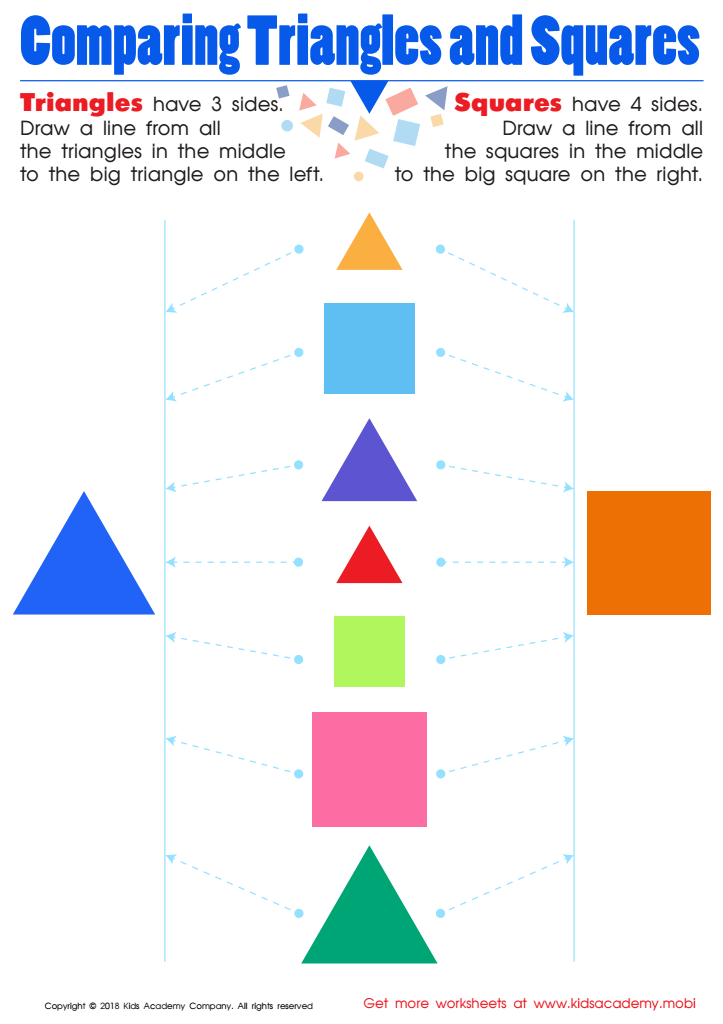
Comparing Triangles Squares Worksheet
 Assign to My Students
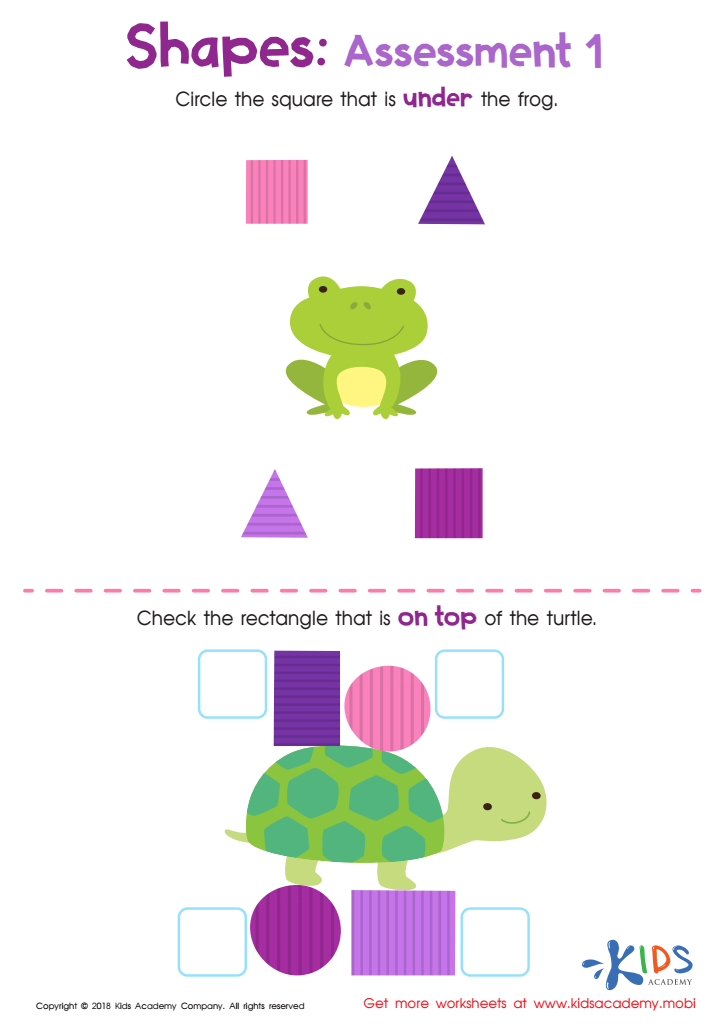
Geometry – Assessment 1 Worksheet
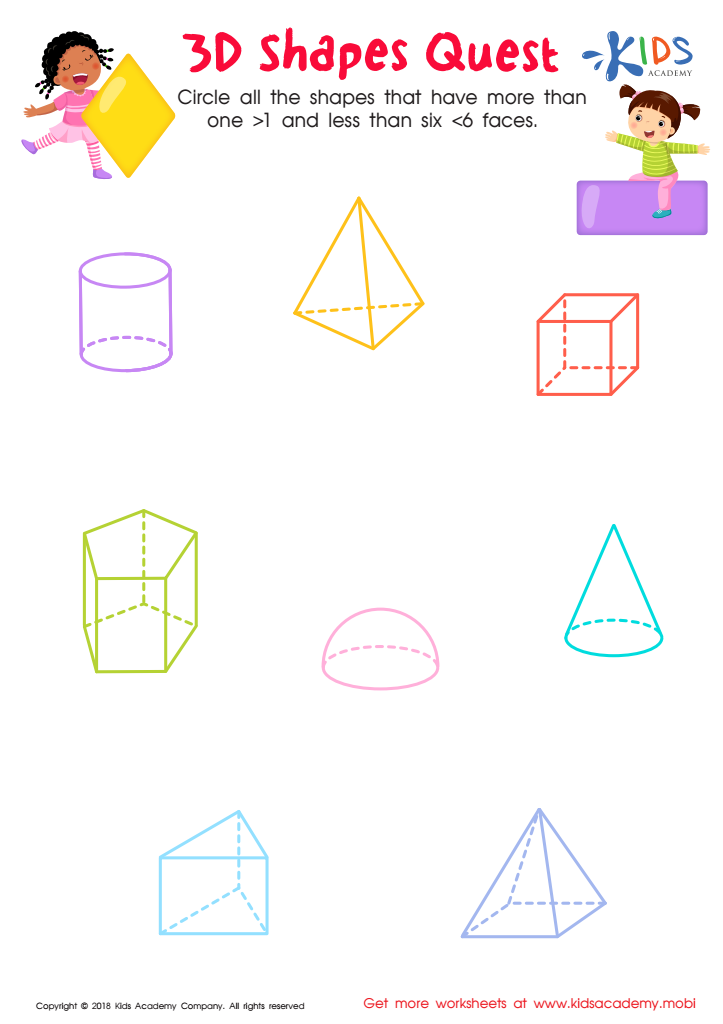
3D Shapes Quest Worksheet
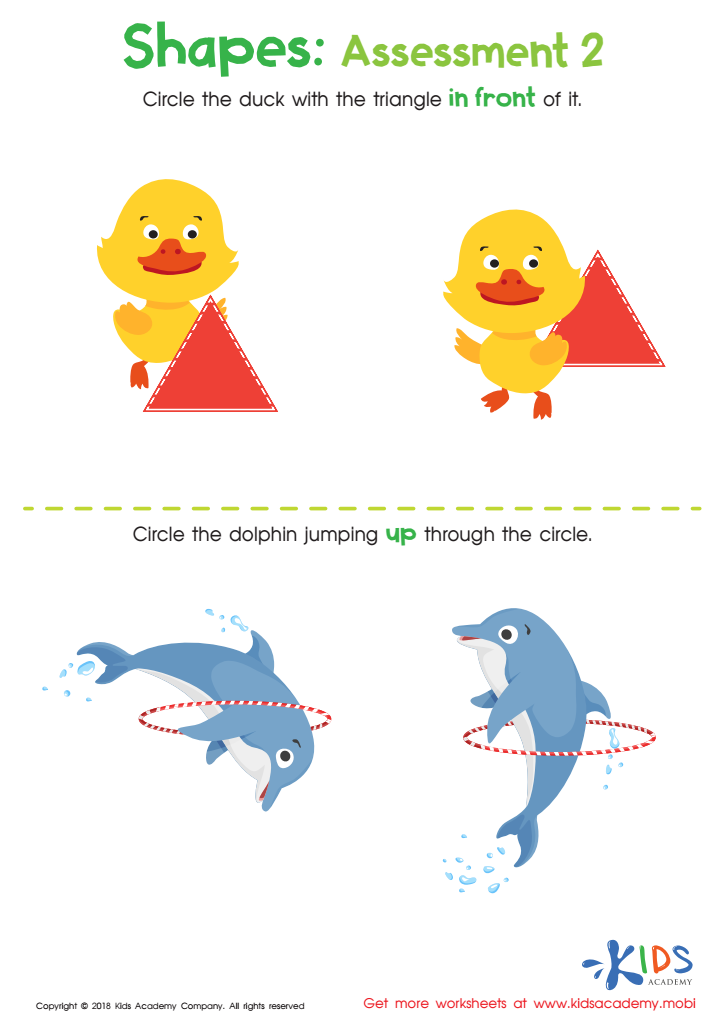
Geometry – Assessment 2 Worksheet








Shape comparison is essential for children aged 3-9 as it plays a crucial role in their cognitive development, foundational math skills, and overall learning progress. Parents and teachers should prioritize this concept for several reasons.
Firstly, comparing shapes helps children develop spatial awareness and visualization skills. These are necessary for problem-solving tasks, enabling kids to comprehend how different parts fit together when building, drawing, or organizing objects. Understanding shapes also aids in recognizing patterns, a critical precursor to mathematical thinking.
Secondly, honing shape comparison skills enhances language development. When discussing shapes, children learn descriptive vocabulary such as "round," "sharp," "large," and "small," which furthers their communication competencies. This practice promotes clearer and more precise expression of their thoughts and ideas.
Moreover, distinguishing between shapes supports early literacy. Recognizing the differences between letters and numbers, many of which are composed of basic shapes, becomes easier, thus facilitating reading and writing readiness.
Lastly, shape comparison fosters stronger observational and analytical skills. Through activities that involve sorting, matching, and categorizing shapes, kids sharpen their ability to notice similarities and differences, a key aspect in scientific and critical thinking.
By focusing on shape comparison, parents and teachers provide essential scaffolding that supports a broad spectrum of developmental milestones encompassing math, language, and logical reasoning skills.








