Times table familiarity Worksheets for Ages 3-9
3 filtered results
-
From - To
Explore our engaging Times Table Familiarity Worksheets designed specifically for children ages 3-9! These worksheets help young learners build a strong foundation in multiplication through fun and interactive exercises. With vibrant illustrations and age-appropriate activities, children can practice and memorize essential times tables in an enjoyable way. Whether in the classroom or at home, our resources promote mathematical confidence and improve problem-solving skills. Parents and educators can easily access and print these worksheets to support learning at their own pace. Foster a love for math and enhance your child's understanding with our Times Table Familiarity Worksheets today!
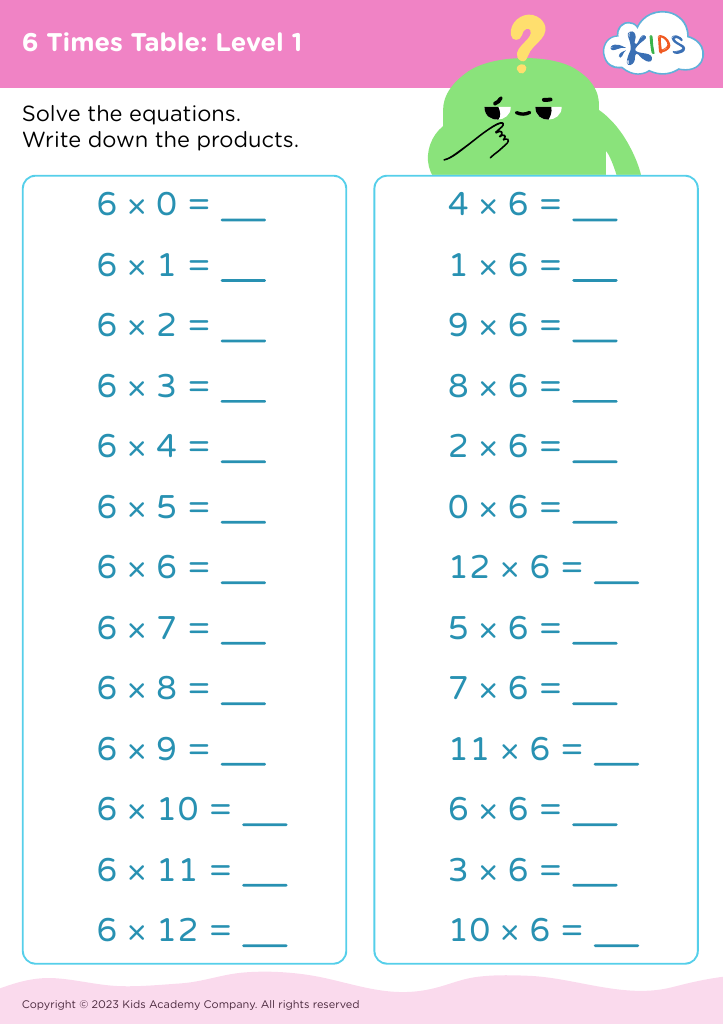
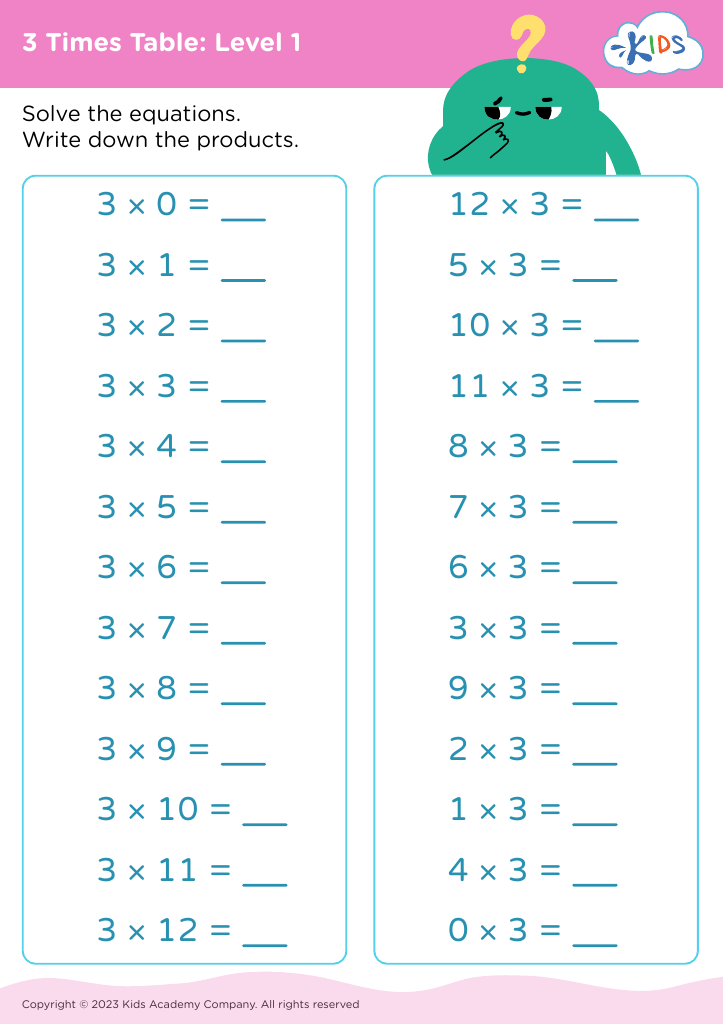
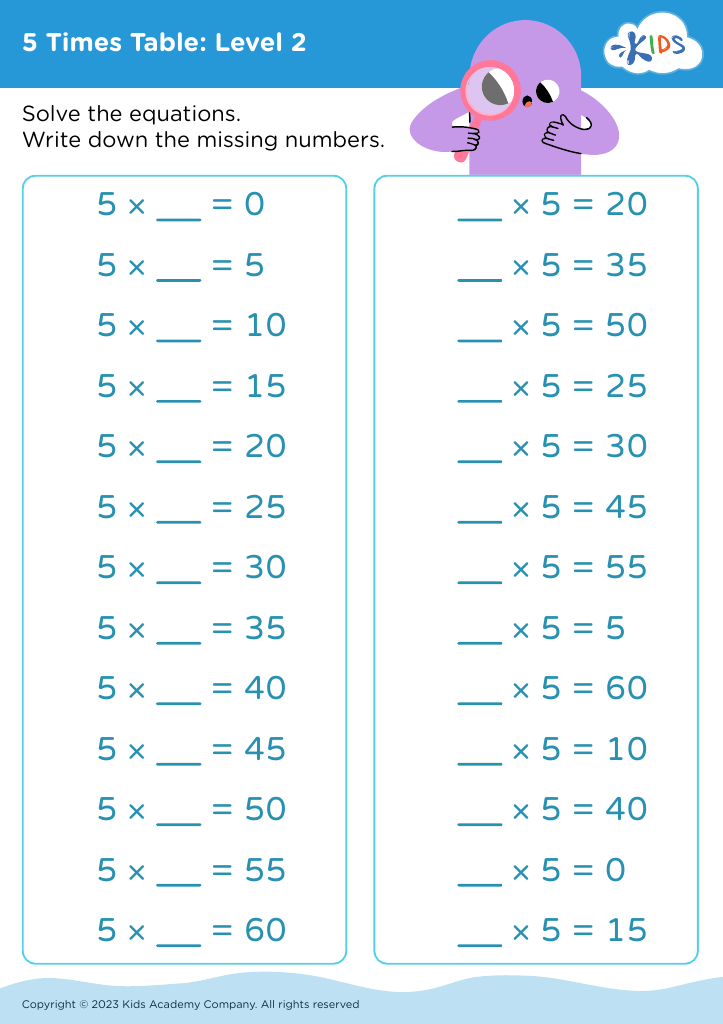







Familiarity with times tables is crucial for children aged 3-9 for several reasons that extend beyond mere memorization of numbers. First, early exposure to multiplication concepts helps solidify foundational math skills, paving the way for more complex mathematical operations in later years. By grasping these core ideas early on, students gain confidence, making them more willing to tackle challenging problems as they progress through their education.
Moreover, a solid understanding of times tables enhances children's problem-solving abilities. It provides them with mental tools to approach real-world situations, such as calculating prices while shopping or understanding basic unit conversions. Supporting this learning at home or in the classroom can lead to strengthened relationships, as collaborative learning reinforces knowledge and creates enjoyable bonding experiences.
In addition, mastering times tables can improve cognitive functions, such as memory, attention, and critical thinking, all vital for academic success. Since many standardized assessments include multiplication, early practice can lead to improved performance. Finally, instilling a love for math at an early age sets the tone for lifelong learning, showing children that mathematics can be exciting and worth exploring. Encouraging familiarity with times tables lays the groundwork for future success in a variety of educational and life pursuits.








