
Times table reinforcement Worksheets for Ages 3-9
4 filtered results
Difficulty Level
Grade
Age
-
From - To
Subject
Activity
Standards
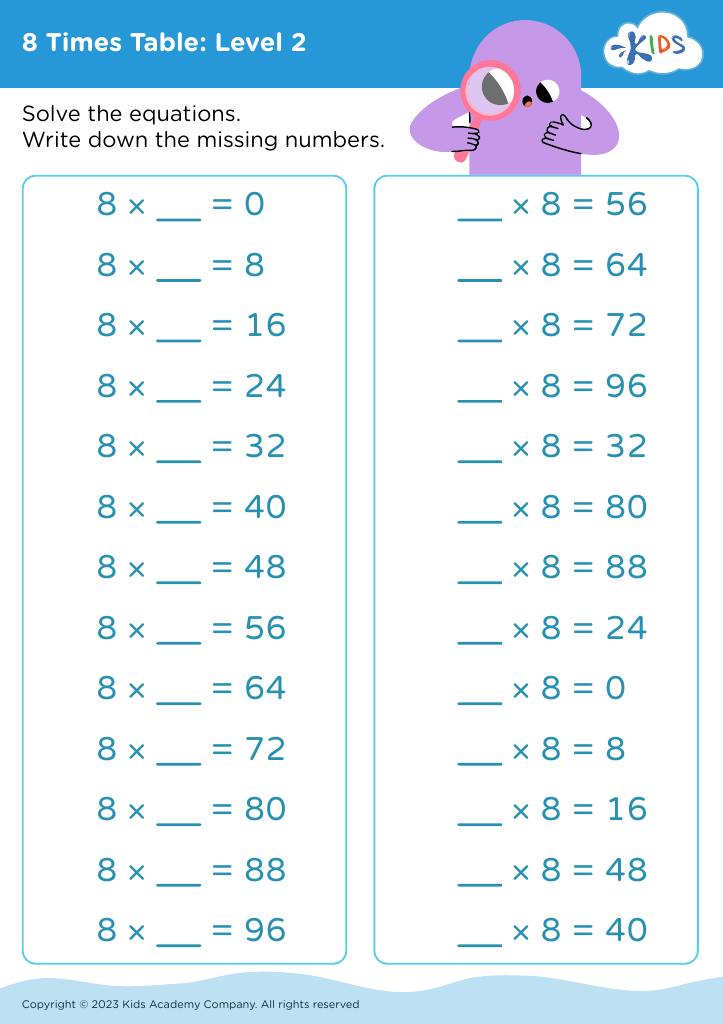
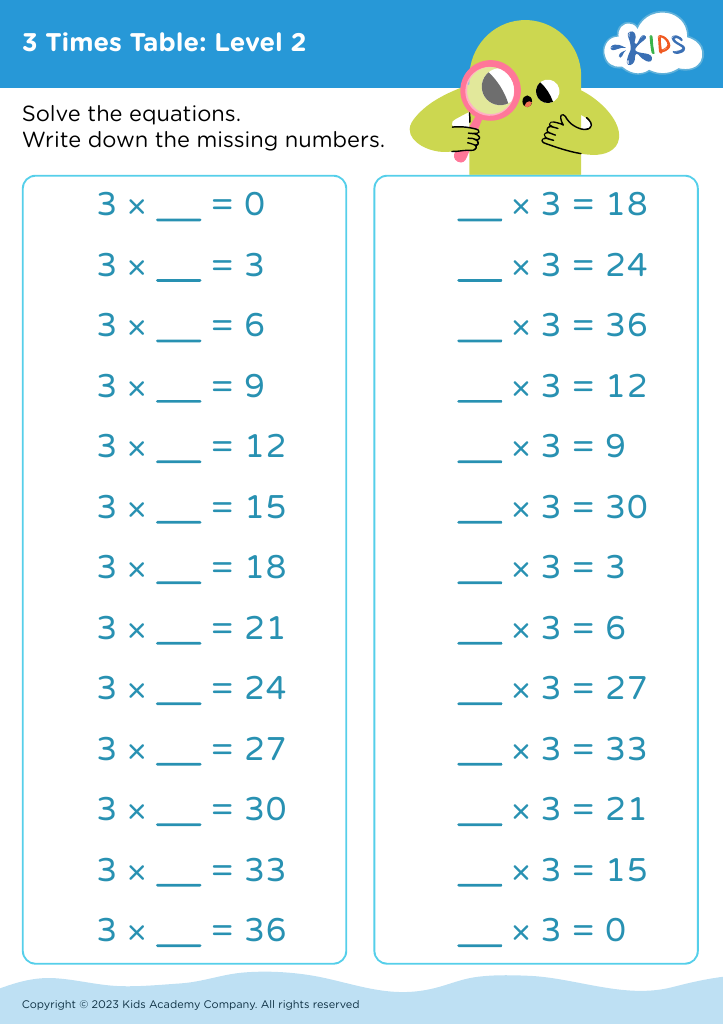
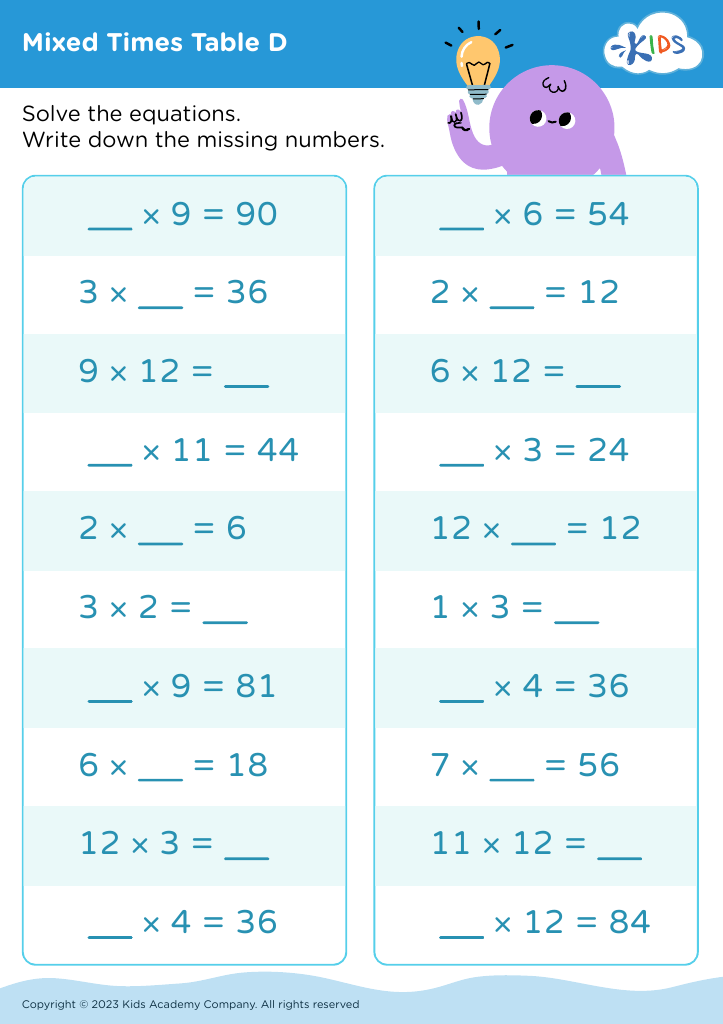
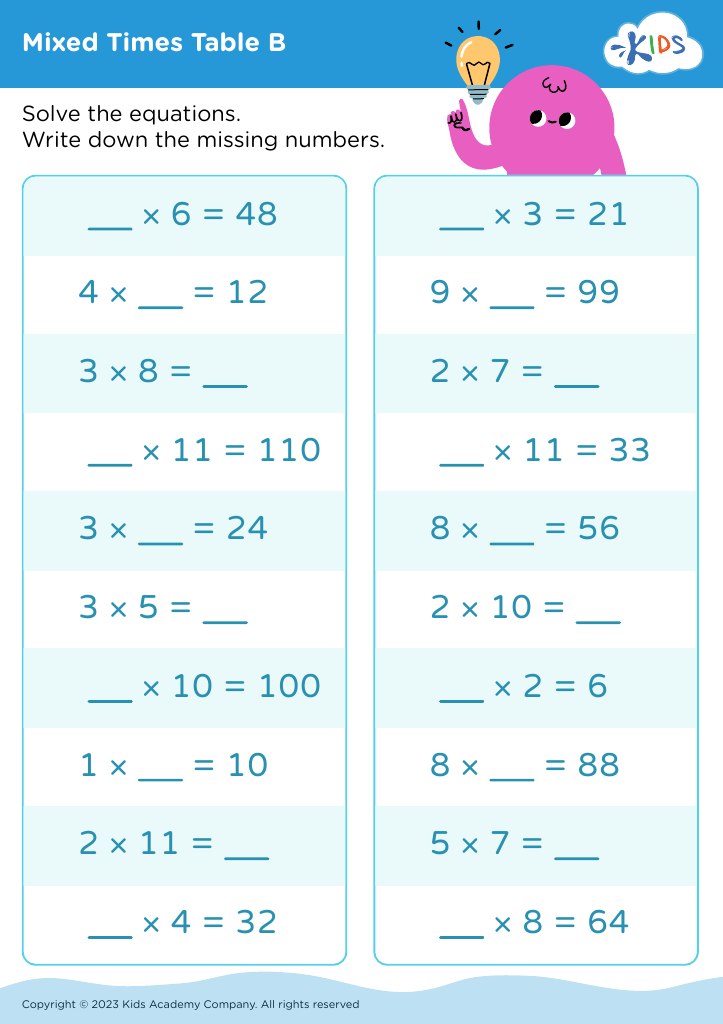
Discover our engaging Times Table Reinforcement Worksheets designed specifically for ages 3-9! These printable worksheets are perfect for helping young learners grasp early math concepts in a fun and interactive manner. Each worksheet emphasizes key multiplication skills through vibrant illustrations and age-appropriate exercises, making learning effortless and enjoyable. With varied activities that challenge and reinforce knowledge, children will build confidence in their math abilities. Ideal for teachers, parents, or tutors, these worksheets support skill development at home or in the classroom. Explore our collection and watch your child thrive in mastering their times tables while having fun!
Favorites
With answer key
Interactive
Join Kids Academy for Free
Who is primarily going to use this learning content?








Reinforcing times tables for children aged 3-9 is critical for their overall mathematical development and confidence. For young learners, mastering basic multiplication lays a solid foundation for more complex math concepts later on, such as division, fractions, and algebra. Early familiarity with times tables aids in developing problem-solving skills, critical thinking, and numeracy.
Cognitive development in these formative years allows children to grasp patterns and relationships in numbers. Engaging with times tables can enhance memory and retrieval skills, which are essential not only in mathematics but in various areas of learning.
Moreover, fluency in times tables boosts children's confidence, reducing math-related anxiety. When children can quickly recall multiplication facts, they feel more capable during math lessons, homework, and standardized tests. This confidence can lead to a more positive attitude toward learning and foster a lifelong appreciation for mathematics.
Additionally, involvement from parents and teachers demonstrates the value placed on education, encouraging collaboration in the learning process. Utilizing games, songs, and repetition makes reinforcement enjoyable, creating a positive learning environment. Ultimately, helping children master times tables empowers them to navigate their academic journey more effectively and prepares them for future success in various subjects.








