Understanding base ten Worksheets for Ages 3-9
3 filtered results
-
From - To
Unlock the world of numbers with our "Understanding Base Ten Worksheets" designed for children ages 3-9. These engaging worksheets are tailored to help young learners grasp foundational mathematical concepts by exploring the base ten system. Through fun activities, exercises, and visuals, kids will learn to count, group, and identify numbers, fostering a solid understanding of place value. Perfect for homeschoolers, classroom use, or extra practice, these worksheets align with early learning standards. Encourage your child's mathematical confidence as they develop essential skills that will pave the way for future success in math. Start their journey today!
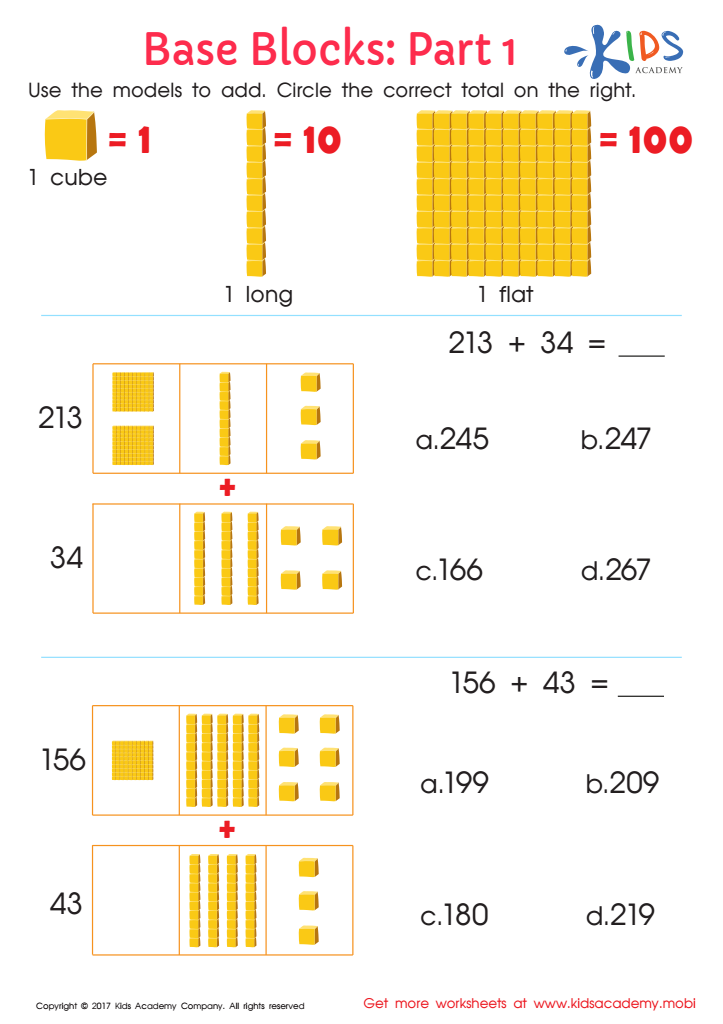
Base Ten Blocks Worksheet: Part 1
 Assign to My Students
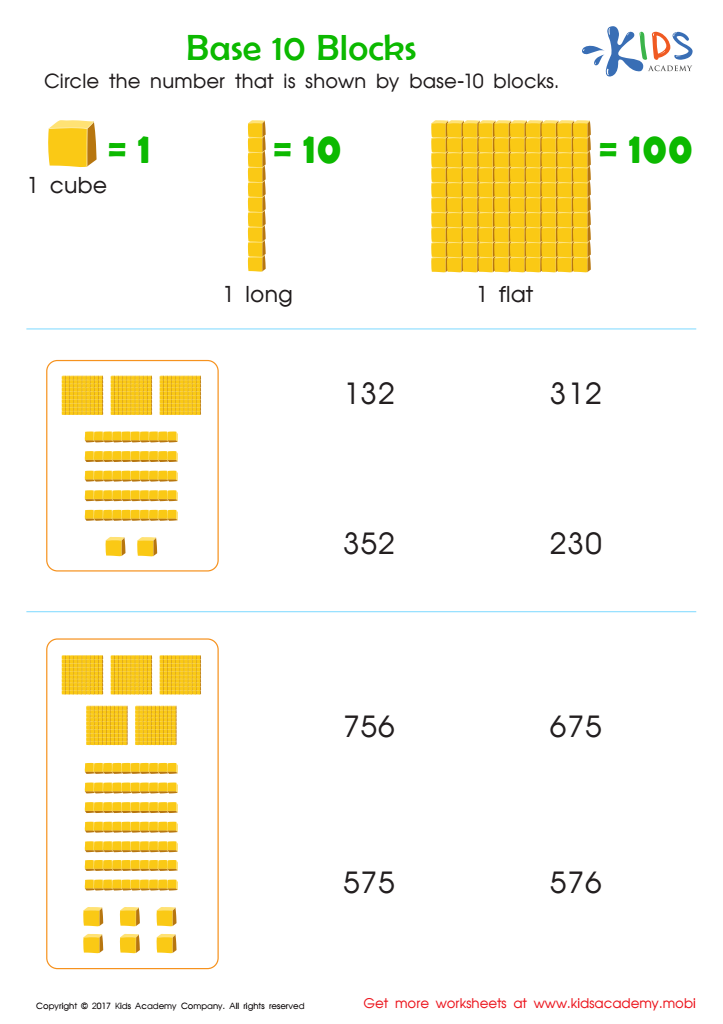
Base Ten Blocks Worksheet
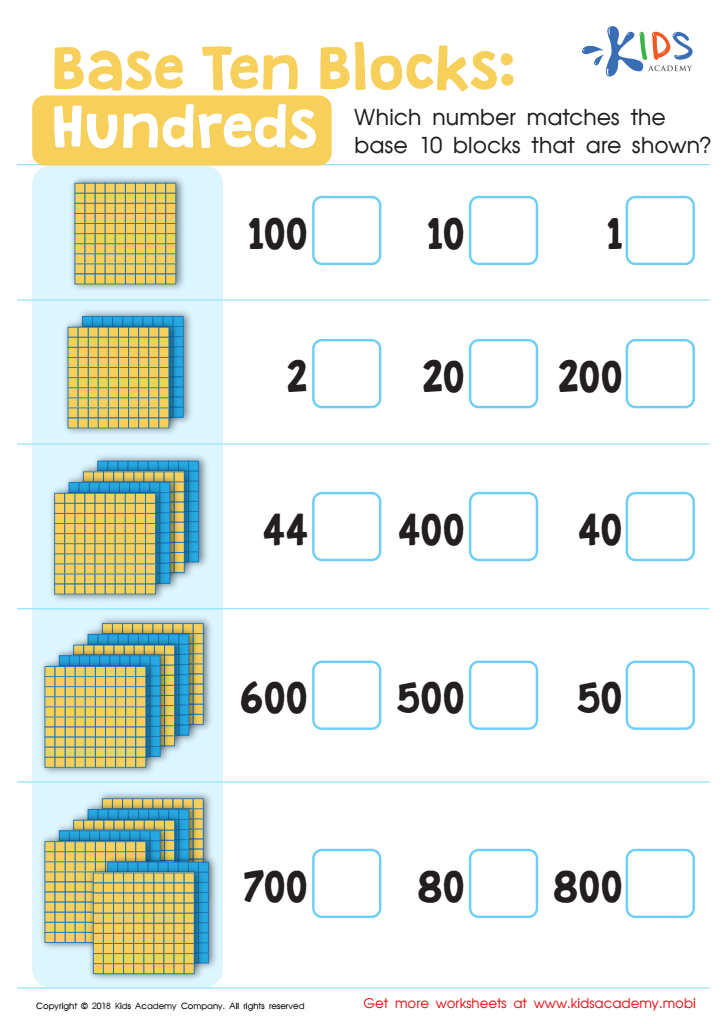
Base Ten Blocks: Hundreds Worksheet







Understanding the base ten system is fundamental for children's mathematical development, particularly for those aged 3 to 9. At this age, children are building the foundations for numeracy that will be critical throughout their academic journey.
Firstly, grasping the base ten system enables young learners to comprehend how numbers are structured. Recognizing that our number system is organized into groups of ten helps children understand counting, addition, and subtraction more intuitively. This foundational knowledge prepares them for more complex operations in later years, making calculations more manageable and sustainable.
Moreover, fostering a solid understanding of base ten strengthens problem-solving and critical-thinking skills. By visualizing numbers in terms of tens and ones, children can develop strategies for mental math, especially with larger numbers.
Additionally, a robust grasp of base ten supports literacy in math, allowing children to communicate their thoughts and strategies effectively. This skill translates not only to math classes but also to real-world applications where numeracy plays a crucial role.
Overall, engaging children in the principles of the base ten system equips them for academic success and helps build confidence, setting them on a path toward a positive mathematical mindset as they grow.








