Understanding number patterns Worksheets for Ages 3-9
6 filtered results
-
From - To
Unlock your child's potential with our "Understanding Number Patterns Worksheets for Ages 3-9." Tailored to nurture early math skills, these engaging worksheets introduce young learners to the magical world of number sequences and patterns. Ideal for preschool through early elementary, they offer colorful, interactive exercises that make learning fun. Build a solid foundation in pattern recognition, critical thinking, and problem-solving. Perfect for parents and teachers seeking to enhance math literacy and build confidence. Transform number learning into an adventure with our expertly designed worksheets—empowering young minds, one pattern at a time! Explore more at Kids Academy.
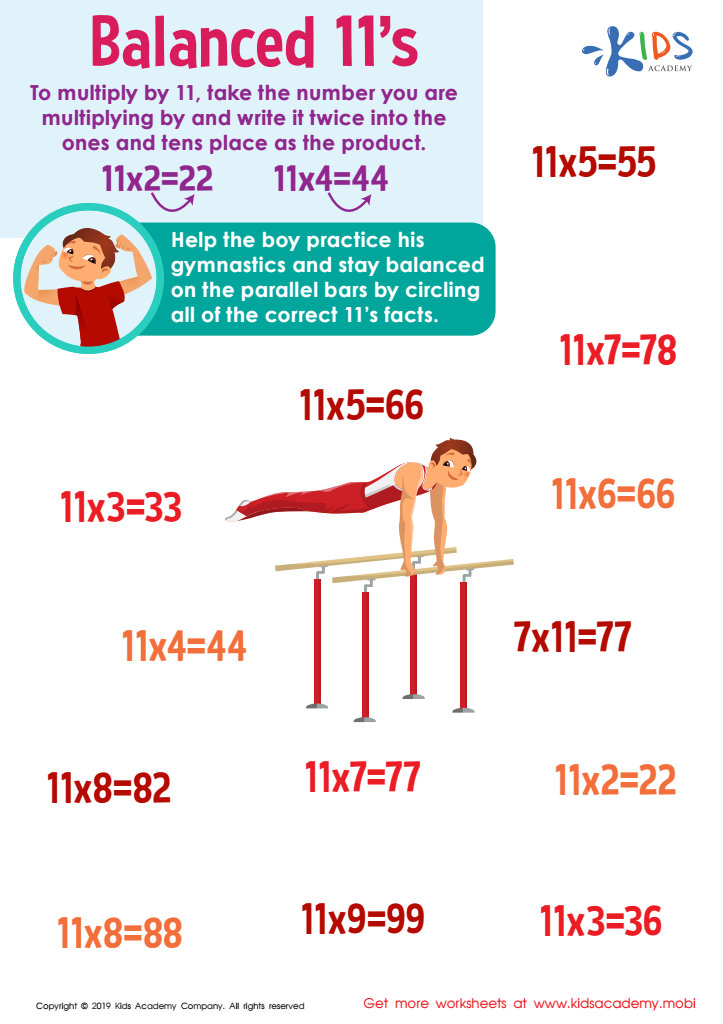
Balanced 11s Worksheet
 Assign to My Students
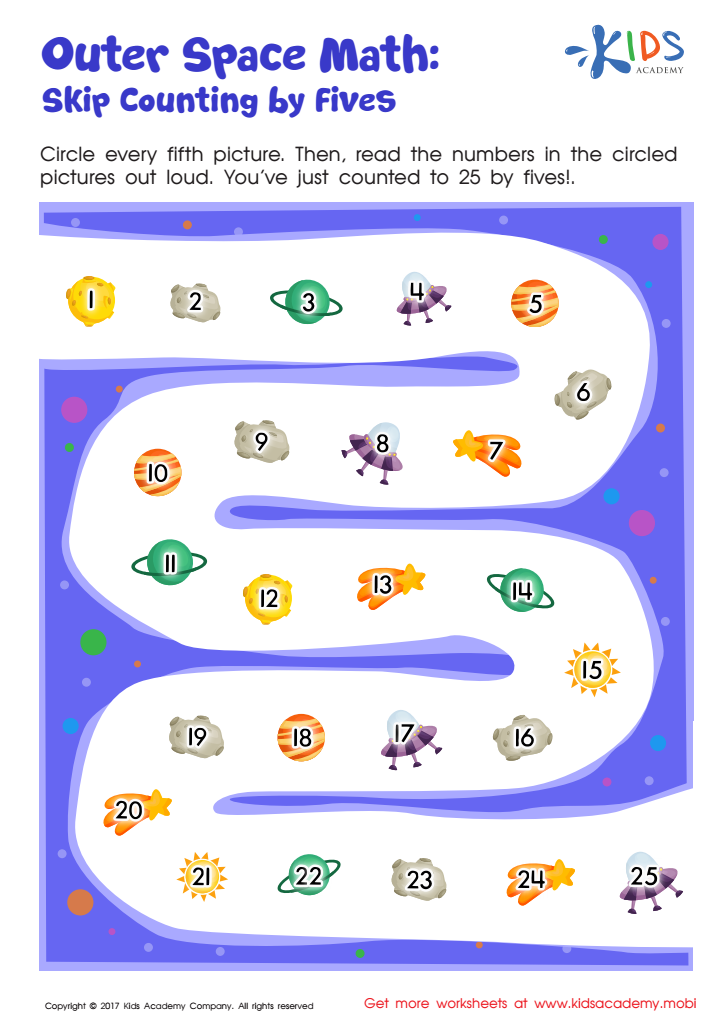
Skip Counting by 5s: Outer Space Math Printable
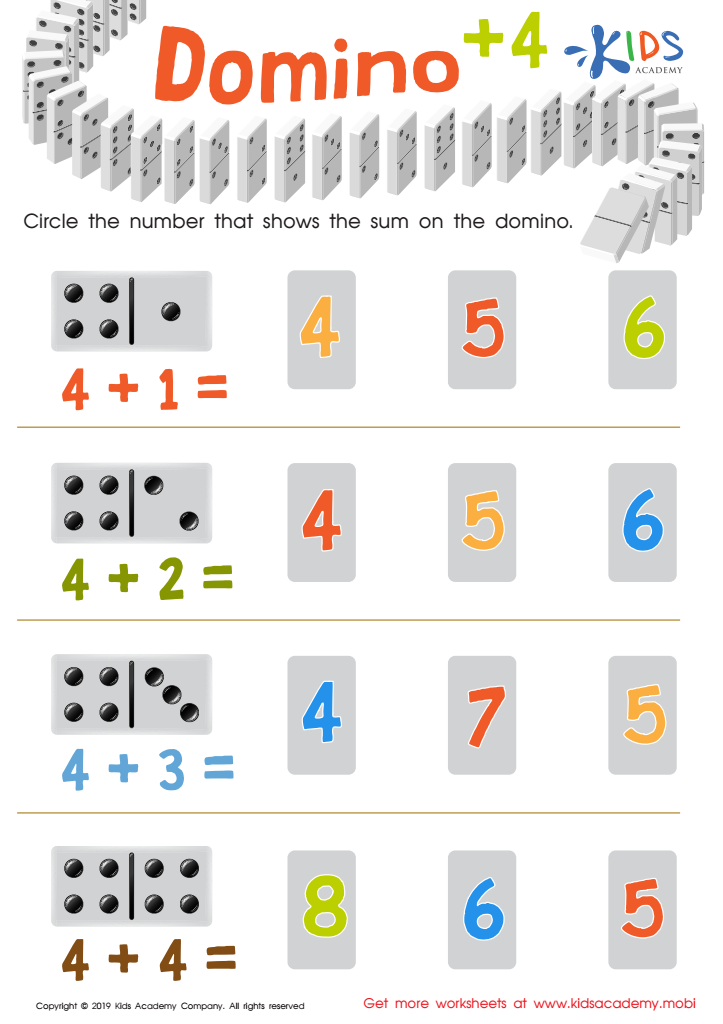
Domino +4 Worksheet
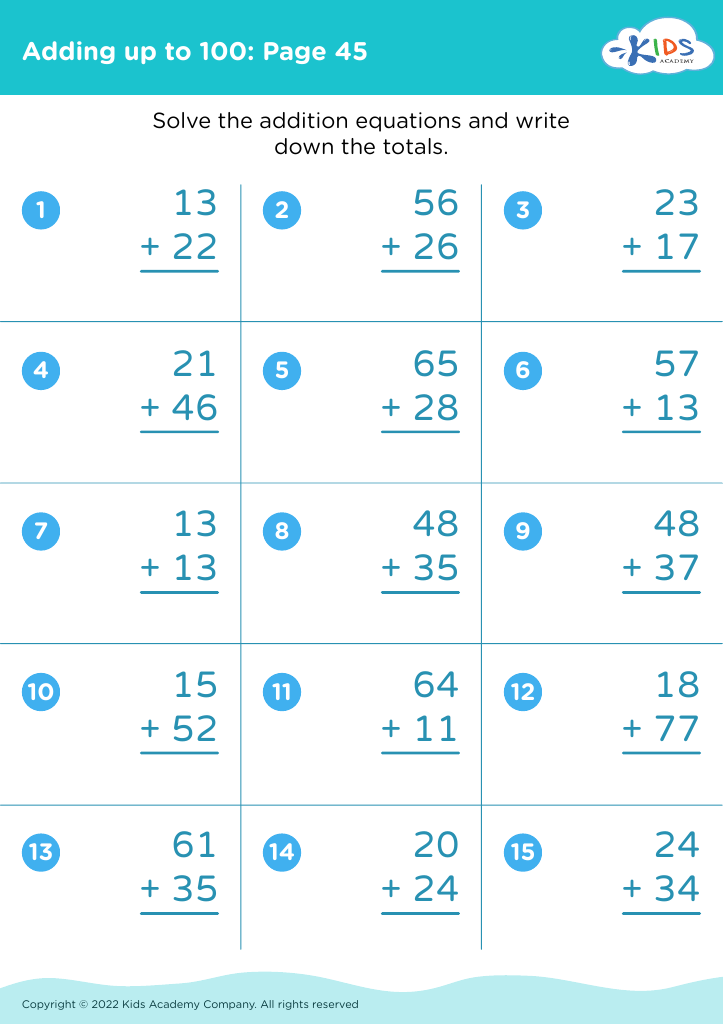
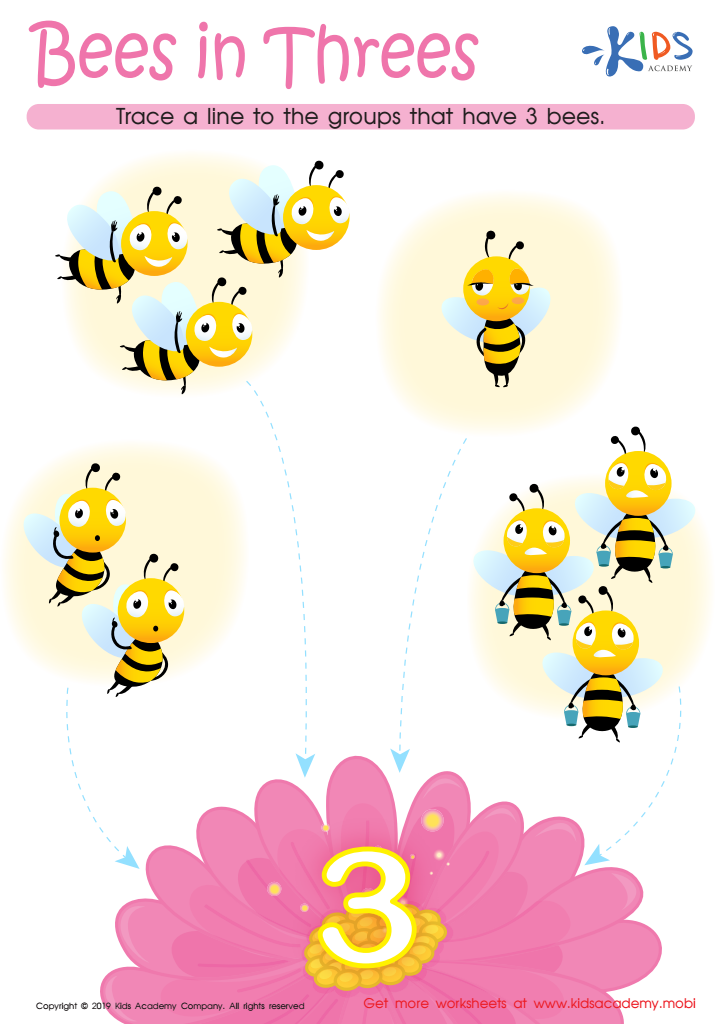
Bees in Threes Worksheet






Understanding number patterns from ages 3 to 9 is crucial for multiple reasons. First, recognizing patterns lays a foundational skill for mathematical thinking, promoting early numeracy skills essential for future math success. Patterns like counting by twos, fives, or recognizing sequences teach children to predict and analyze, cultivating critical thinking skills.
Moreover, engaging with number patterns enhances problem-solving abilities. Children learn to identify relationships, make logical connections, and develop strategies to solve problems.
Patterns aren't limited to math; they appear in daily life—in music, art, and nature. Thus, recognizing and understanding patterns help children make sense of the world around them, enhancing observational skills and cognitive development.
Early exposure to number patterns also boosts confidence in young learners. They'll feel more comfortable with mathematical concepts, reducing the likelihood of math anxiety as they progress to more complex topics.
Finally, discussing number patterns at home or in the classroom can foster a nurturing learning environment. Encouraging exploration and curiosity in patterns can inspire young minds, making learning fun and interactive. This foundational skill isn't just about solving problems but empowering kids to see the world through a more inquisitive and analytical lens.








