Understanding Rhymes Worksheets for Ages 3-9
4 filtered results
-
From - To
Explore our "Understanding Rhymes Worksheets for Ages 3-9" at Kids Academy, designed to ignite a love for language and poetry! These engaging worksheets help young learners develop crucial phonemic awareness and linguistic skills through fun, age-appropriate rhyming activities. Perfect for preschool to early elementary students, our resources enhance vocabulary, reading fluency, and comprehension by focusing on recognizing and generating rhyming words. Support your child’s literacy journey with colorful, interactive exercises that make learning rhymes enjoyable and effective. Download today and watch your child’s confidence and creativity soar with every rhyme!
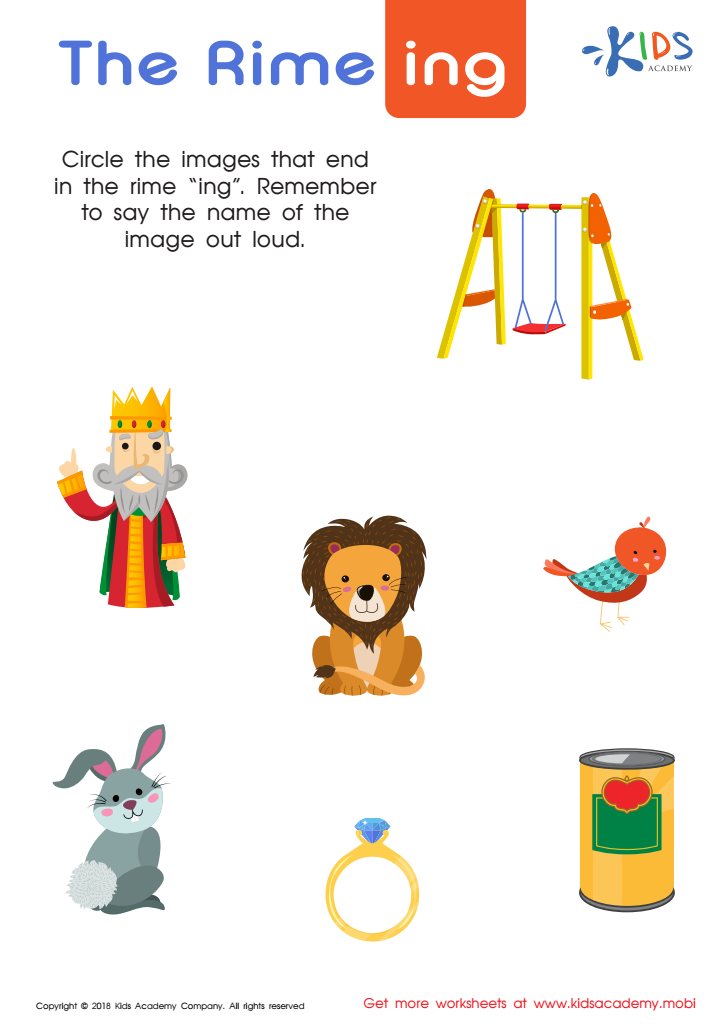
The Rime "ing" Worksheet
 Assign to My Students
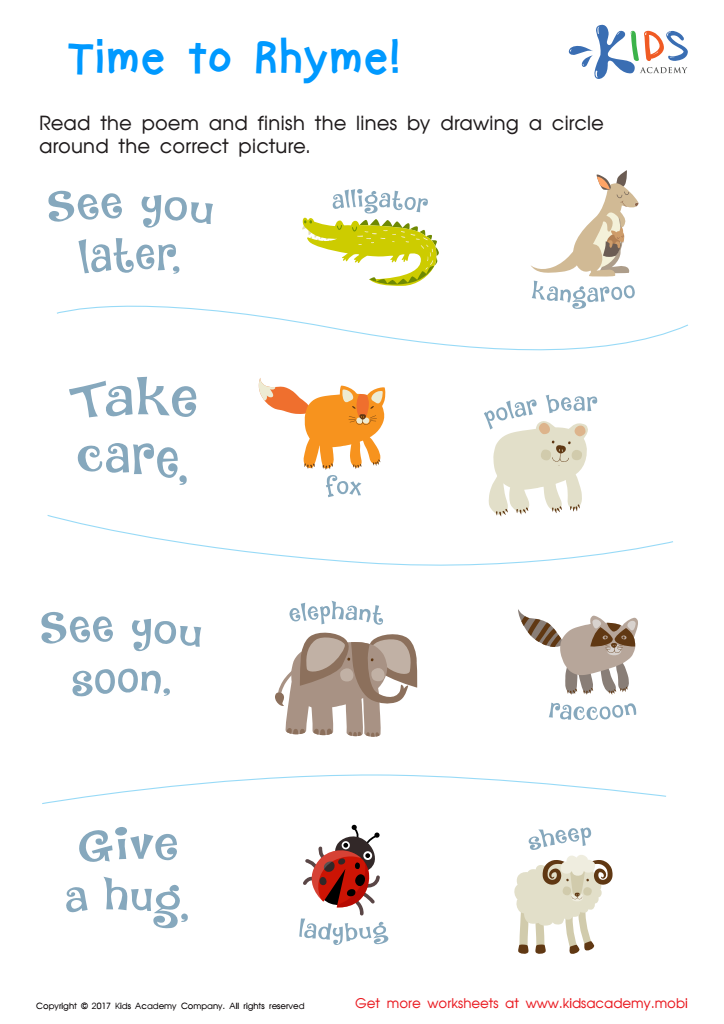
Time to Rhyme Rhyming Worksheet
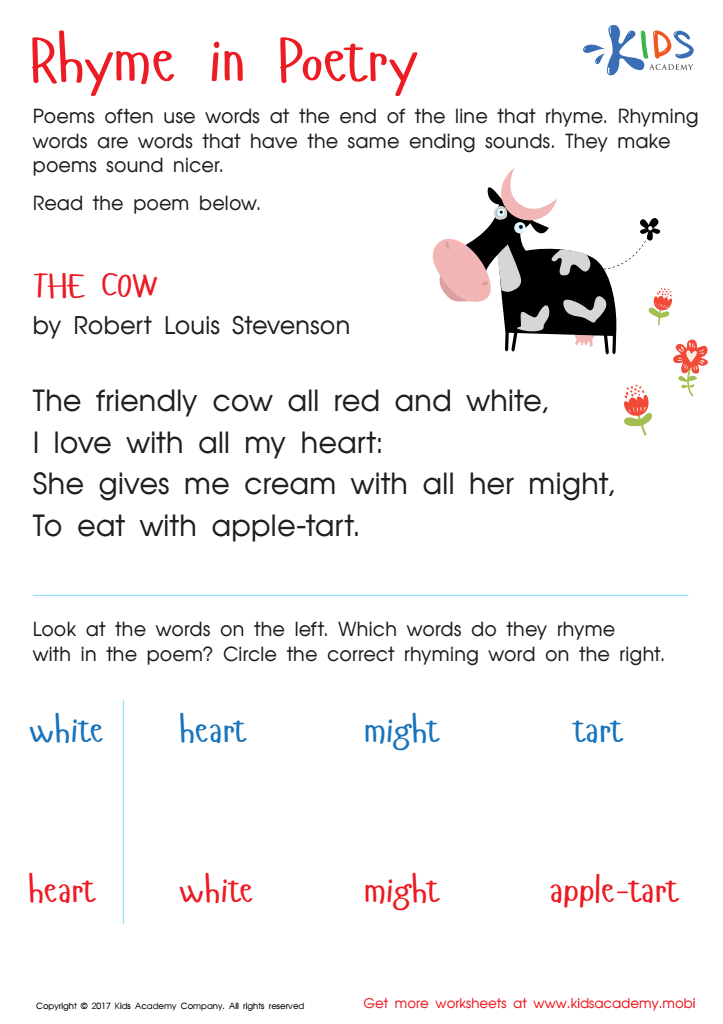
Rhyme In Poetry Worksheet








Understanding rhymes is crucial for children ages 3-9, a period marked by significant language development. First and foremost, rhymes enhance phonemic awareness— a foundational skill for reading. When children recognize rhyming patterns, they begin to notice how sounds form words, which paves the way for efficient decoding and ultimately reading fluency.
Moreover, rhyming activities expand vocabulary. By engaging with varied and imaginative text through songs, poems, and stories, children are exposed to a rich array of words, helping them build a robust linguistic toolkit. Storybooks and nursery rhymes often introduce verbs, adjectives, and nouns that children might not otherwise encounter in everyday conversation.
Rhyming also nurtures memory and cognitive skills. Remembering rhyming sequences requires young learners to tap into and expand their memory storage. This practice can lead to improved recall abilities that are invaluable across all subjects.
Interpersonal skills and emotional bonding are another bonus. Singing and reciting rhymes together enable family members and teachers to form strong bonds with the children. These activities engage kids in group dynamics, teaching them how to listen, engage in turn-taking, and connect with peers positively.
Therefore, by understanding and applying rhymes in routines, parents and teachers help lay a comprehensive educational foundation that supports continued literacy and cognitive advancements.








