Explore our engaging "Understanding Syllables Worksheets" designed for children ages 3-9! These interactive resources help young learners grasp the concept of syllables through fun activities that enhance phonemic awareness and reading skills. Our worksheets feature colorful images, simple instructions, and a variety of exercises aimed at making learning enjoyable. From counting syllables in words to separating sounds, each sheet encourages children's development at their own pace. Perfect for home or classroom use, these worksheets foster early literacy and help children build a strong foundation in language. Download today and watch your child thrive in their reading journey!

Check out this FREE "Understanding syllables" Trial Lesson for age 3-9!

Find Spelling Patterns

Favorites
With answer key
Interactive
  • 3-9
  • Understanding syllables
Closed Syllable Worksheets for 3rd Grade

Closed Syllable Spelling Worksheet

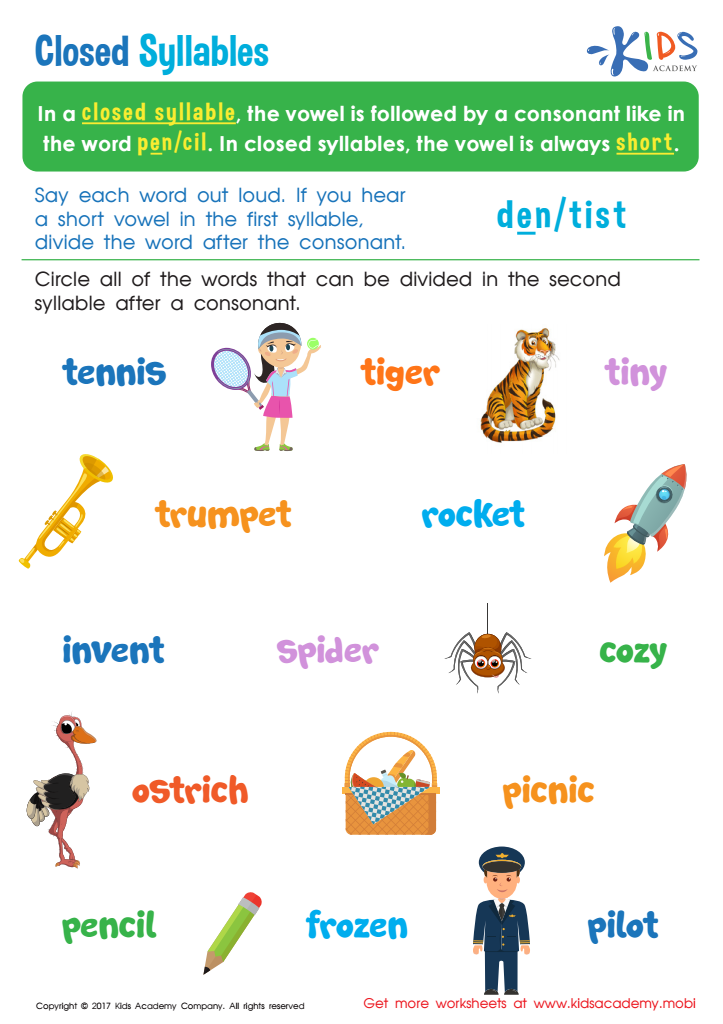
Learning syllables can be tough, but we can make it easier! Look for long and short vowel sounds to identify closed syllables. This worksheet can help 3rd graders do just that, with its fun and colorful design.
Closed Syllable Spelling Worksheet
Worksheet
Open Syllables Worksheet

Open Syllables Worksheet

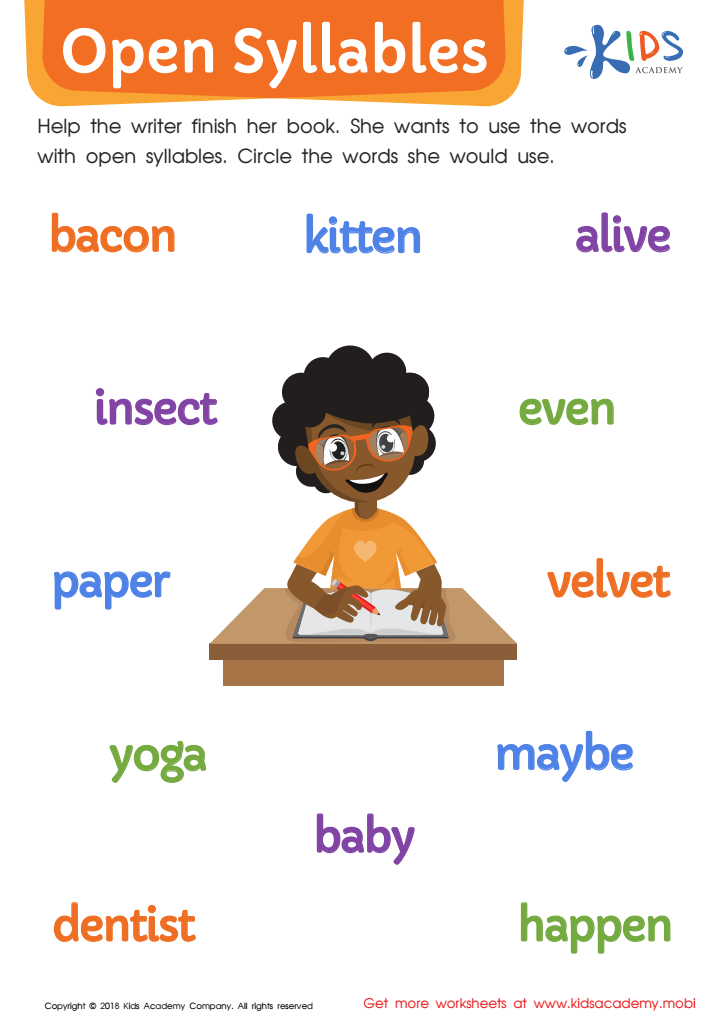
Before beginning this worksheet, make sure your child knows what open syllables are. If not, take time to teach them with examples. Then, help the writer finish her book by circling words with open syllables. She needs your child's help!
Open Syllables Worksheet
Worksheet
Which Is the Onset? Worksheet

Which Is the Onset? Worksheet

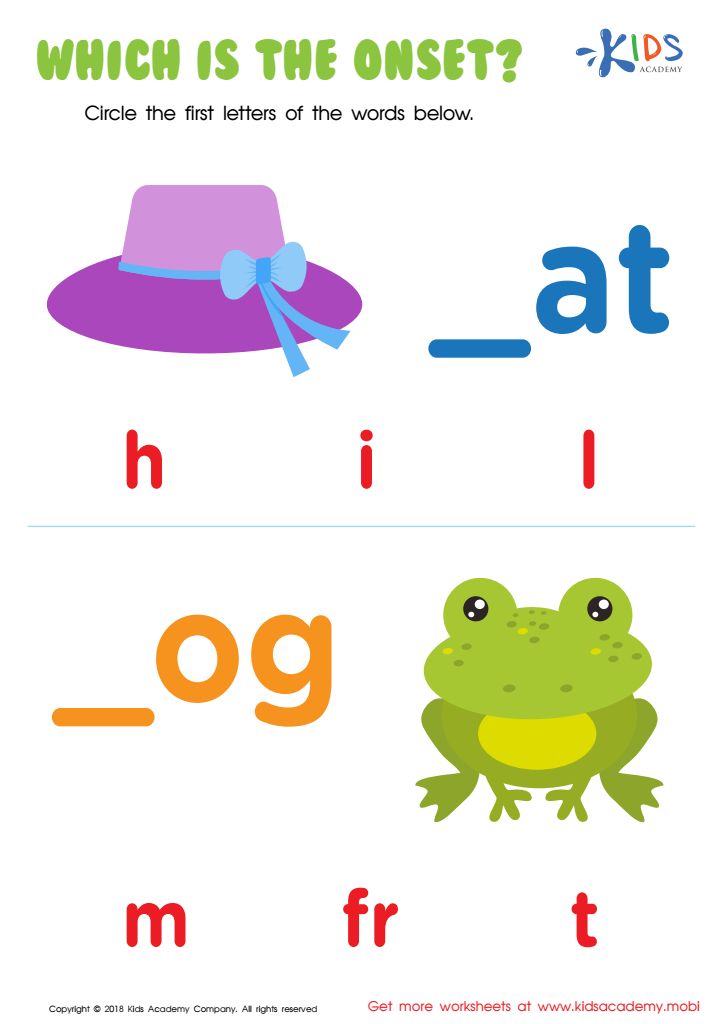
Help your children learn to spell with this bright, fun worksheet. Struggling with spelling small words can make reading and writing sentences difficult. Encourage them to look at the pictures, say the names aloud and circle the correct first letter from the options. They will soon overcome any reluctance to spell.
Which Is the Onset? Worksheet
Worksheet
Word structure worksheet: syllables

Finding Syllables Word Structure Worksheet
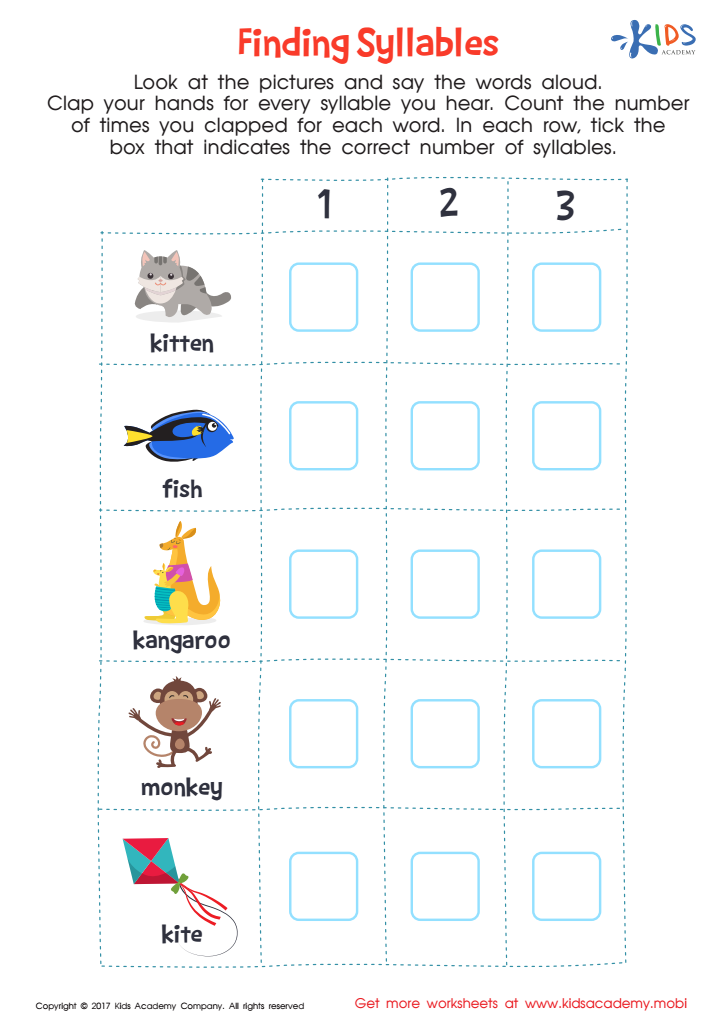
Have your kid clap and count syllables in words to improve their reading and spelling! Use this word structure worksheet for a fun activity - syllables!
Finding Syllables Word Structure Worksheet
Worksheet
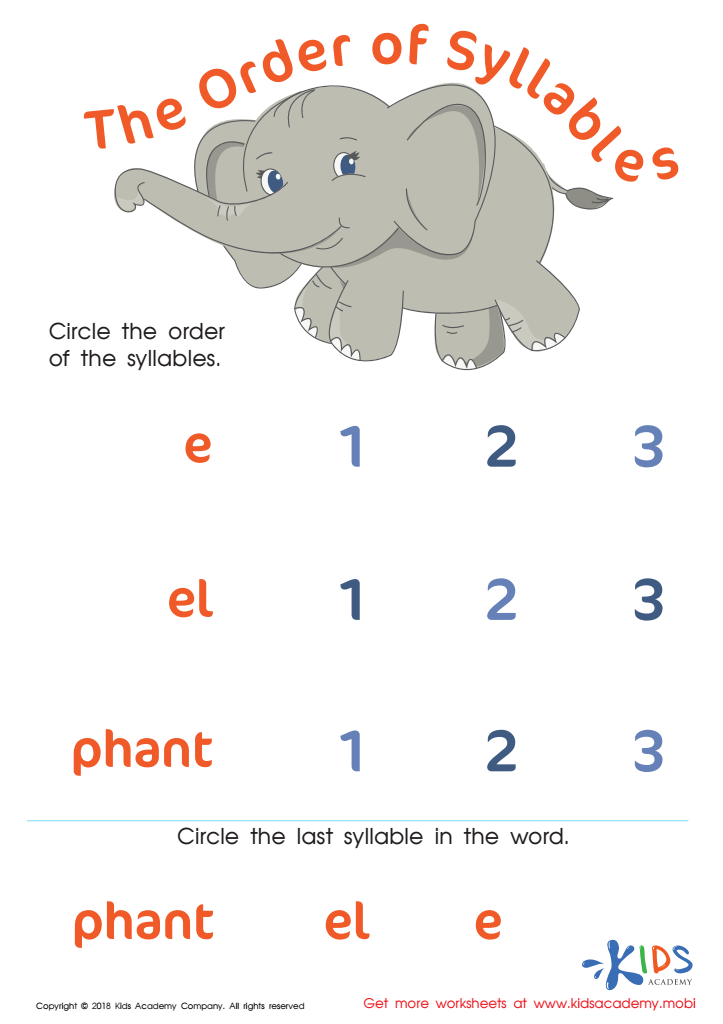
The Order of Syllables Worksheet

The Order of Syllables Worksheet

Syllabication is vital for prereading and decoding words. Download this fun, free worksheet to help your reader practice breaking words into syllables and arranging them for reading. It also strengthens fine motor skills as they trace the numbers for each syllable, guided by a cheerful elephant!
The Order of Syllables Worksheet
Worksheet
Finding Syllables in Long Vowel Words Worksheet

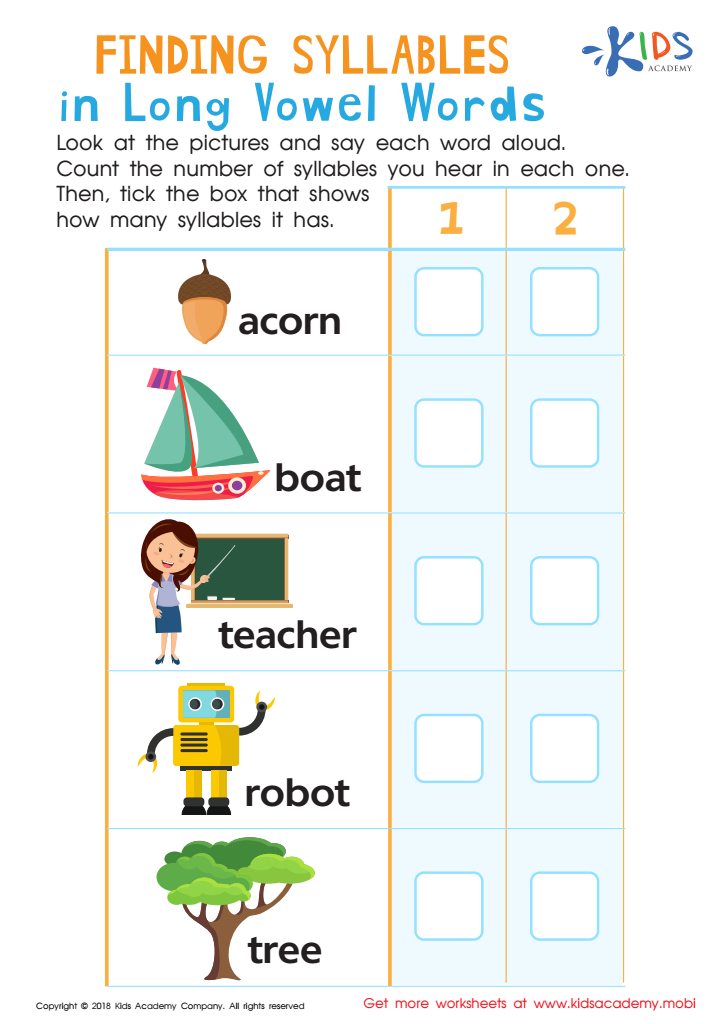
Finding Syllables in Long Vowel Words Worksheet

Help your kids identify objects and better count syllables in words. Look at the printout images with them and have them say each word out loud. Ask them to count syllables and tick the box with the correct number. With this worksheet, your kids will become more skilled.
Finding Syllables in Long Vowel Words Worksheet
Worksheet
Worksheet: Spelling Words Ending with -le, -el and -al

Spelling Words Ending with –le, –el and –al Worksheet
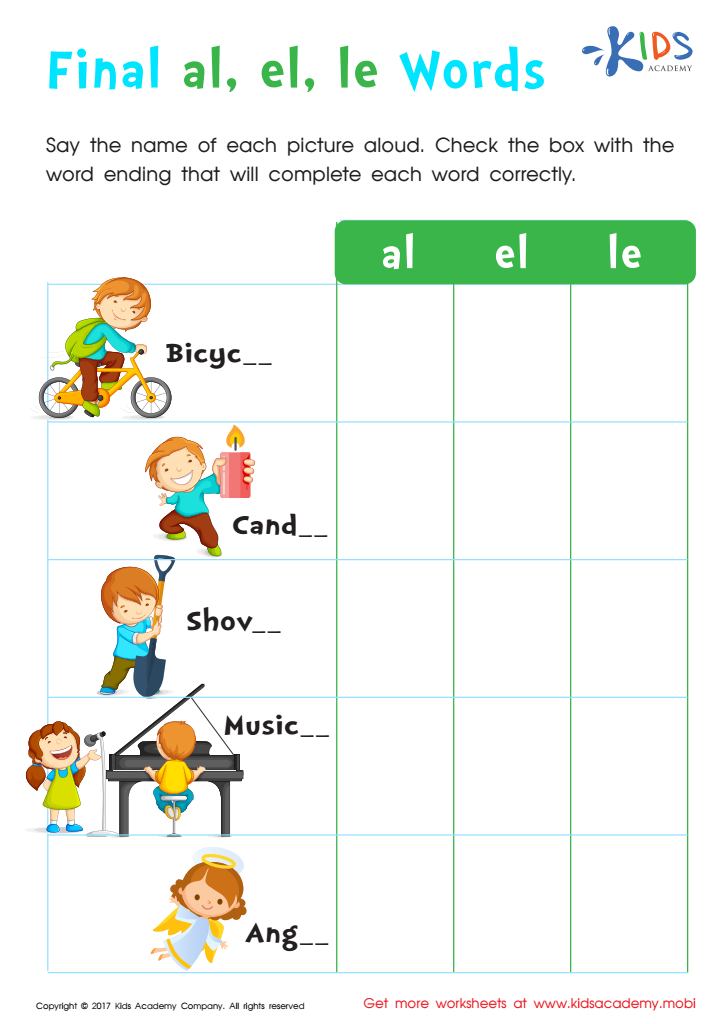
Spelling tricky words with the same ending sounds can be fun with this worksheet! Kids learn to spell -le, -el, and -al words while enjoying colorful pictures. It's a great way to refine their usage of tricky word endings.
Spelling Words Ending with –le, –el and –al Worksheet

Worksheet
Grade 3 Sight Words: Grow

Grade 3 Sight Words: Grow

Grade 3 Sight Words: Grow
Worksheet


Understanding syllables is crucial for children aged 3-9 as it forms the foundation for literacy and language development. Recognizing syllables helps young learners break down words into manageable components, which enhances their reading skills. When children can segment words into syllables, they become more adept at decoding unfamiliar words, improving both their reading fluency and comprehension.

Syllable awareness also plays a significant role in spelling. By understanding the structure of words, children can identify patterns, which supports their ability to spell phonetically. Additionally, exposure to syllable practice fosters better pronunciation and vocabulary development, aiding in clearer communication.

For parents and teachers, promoting syllable understanding can be engaging and fun, transforming learning into playful activities that captivate young learners' attention. Shared reading, rhyming games, and clapping exercises can reinforce the concept of syllables in an interactive way.

Moreover, mastering syllables lays the groundwork for literacy skills needed in later academic success. It increases confidence as children progress on their educational journeys. Thus, prioritizing syllable awareness is essential for fostering resilient, capable learners who are well-equipped for future challenges.