Understanding symmetry Worksheets for Ages 3-9 - Page 2
38 filtered results
-
From - To
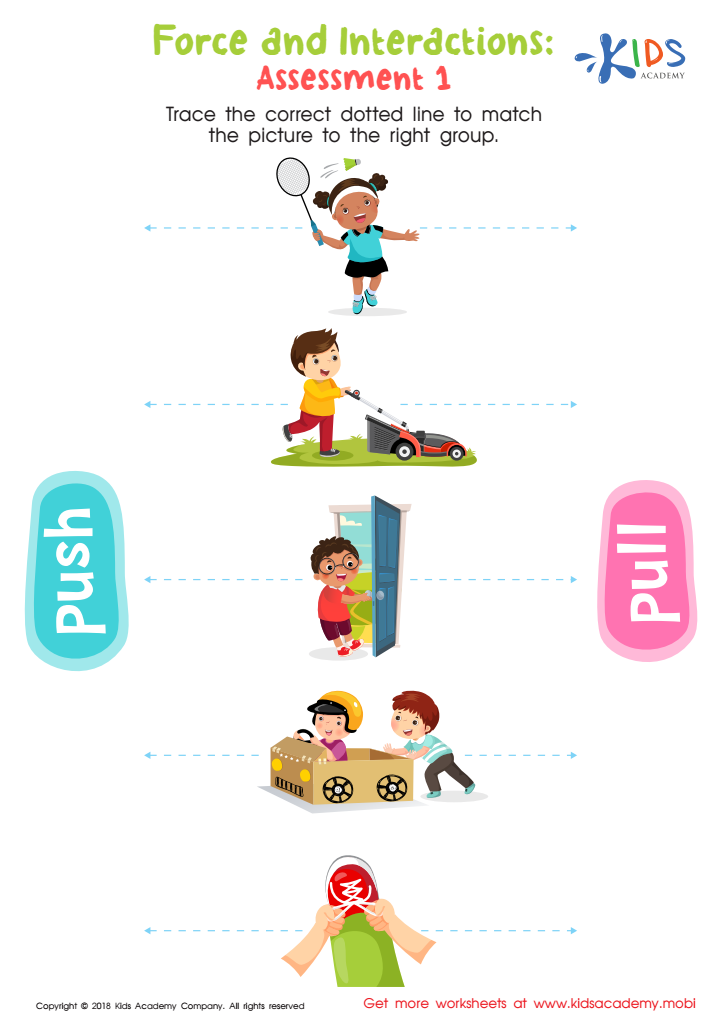
Force and Interactions: Assessment 2 Worksheet
 Assign to My Students
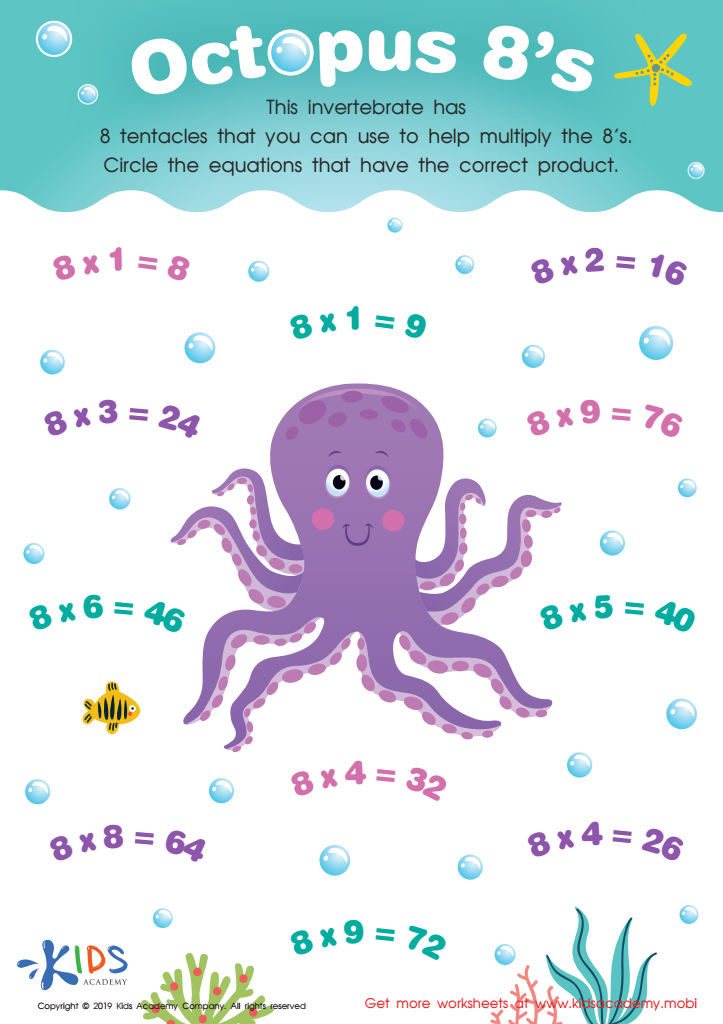
Octopus 8’s Worksheet





.jpg)
Understanding symmetry is fundamental for children ages 3-9 as it bolsters their cognitive and developmental growth. Parents and teachers play a crucial role in fostering this understanding, which offers multiple benefits.
First, learning about symmetry enhances mathematical skills. Recognizing symmetrical shapes and patterns nurtures a child’s ability to identify and categorize objects, promoting critical thinking and problem-solving abilities. These skills are foundational for more advanced mathematical concepts they will encounter later in their academic journey.
Second, symmetry plays a significant role in art and aesthetics. By identifying and creating symmetrical patterns, children develop fine motor skills and an appreciation for balance and beauty in the world around them. This not only stimulates creativity but also helps in understanding the structure and pattern in nature and human-made objects.
Moreover, engagement with symmetry supports spatial intelligence. It improves a child's ability to visualize and manipulate objects in their mind, which is essential for tasks ranging from navigation to understanding complex concepts in science and engineering.
Lastly, recognizing symmetry establishes a sense of order and predictability, offering psychological comfort and fostering emotional well-being. Activities involving symmetry can be quite calming and satisfying, providing a perfect balance between structure and creativity.
By emphasizing the importance of symmetry, parents and teachers equip children with a multifaceted skill set essential for their all-round development.








