Understanding water cycle Worksheets for Ages 3-9
3 filtered results
-
From - To
Explore our engaging and educational worksheets designed for children ages 3-9 to help them understand the water cycle. Our interactive resources simplify complex concepts into fun activities that cater to emerging minds. From identifying the stages of the water cycle to creative coloring pages and hands-on experiments, these worksheets promote essential skills while fostering a love for learning aboutnature. Perfect for early learners, educators, and parents, our materials encourage curiosity and provide a solid foundation in environmental science. Download our worksheets now and let your child's imagination flow as they discover the fascinating journey of water on Earth!
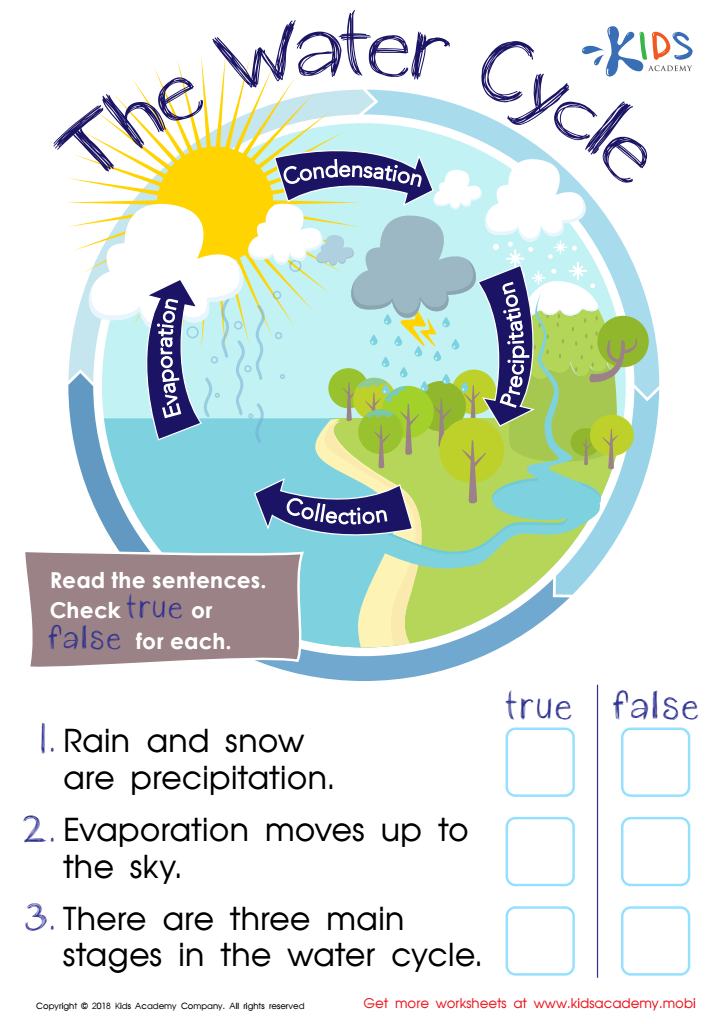
The Water Cycle Worksheet
 Assign to My Students
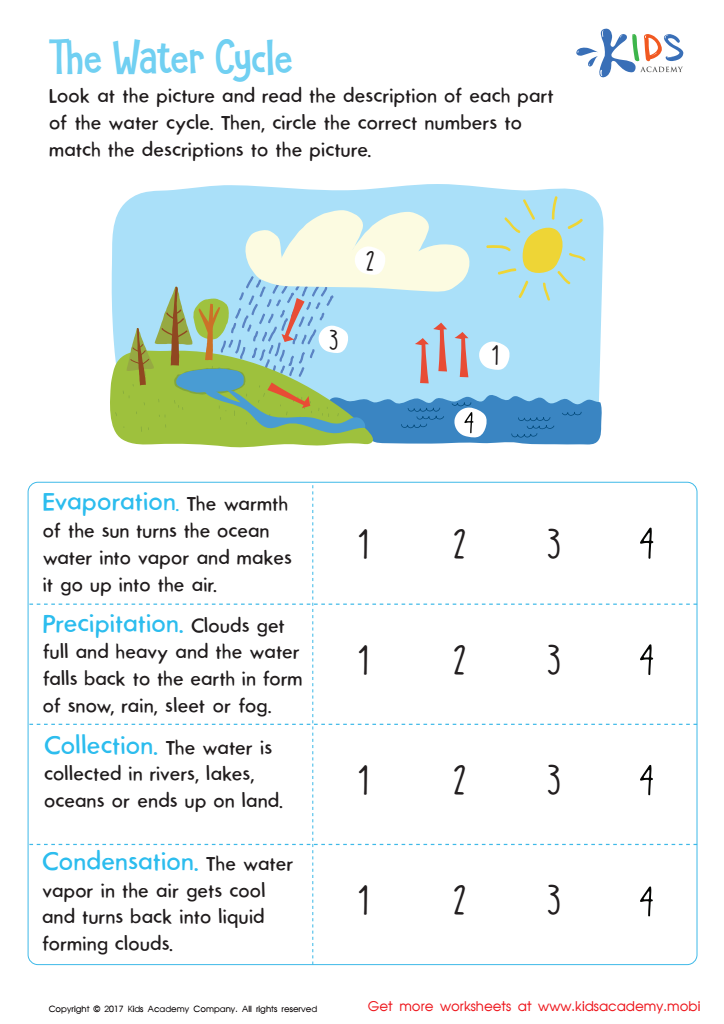
The Water Cycle Worksheet
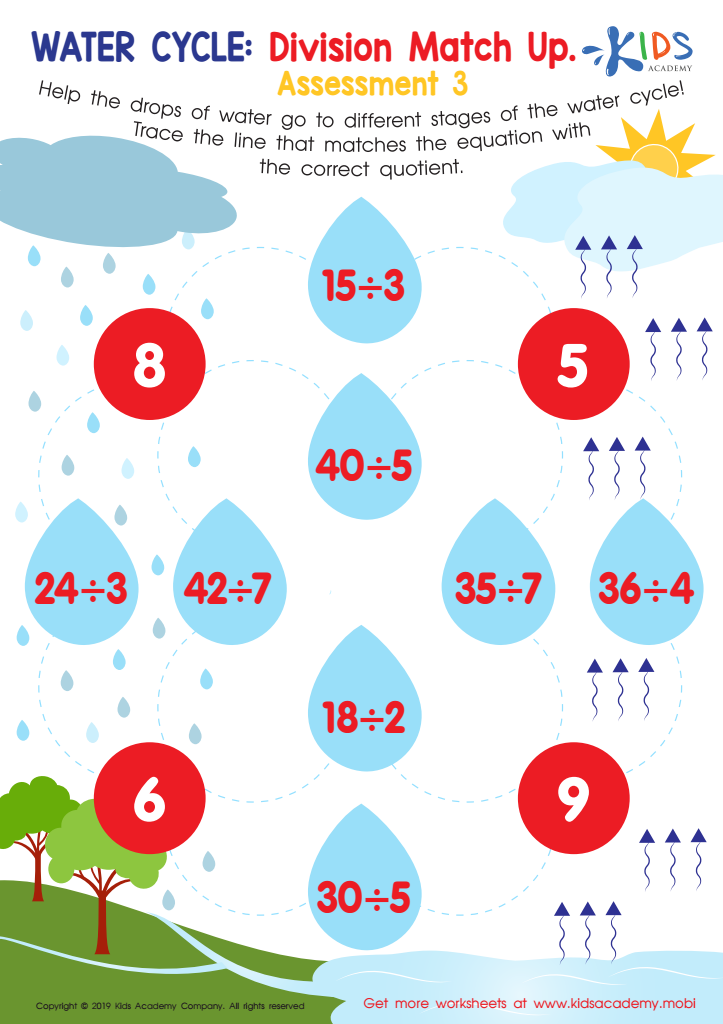
Water Cycle Division Match Up Assessment 3 Worksheet







Understanding the water cycle is crucial for children aged 3-9 as it forms the basis of essential environmental literacy. Parents and teachers should prioritize this topic because it fosters an early appreciation for nature and the interconnectedness of living systems. By grasping concepts like evaporation, condensation, precipitation, and collection, children learn how water moves through our environment, which is fundamental to life on Earth.
Engaging with the water cycle empowers young learners to develop critical thinking and observational skills, as they can relate learned concepts to daily life—watching rain fall or observing steam from a boiling kettle. This foundational knowledge can nurture curiosity and encourage questions about their surroundings, promoting a scientifically literate mindset from an early age.
Additionally, introducing environmental topics like the water cycle can instill a sense of responsibility and stewardship for the planet. Children who understand these processes are more likely to value conservation and sustainability as they grow older. Overall, teaching the water cycle provides an essential framework for understanding broader ecological principles, fostering a connection to the environment that can influence ethical decision-making for years to come. Thus, it’s vital for parents and teachers to care about introducing this knowledge to young learners.








