Visual discrimination Worksheets for Ages 3-9 - Page 2
28 filtered results
-
From - To
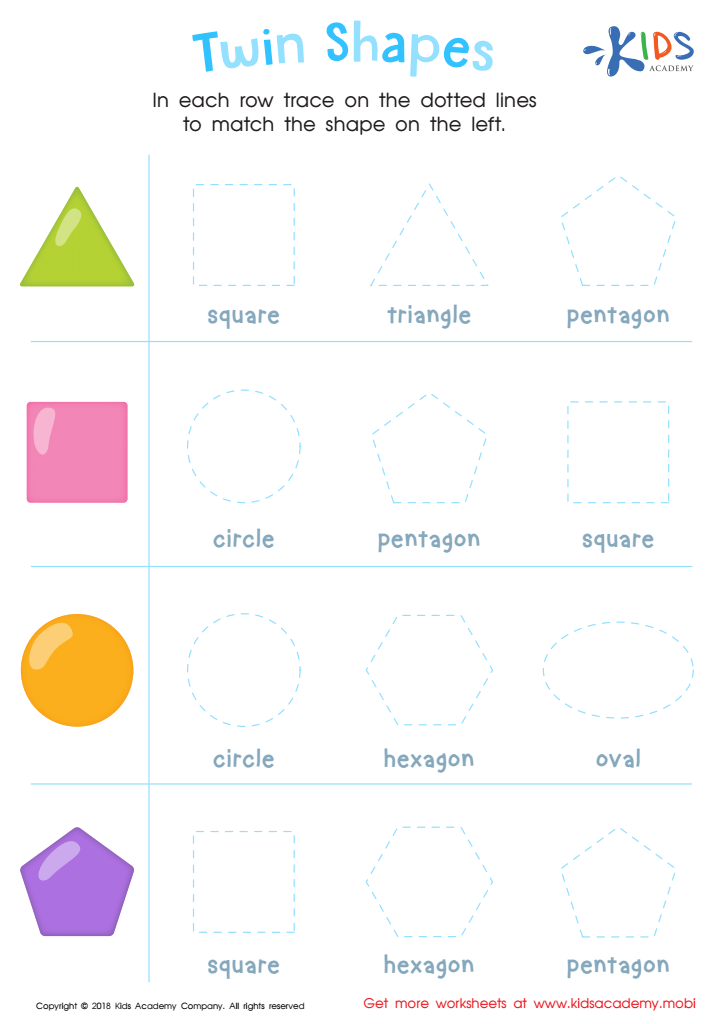
Twin Shapes Dot-to-Dot Worksheet
 Assign to My Students
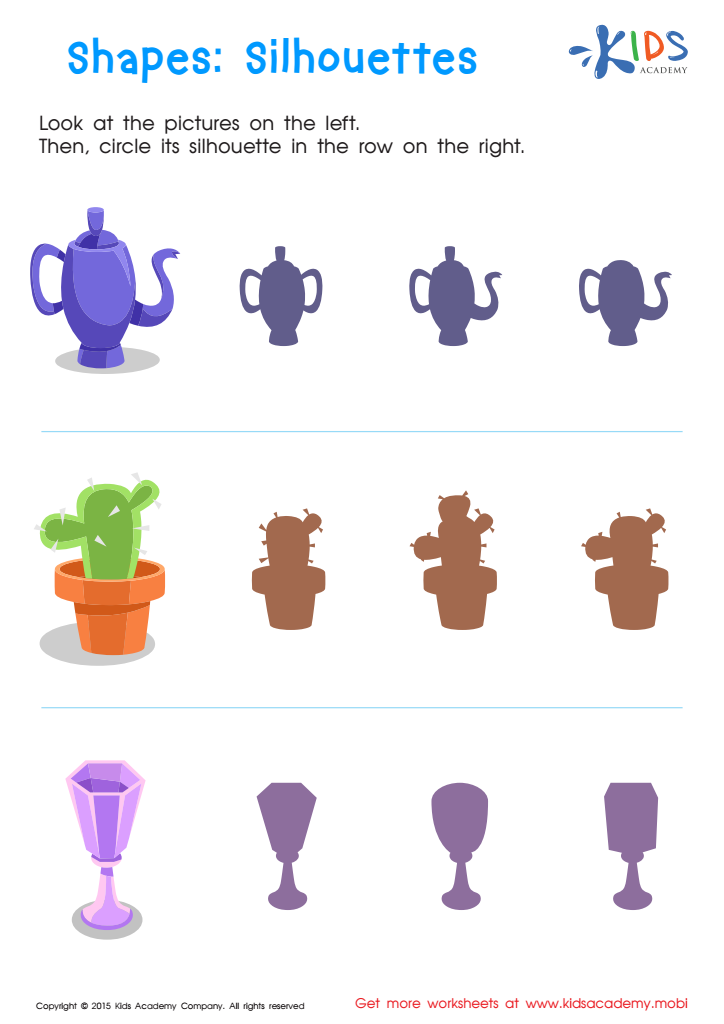
Silhouettes – Shapes Worksheet
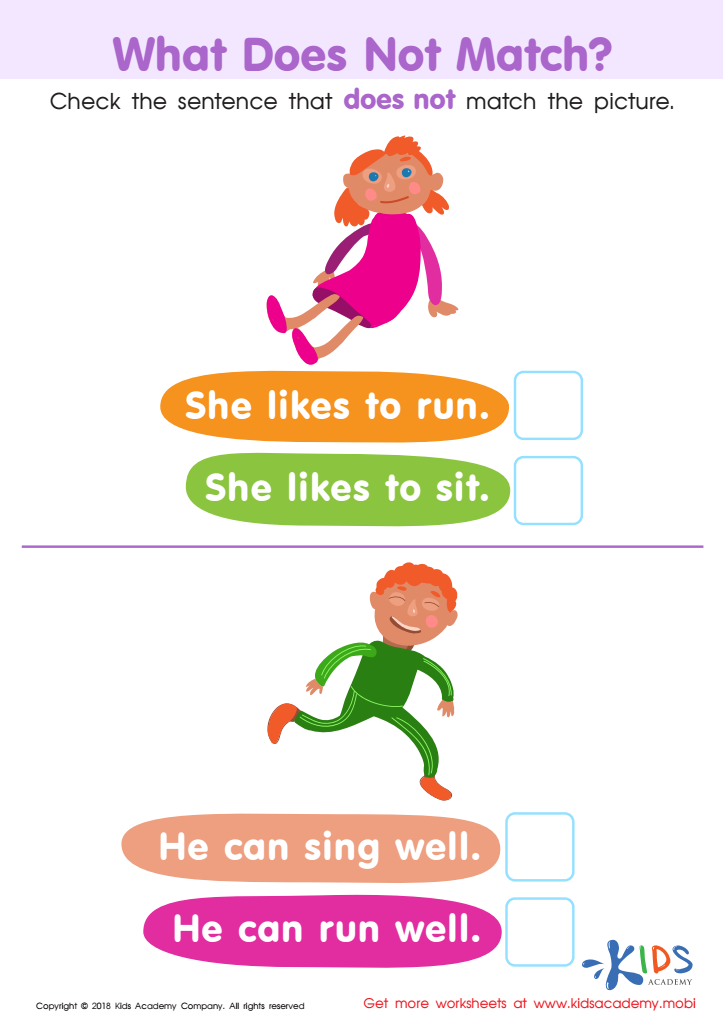
What Does Not Match? Worksheet






Visual discrimination is a crucial skill for children aged 3-9, as it lays the foundation for several key academic abilities and everyday tasks. This skill allows children to notice and understand differences and similarities in shapes, colors, sizes, and patterns. As they begin to read, good visual discrimination helps them distinguish between letters and words, which is fundamental for literacy development. Additionally, it plays a significant role in math, where recognizing patterns and sorting objects is essential.
For parents and teachers, caring about visual discrimination means enhancing children’s overall learning experience. By actively fostering these skills, they can help improve a child’s attention to detail, problem-solving capabilities, and critical thinking. Moreover, strong visual discrimination aids in promoting better task completion and organizational skills.
Engaging children in activities such as matching games, puzzles, and interactive art projects can significantly boost their visual discrimination capabilities. When parents and educators prioritize this skill, they not only contribute to a child's academic success but also help them gain confidence in their ability to process and respond to visual information in a rapidly changing world. By providing the right opportunities and support, parents and teachers can inspire a lifelong love for learning.








