
Vowel differentiation Worksheets for Ages 3-9
3 filtered results
Difficulty Level
Grade
Age
-
From - To
Subject
Activity
Standards
Enhance your child's reading and phonics skills with our engaging Vowel Differentiation Worksheets, designed for ages 3-9! These worksheets provide a fun and interactive way for young learners to identify and differentiate between short and long vowel sounds. With colorful illustrations and diverse activities, children will develop essential literacy skills, building a strong foundation for reading and writing success. Our resources cater to varied learning styles, ensuring every child can thrive. Dive into the world of vowels and watch as your little ones gain confidence in their reading abilities. Download our worksheets today and make learning vowels enjoyable and effective!
Favorites
With answer key
Interactive
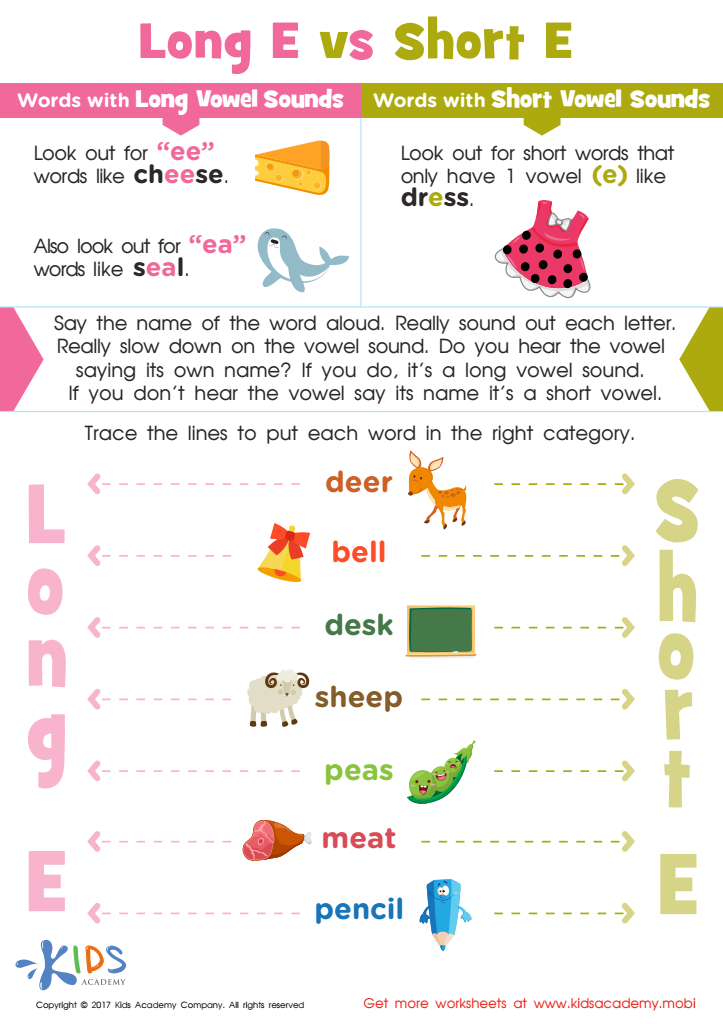
Long and Short Vowel E Spelling Worksheet
This worksheet helps kids master spelling with the letter "E". They read about long and short vowel sounds, view examples and sound out words to complete it. Two vowels distinguish long "E" sounds from its short vowel counterparts with just one.
Long and Short Vowel E Spelling Worksheet
Worksheet
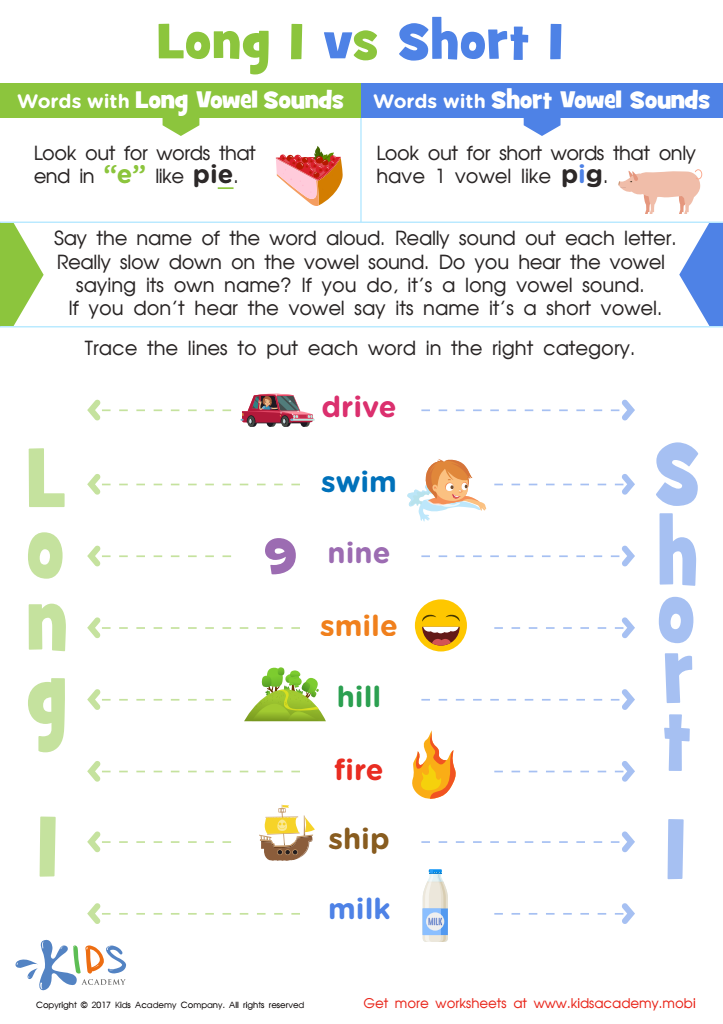
Long and Short Vowel I Spelling Worksheet
When it comes to long "I" sounds, kids should look out for the letter "E" at the end. With examples and sounding out words, kids will improve spelling skills with this long/short "I" worksheet!
Long and Short Vowel I Spelling Worksheet
Worksheet
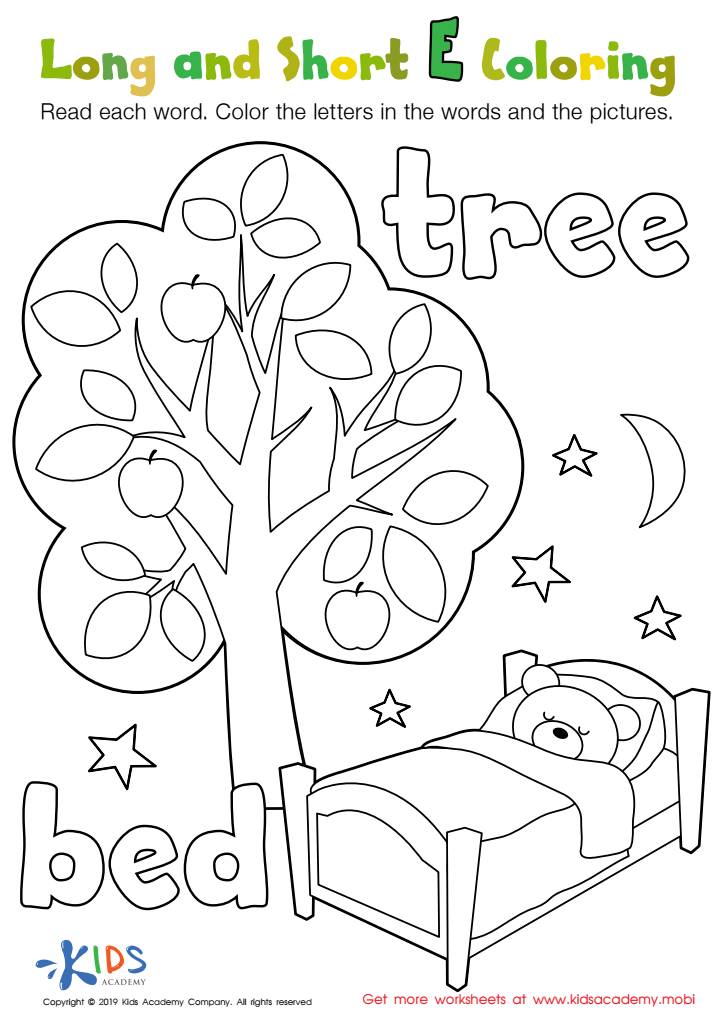
Long and Short E Worksheet
This fun printout makes learning phonics enjoyable for Grade 3 students. Get them to read the words “tree” and “bed” to recognize the different sounds of the letter “E”. After hearing the words they can color the words and the pictures to understand differences between long and short vowels.
Download (PDF)
 Assign to My Students
Assign to My Students
Long and Short E Worksheet
Worksheet
Join Kids Academy for Free
Who is primarily going to use this learning content?








Vowel differentiation is a crucial aspect of early literacy development for children ages 3-9. Understanding and recognizing vowel sounds lay the foundation for phonemic awareness, which is vital for reading and writing success. During these formative years, children develop essential linguistic skills, and distinguishing between different vowel sounds can significantly enhance their ability to decode words.
Parents and teachers should care about vowel differentiation because it fosters language development. When children can identify and articulate different vowel sounds, they are better equipped to pronounce words correctly, leading to improved reading fluency. Furthermore, enhanced vowel recognition aids in spelling, as many spelling rules depend on vowel usage and patterns.
Moreover, the ability to differentiate vowels supports children in their overall communication skills, enabling them to express themselves more effectively. Engaging children in fun, interactive activities—such as songs, games, and phonics exercises—can make vowel differentiation an enjoyable experience. Ultimately, by focusing on vowel differentiation, parents and teachers can help cultivate a love for reading and learning, equipping children with the essential tools they need to thrive academically and socially as they transition into more advanced literacy tasks.








