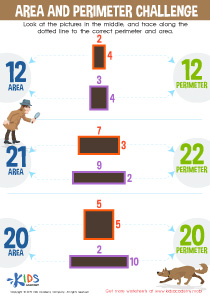
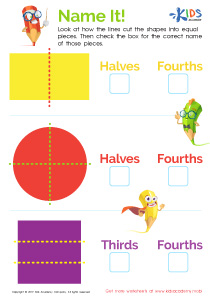
Visual perception 2D Shapes Worksheets for Ages 3-9
4 filtered results
-
From - To
Explore our Visual Perception 2D Shapes Worksheets, perfect for ages 3-9! These engaging activities help children identify, classify, and understand different 2D shapes. Each worksheet is designed to enhance young learners' visual perception, critical thinking, and problem-solving skills. From recognizing circles, squares, and triangles to solving shape-based puzzles, our resources offer a fun and educational experience. Ideal for preschool to third grade, these worksheets support foundational math skills and cognitive development. Inspire a love for learning in your child today with our comprehensive collection! Visit our website and download your free worksheets now!
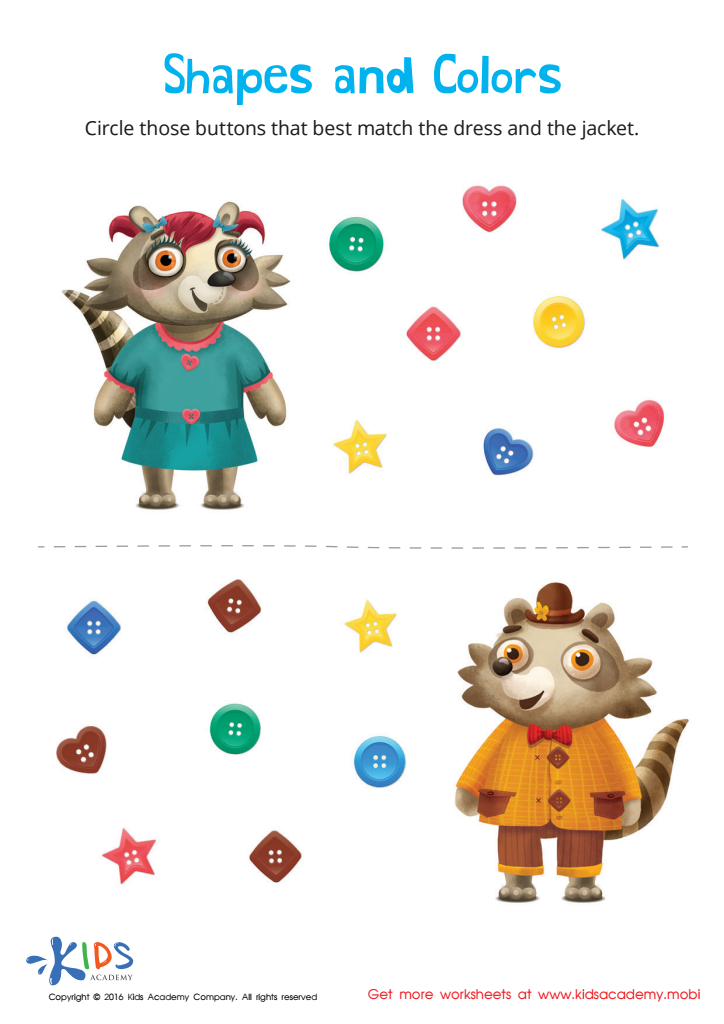
Matching: Shapes and Colors Worksheet
 Assign to My Students











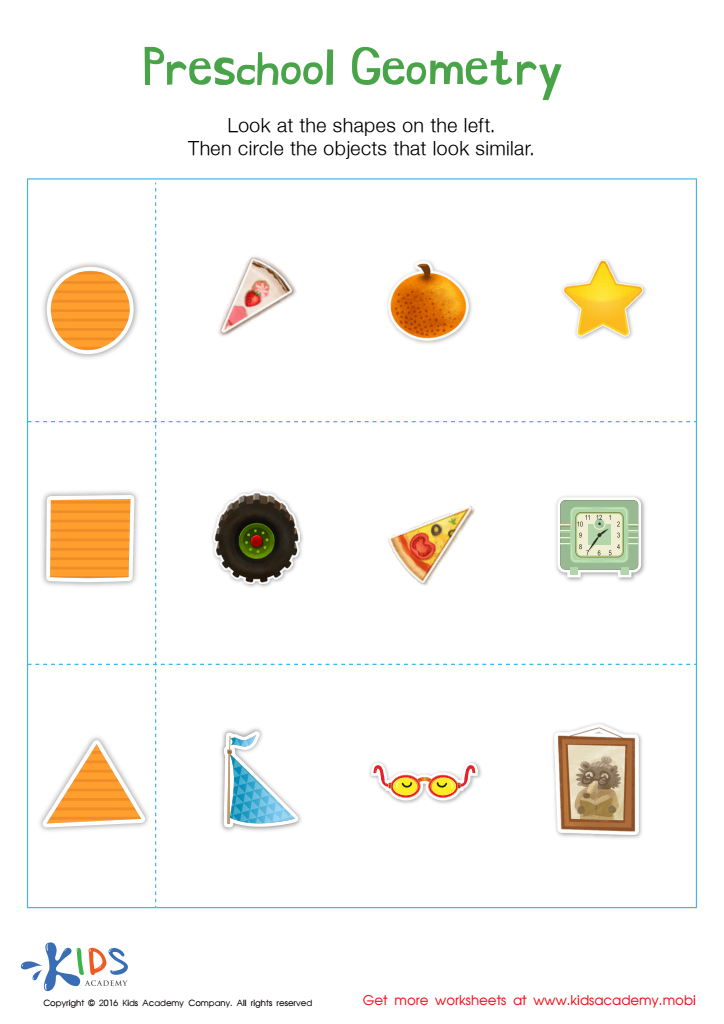
Preschool Geometry Match Up Worksheet
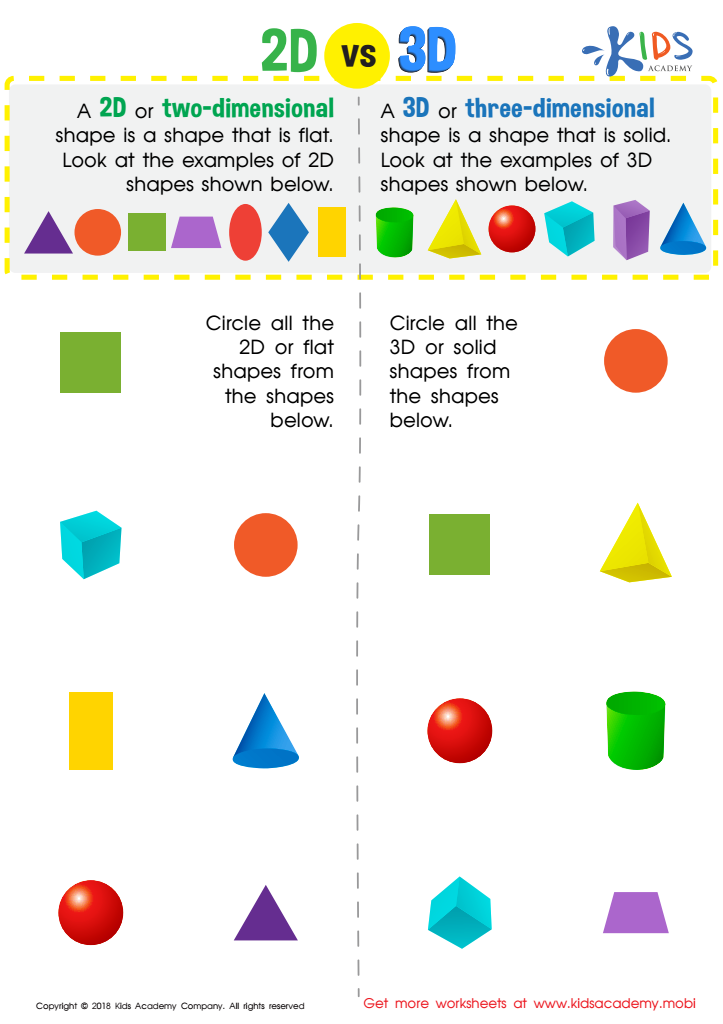
2D vs 3D Shapes Worksheet
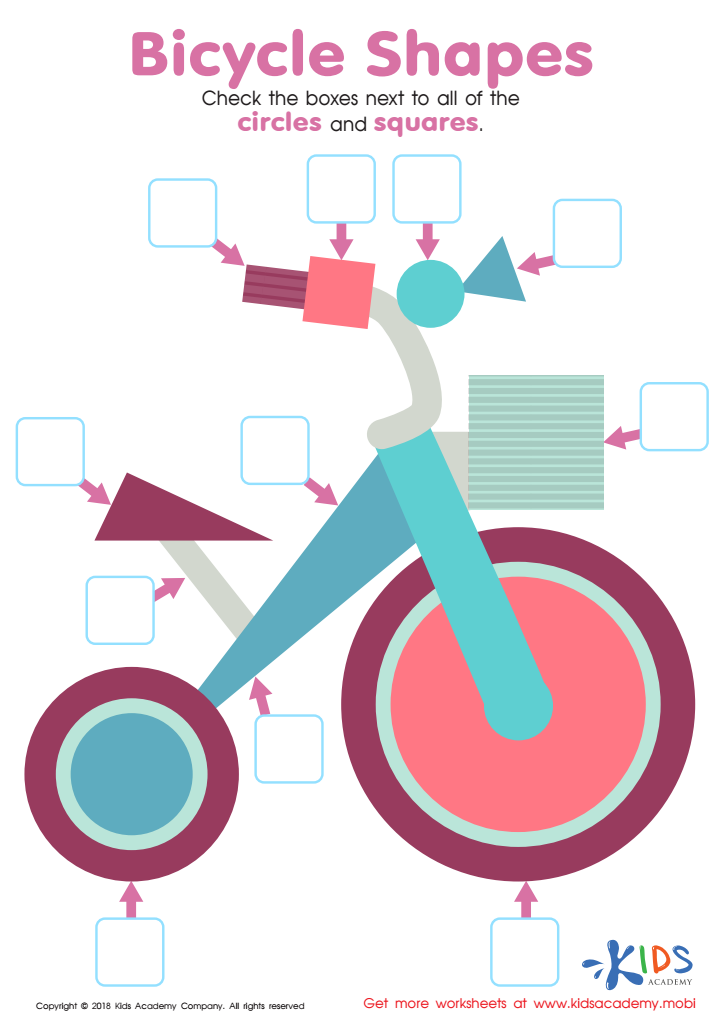
Bicycle Shapes Worksheet








Visual perception, particularly understanding 2D shapes, is crucial for children aged 3-9 because it lays the foundation for key skills in various aspects of their development. For parents and teachers, fostering this ability is essential for several reasons:
-
Cognitive Development: Recognizing shapes helps build early math skills. Children learn to categorize and sort objects, which are critical first steps in understanding more complex mathematical concepts like geometry and spatial reasoning.
-
Language Skills: Discussing shapes expands a child's vocabulary and aids their ability to describe the world around them. Terms like "circle," "triangle," and "square" provide essential descriptive language that enhances communication skills.
-
Fine Motor Skills: Activities like drawing, tracing, and manipulating shapes enhance fine motor skills. These movements develop hand-eye coordination necessary for tasks such as writing.
-
Problem-Solving: Identifying and differentiating between shapes trains a child’s brain to notice patterns, solve puzzles, and understand symmetry—all fundamental for successful problem-solving and analytical thinking in later years.
-
Cultural Understanding: Shapes are a universal language and being familiar with them helps in understanding art, architecture, and other cultural artifacts, fostering broader intellectual and cultural awareness.
Prioritizing visual perception of 2D shapes ultimately supports a child's overall academic and personal growth, making it a rewarding focus for both parents and teachers.