Basic addition practice Adding in the Sea Worksheets for Ages 3-9
3 filtered results
-
From - To
Discover the exciting world of "Adding in the Sea Worksheets," designed for young learners aged 3-9 to enhance their basic addition skills! These engaging worksheets feature colorful ocean-themed illustrations that make math fun and enjoyable. Each activity is crafted to reinforce foundational addition concepts through playful challenges and visual aids. With varying difficulty levels, children can progress at their own pace, boosting their confidence and mastery. Perfect for classroom use or home activities, these worksheets promote active learning and skill development in a playful context. Dive into a sea of knowledge and watch your child's mathematical abilities flourish!
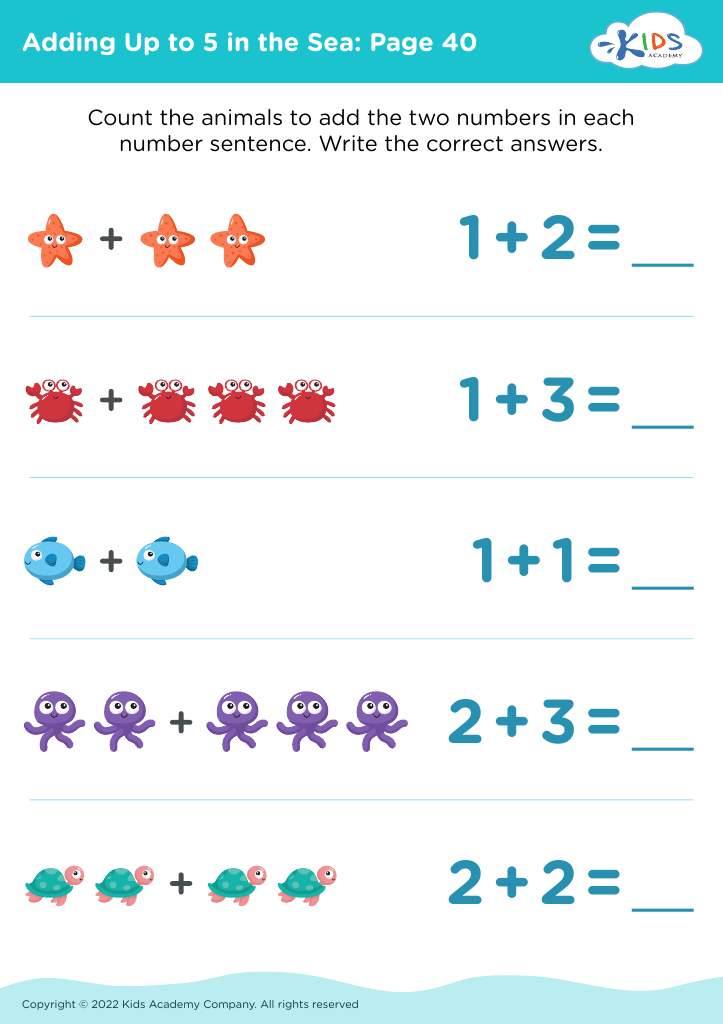
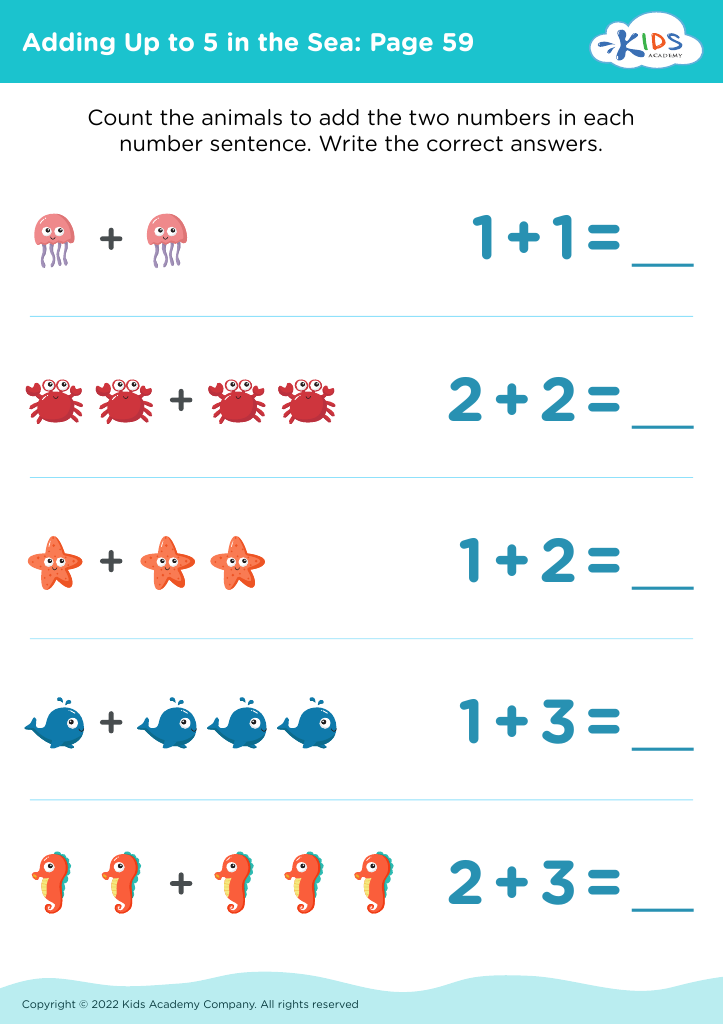
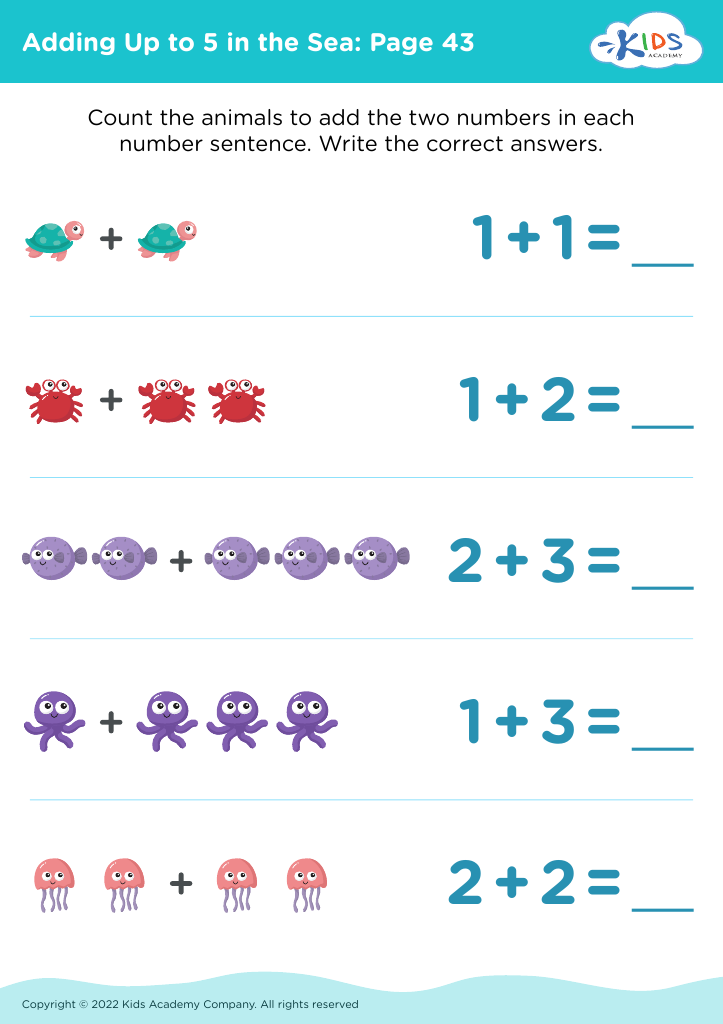



Basic addition practice is fundamental for young learners aged 3-9, and resources like "Adding in the Sea" can make this learning fun and engaging. Early mathematical skills set the foundation for future academic success, fostering critical thinking and problem-solving abilities. Ensuring children are comfortable with addition helps build their confidence, setting them on a positive trajectory in their overall educational journey.
Interactive and themed resources, like "Adding in the Sea," not only make the learning process enjoyable but also tie in concepts from familiar environments, which helps children relate to the subject matter. Utilizing engaging visuals and storytelling can spark a child's interest in mathematics, making abstract concepts, such as numbers and addition, much more tangible.
Moreover, practicing basic addition aids in the development of cognitive skills, enhancing a child’s ability to focus, follow instructions, and understand sequence. For parents and teachers, active involvement in this stage of learning promotes a better understanding of mathematical concepts, allowing them to provide support that addresses each child's unique needs.
Ultimately, cultivating early addition skills through playful and interactive resources is a vital investment in a child's future learning and development.