Counting practice Adding on the Farm Worksheets for Ages 3-9 - Page 3
54 filtered results
-
From - To
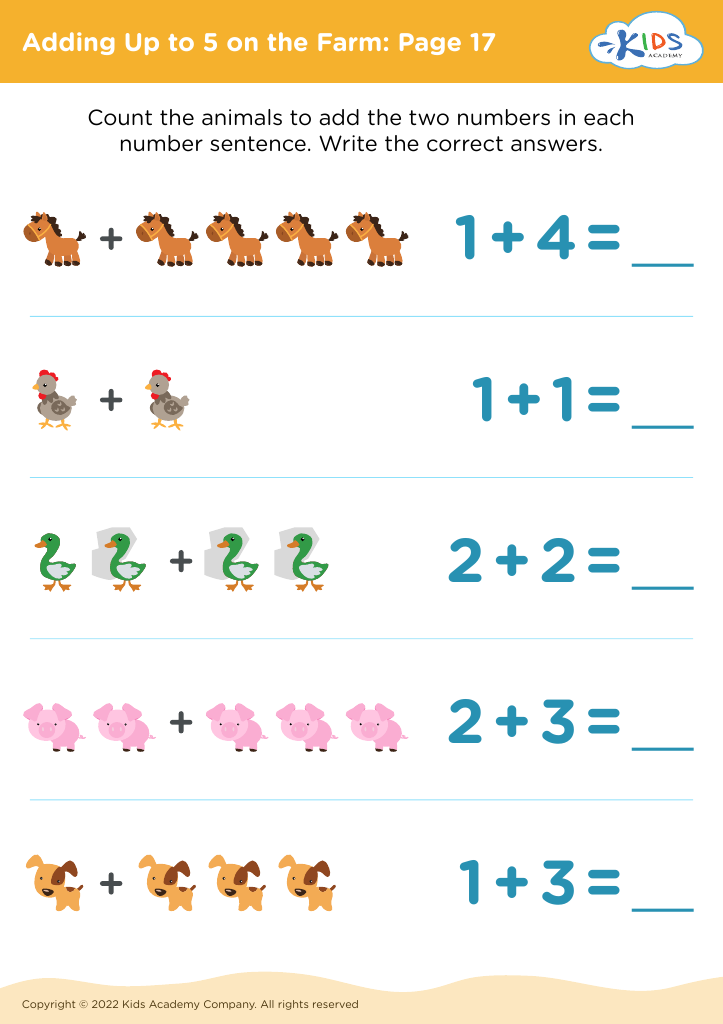
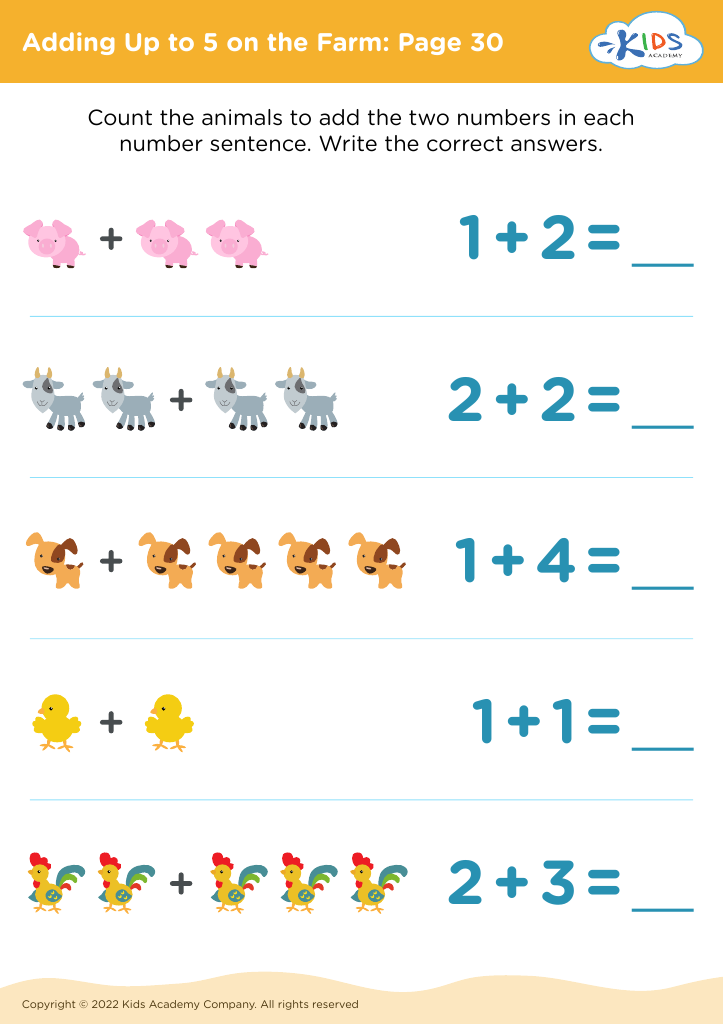
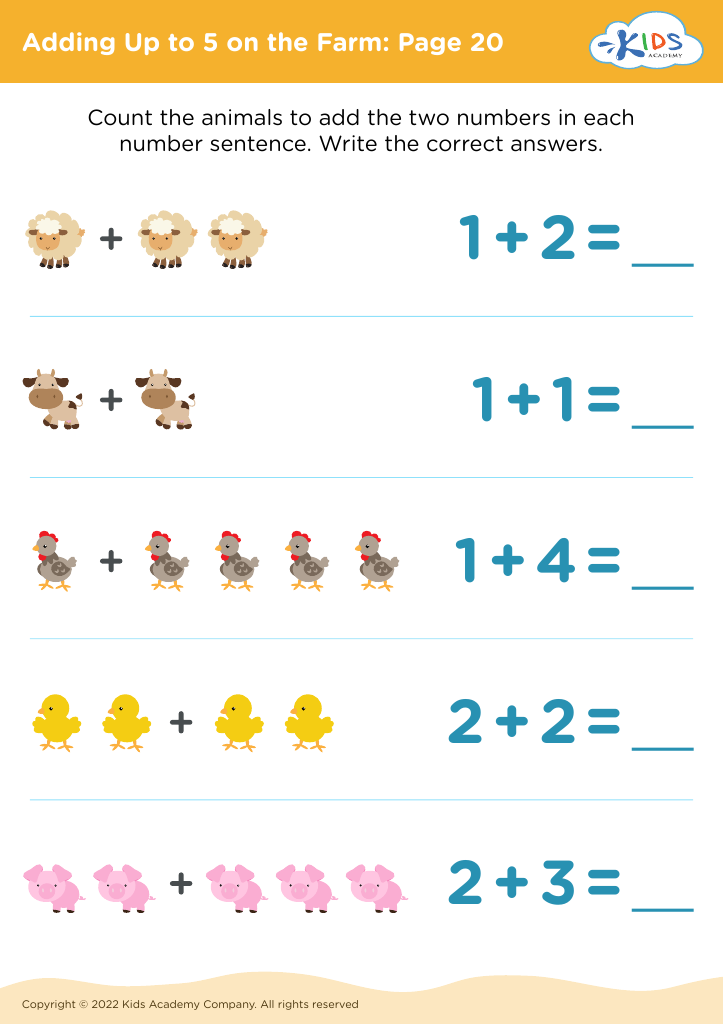
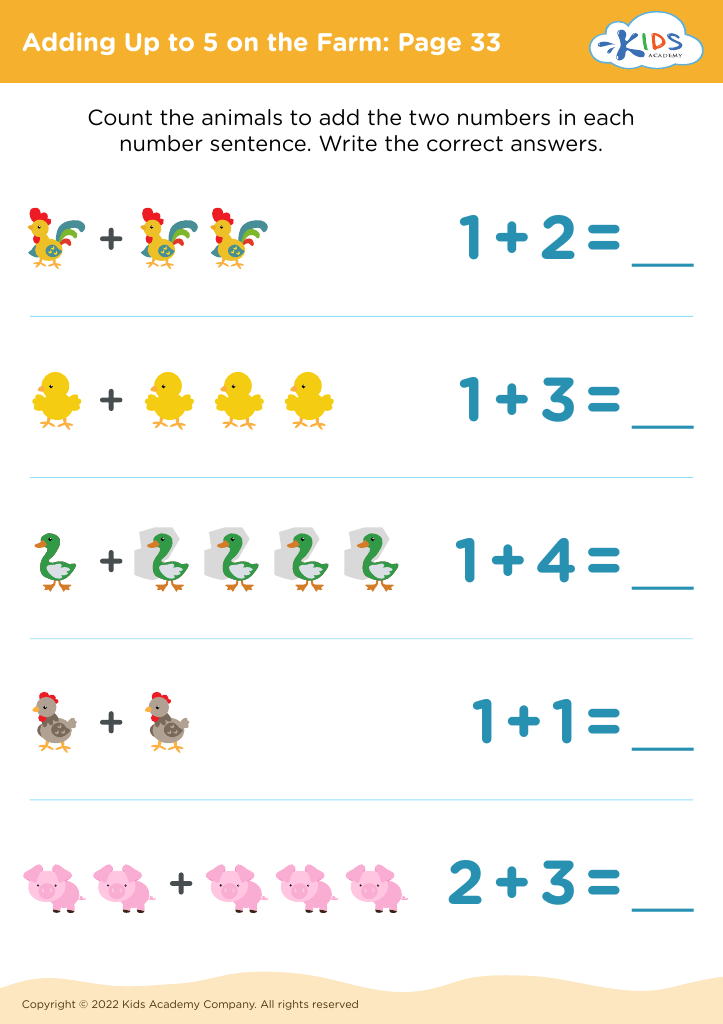
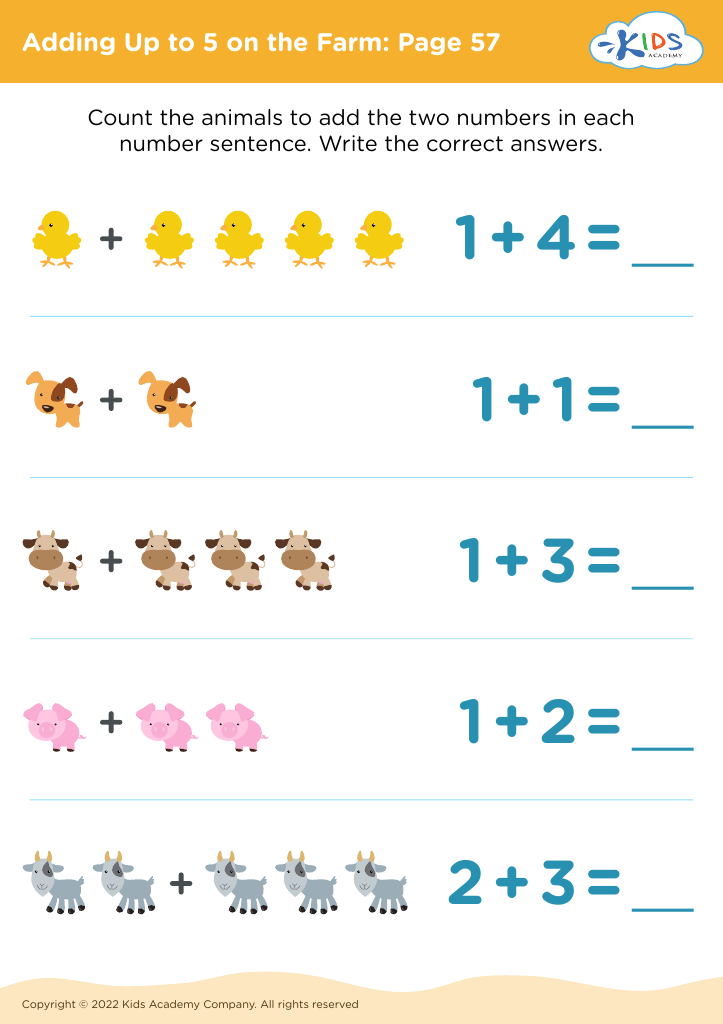
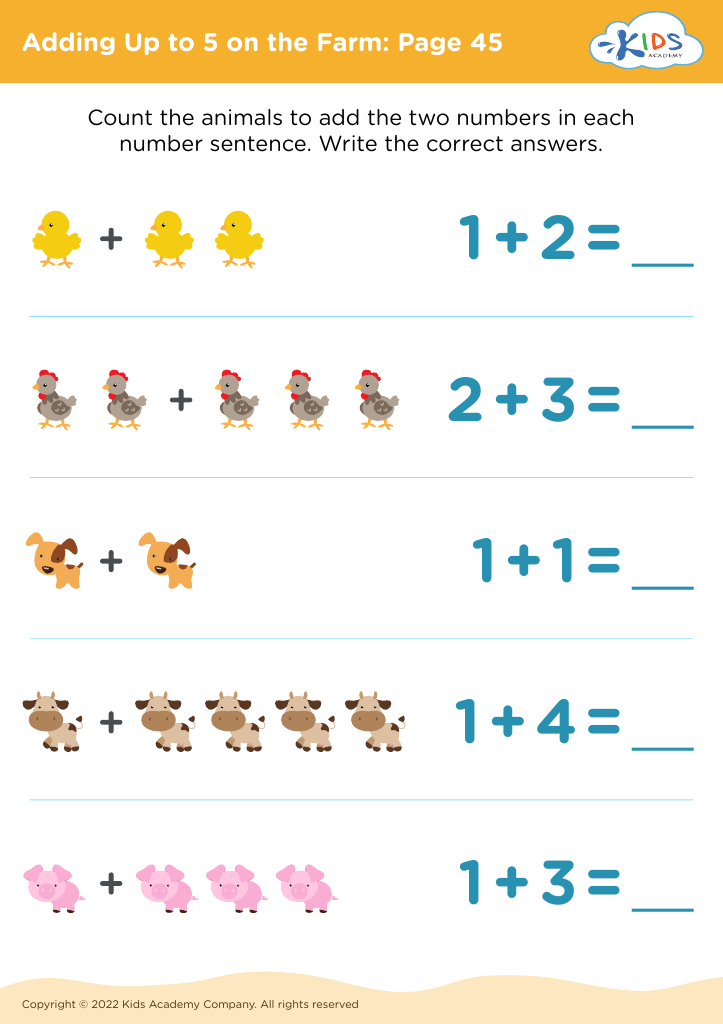



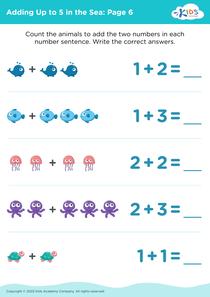
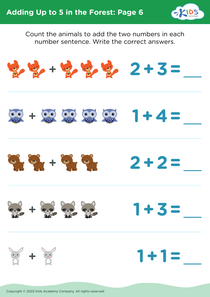
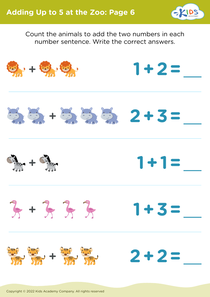
Counting practice, especially activities like “Adding on the Farm,” is fundamental for children aged 3-9 for multiple vital reasons. Firstly, early math skills are building blocks for future academic success. Introducing addition in a playful and relatable context, such as a farm, not only fosters foundational numerical skills but also encourages engagement and interest in learning.
Counting animals, objects, or crops can make the abstract concept of addition tangible. This contextual learning makes it easier for children to grasp, retain, and apply these skills. Activities of this nature also nurture critical thinking and problem-solving abilities. When children count and add different farm elements, they are essentially practicing logical thinking and analytical skills.
Additionally, such activities contribute significantly to cognitive development. At these early ages, children’s brains are highly receptive to new information, and interactive counting strengthens their memory and concentration. Parents and teachers should appreciate that these exercises also support fine motor skills as children physically manipulate objects to count and add.
Social and emotional development is another critical benefit. Inclusive counting activities can be done in groups, promoting teamwork and communication skills. The joy and sense of accomplishment children feel when they solve a counting problem build confidence and a positive attitude toward learning.
In summary, counting practice, particularly through engaging themes like farm addition, is pivotal in nurturing multiple areas of development for young children, laying a strong foundation for lifelong learning.