Number Recognition Adding up to 1000 Misc Worksheets for Ages 3-9
13 filtered results
-
From - To
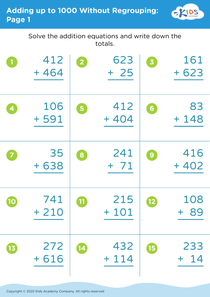
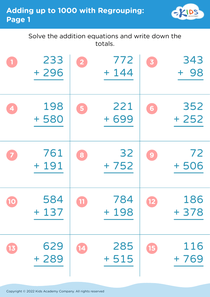
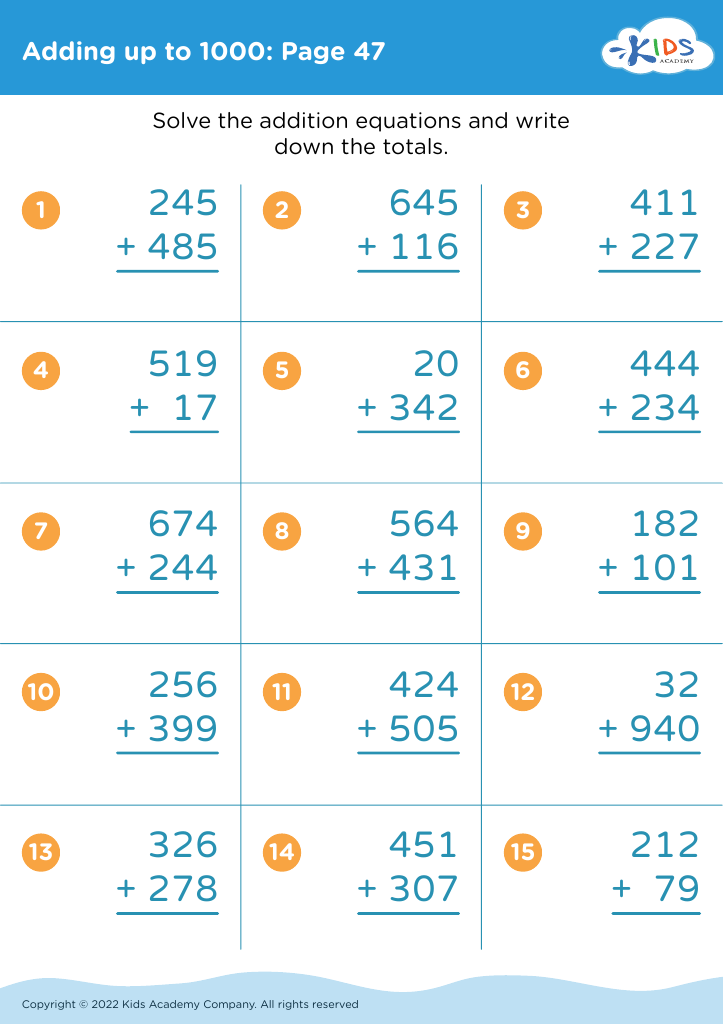
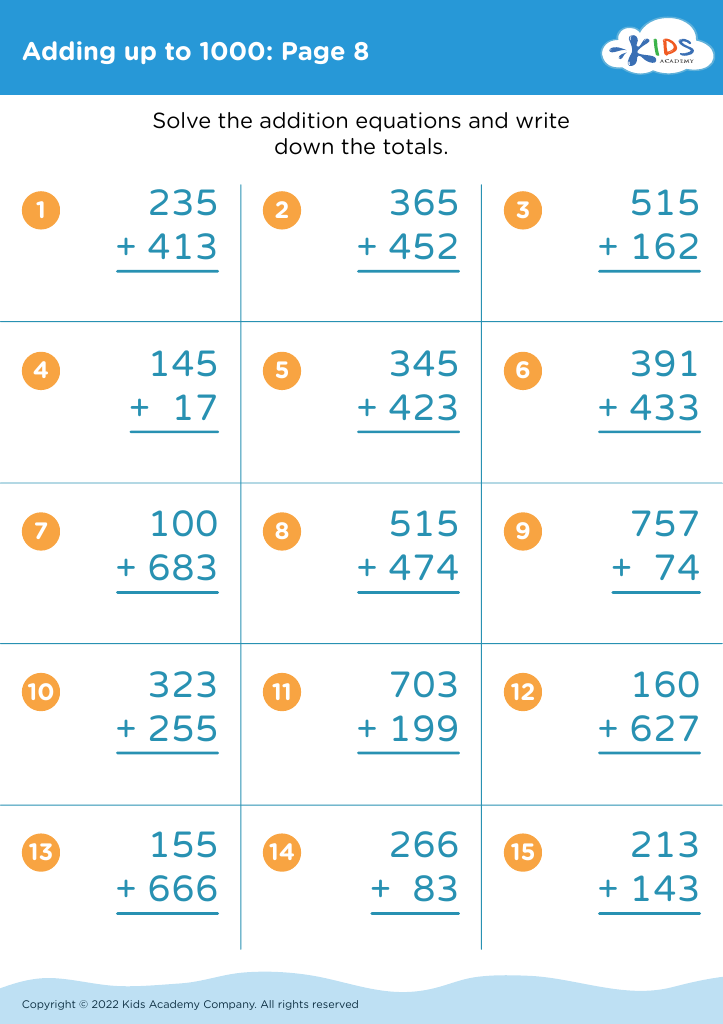
Explore our engaging "Number Recognition Adding up to 1000 Misc Worksheets" designed specifically for children aged 3-9! These worksheets promote essential number recognition skills while helping young learners master addition up to 1000. With a variety of colorful, kid-friendly activities, children will enjoy identifying numbers, recognizing patterns, and practicing their math skills in a fun and interactive way. Tailored for diverse learning styles, our resources support early childhood development and build a strong mathematical foundation. Perfect for classroom use or at-home learning, these worksheets provide countless opportunities for hands-on practice, fostering confidence and enthusiasm for math from an early age!
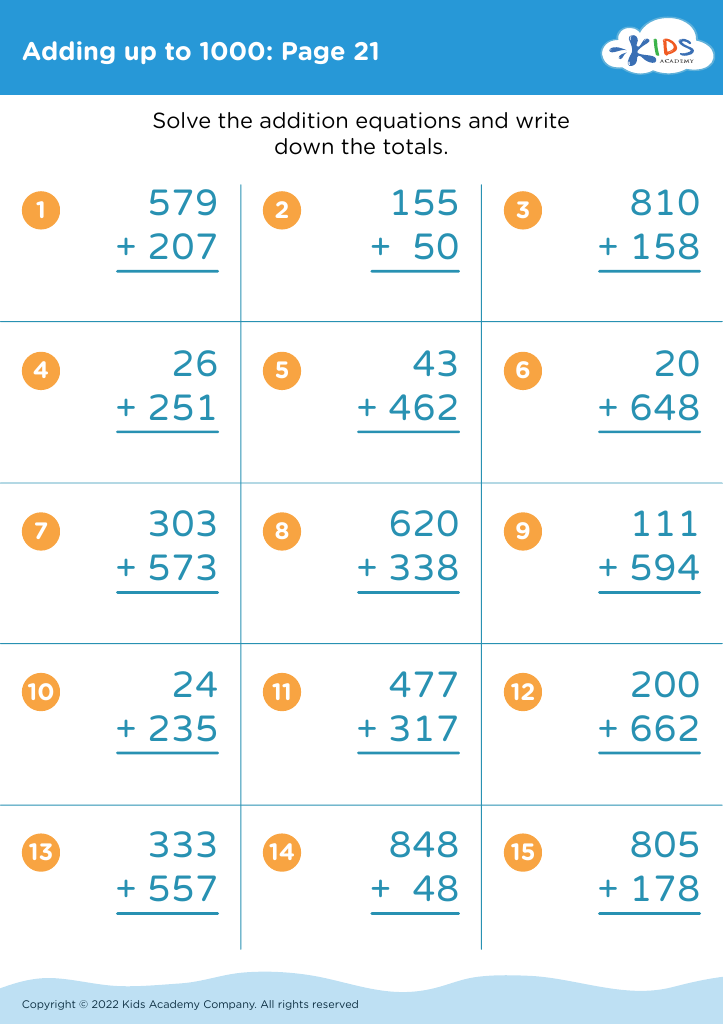
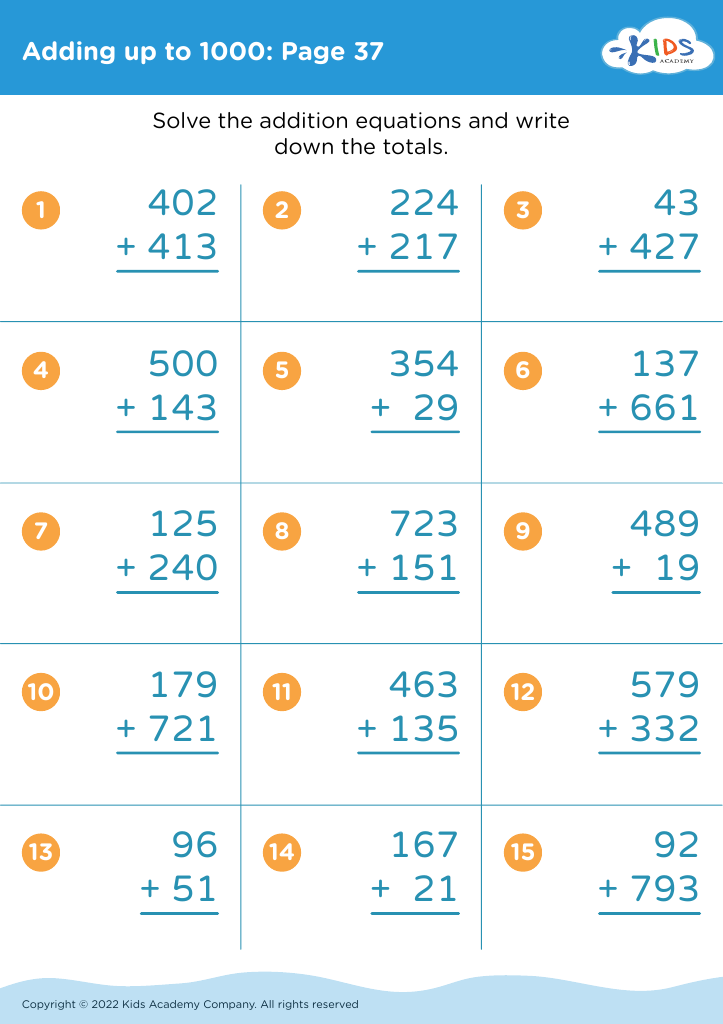
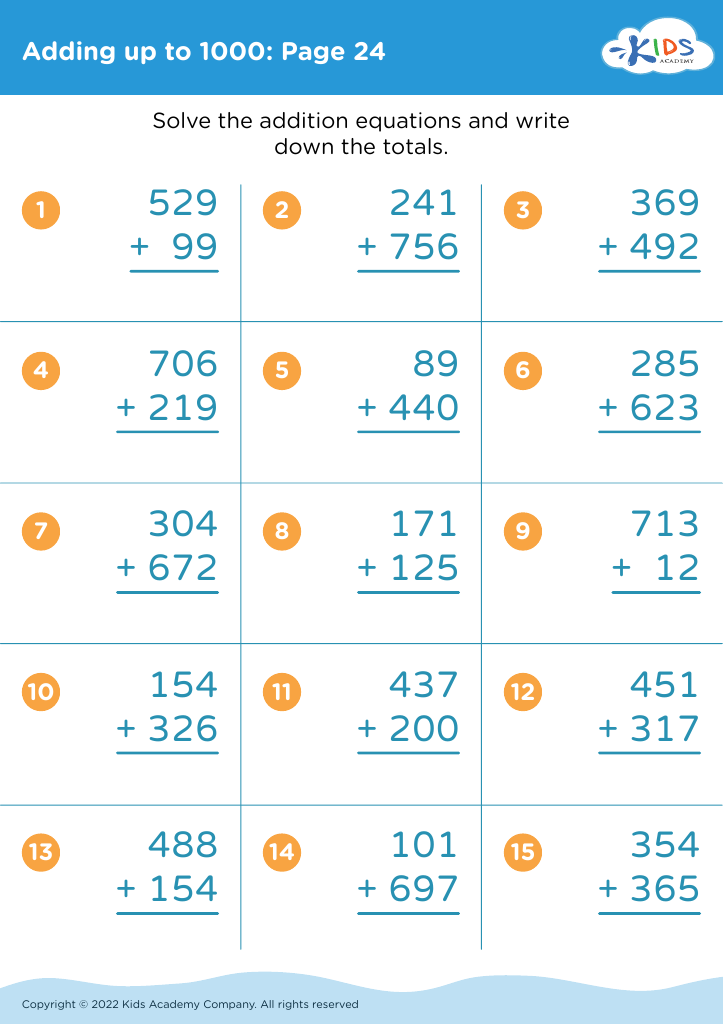
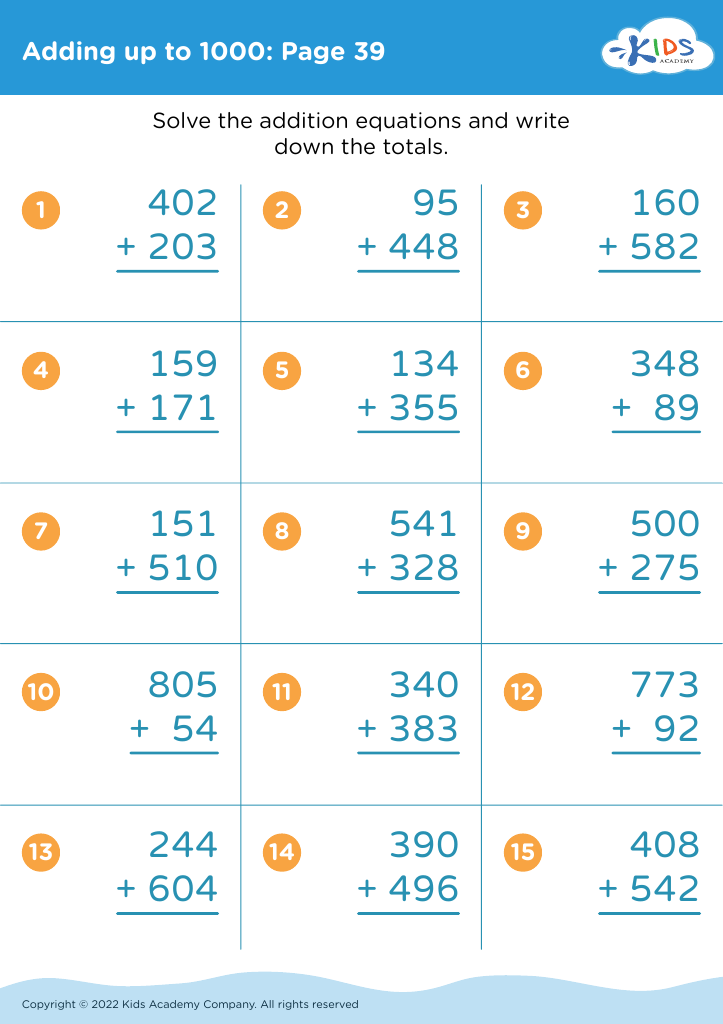
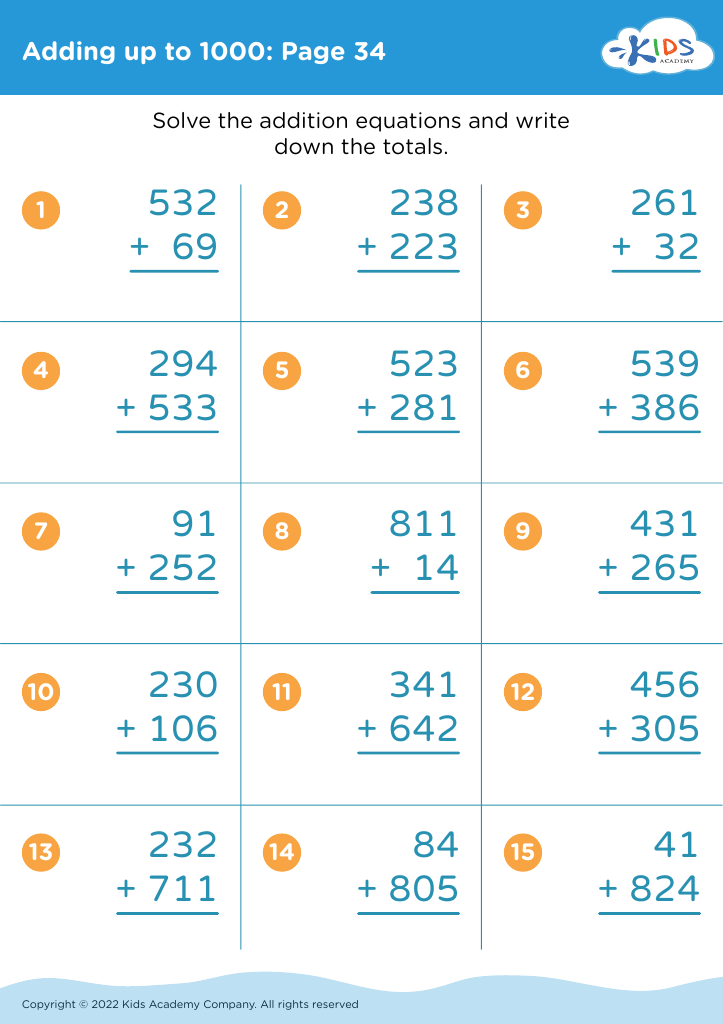
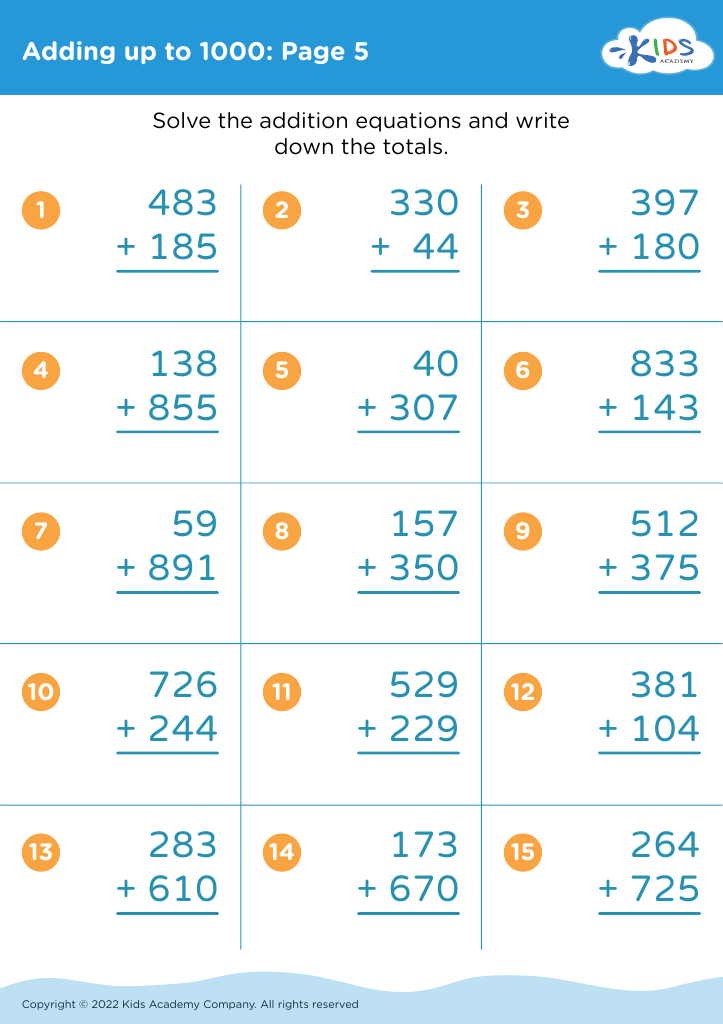
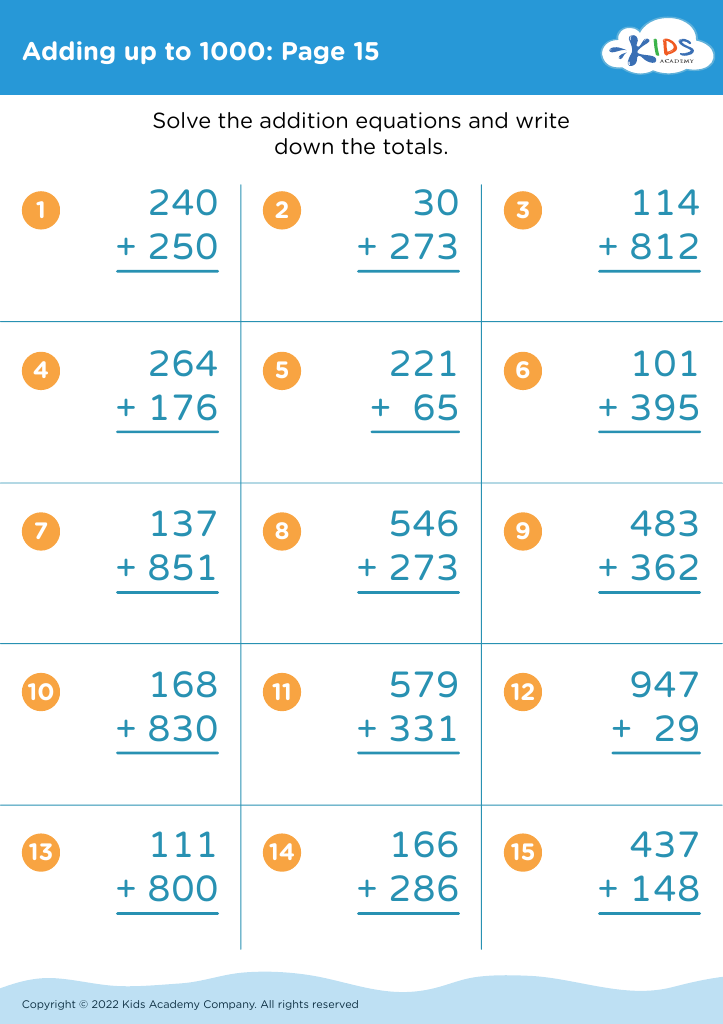
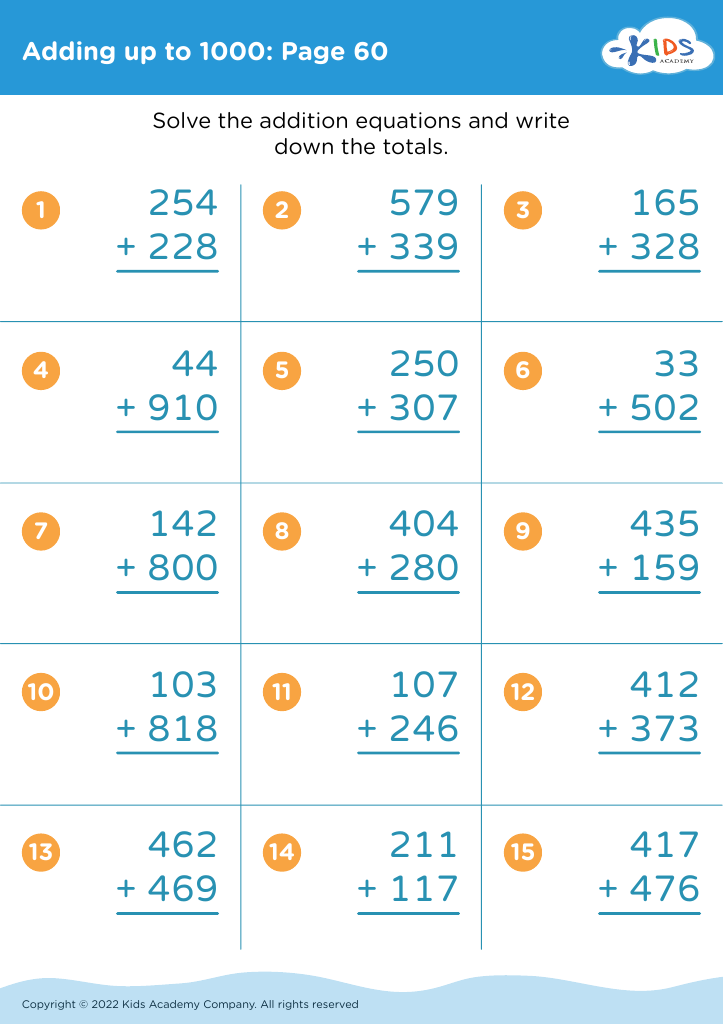
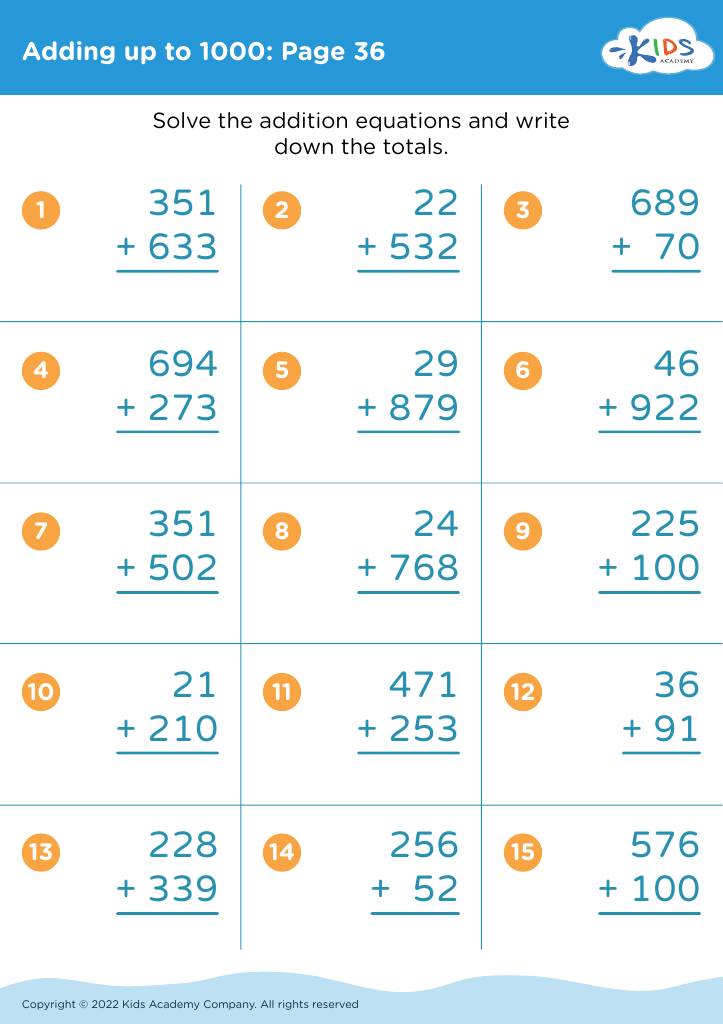
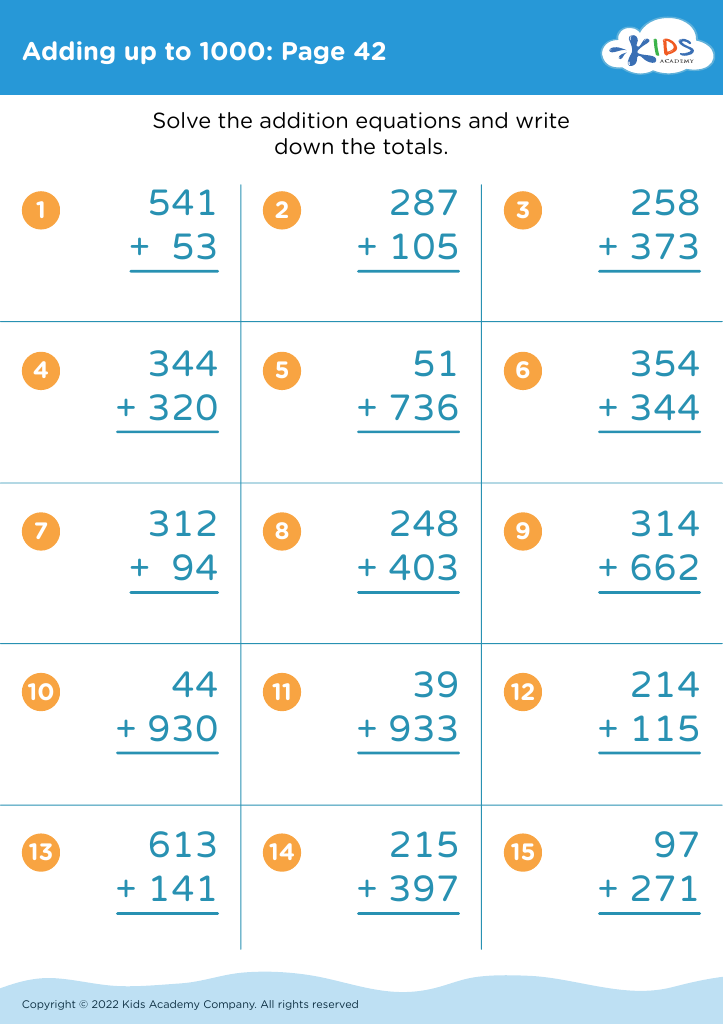
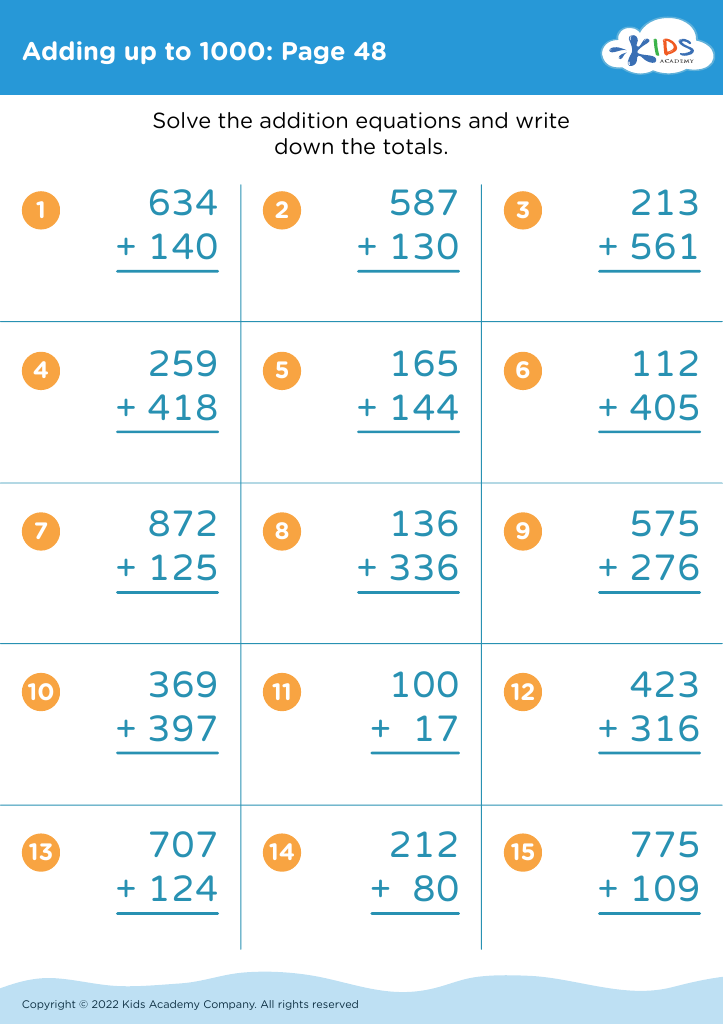


Number recognition is a fundamental skill that lays the foundation for a child's mathematical understanding and cognitive development. For children aged 3-9, recognizing numbers up to 1000 is crucial as it forms the building blocks for more advanced concepts like addition, subtraction, and problem-solving.
Parents and teachers should care about developing this skill for several reasons. Firstly, strong number recognition aids in boosting a child’s confidence in mathematics. Children who can easily identify numbers are more likely to engage in math-related activities, fostering a positive relationship with the subject. Secondly, early number recognition enhances critical thinking and analytical skills. As children learn to manipulate numbers, they're building their ability to compare, classify, and make connections, which are essential for overall cognitive development.
Additionally, recognizing numbers facilitates everyday tasks like telling time, managing money, and understanding measurements—skills that are unavoidable in daily life. By ensuring that children grasp number recognition by age 9, parents and educators equip them with essential tools for academic success and real-world applications. Ultimately, nurturing this skill will promote a lifetime of learning and curiosity in mathematics.