Addition up to 5 Adding Up to 5 Worksheets for Ages 3-9
4 filtered results
-
From - To
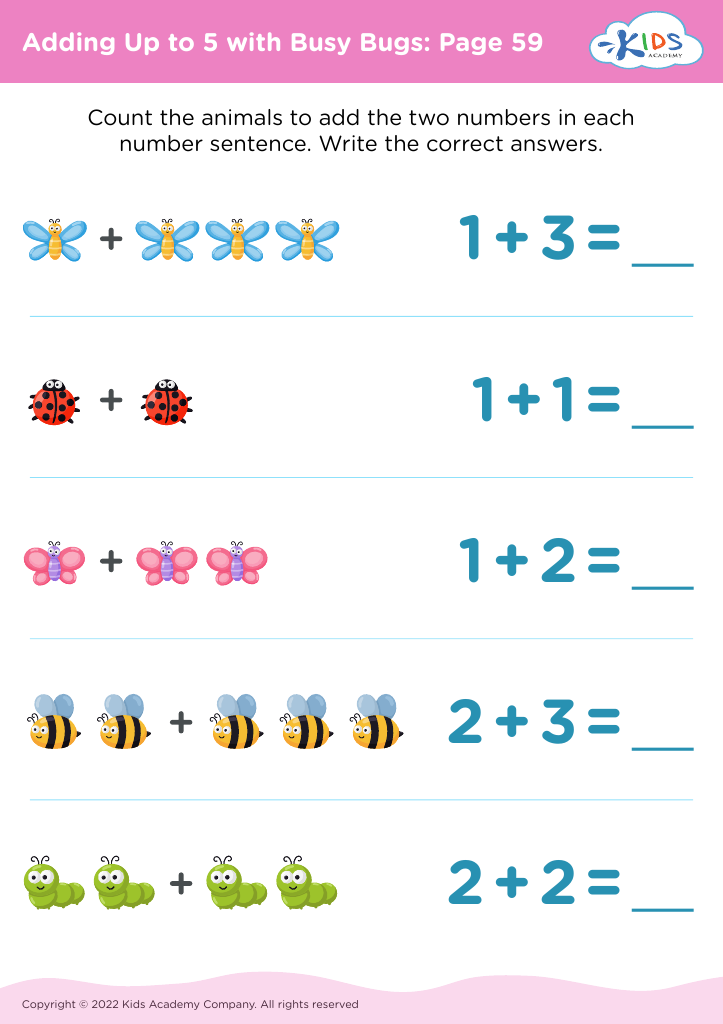
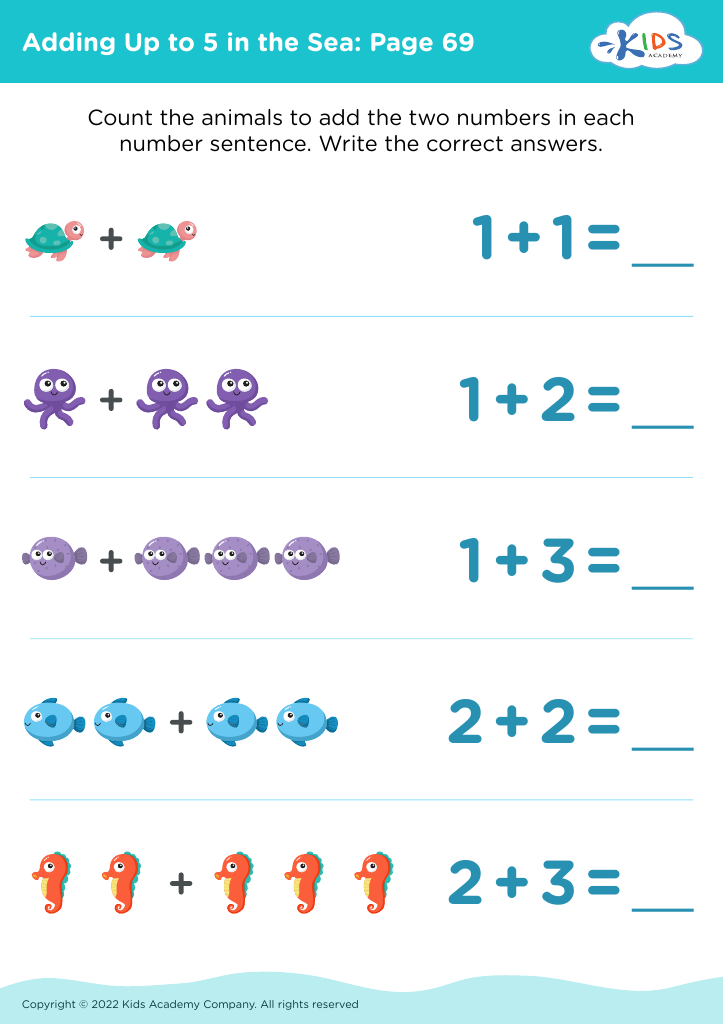
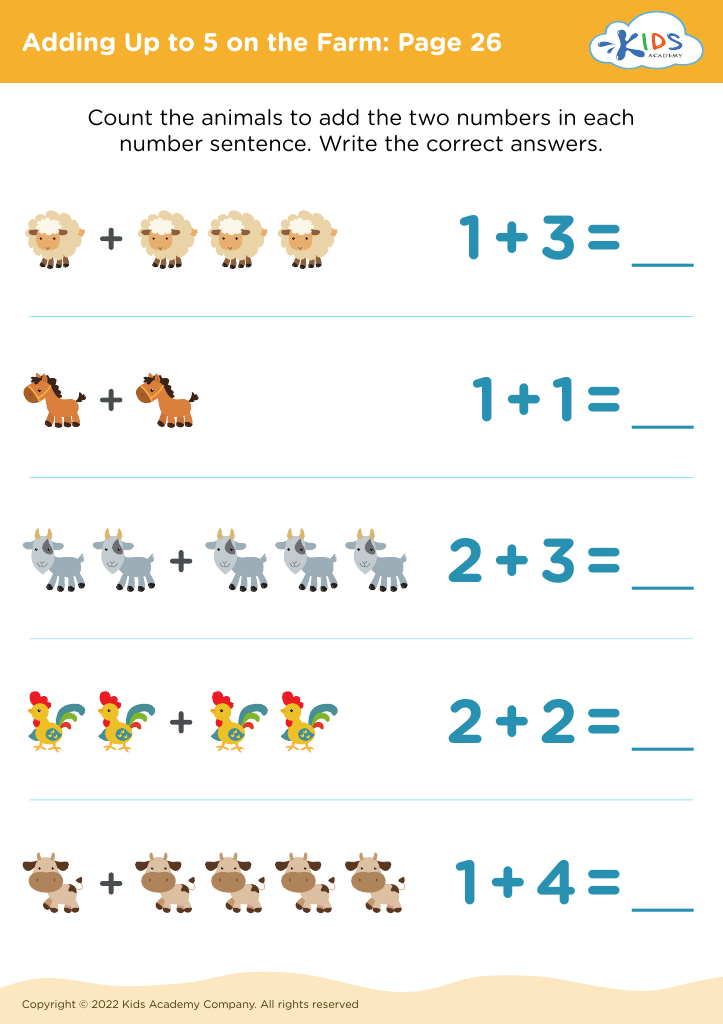
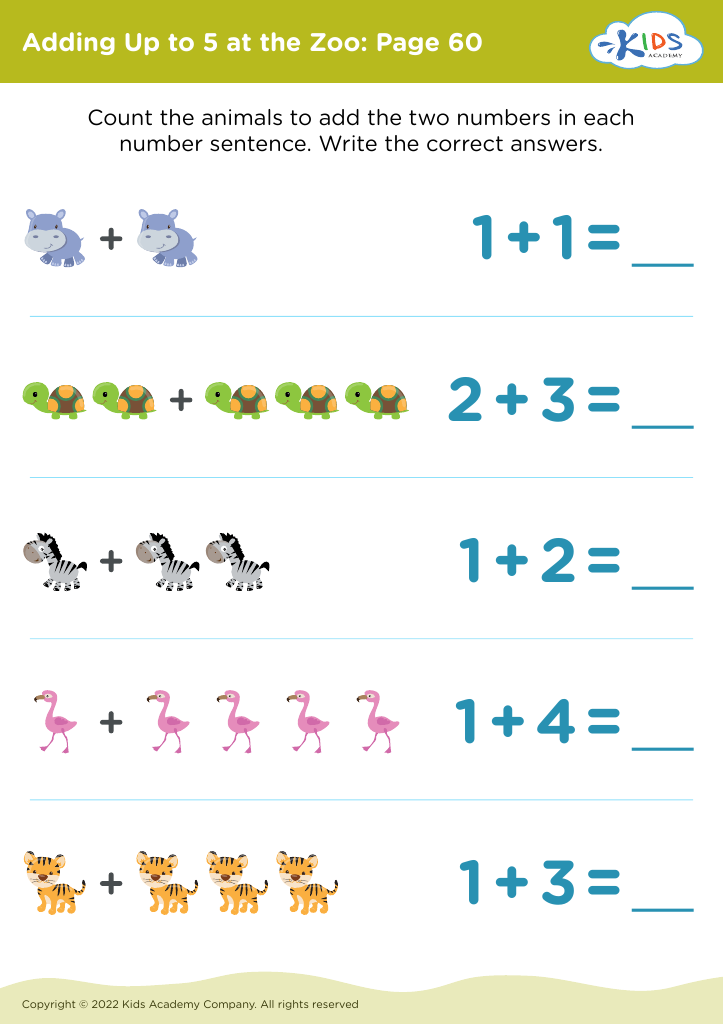
Discover our "Addition up to 5" worksheets designed for children aged 3-9! These engaging and colorful printables help young learners build a strong foundation in basic math skills while having fun. Ideal for beginners, each worksheet focuses on adding numbers up to 5, making it simple for kids to grasp essential addition concepts. Our resources are perfect for classroom use or at-home practice, ensuring that children develop confidence in their math abilities. Boost your child’s early math skills with our easy-to-follow worksheets and watch them progress as they enjoy each learning adventure!






.jpg)

Parents and teachers should recognize the importance of ensuring children grasp the concept of addition up to 5 during early childhood because it lays a strong foundation for future mathematical learning. At ages 3-9, children's brains are flexible and particularly open to absorbing new concepts, making it the optimal period for introducing basic addition. Understanding addition helps children develop number sense, which is crucial for comprehending more complex mathematical concepts as they progress in their education.
Mastering addition up to 5 provides children with an opportunity to practice logical thinking and problem-solving skills. It also builds their confidence to handle larger numbers and more complex operations autonomously. Moreover, when children realize they can solve problems on their own, it fosters a positive attitude toward learning and tackling challenges, which is beneficial across all subjects.
Additionally, early exposure to math concepts like addition helps bridge the gap between concrete and abstract thinking, which is essential for academic success. As children become more adept at basic addition, they are more likely to develop an interest in math, reducing anxiety around the subject.
In conclusion, focusing on addition up to 5 for young children creates a confident, competent mathematical mindset. It equips them with essential skills while nurturing a lifelong love for learning.








