Filters

244 filtered results

Clear all filters
Favorites
With answer key
Interactive

244 filtered results

Difficulty Level

Grade


Check out this FREE Trial Lesson on Adding Up to 5 for age 3-9!

Match Exactly the Same

Favorites
With answer key
Interactive
  • 3-9
  • Basic Addition Skills
  • Adding Up to 5
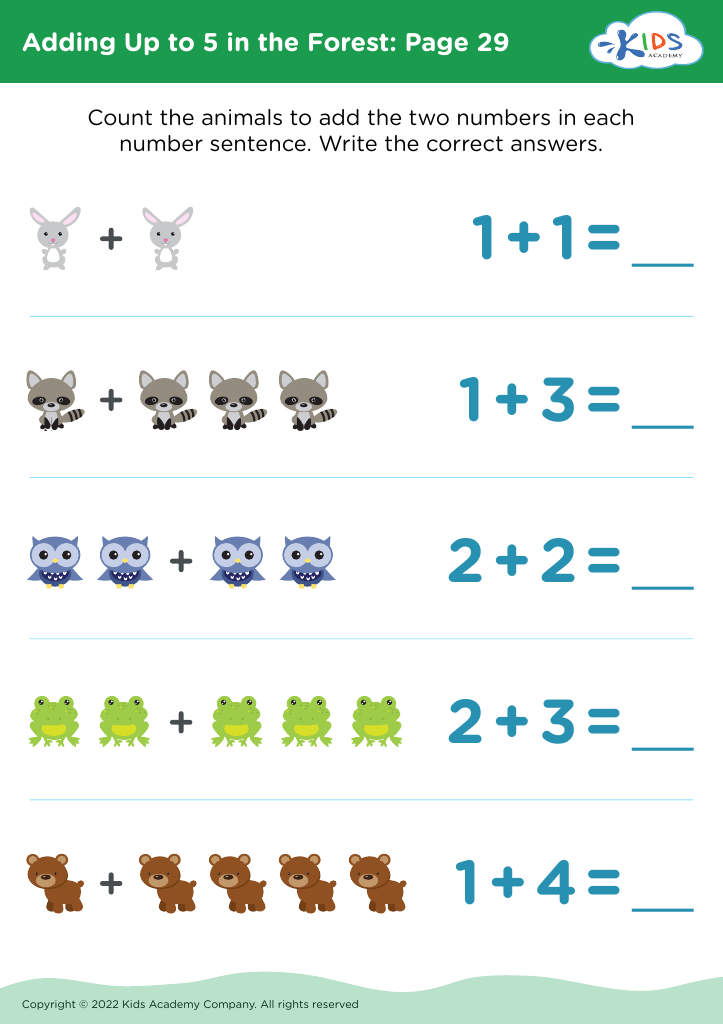
Adding Up to 5 in the Forest: Page 29
Worksheet
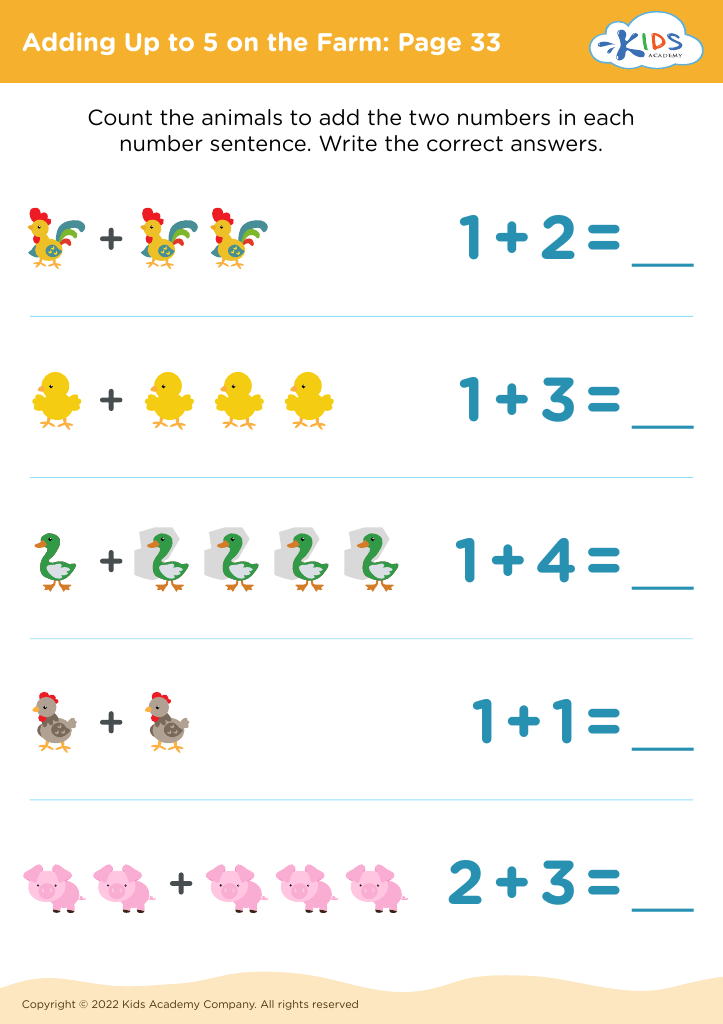
Adding Up to 5 on the Farm: Page 33
Worksheet
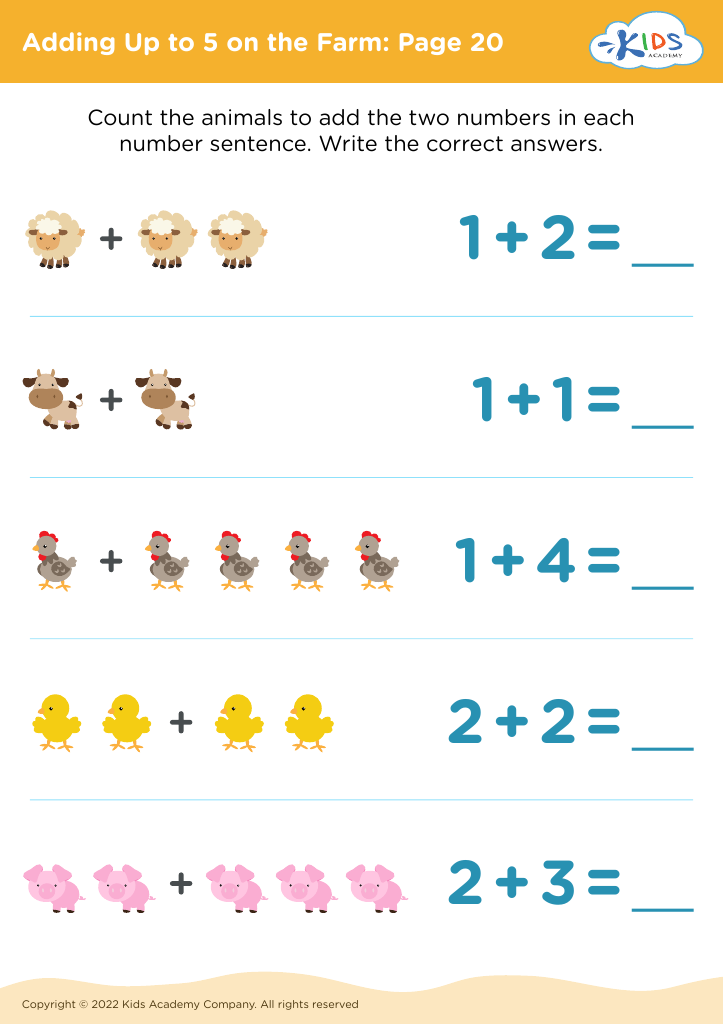
Adding Up to 5 on the Farm: Page 20
Worksheet
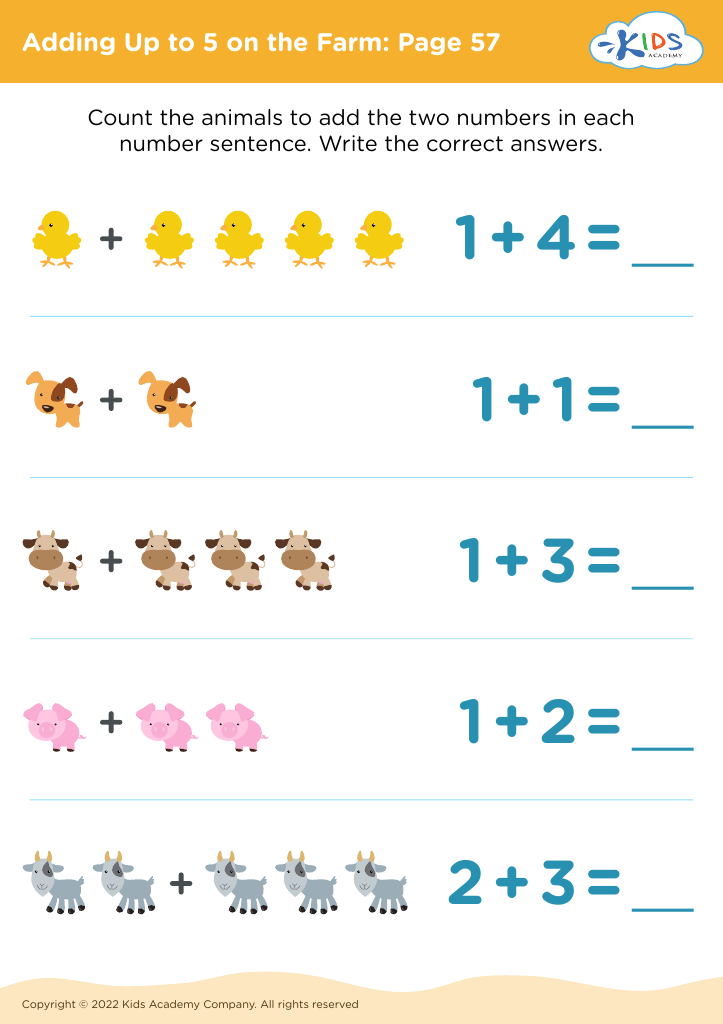
Adding Up to 5 on the Farm: Page 57
Worksheet
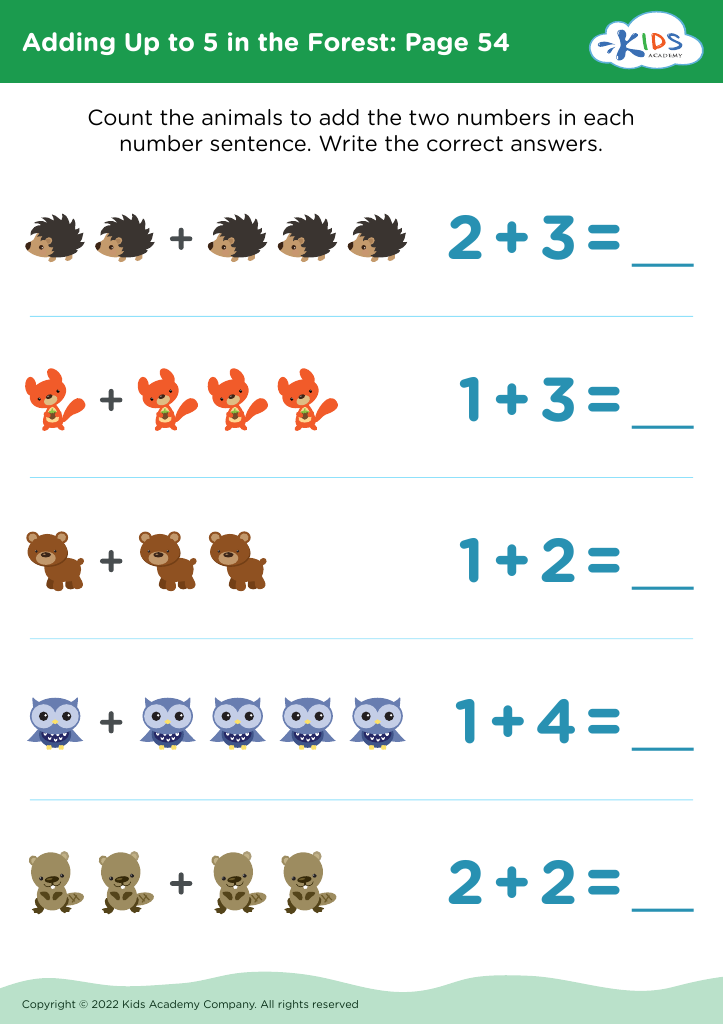
Adding Up to 5 in the Forest: Page 54
Worksheet
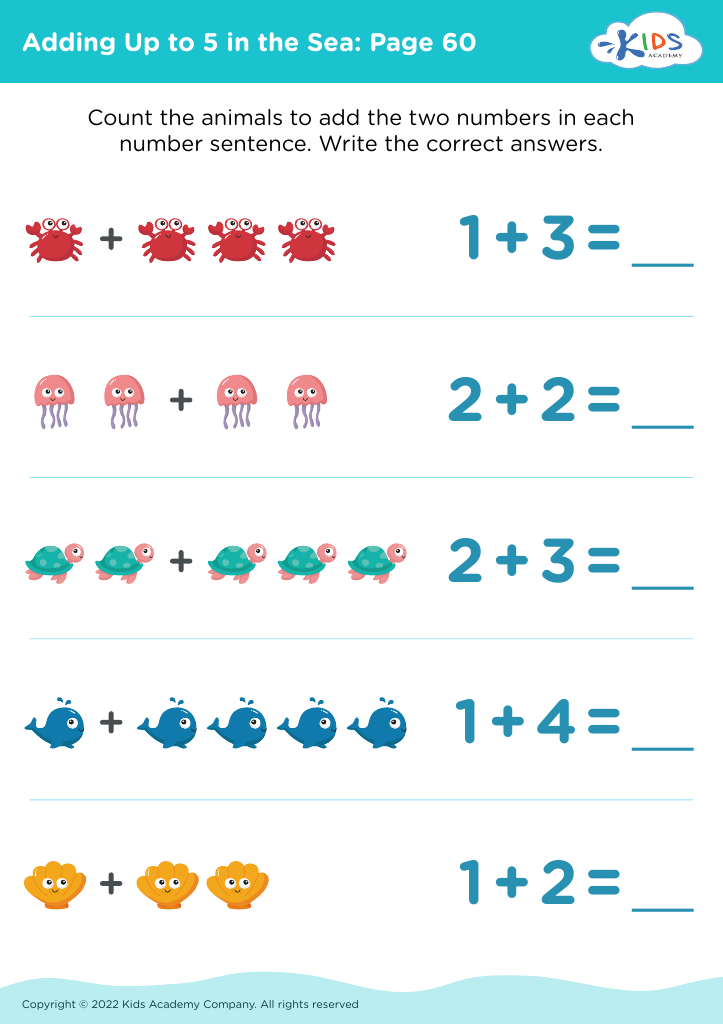
Adding Up to 5 in the Sea: Page 60
Worksheet
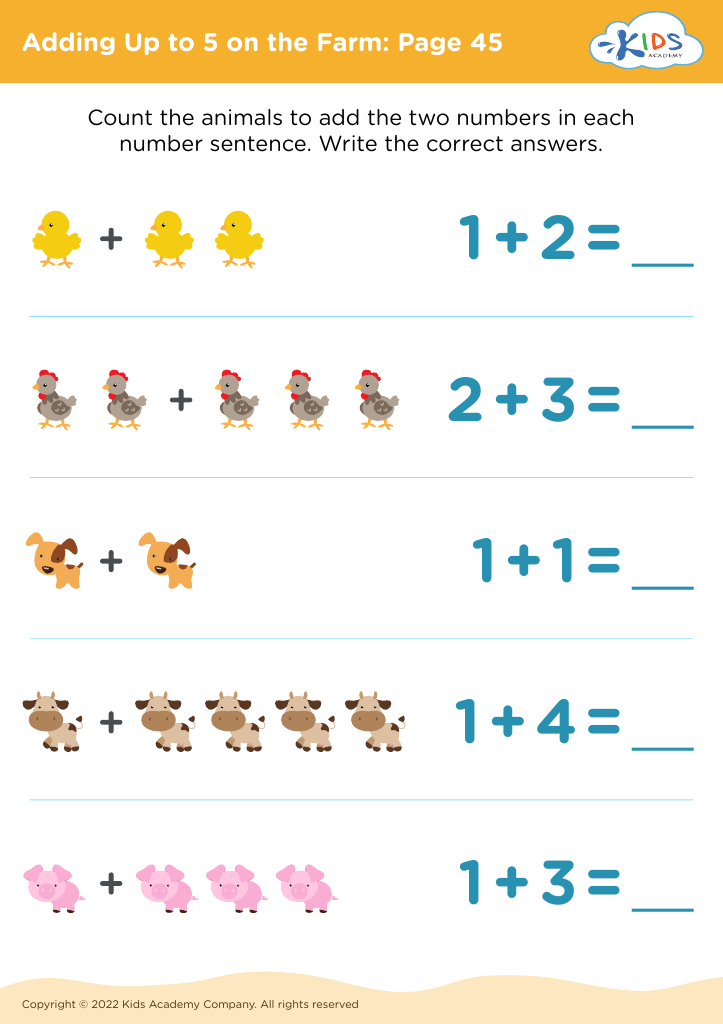
Adding Up to 5 on the Farm: Page 45
Worksheet
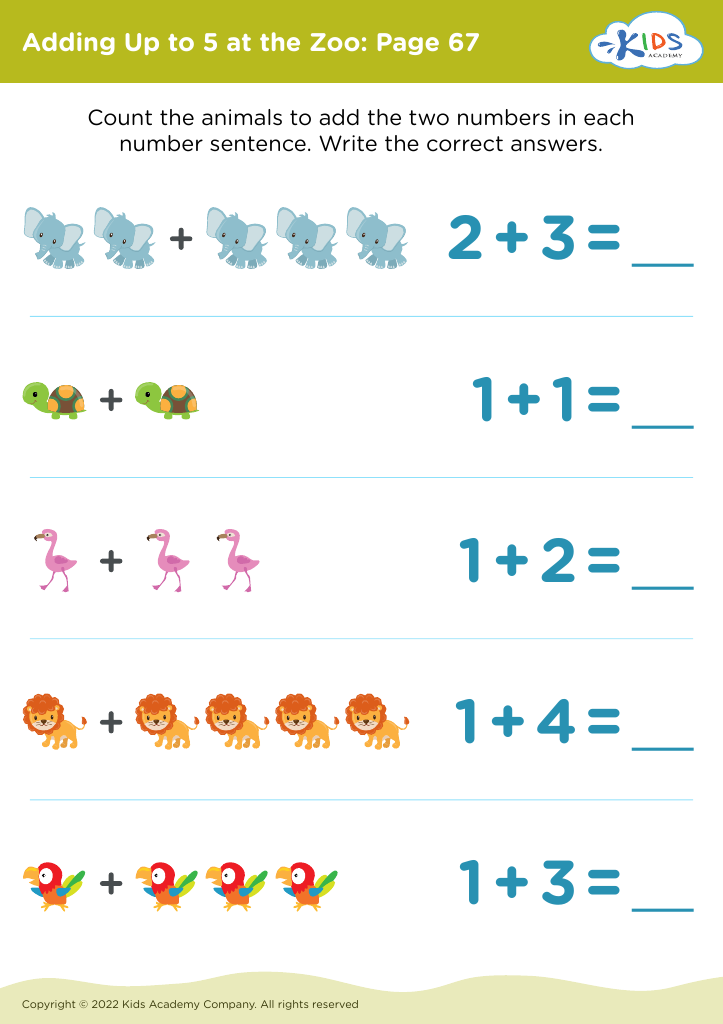
Adding Up to 5 at the Zoo: Page 67
Worksheet
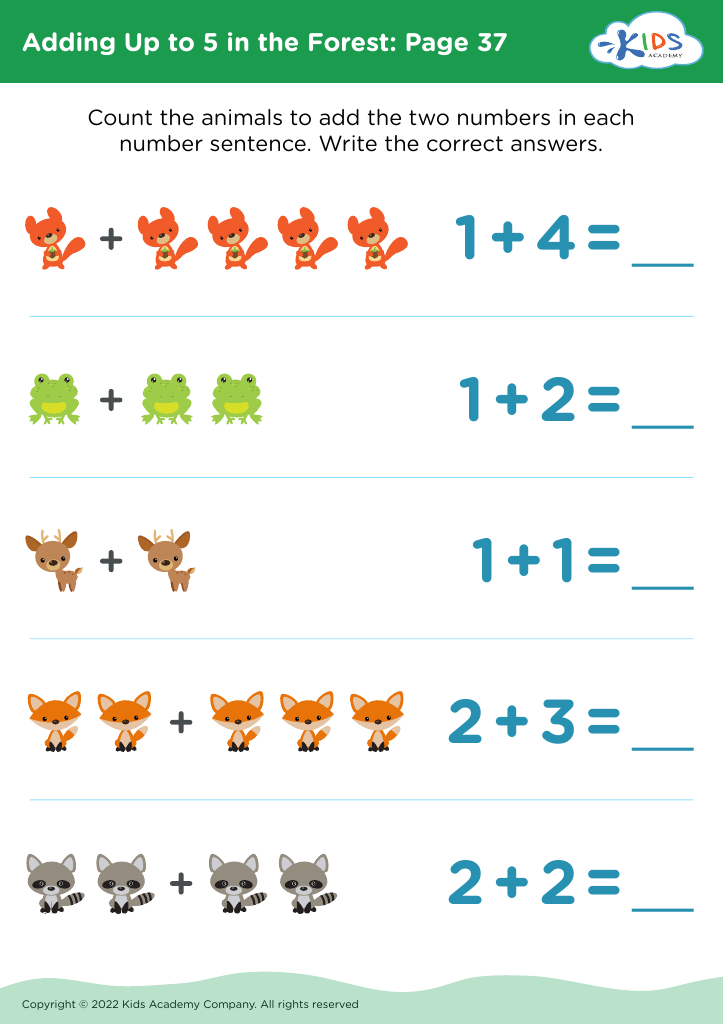
Adding Up to 5 in the Forest: Page 37
Worksheet
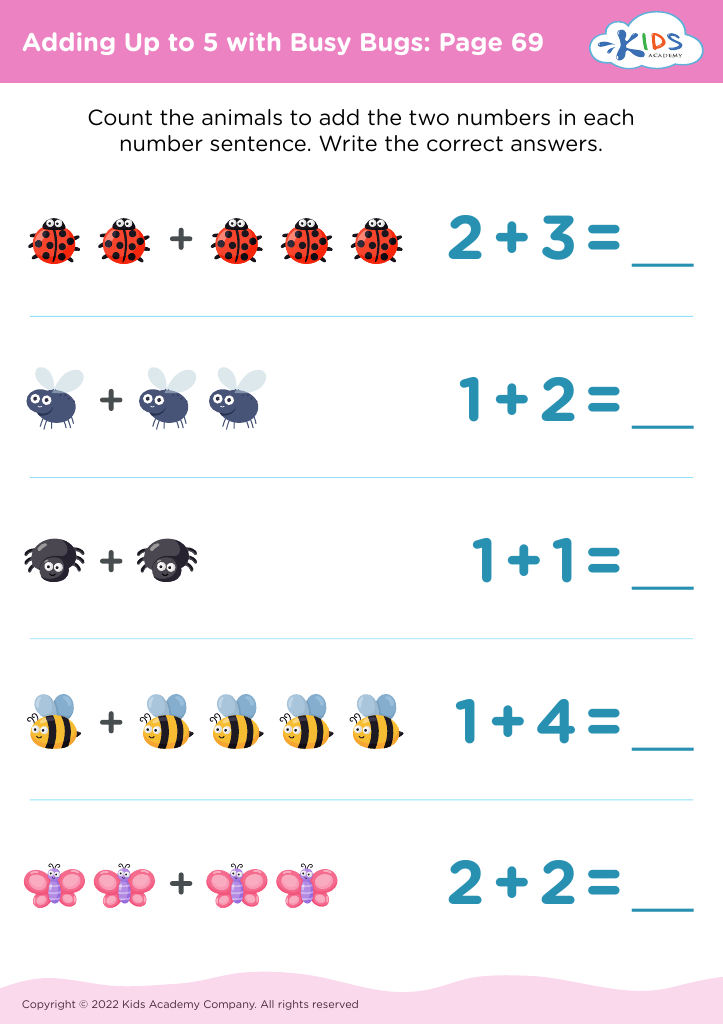
Adding Up to 5 with Busy Bugs: Page 69
Worksheet
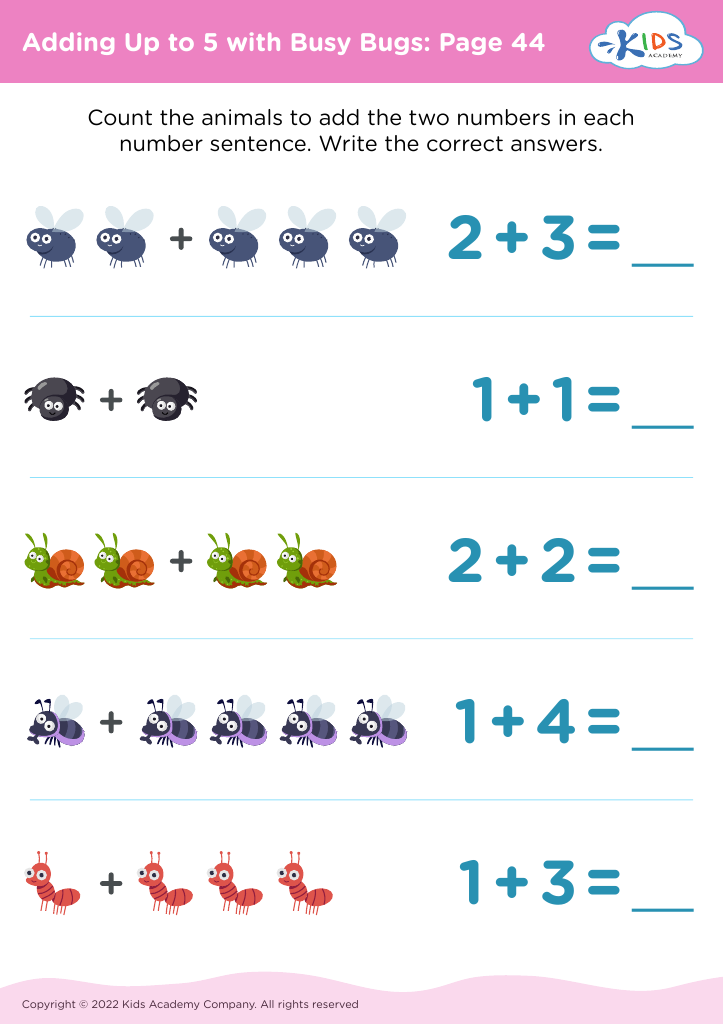
Adding Up to 5 with Busy Bugs: Page 44
Worksheet
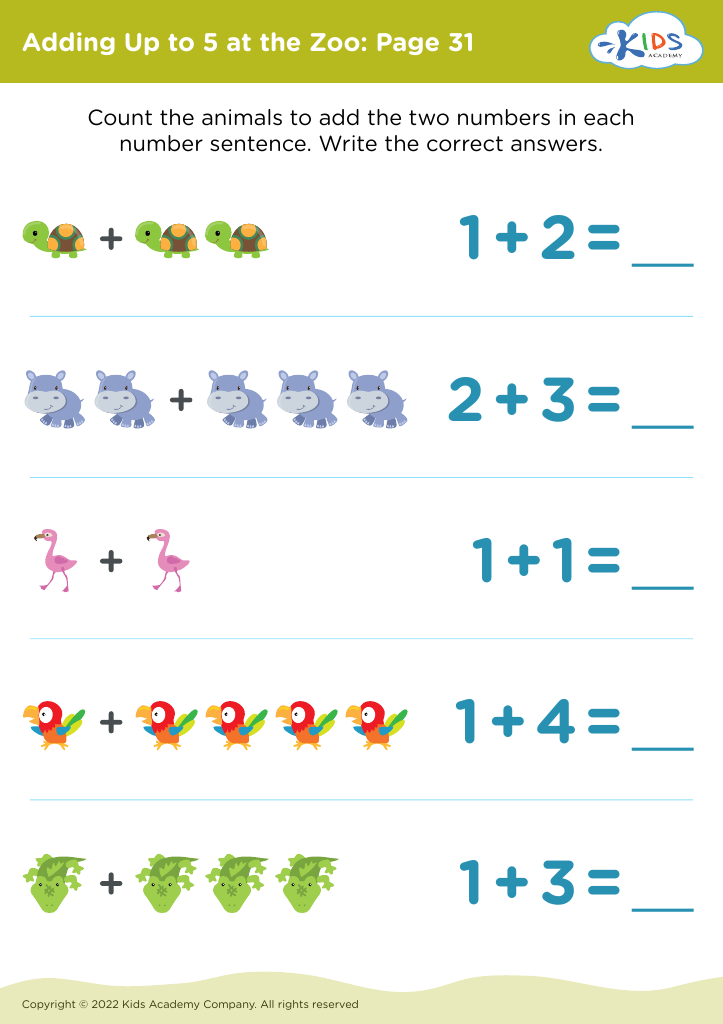
Adding Up to 5 at the Zoo: Page 31
Worksheet
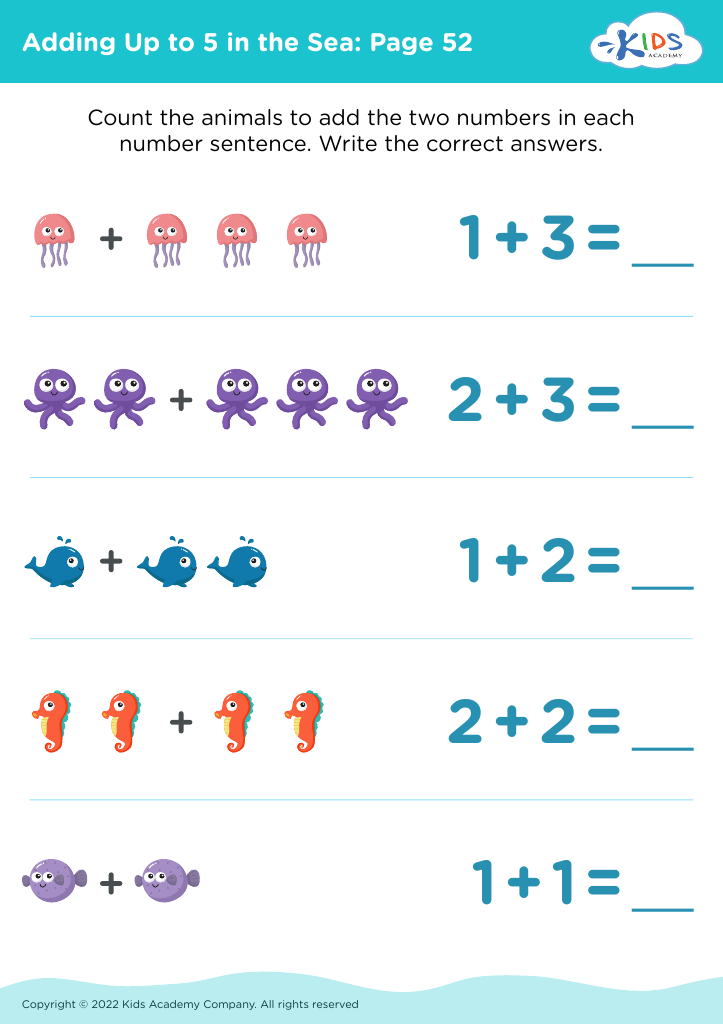
Adding Up to 5 in the Sea: Page 52
Worksheet
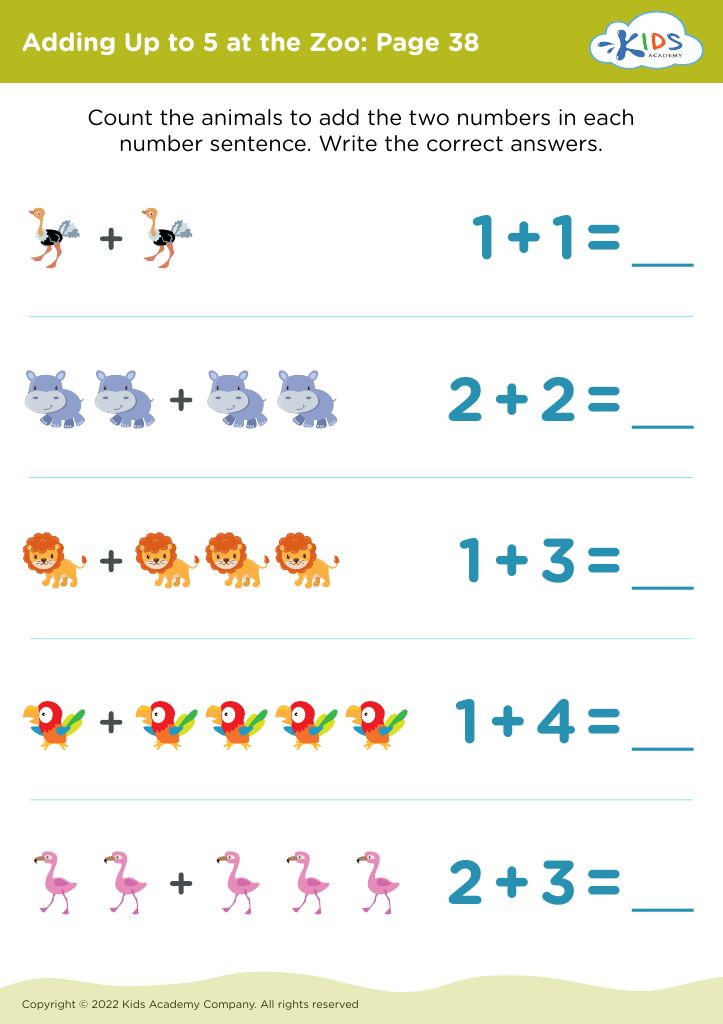
Adding Up to 5 at the Zoo: Page 38
Worksheet
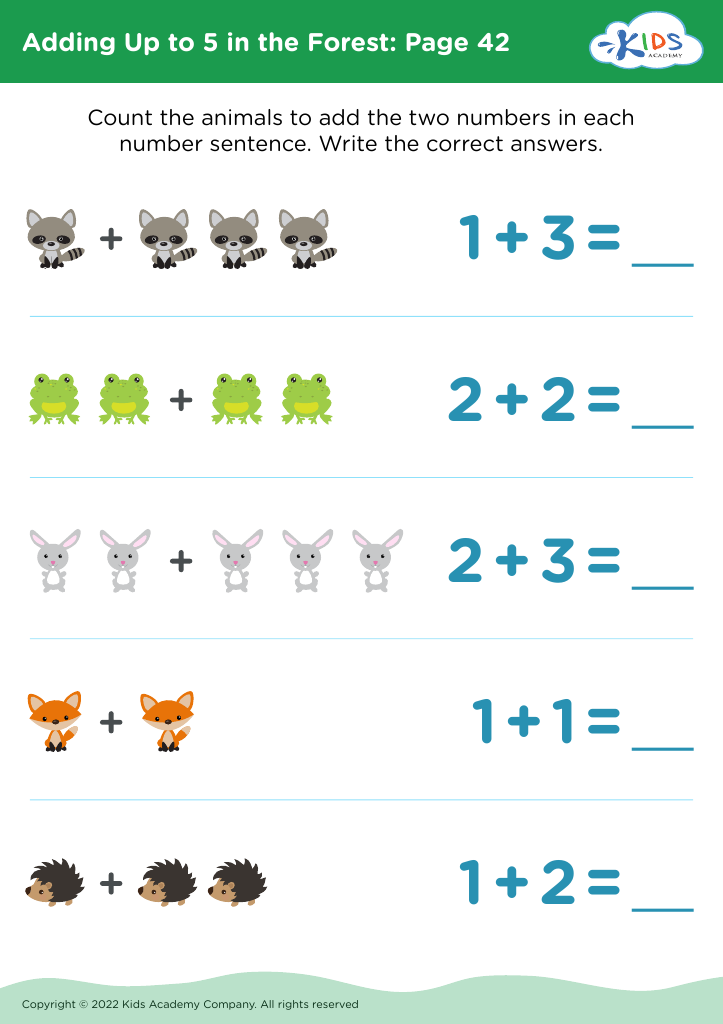
Adding Up to 5 in the Forest: Page 42
Worksheet
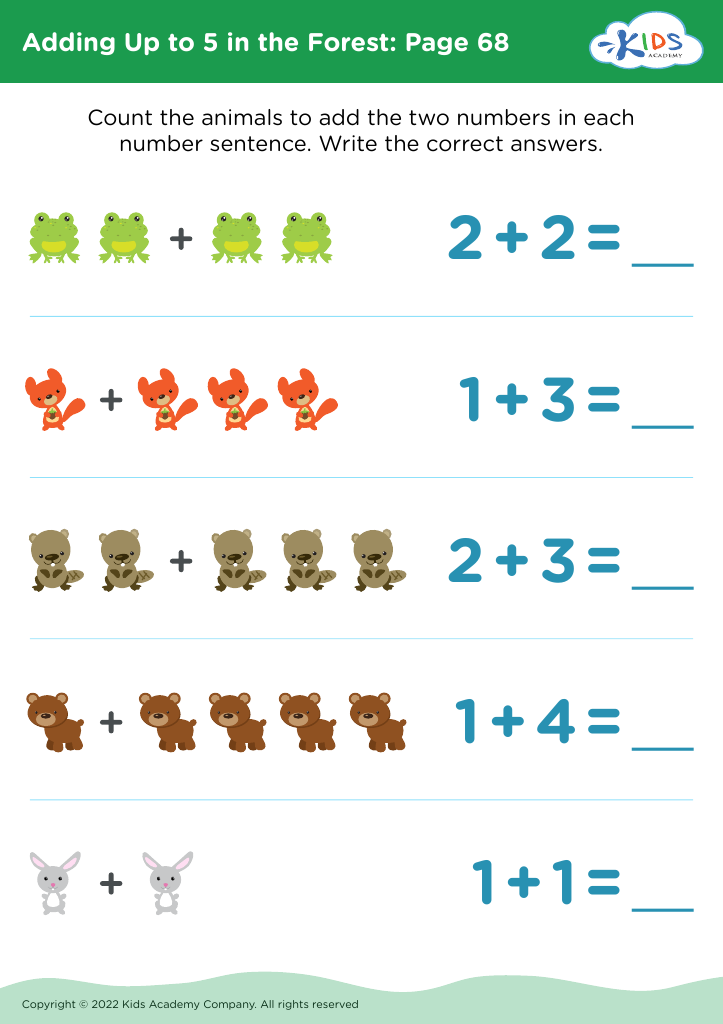
Adding Up to 5 in the Forest: Page 68
Worksheet
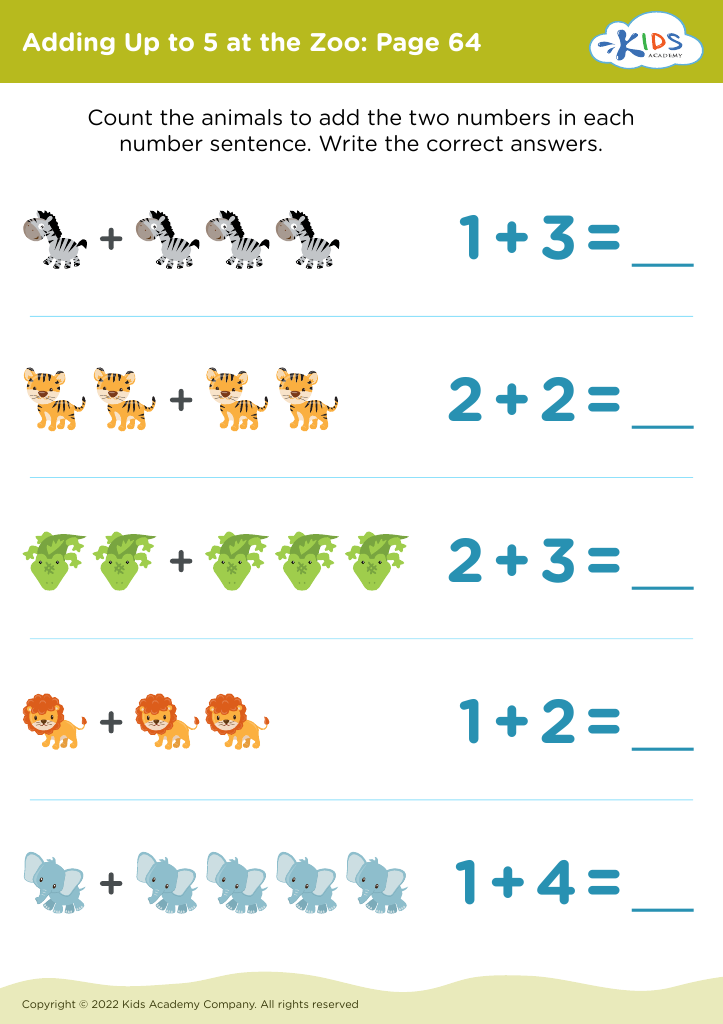
Adding Up to 5 at the Zoo: Page 64
Worksheet
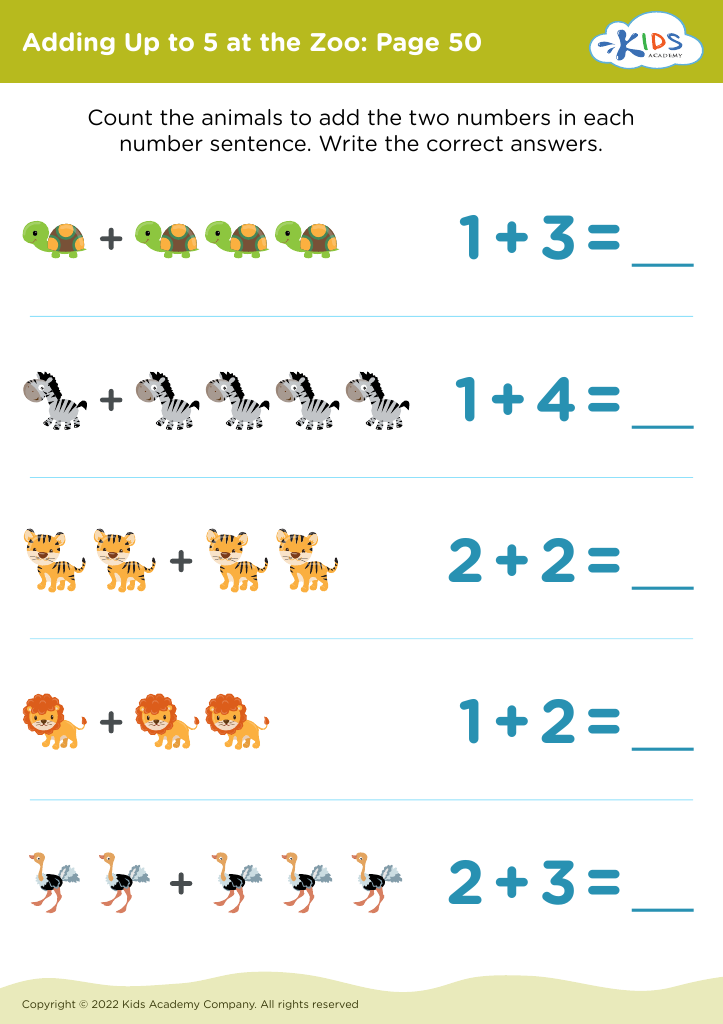
Adding Up to 5 at the Zoo: Page 50
Worksheet
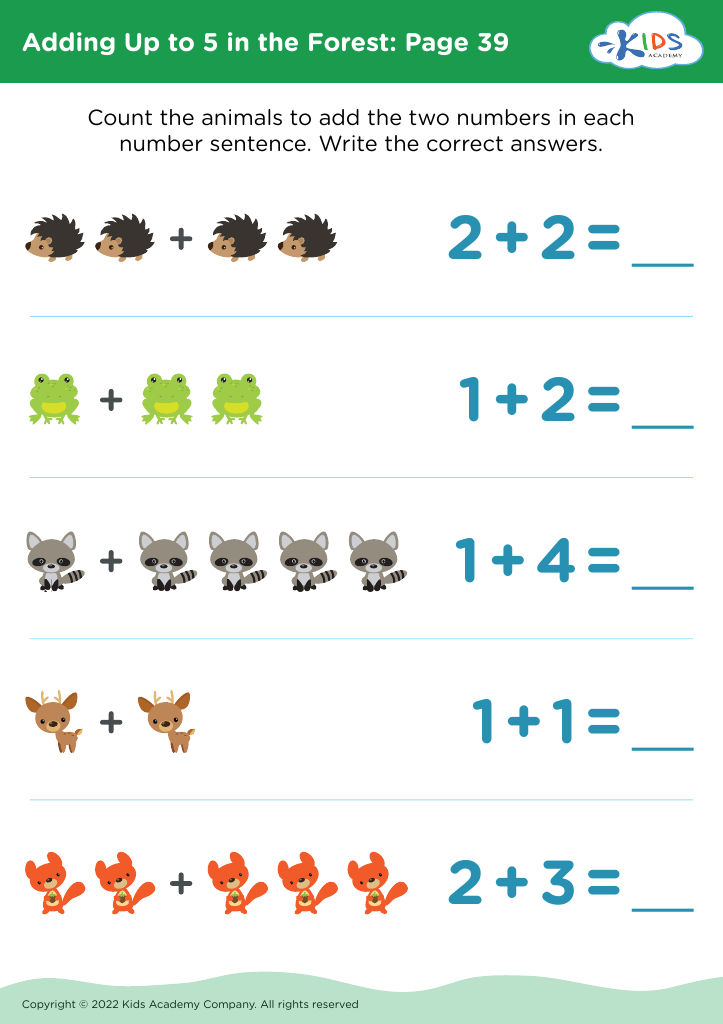
Adding Up to 5 in the Forest: Page 39
Worksheet
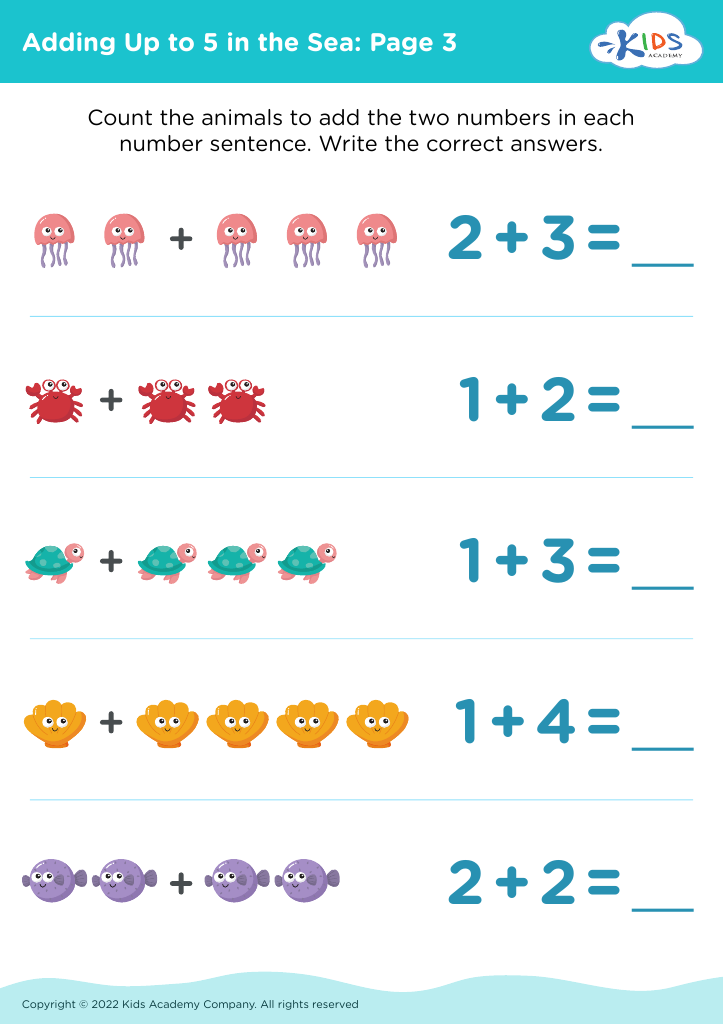
Adding Up to 5 in the Sea: Page 3

Adding Up to 5 in the Sea: Page 3

Adding Up to 5 in the Sea: Page 3
Worksheet
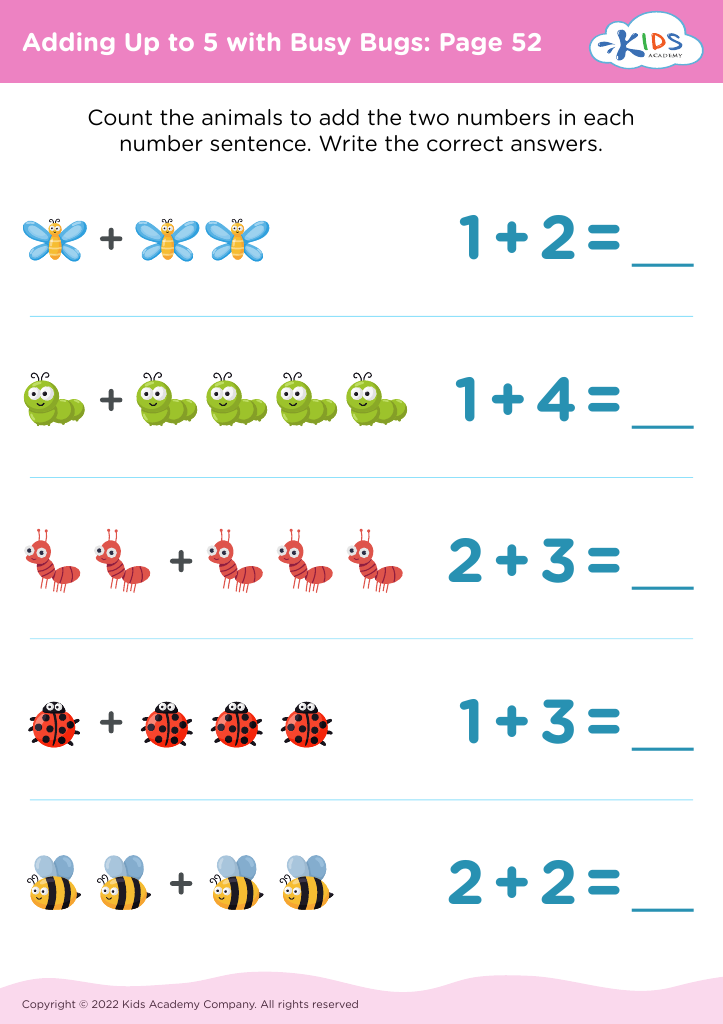
Adding Up to 5 with Busy Bugs: Page 52
Worksheet
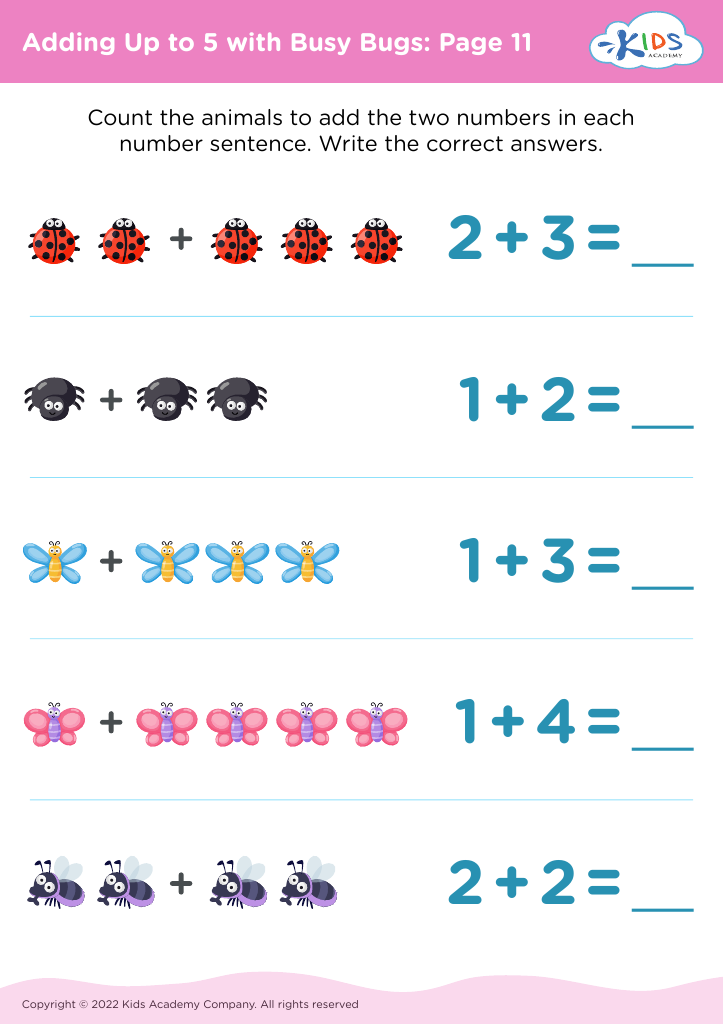
Adding Up to 5 with Busy Bugs: Page 11
Worksheet
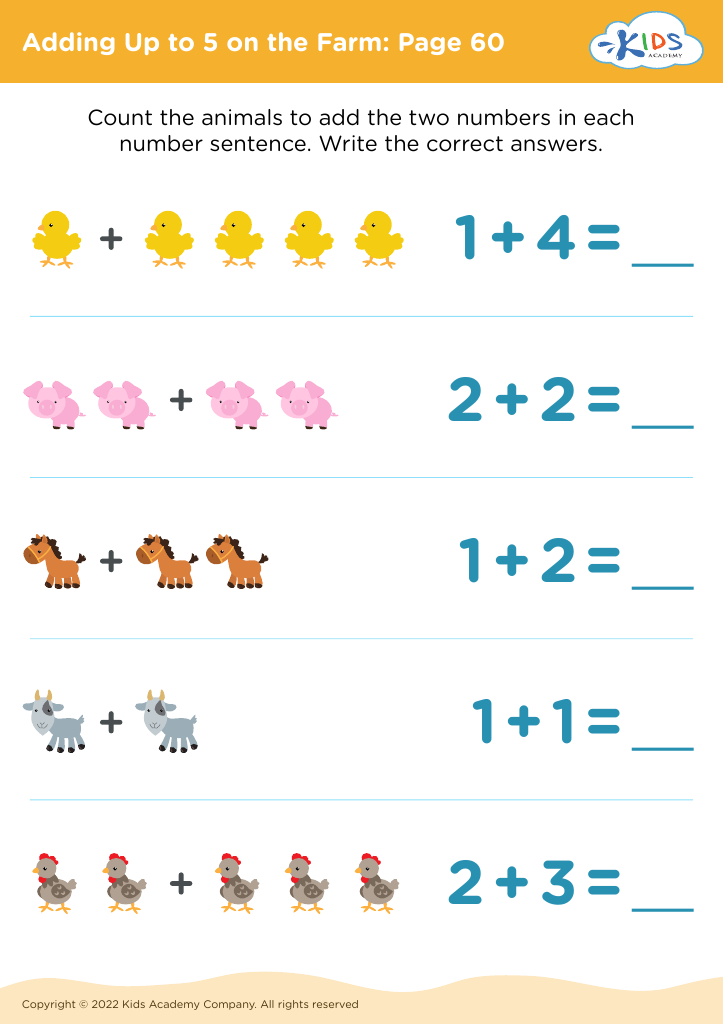
Adding Up to 5 on the Farm: Page 60
Worksheet
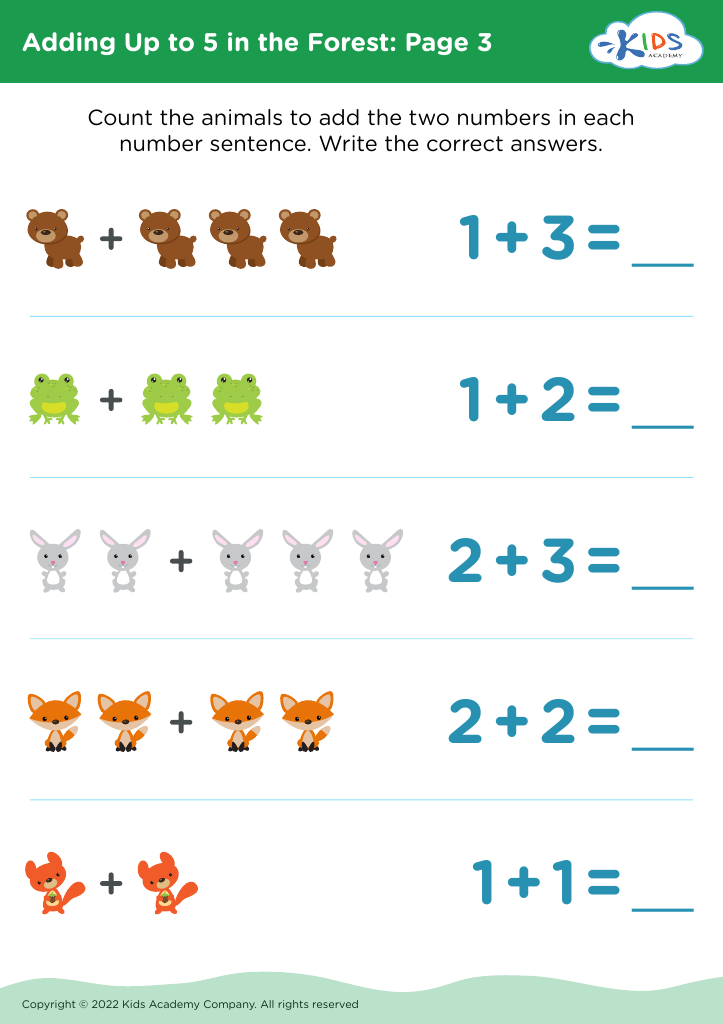
Adding Up to 5 in the Forest: Page 3
Worksheet


Basic addition skills, particularly adding numbers up to 5, lay the foundation for a child's mathematical understanding and overall cognitive development. For children aged 3-9, mastering these skills promotes a sense of accomplishment and boosts their confidence in their abilities. Early exposure to simple addition helps children recognize patterns, understand quantities, and develop critical thinking skills essential for future learning.

Furthermore, addition is one of the first mathematical concepts children encounter, making it crucial in helping them gain a strong grasp of numbers. It prepares them for more complex operations and problem-solving tasks they will face in later grades. Engaging with basic addition also enhances fine motor skills and promotes social interactions through collaborative learning experiences, such as participating in games or group activities.

Parents and teachers can foster a love for math by incorporating fun and interactive techniques—like counting toys or using visual aids—that resonate with young children. Investing time in developing these foundational skills not only benefits children academically but also encourages resilience and persistence as they tackle challenges. Ultimately, supporting children's basic addition skills contributes to their overall development and equips them with tools necessary for lifelong learning and success.