Fine motor skills (drawing lines) Adding Up to 5 Worksheets for Ages 3-9
3 filtered results
-
From - To
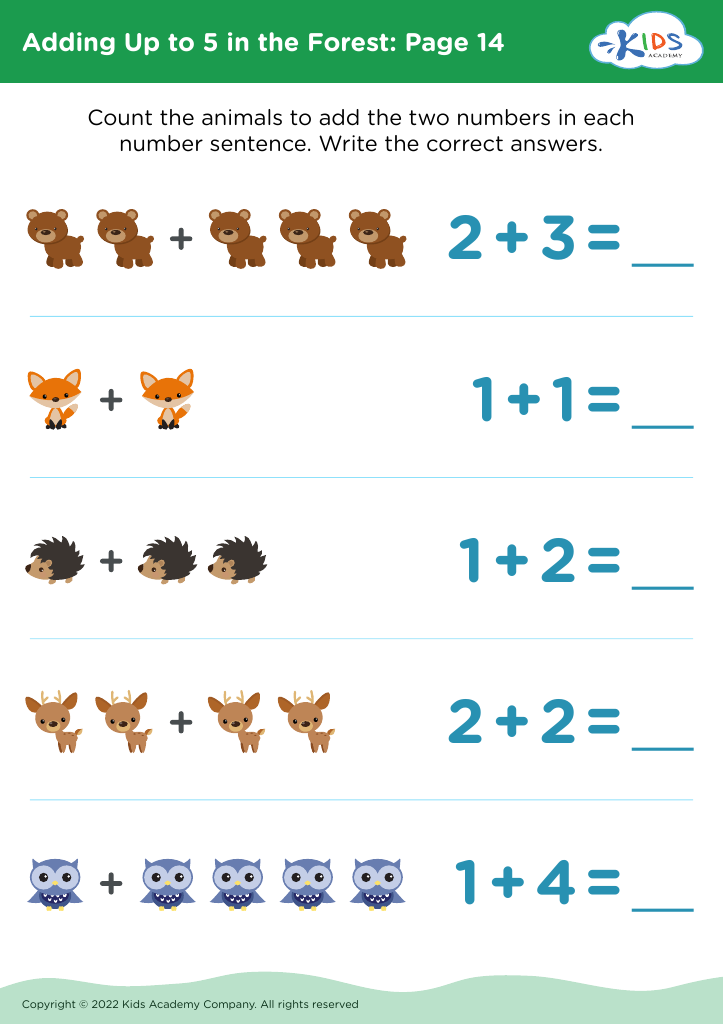
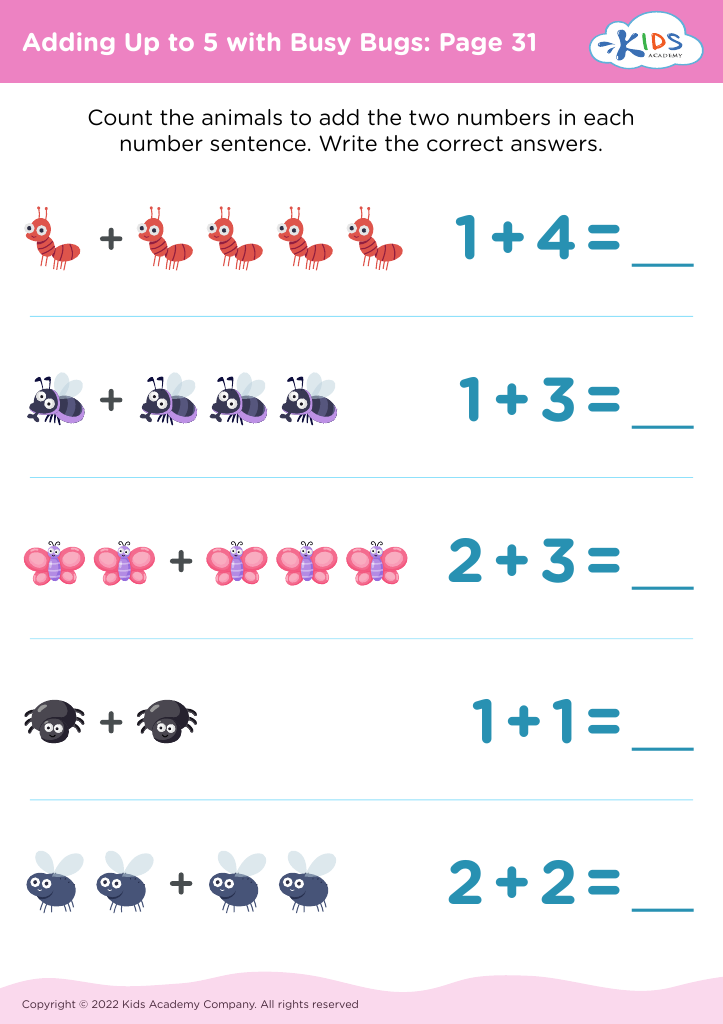
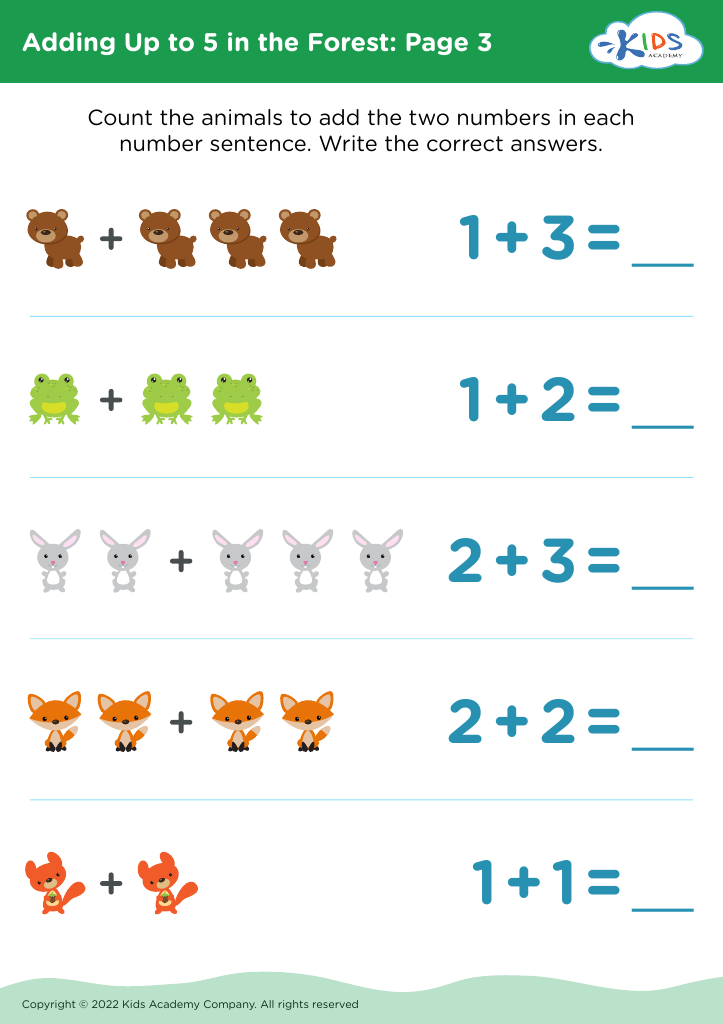
Enhance your child's fine motor skills with our engaging “Adding Up to 5” worksheets, designed specifically for ages 3-9. These interactive activities focus on drawing lines, helping children improve their hand-eye coordination and dexterity while they learn basic math concepts. With a variety of fun exercises that involve tracing and connecting dots, kids will not only develop essential motor skills but also get practice in counting and simple addition. Perfect for early learners, these worksheets provide a stimulating way to combine math learning with fine motor skill development, setting the foundation for future academic success. Download now for hours of constructive fun!







.jpg)
Fine motor skills are crucial for children's overall development, particularly for ages 3-9. As children learn to draw lines, they improve their dexterity and hand-eye coordination, essential for everyday tasks such as writing, buttoning clothes, and using utensils. These skills lay the foundation for successful learning and self-reliance in later years.
The ability to draw lines also integrates cognitive development. It encourages spatial awareness and helps children understand patterns and shapes—key skills in mathematics. For example, drawing lines can evolve into activities like counting, allowing kids to effectively engage in “Adding Up to 5.” When children practice manipulating objects and drawing lines, they develop problem-solving abilities and improve their concentration.
Furthermore, early mastery of these skills fosters confidence. Children who can grasp a pencil and draw simple shapes feel accomplished, setting a positive tone for future learning experiences. By emphasizing fine motor skills, parents and teachers create a supportive environment that nurtures children's academic and social confidence. This fluidity in movement not only boosts performance in school but also forges critical connections in their developing brain, paving the way for complex skills needed in adulthood. Investing attention in these areas is vital for holistic child development.








