Filters

36 filtered results

Clear all filters
Favorites
With answer key
Interactive

36 filtered results

Difficulty Level

Grade


Check out this FREE Trial Lesson on Adding Up to 5 for age 3-9!

Short and Long Vowel Sort

Favorites
With answer key
Interactive
  • 3-9
  • Understanding Quantities
  • Adding Up to 5
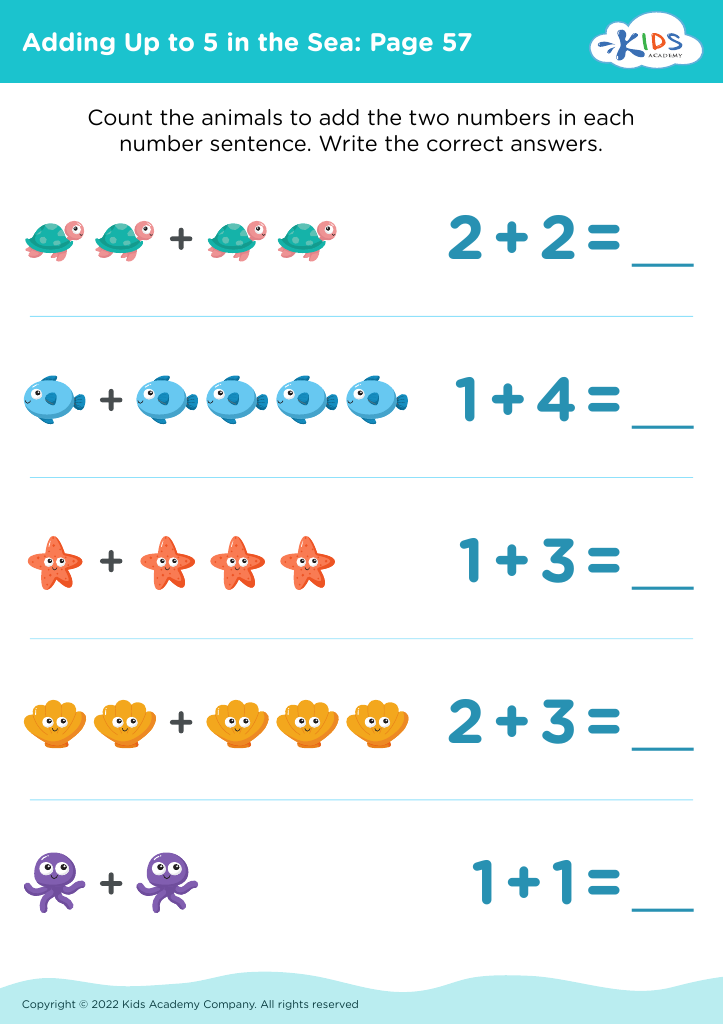
Adding Up to 5 in the Sea: Page 57
Worksheet
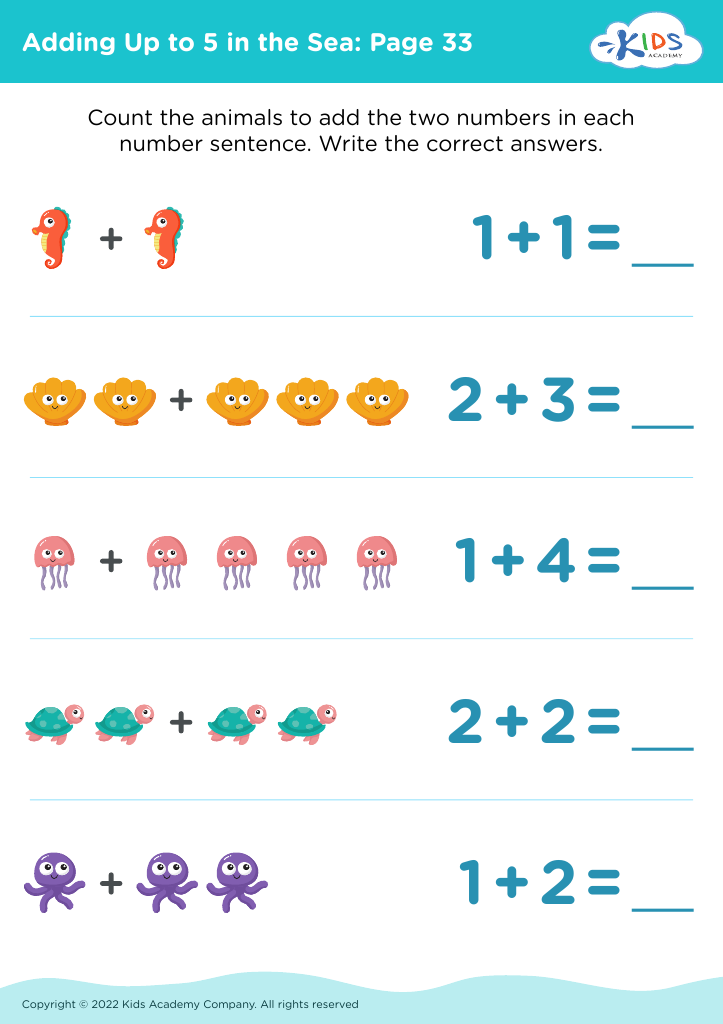
Adding Up to 5 in the Sea: Page 33
Worksheet
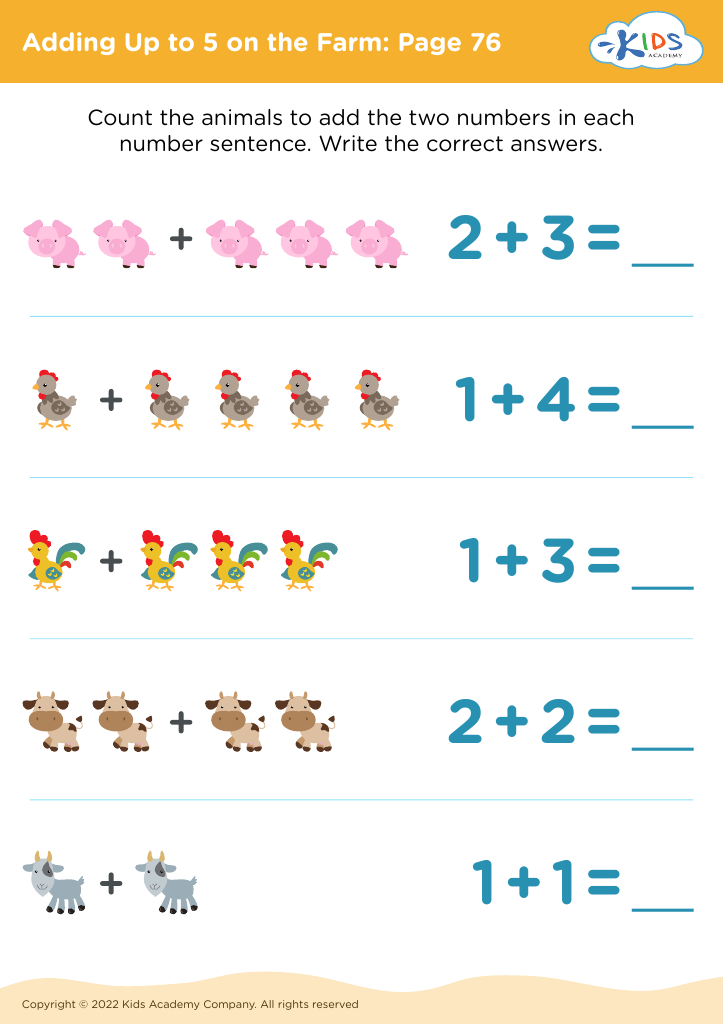
Adding Up to 5 on the Farm: Page 76
Worksheet
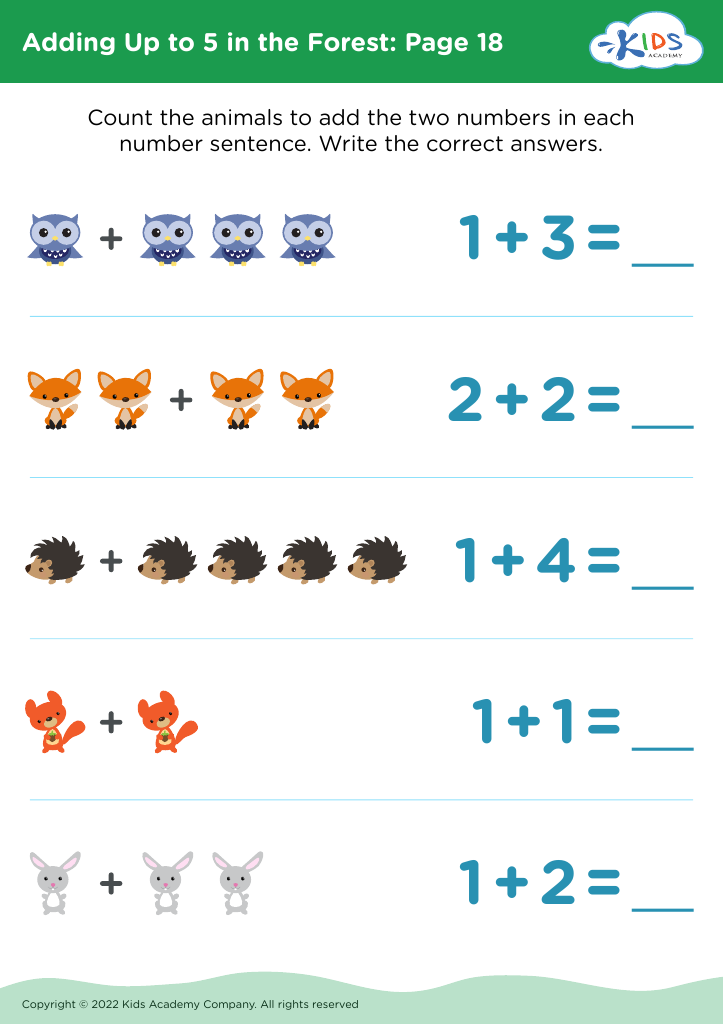
Adding Up to 5 in the Forest: Page 18
Worksheet
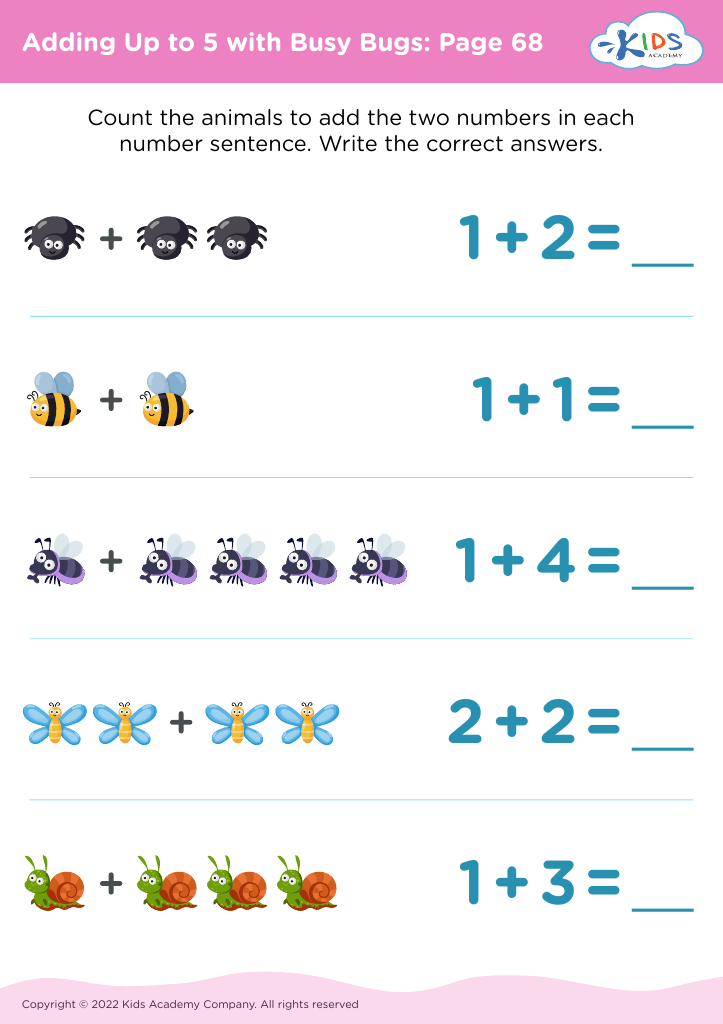
Adding Up to 5 with Busy Bugs: Page 68
Worksheet
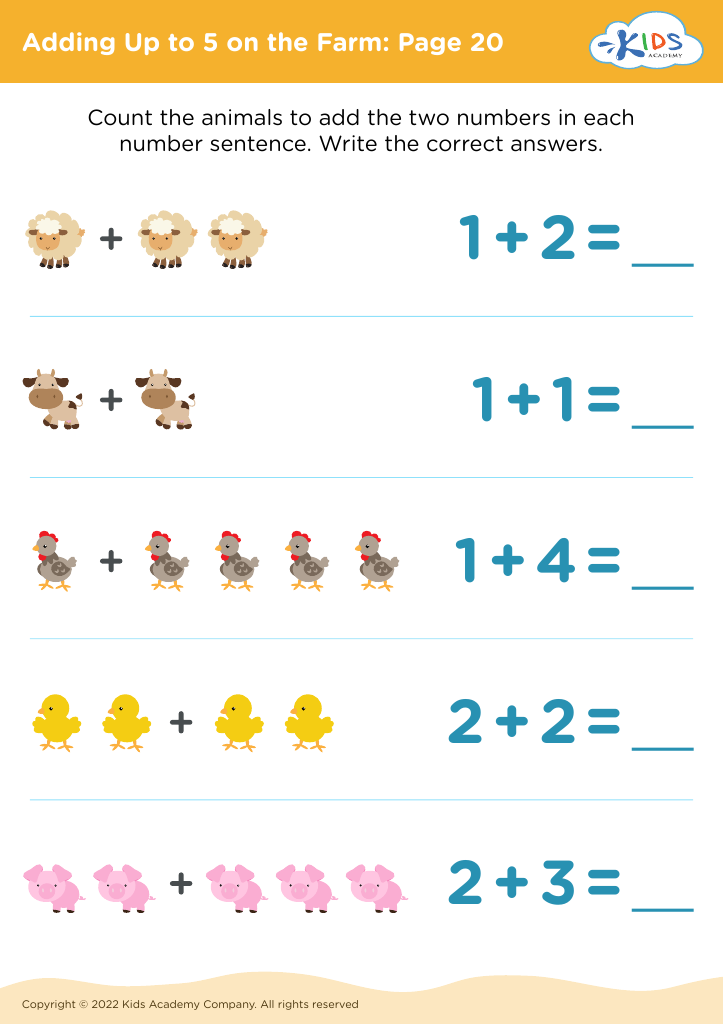
Adding Up to 5 on the Farm: Page 20
Worksheet
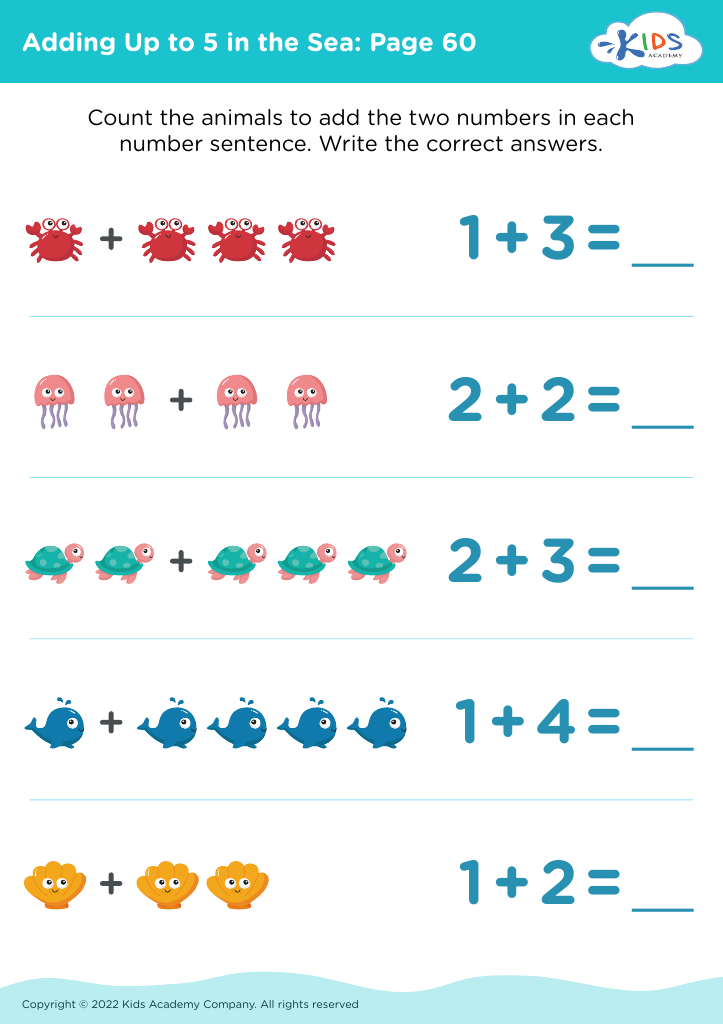
Adding Up to 5 in the Sea: Page 60
Worksheet
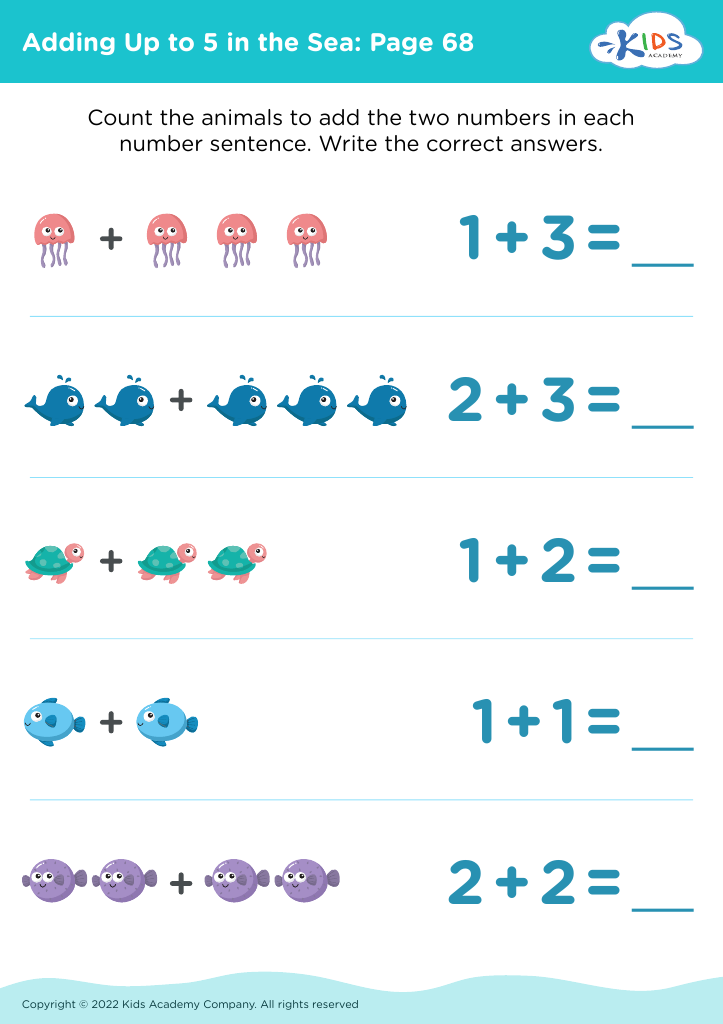
Adding Up to 5 in the Sea: Page 68
Worksheet
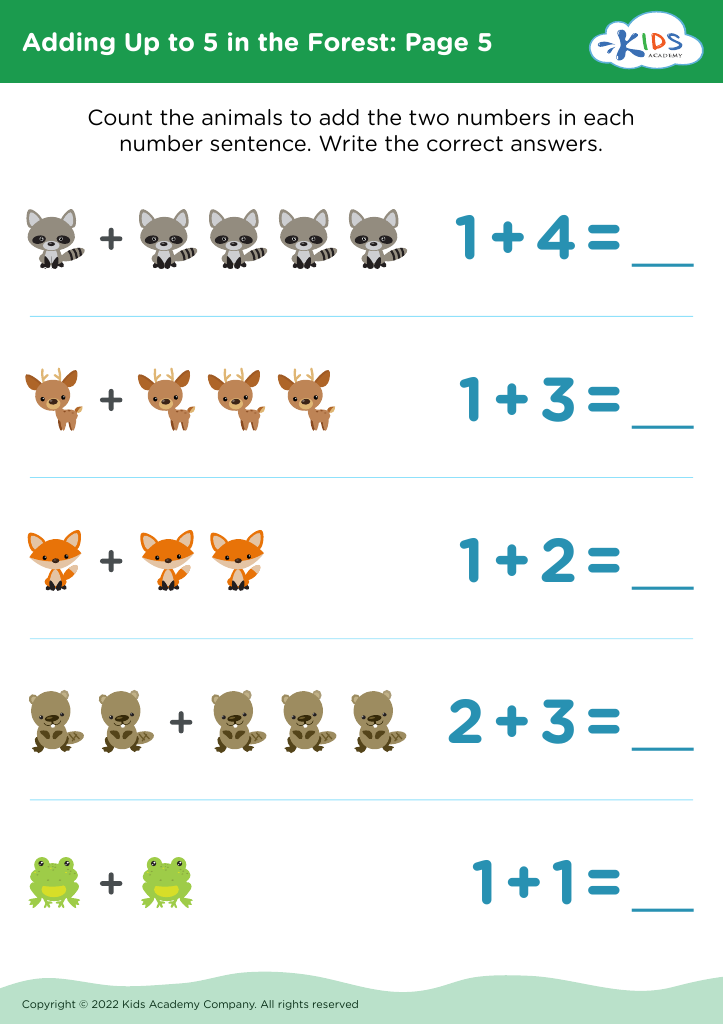
Adding Up to 5 in the Forest: Page 5
Worksheet
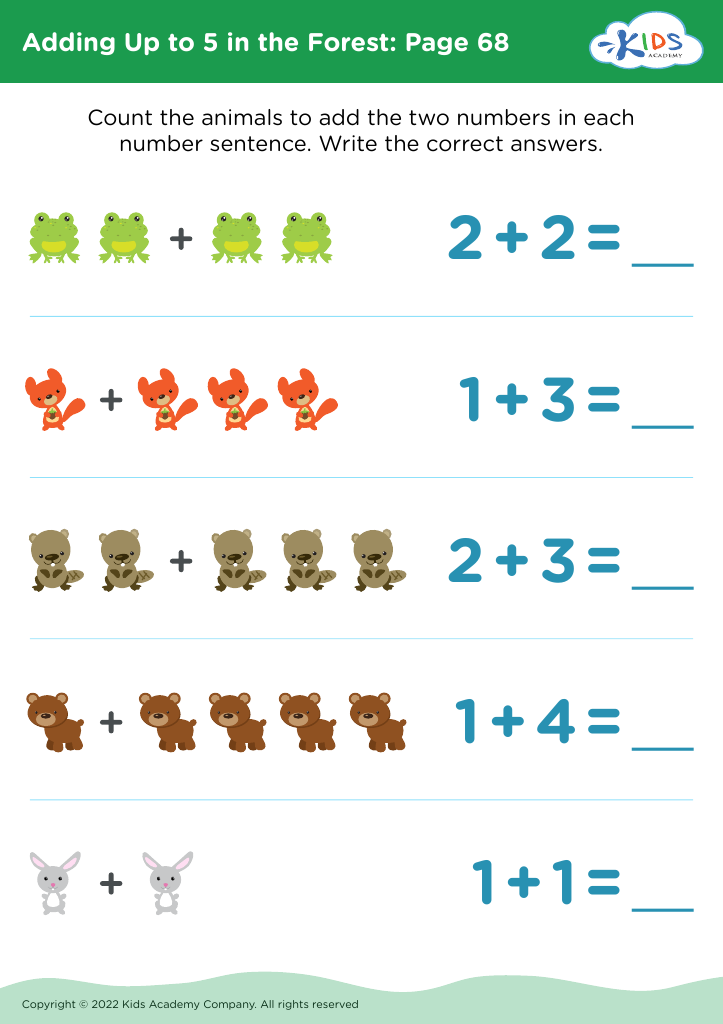
Adding Up to 5 in the Forest: Page 68
Worksheet
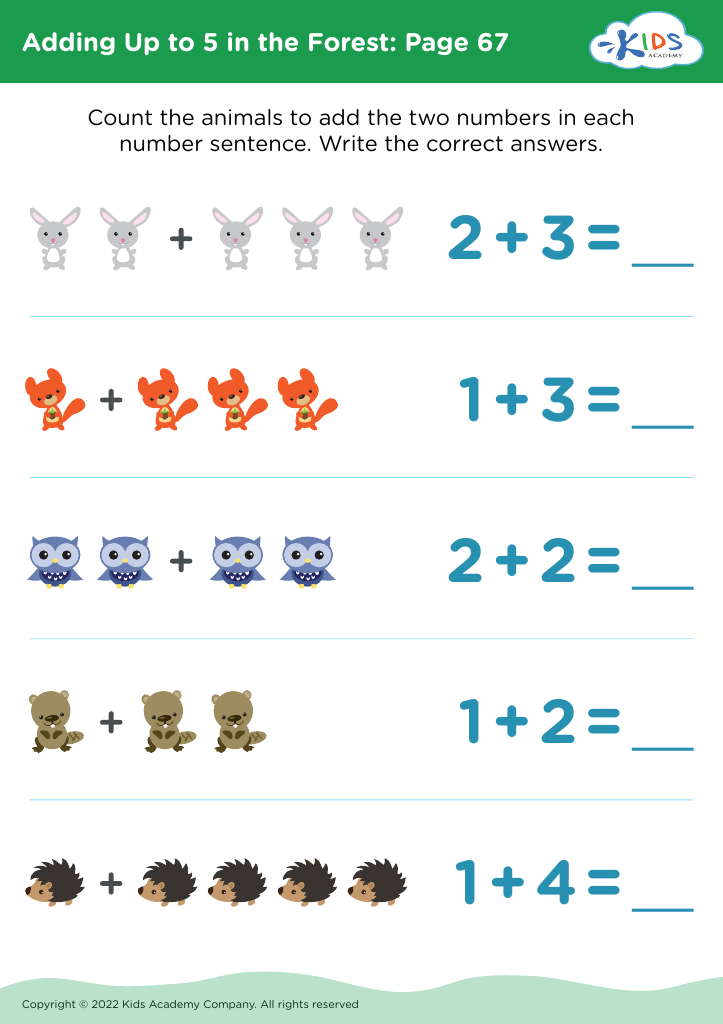
Adding Up to 5 in the Forest: Page 67
Worksheet
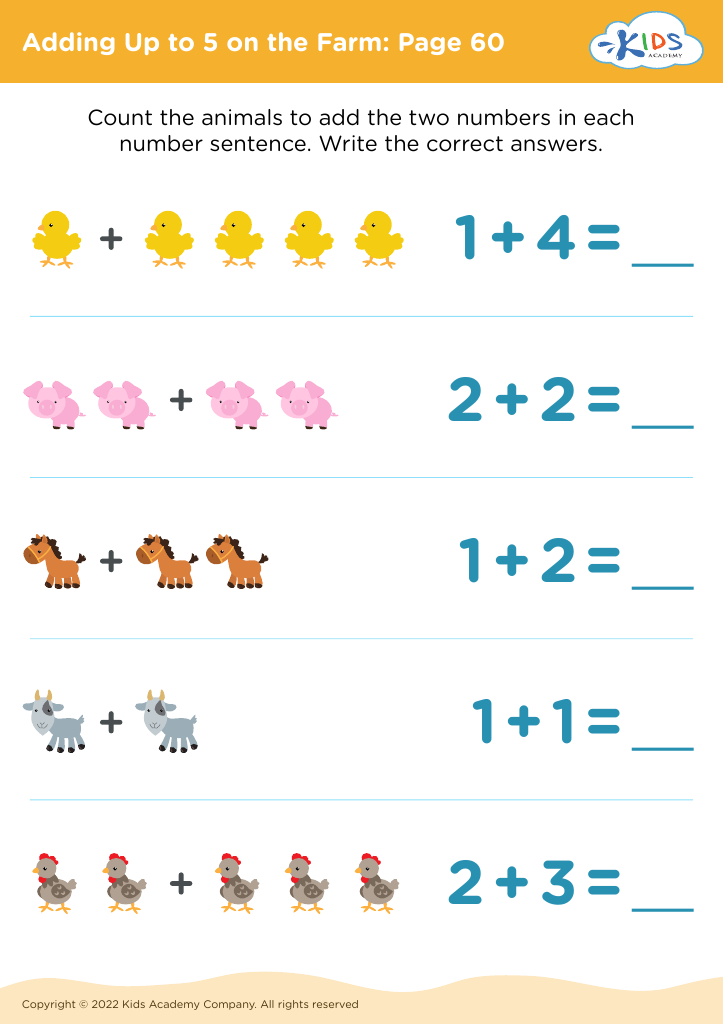
Adding Up to 5 on the Farm: Page 60
Worksheet


Understanding quantities adding up to 5 is a fundamental milestone for children aged 3-9 and plays a critical role in early cognitive and mathematical development. For young learners, grasping these basic numerical concepts lays the groundwork for more complex mathematical operations like addition, subtraction, multiplication, and division.

At this age, representing smaller numbers up to 5 with objects or fingers helps children internalize the concept of addition and understanding part-whole relationships. This visualization skill is crucial as it aids memory retention and builds confidence. By repeatedly practicing combining smaller groups to reach a total of 5, children develop a robust number sense, which is essentially their intuitive understanding of numbers and their relationships.

In addition to mathematical growth, learning to add quantities up to 5 enhances problem-solving skills and logical thinking. It's not just about numbers; it encourages cognitive development and improves children’s ability to categorize and organize their thoughts.

For parents and teachers, fostering a strong foundation in such basic math promotes a child's overall academic success. It transforms learning into an engaging and interactive experience, where young minds become curious and enthusiastic about exploring math. Prioritizing these fundamentals makes future learning smoother and sets the stage for lifelong analytical thinking skills.