Visual learning enhancement Adding Up to 5 Worksheets for Ages 3-9
4 filtered results
-
From - To
Enhance your child’s learning experience with our "Visual Learning Enhancement: Adding Up to 5 Worksheets," designed specifically for ages 3-9. These fun and engaging worksheets utilize colorful visuals to foster a better understanding of basic addition concepts, helping your child grasp the fundamentals in an interactive way. Each worksheet includes unique illustrations and practical exercises that cater to different learning styles, making math enjoyable and accessible. Perfect for parents and educators seeking to improve early math skills, our resources provide a solid foundation while promoting visual recognition and critical thinking. Start cultivating your child's love for math today!
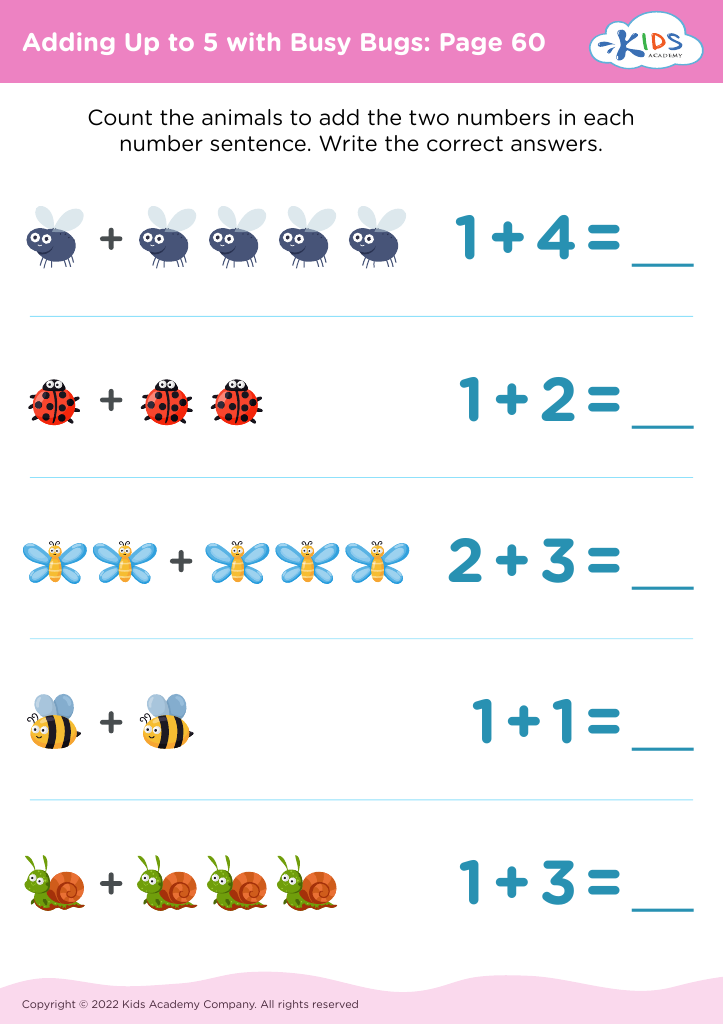
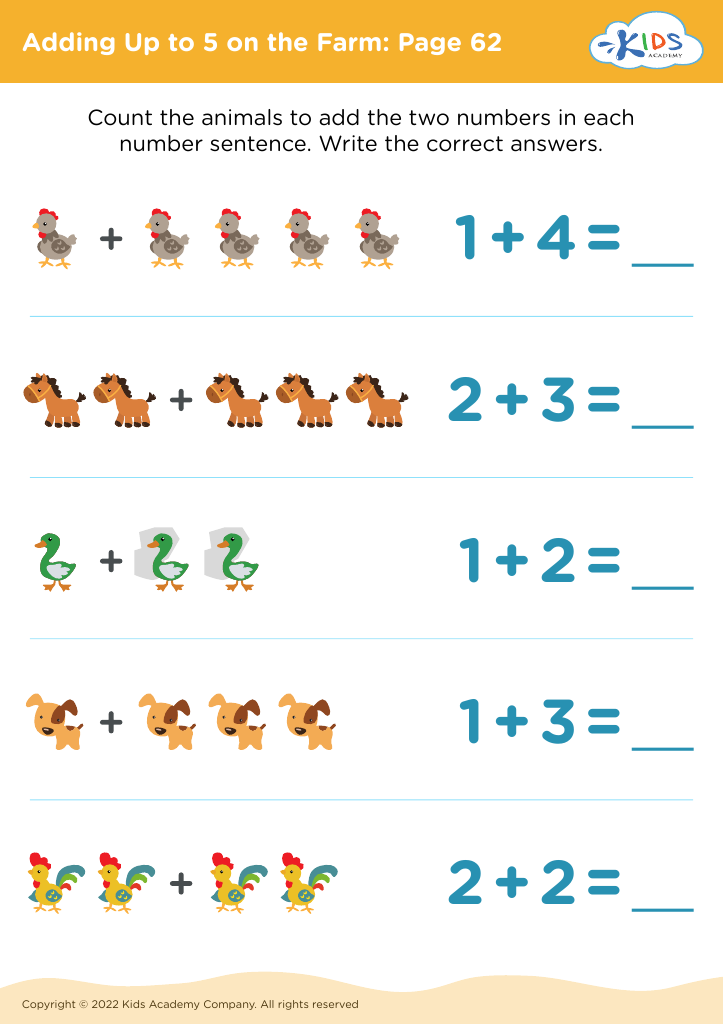
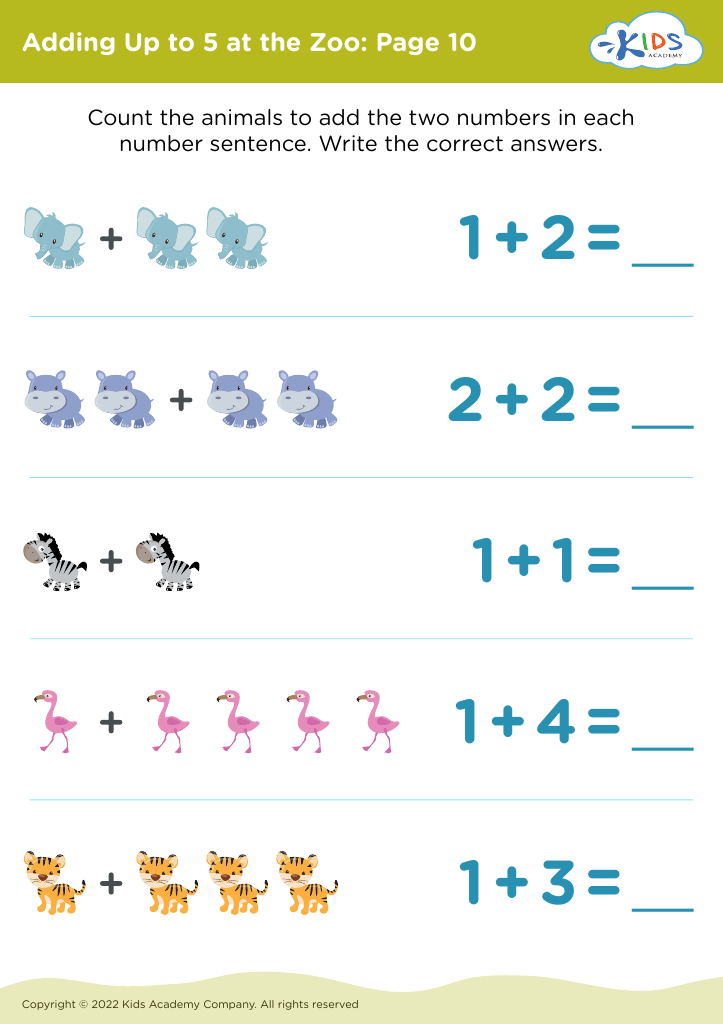
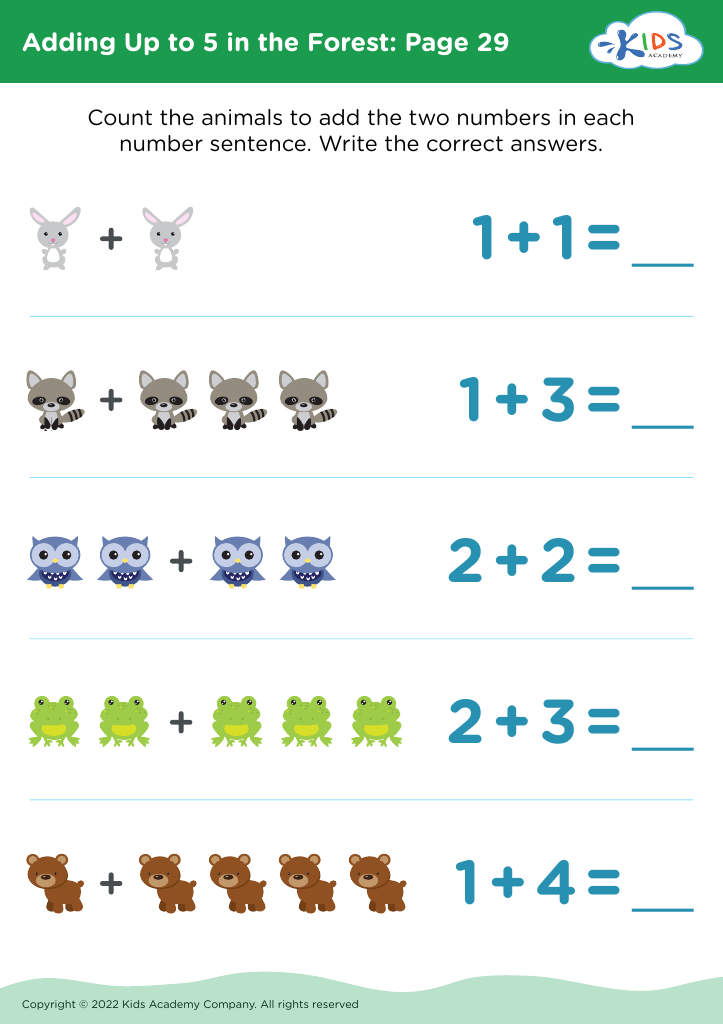




.jpg)



Visual learning enhancement is crucial for young learners, particularly when it comes to foundational math skills like adding up to 5. For children aged 3 to 9, visual strategies help solidify abstract concepts by turning them into concrete experiences. Young children are naturally inclined toward visual stimuli, making it easier for them to grasp mathematical concepts when presented through engaging visuals.
Research shows that these visual aids, such as counters, number lines, and interactive games, can dramatically improve understanding and retention of basic addition. When children manipulate objects visually, they develop critical thinking and problem-solving skills alongside mathematical understanding.
For parents and teachers, embracing visual learning techniques cultivates a supportive and effective learning environment. This approach not only enhances mathematical proficiency but also builds confidence, motivating kids to explore complex concepts as they grow. By understanding and integrating visual learning into daily lessons, educators and caregivers can cater to diverse learning styles, ensure that all children can succeed, and lay a strong foundation for future academic endeavors. Ultimately, fostering visual learning not only enhances literacy and numeracy but shapes positive attitudes towards learning for years to come.








