Addition of fractions Addition & Subtraction Worksheets for Ages 3-9
3 filtered results
-
From - To
Introduce young learners to the world of fractions with our "Addition of Fractions Addition & Subtraction Worksheets for Ages 3-9". These engaging and colorful worksheets are specially designed to make learning fractions fun and easy for kids. With a variety of exercises, children will practice adding fractions while also building their fundamental math skills. Ideal for children ages 3 to 9, our worksheets are perfect for use in both classrooms and at home. Help your child gain confidence in their mathematical abilities and develop a love for learning with our expertly crafted educational resources. Visit Kids Academy to explore more!
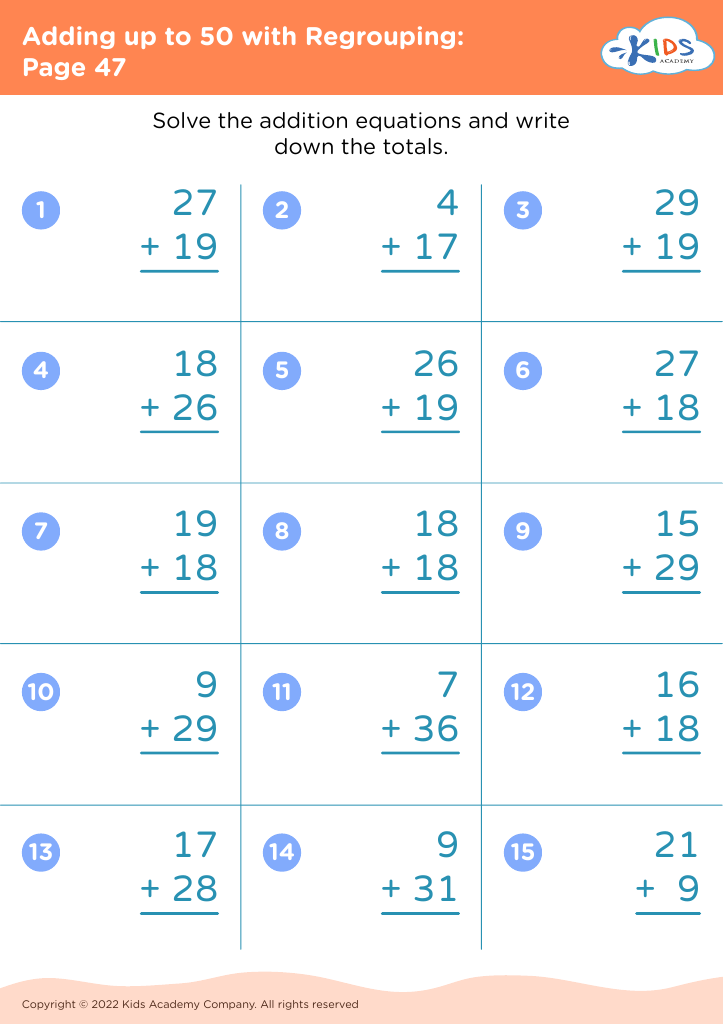
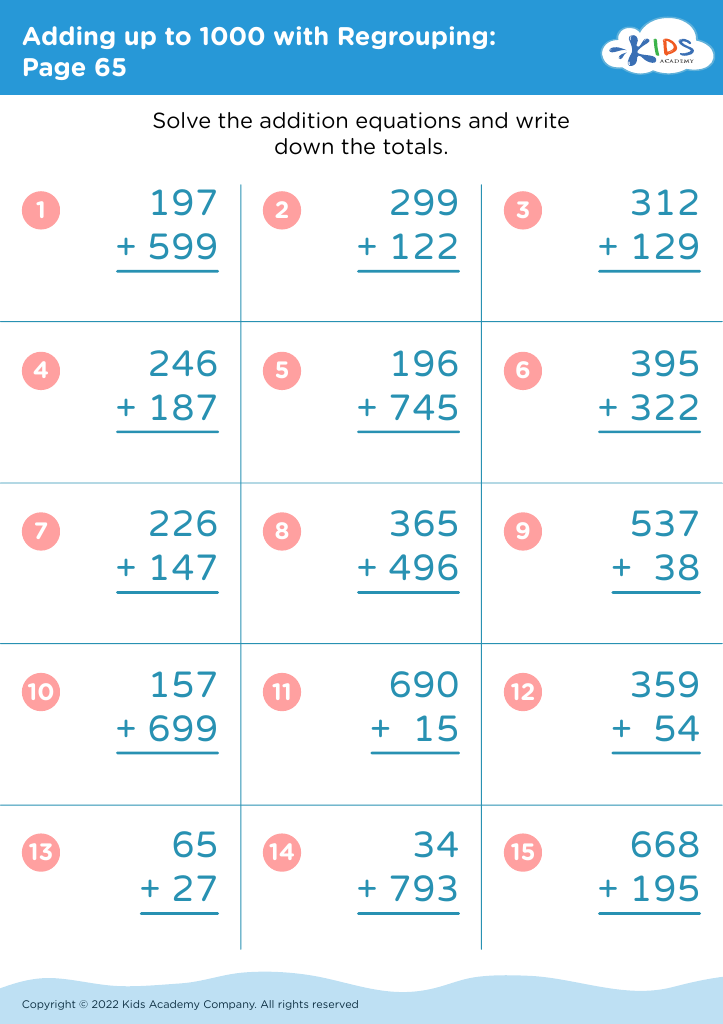
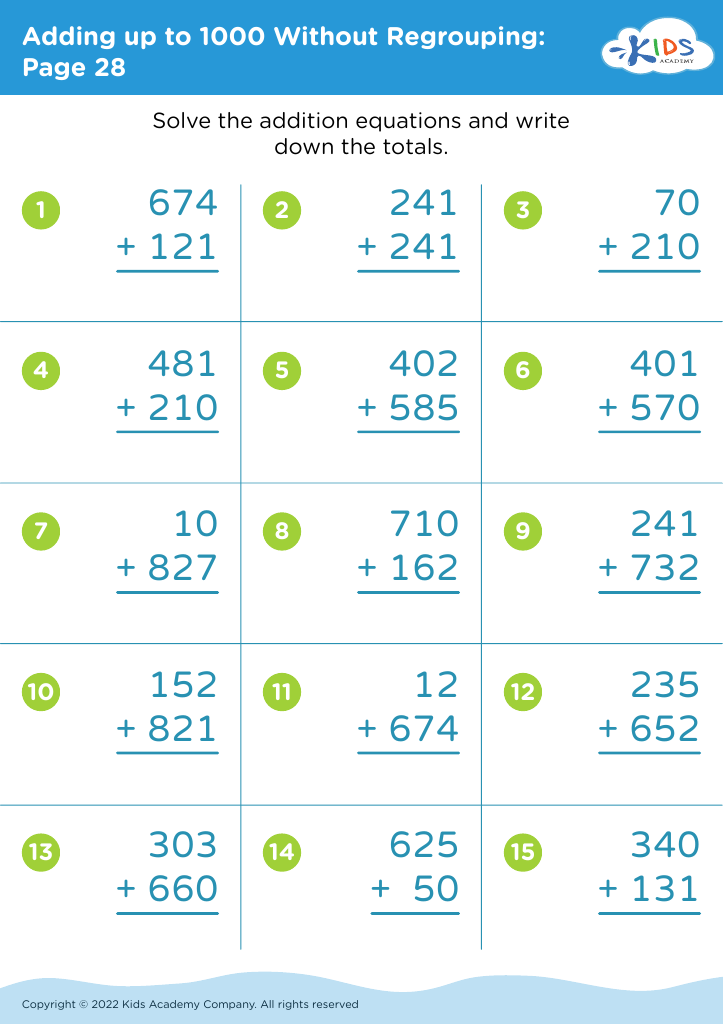








Understanding addition and subtraction of fractions in early childhood is crucial as it lays the foundation for a child's mathematical development. For ages 3-9, mastering these concepts enhances critical thinking and problem-solving skills. When parents and teachers invest time and effort into teaching addition and subtraction of fractions, children become more confident and adept at navigating complex math in their future school years.
First, fractions introduce the idea of parts of a whole, which is foundational in many everyday contexts, such as dividing food, measuring ingredients, or sharing resources. For example, when a child understands that 1/2 + 1/4 equals 3/4, they grasp how different parts can combine to make a whole or a larger part. This comprehension extends beyond math, aiding in the development of logical thinking and qualitative analysis.
Additionally, working with fractions requires children to understand and work with different denominators, promoting cognitive flexibility and mental calculation skills. This not only improves their arithmetic proficiency but also enhances their ability to approach problems from multiple angles.
By focusing on these math skills early on, children are more likely to develop positive attitudes towards mathematics, leading to greater academic success and confidence. Parents and teachers who emphasize these concepts contribute to holistic educational growth, equipping children with essential life skills.








