Comparing lengths Addition & Subtraction Worksheets for Ages 3-9
3 filtered results
-
From - To
Enhance your child's understanding of measurements with our engaging "Comparing Lengths Addition & Subtraction Worksheets" for ages 3-9! Designed to make learning fun, these worksheets help little learners develop essential math skills by comparing lengths through addition and subtraction activities. Tailored to foster a solid foundation in problem-solving, they offer colorful visuals and interactive exercises that captivate young minds. Perfect for home or classroom use, these worksheets encourage practical application of mathematical concepts. Watch as your child builds confidence and proficiency with each completed activity. Download now and make math an enjoyable adventure in measuring and comparing lengths!
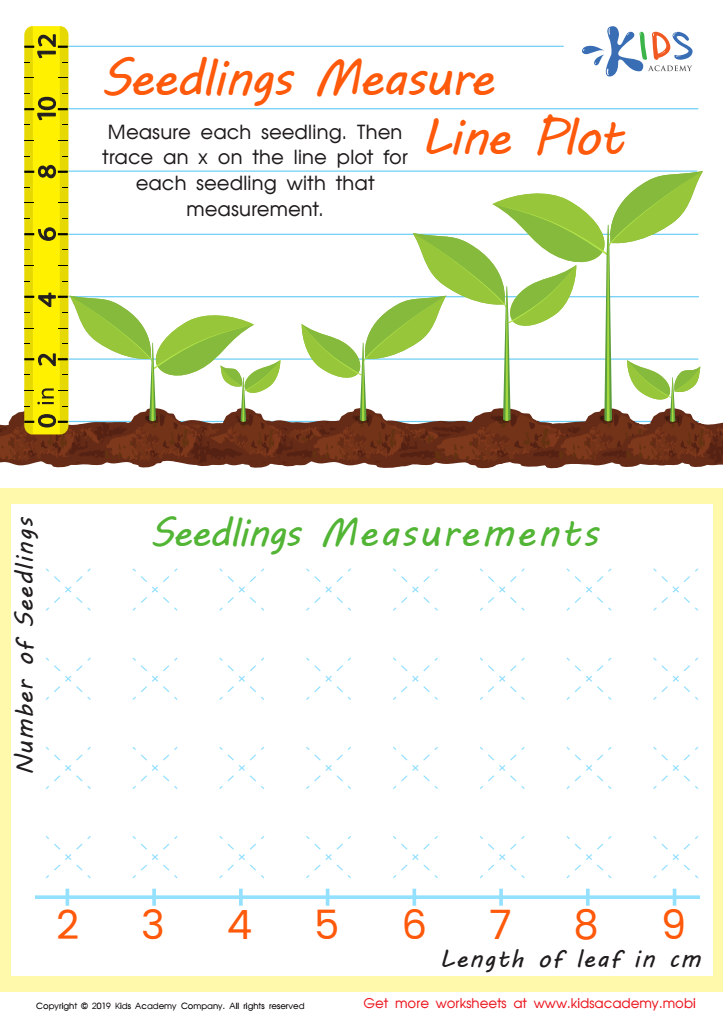
Seedling Measure Line Plot Worksheet
 Assign to My Students
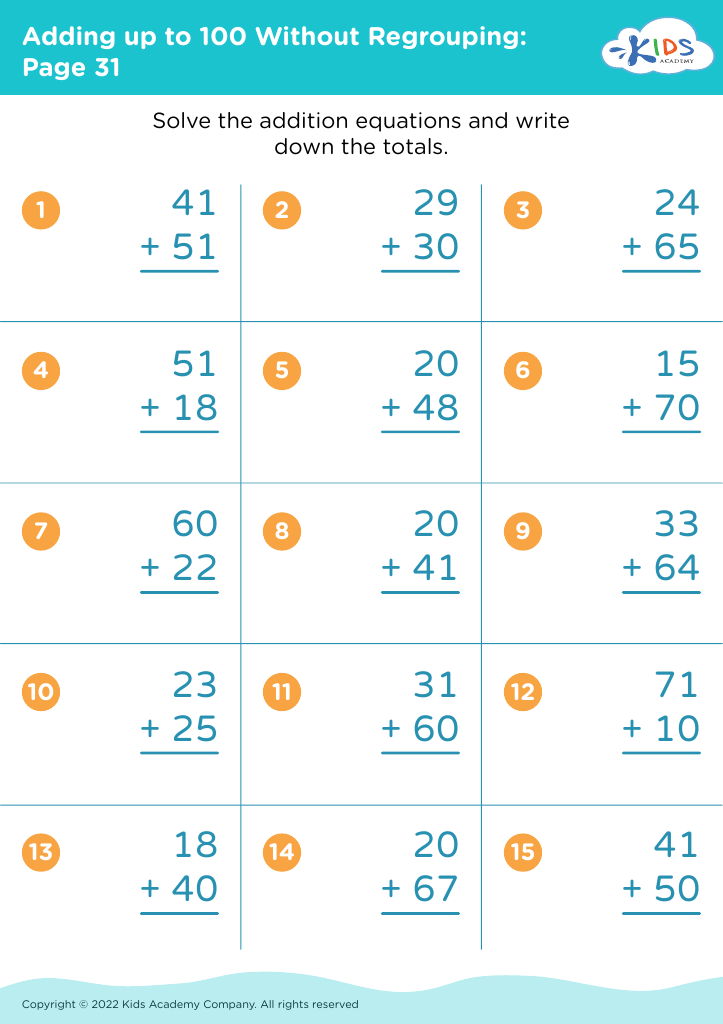
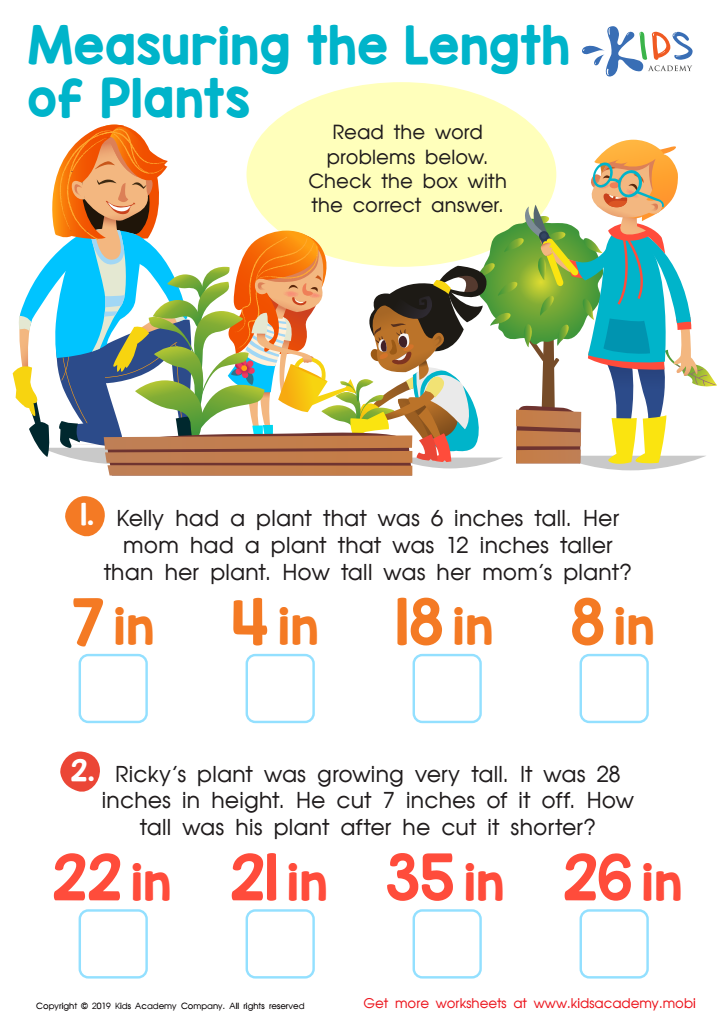
Measuring the Length of Plants Worksheet








Comparing lengths, along with understanding addition and subtraction, are essential skills for children ages 3-9 as they form the foundation of early mathematical concepts. Teaching these skills helps children develop critical thinking abilities and enhances their problem-solving capabilities, which are crucial for navigating everyday situations.
By engaging children in measuring and comparing lengths, teachers and parents encourage hands-on learning. This activity fosters a practical understanding of basic concepts such as “longer” vs. “shorter,” which kids can relate to tangible objects. It aids in the development of spatial awareness and helps them recognize patterns—skills that are not only crucial for future math problems but also for literacy and science.
Moreover, integrating addition and subtraction into these comparisons adds another layer of complexity, allowing children to manipulate and quantify what they observe. For example, when they add or subtract different lengths, they're learning to visualize concepts, reason logically, and articulate their thought processes.
Educators and parents who prioritize these fundamental math concepts in a playful, engaging way provide children with a strong mathematical foundation. This foundation supports academic success, encouraging interest in STEM (Science, Technology, Engineering, and Mathematics) fields as they grow, thereby shaping informed and capable learners.








