
Drawing skills Addition & Subtraction Worksheets for Ages 3-9
6 filtered results
Difficulty Level
Grade
Age
-
From - To
Subject
Activity
Standards
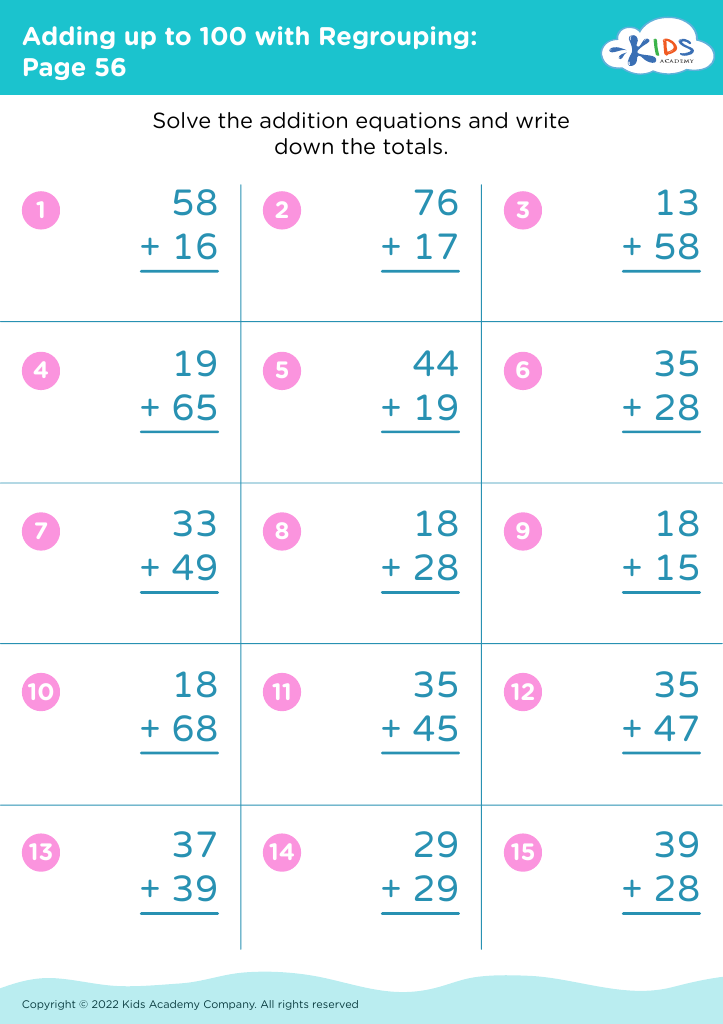
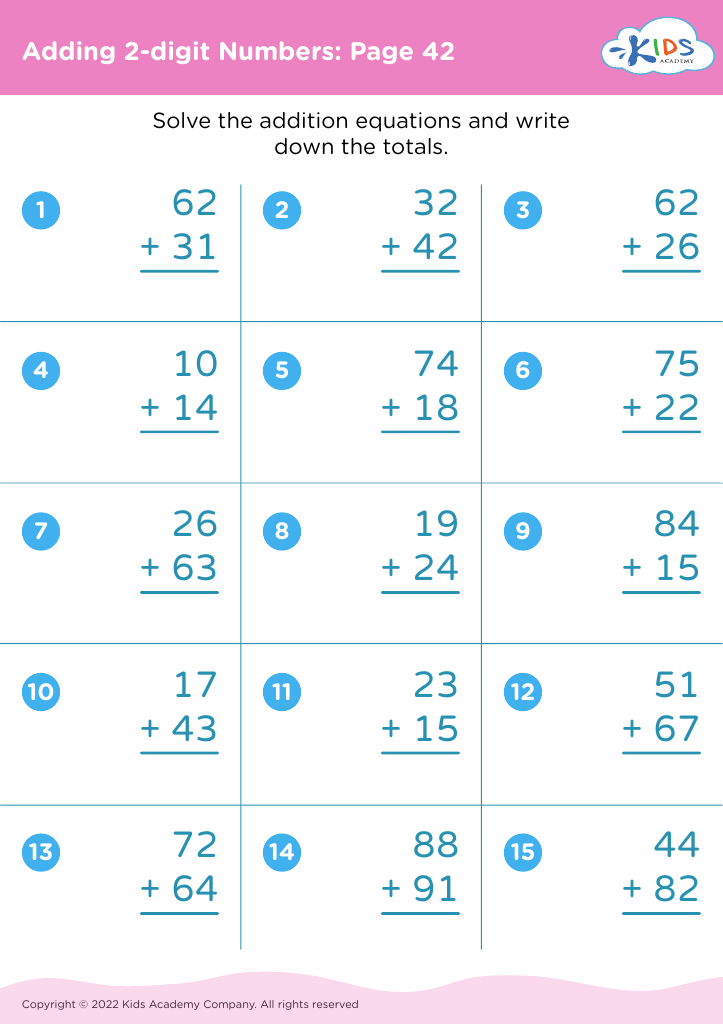
Enhance your child's math journey with our engaging Drawing Skills Addition & Subtraction Worksheets, tailored for ages 3-9! These printable worksheets combine art and arithmetic, helping young learners develop foundational math skills through fun and interactive drawing activities. Each worksheet encourages creativity while reinforcing addition and subtraction concepts, making learning enjoyable and effective. Designed by education professionals, these resources align with early learning standards, fostering both cognitive and motor skills in a playful setting. Explore our collection today to inspire your child's love for math and creativity, setting them on a path to academic success! Download now and watch them flourish!
Favorites
With answer key
Interactive
Join Kids Academy for Free
Who is primarily going to use this learning content?








Parents and teachers should care about drawing skills in conjunction with addition and subtraction for children aged 3-9 because these foundational abilities are deeply interconnected. Drawing encourages creativity and fine motor skills, essential for cognitive development. When children illustrate math concepts, they visually represent numbers, problems, and solutions, making abstract ideas more tangible.
For instance, using drawings to depict simple addition or subtraction scenarios allows children to engage with mathematical concepts dynamically. Children can use illustrations like apples, stars, or sticks to visually add or take away, enhancing comprehension. This combination of art and math helps solidify the understanding of numerical relationships and improves problem-solving skills.
Additionally, integrating drawing into math activities appeals to various learning styles, particularly visual and kinesthetic learners. This approach also promotes critical thinking and encouragement in children to express their understanding creatively. Building confidence in these skills is essential for fostering a positive attitude toward learning.
Moreover, drawing as a means of expression can help children process their emotions about learning and any difficulties they may encounter. Therefore, supporting drawing skills in the context of addition and subtraction not only aids in mathematical development but also fosters overall emotional and cognitive growth in young learners.








