Improving numeracy skills Addition & Subtraction Worksheets for Ages 3-9
4 filtered results
-
From - To
Boost your child's numeracy skills with our engaging Addition & Subtraction Worksheets designed for ages 3-9. These expertly crafted worksheets focus on making math both fun and educational, helping young learners build a strong foundation in basic arithmetic. Each worksheet is tailored to meet developmental milestones, progressing from simple counting exercises to more complex addition and subtraction problems. Perfect for both classroom settings and at-home learning, our resources aim to enhance mathematical understanding, critical thinking, and problem-solving abilities. Give your child the confidence they need in math with our user-friendly, print-ready worksheets today!
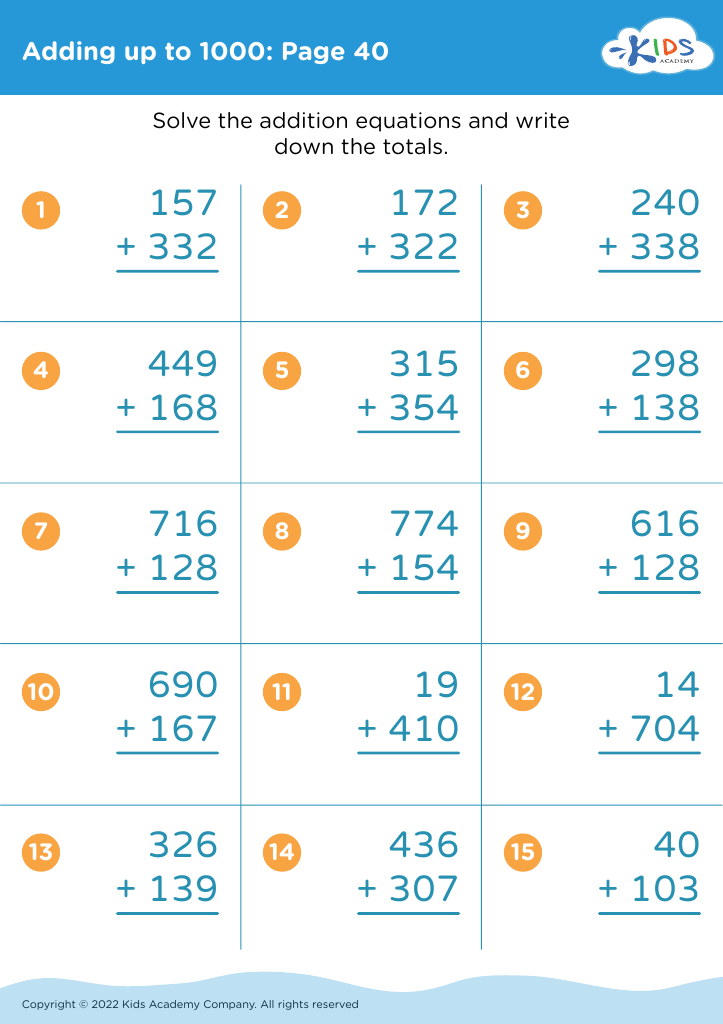
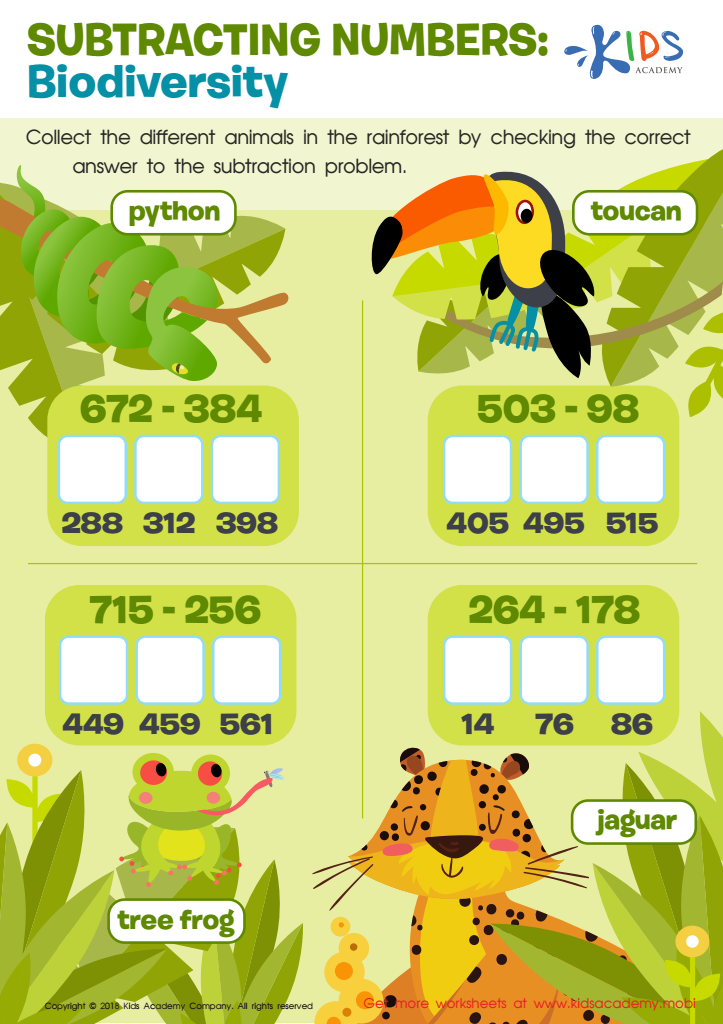
Subtracting Numbers: Biodiversity Worksheet
 Assign to My Students
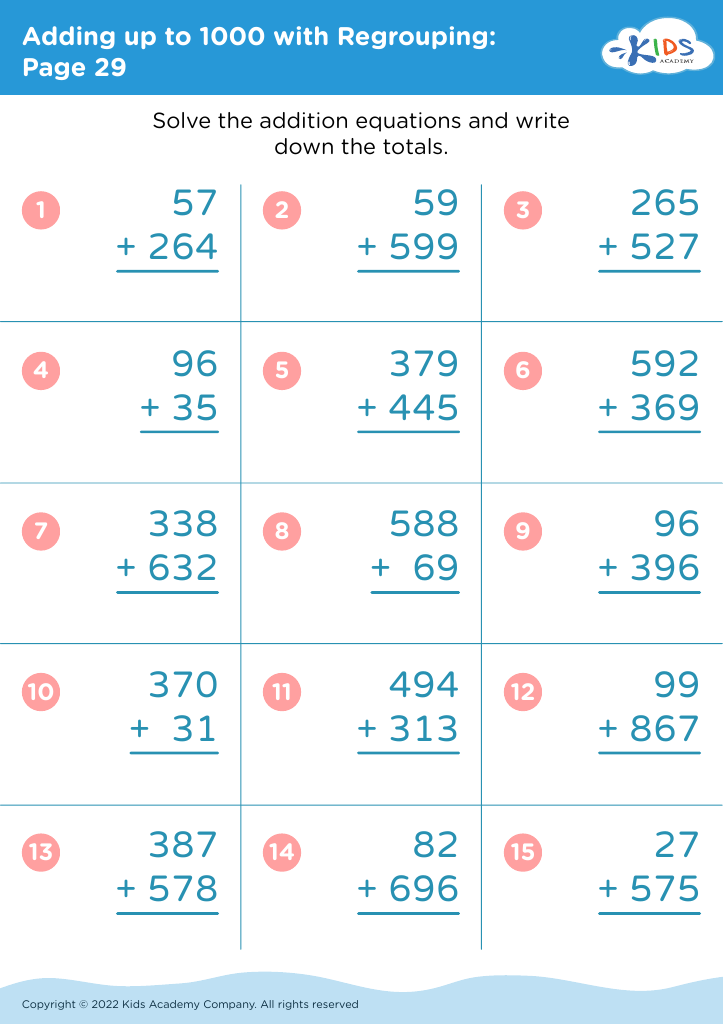
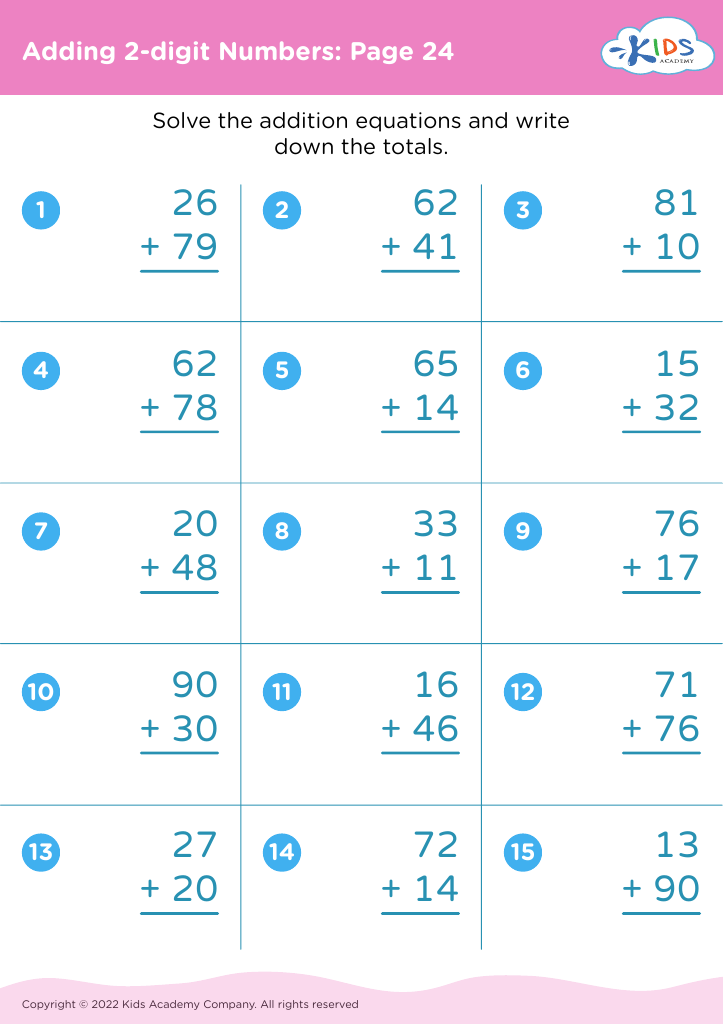








Improving numeracy skills, specifically addition and subtraction, for children ages 3-9 is crucial because these foundational math skills set the stage for future academic success and everyday life problem-solving. During these early years, children's brains are incredibly receptive to learning new concepts, making it the ideal time to instill fundamental arithmetic skills. Mastery of these concepts helps young learners develop logical thinking and enhances their ability to reason systematically.
For parents and teachers, prioritizing numeracy education means fostering children's confidence in their abilities to tackle more complex mathematical problems later on. In a world increasingly dominated by STEM (Science, Technology, Engineering, and Math) fields, early proficiency in math opens up future educational and career opportunities.
Furthermore, addition and subtraction are not just academic skills; they are practical tools children use in daily activities, like sharing toys, counting money, and understanding time. Strong numeracy skills also translate to better problem-solving abilities in real-world scenarios, promoting independence and critical thinking.
By nurturing these skills early, parents and teachers provide children with a strong academic foundation, which enhances cognitive development and leads to greater self-assurance in their academic journeys and everyday tasks. Investing in early numeracy education thus offers long-term benefits that profoundly impact a child’s overall growth and future success.








