Learn addition Addition & Subtraction Worksheets for Ages 3-9
3 filtered results
-
From - To
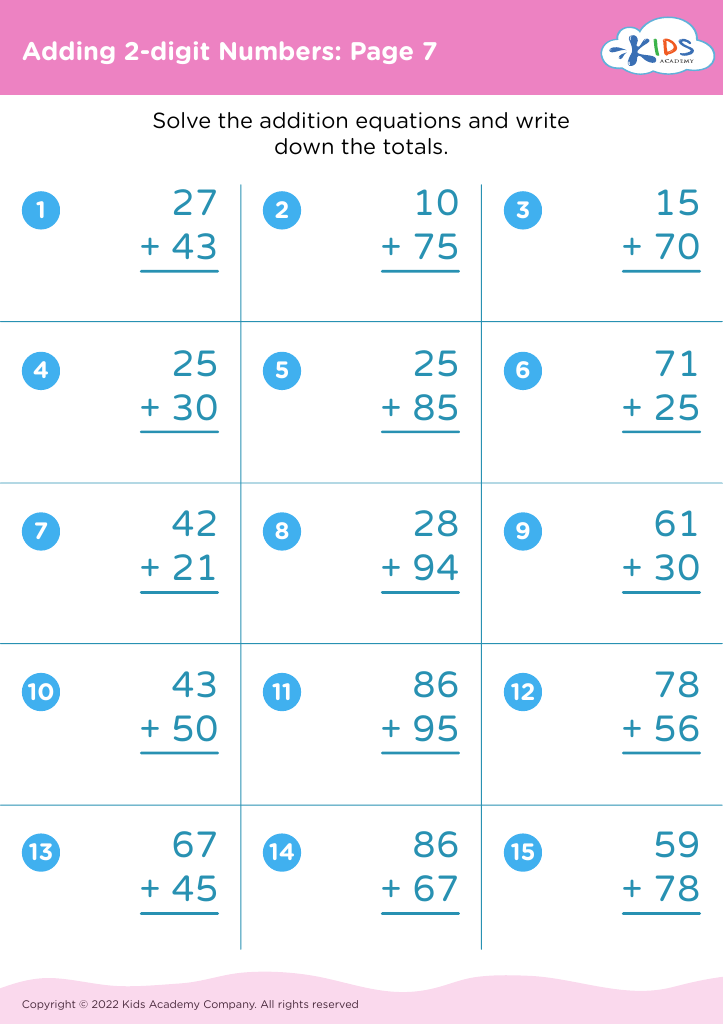
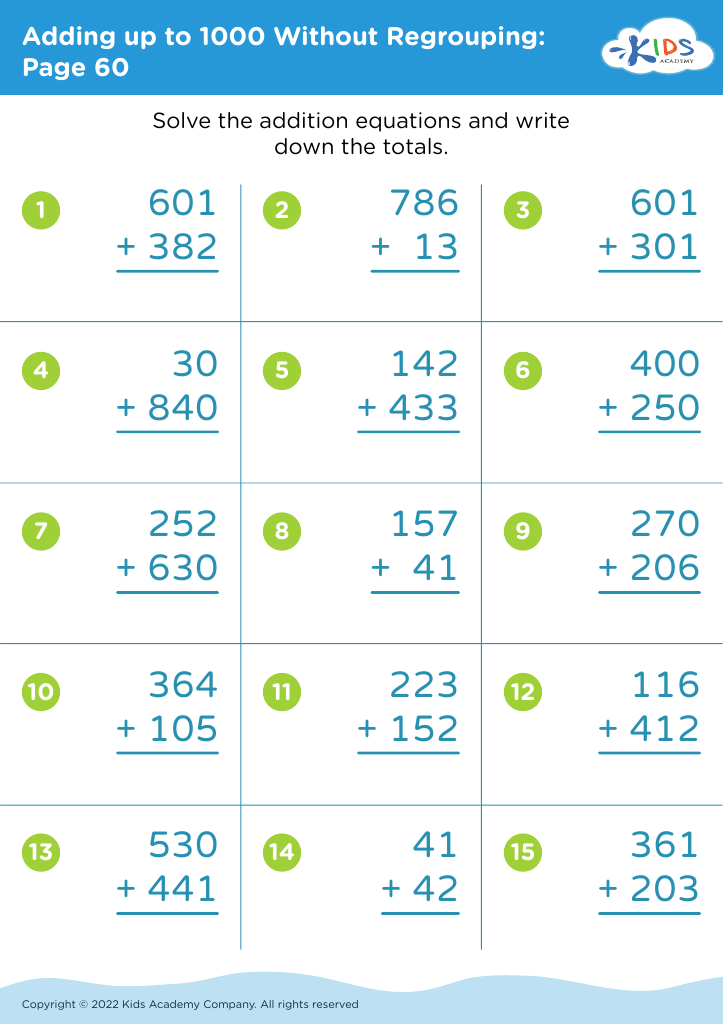
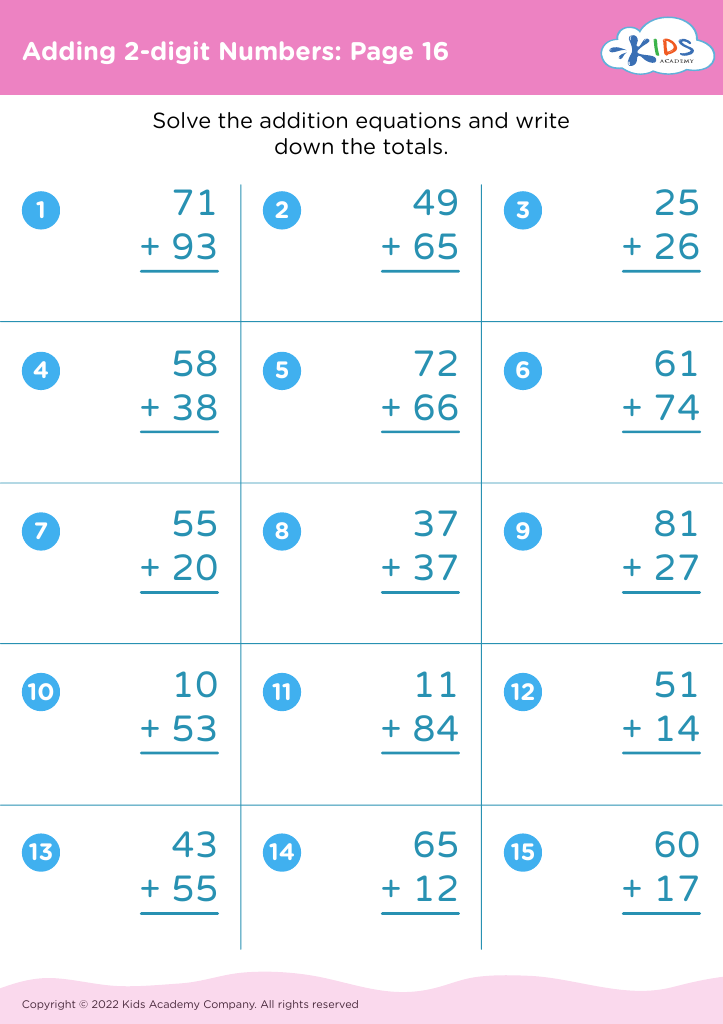
Discover a fun and engaging way to teach your child essential math skills with our "Learn Addition & Subtraction Worksheets for Ages 3-9." At Kids Academy, we offer a wide range of printable worksheets designed to help young learners grasp the basics of math. Tailored for children aged 3-9, our worksheets blend interactive exercises with colorful designs to make learning enjoyable. Whether your child is just starting with simple addition or mastering subtraction, our resources will boost their confidence and mathematical abilities. Unlock your child's potential and make math a breeze with our expert-crafted worksheets.








Parents and teachers play a pivotal role in early childhood education, and fostering early math skills such as addition and subtraction is crucial for children aged 3-9. First and foremost, foundational math skills set the stage for future academic success. Proficiency in addition and subtraction develops logical thinking, pattern recognition, and problem-solving abilities, which are essential for more complex math concepts encountered in later grades and various life situations.
Introducing addition and subtraction at an early age also promotes confidence and a positive attitude towards math. When children grasp these basic concepts early on, they are less likely to develop math anxiety and more likely to approach new challenges with enthusiasm.
Moreover, early math skills nurture critical cognitive abilities such as memory, attention to detail, and analytical thinking. These cognitive capabilities are interconnected and benefit not only math learning but also other subjects and daily activities.
Lastly, understanding addition and subtraction enhances practical life skills. Whether in managing allowance, measuring ingredients for a recipe, or sharing toys, math is everywhere in a child's world. Proficiency in these basic operations empowers children to navigate everyday tasks efficiently.
In summary, investing time and effort in teaching young children addition and subtraction is a commitment to their all-rounded development, setting a strong foundation for lifelong learning and problem-solving.








