
Mathematical skills Addition & Subtraction Worksheets for Ages 3-9
3 filtered results
Difficulty Level
Grade
Age
-
From - To
Subject
Activity
Standards
Enhance your child's arithmetic abilities with our engaging Addition & Subtraction Worksheets designed for ages 3-9. Beautifully illustrated and crafted by education experts, these worksheets transform math practice into an exciting adventure. Each activity helps young learners grasp fundamental concepts of addition and subtraction, building strong mathematical foundations through fun exercises. These resources are perfect for at-home learning or classroom use, promoting confidence and mastery in essential math skills. Foster mathematical curiosity and competence in your child with our thoughtfully designed worksheets, paving their way for future academic success. Explore our selection and inspire a love of math today!
Favorites
With answer key
Interactive
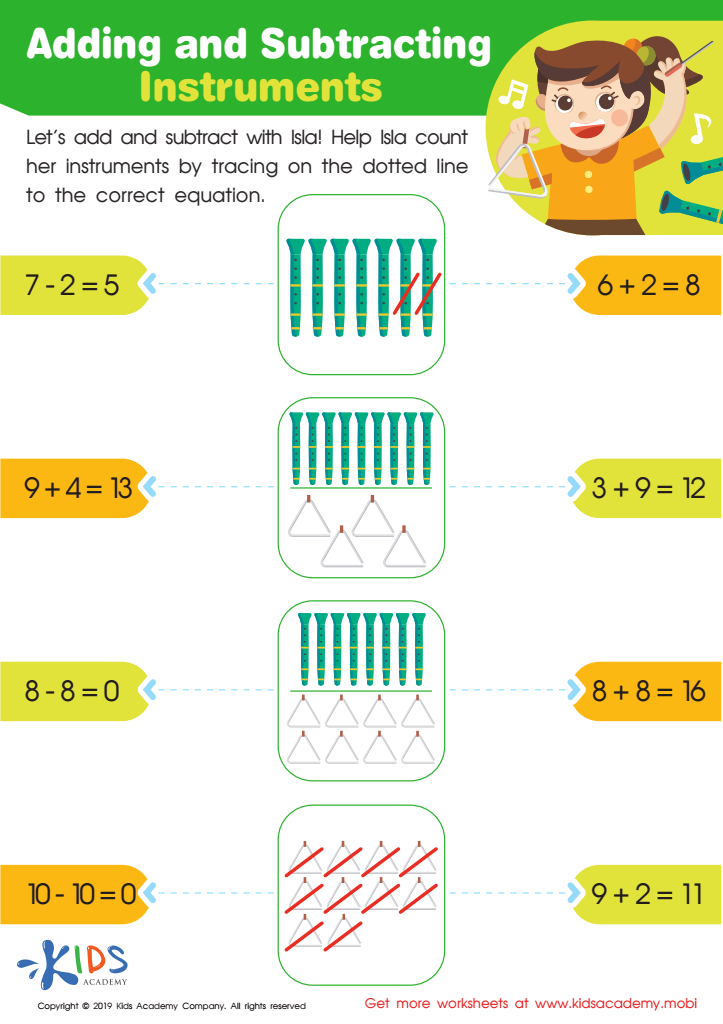
Adding and Subtracting: Instruments Worksheet
Children can help Isla count her musical instruments with this fun worksheet. The downloadable PDF gives them a chance to practice addition and subtraction by connecting pictures to equations. It's also a great way to learn the order of operations.
 Assign to My Students
Adding and Subtracting: Instruments Worksheet
Worksheet
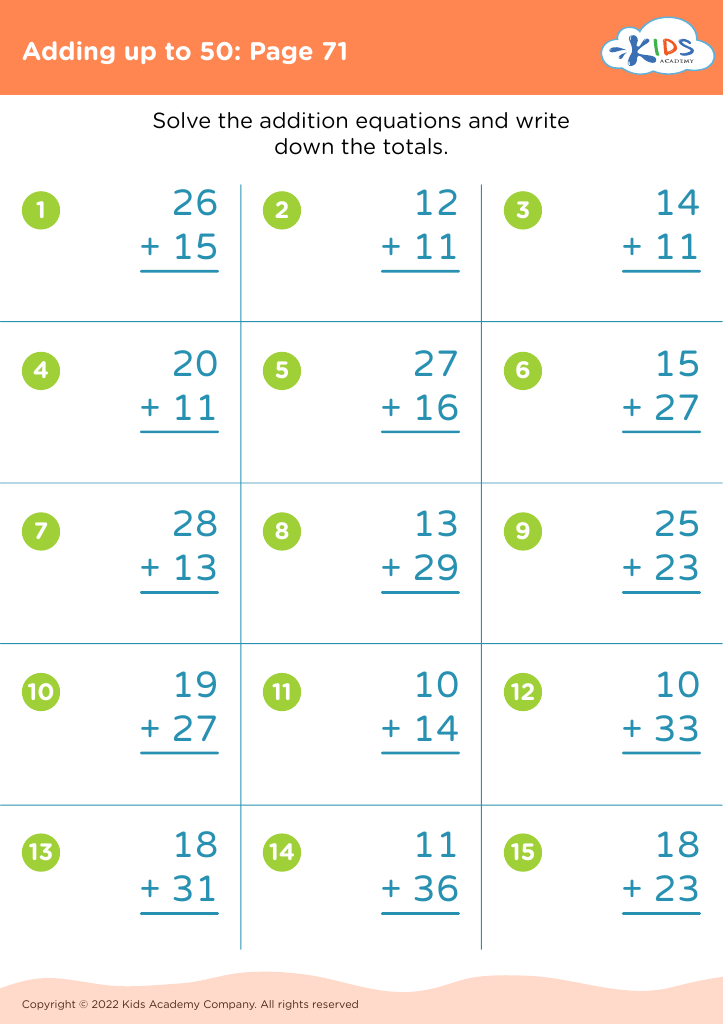
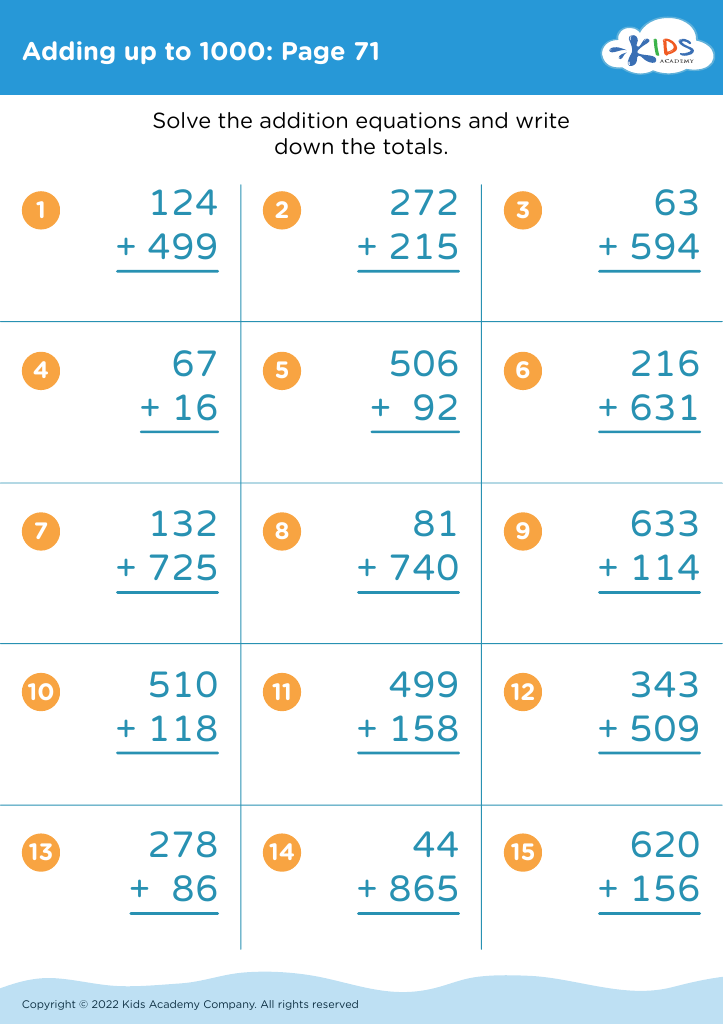
Join Kids Academy for Free
Who is primarily going to use this learning content?








Mathematical skills like addition and subtraction are foundational and critically important for children aged 3-9, serving as the building blocks for more complex mathematical concepts and problem-solving abilities later in life. For parents and teachers, nurturing these skills in early childhood is crucial for several reasons.
Firstly, early proficiency in addition and subtraction boosts cognitive development by promoting logical thinking, pattern recognition, and memory enhancement. These early math skills dovetail with other areas of learning, such as language and science. Secondly, a solid grasp of basic math fosters confidence in young learners. When children master these primary operations, they cultivate a sense of achievement and positive attitudes towards learning, which can be long-lasting.
Thirdly, addition and subtraction are pervasive in everyday life. Simple tasks such as counting objects, sharing snacks, and even understanding time rely on these skills. Early mathematical understanding equips children to manage these situations effectively and independently.
Lastly, many educational studies show that early math skills are strong predictors of later academic success, surpassing even early reading skills in some cases. By focusing on these basic operations, parents and teachers lay the groundwork for higher math learning, setting students up for strong performance in subsequent grades.
Thus, prioritizing addition and subtraction in the early years equates to fostering an environment where foundational critical thinking, self-confidence, practical life skills, and future academic achievement are all given robust support.








