
Mathematics skills Addition & Subtraction Worksheets for Ages 3-9
3 filtered results
Difficulty Level
Grade
Age
-
From - To
Subject
Activity
Standards
Boost your child’s math skills with our engaging addition and subtraction worksheets, tailored for ages 3-9. At Kids Academy, we offer a variety of fun and educational printable worksheets designed to develop essential math abilities. Our resources are perfect for different learning levels, from beginners to more advanced learners. Each worksheet combines colorful illustrations and interactive activities to make learning enjoyable. Help your child improve their number sense, problem-solving skills, and confidence in math. Visit our website to explore our collection and give your child a head start in mastering core mathematics skills today!
Favorites
With answer key
Interactive
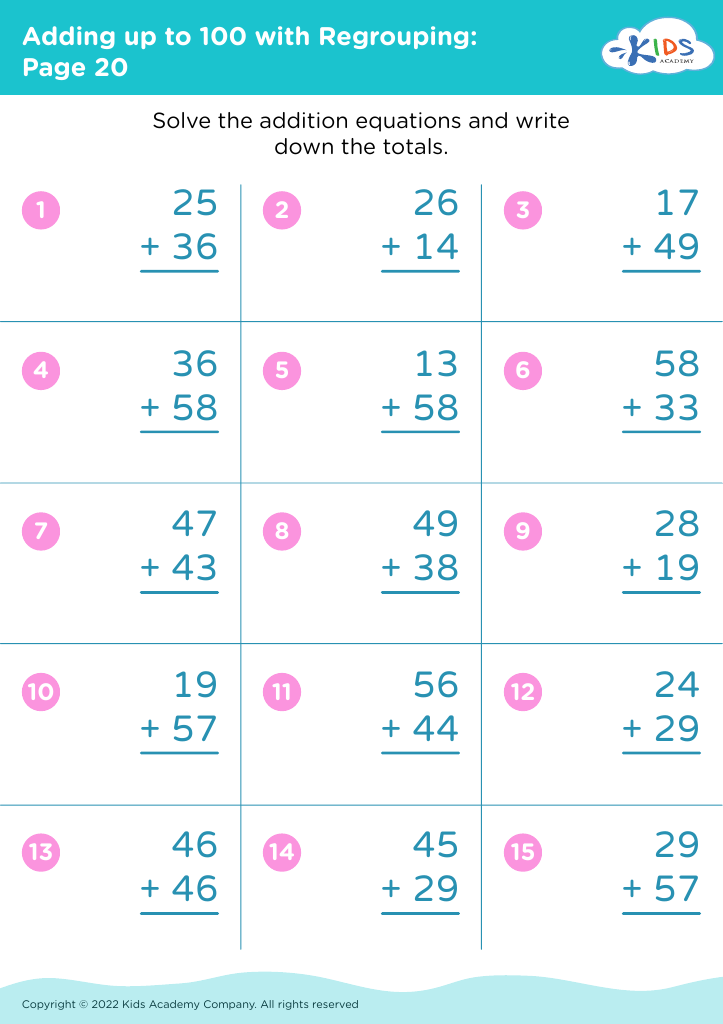
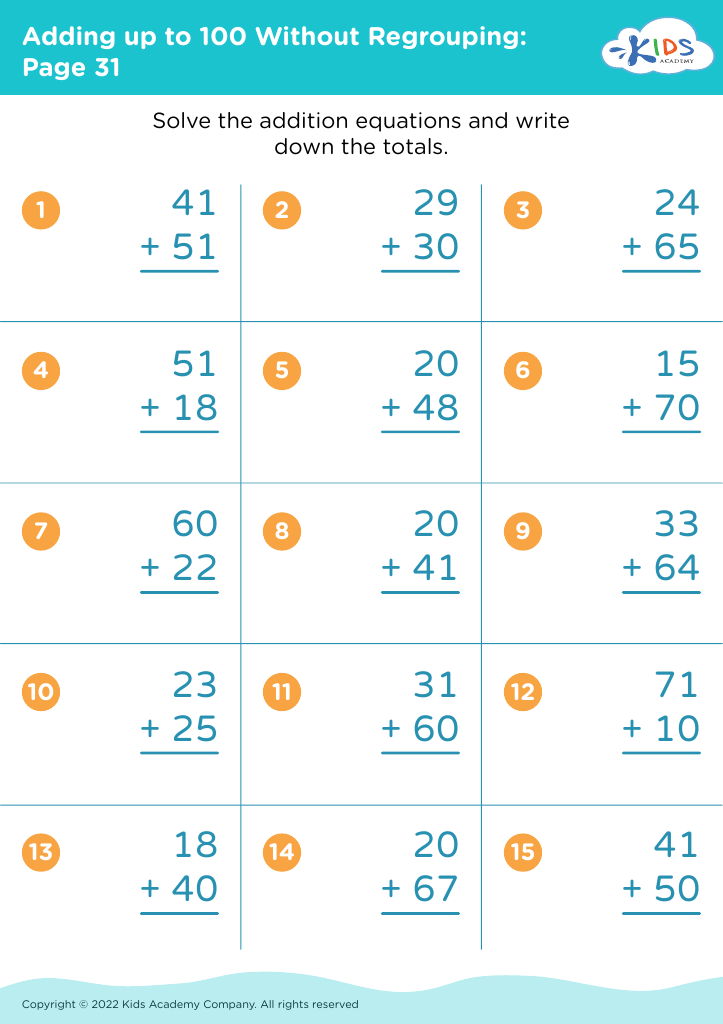
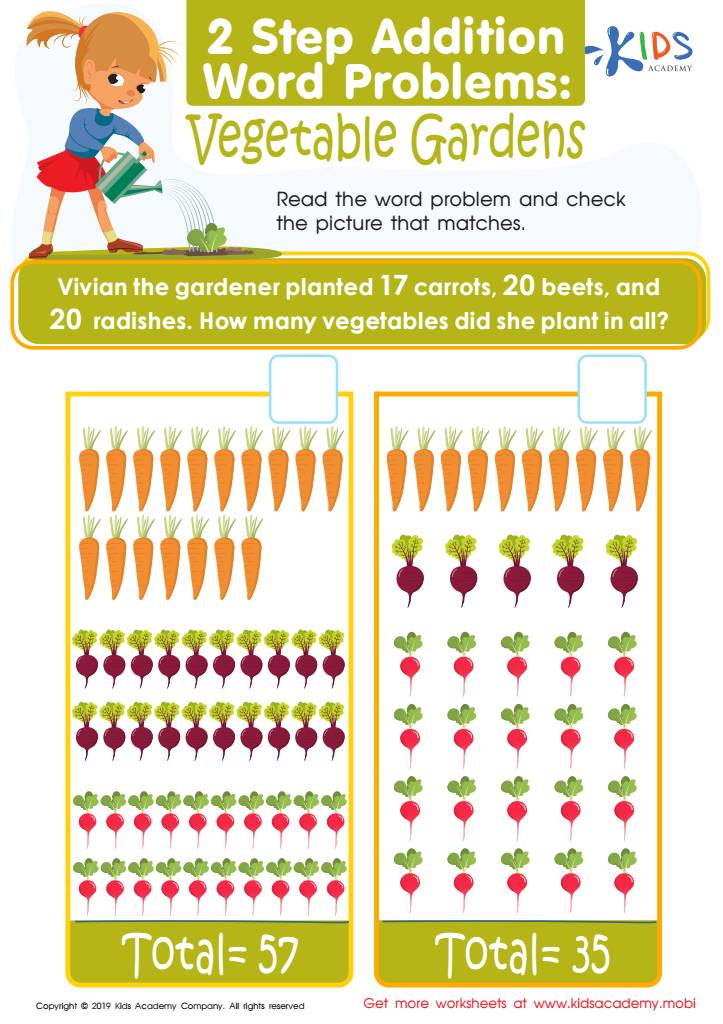
Vegetable Gardens Worksheet
Kids will have fun helping their buddy Vivian solve the addition word problems. Using one-to-one representation, they'll count the beets, carrots and radishes, then figure out the multi-step word problems. After, they'll check the picture that matches the answer, boosting their understanding of adding multiple numbers for one answer.
 Assign to My Students
Vegetable Gardens Worksheet
Worksheet
Join Kids Academy for Free
Who is primarily going to use this learning content?








For children aged 3-9, establishing a solid foundation in mathematics, specifically addition and subtraction, is crucial for multiple reasons. These fundamental skills are the building blocks for all future mathematical concepts and problem-solving abilities. Firstly, understanding addition and subtraction fosters cognitive development by enhancing logical thinking, pattern recognition, and analytical skills. Developing these skills early makes more advanced math topics easier to grasp later on.
Additionally, proficiency in these basic operations cultivates confidence in young students as they tackle progressively challenging tasks. When children expect that they can solve simple math problems, they build a positive attitude towards mathematics, reducing math anxiety and fostering a growth mindset.
Math skills also have practical implications in everyday life. Young children use addition and subtraction in real-world scenarios, such as sharing toys, managing their allowances, or noticing how many pieces of a puzzle fit together. These activities also improve their understanding of mathematics as a tool, promoting functional numeracy crucial for adult life.
From an academic perspective, early mastery of addition and subtraction aligns with educational standards and supports overall academic achievement. Research consistently shows that early math skills are strong predictors of later academic success, not only in math but across multiple subject areas.
By prioritizing these essential skills, parents and teachers help children build a sturdy educational foundation and equip them with tools for lifelong learning and success.








