Mental arithmetic Addition & Subtraction Worksheets for Ages 3-9
6 filtered results
-
From - To
Discover our engaging Mental Arithmetic Addition & Subtraction Worksheets for children ages 3-9! Designed to enhance numeracy skills, these worksheets focus on developing quick mental calculation abilities. Our colorful and interactive exercises make learning fun, helping young learners master addition and subtraction through practice and play. Tailored for early education, each worksheet encourages independent thinking while fostering a love for math. Perfect for classroom or home use, our resources offer a variety of challenges to match different skill levels. Boost your child's confidence in math with our carefully crafted worksheets that promote cognitive development and numerical fluency!
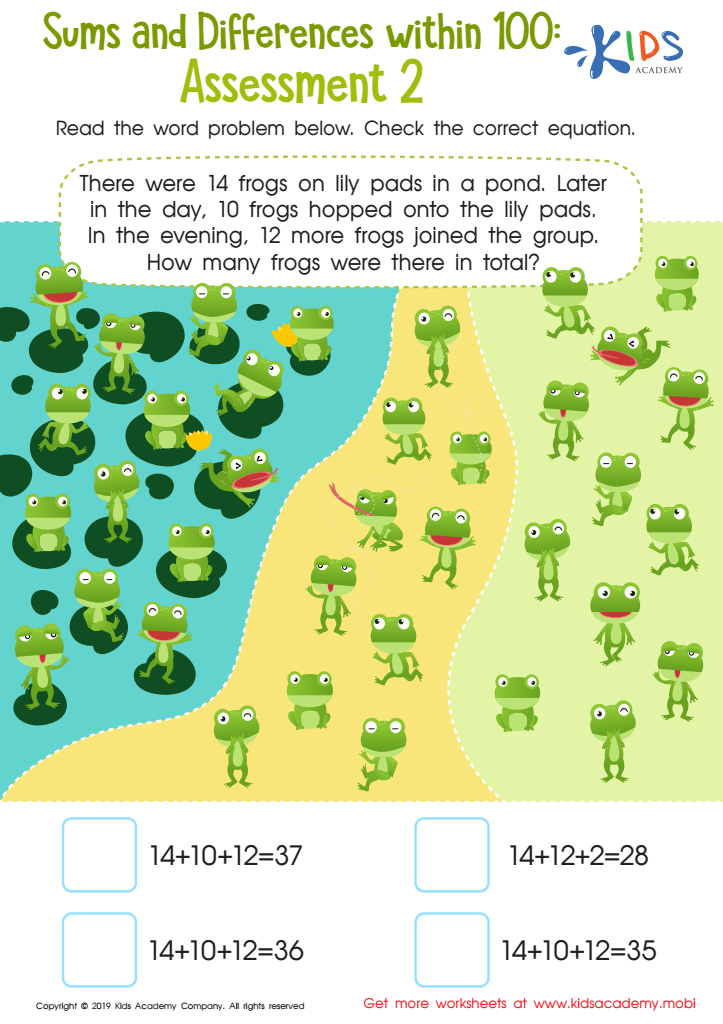
Sums and Differences Within 1 - Assessment 2 Worksheet
 Assign to My Students
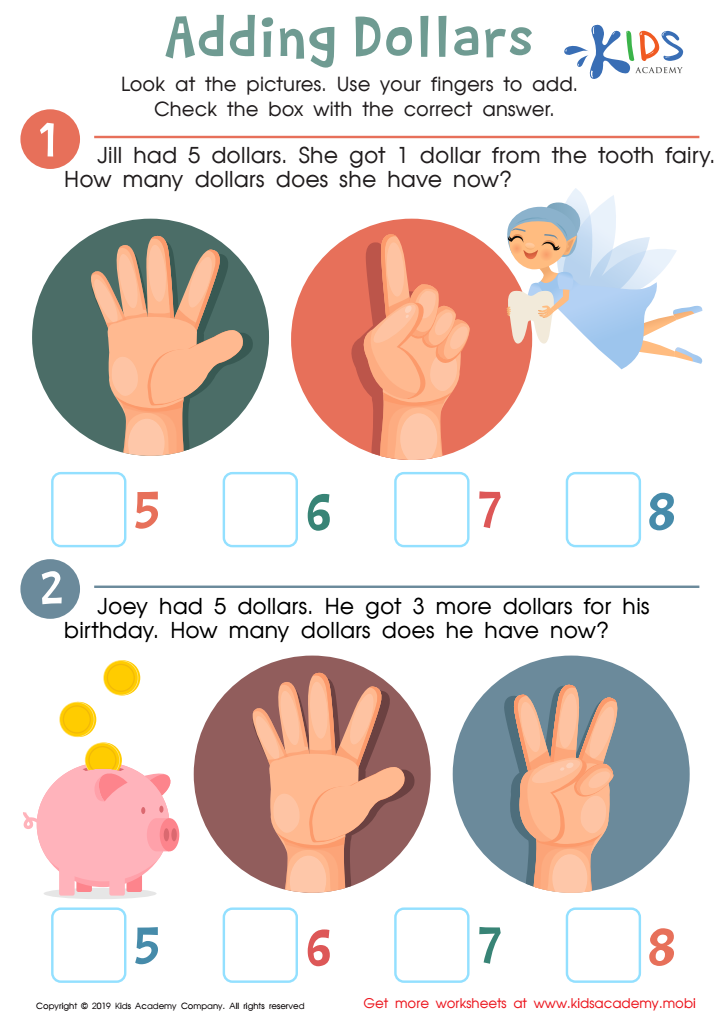
Tooth Fairy Addition Worksheet
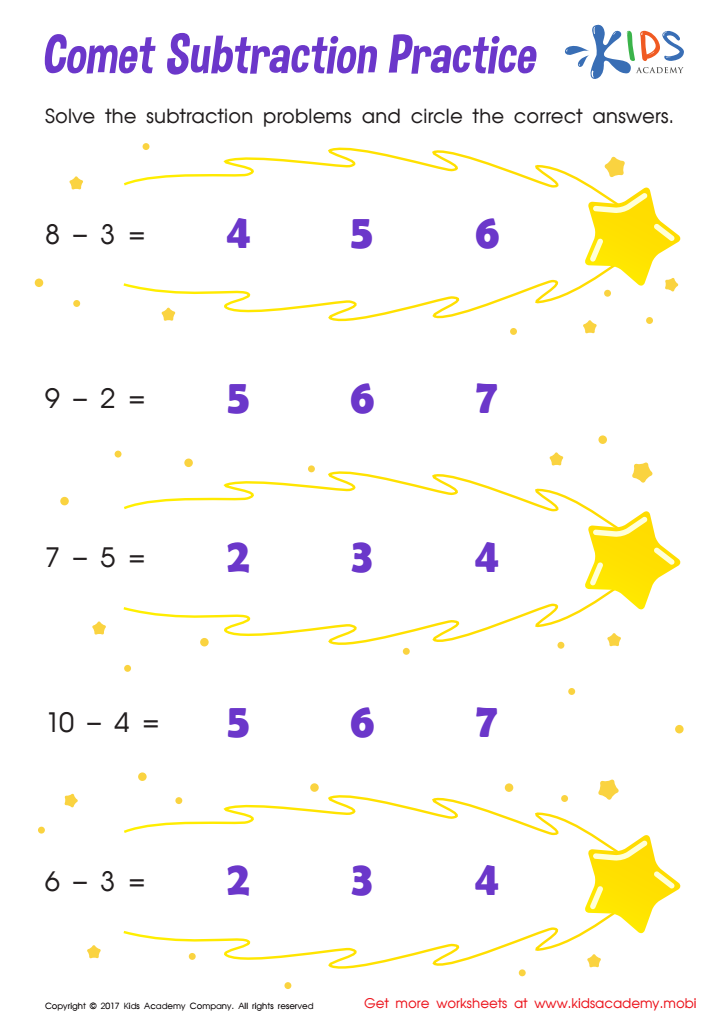
Comet Subtraction Practice Substraction Worksheet
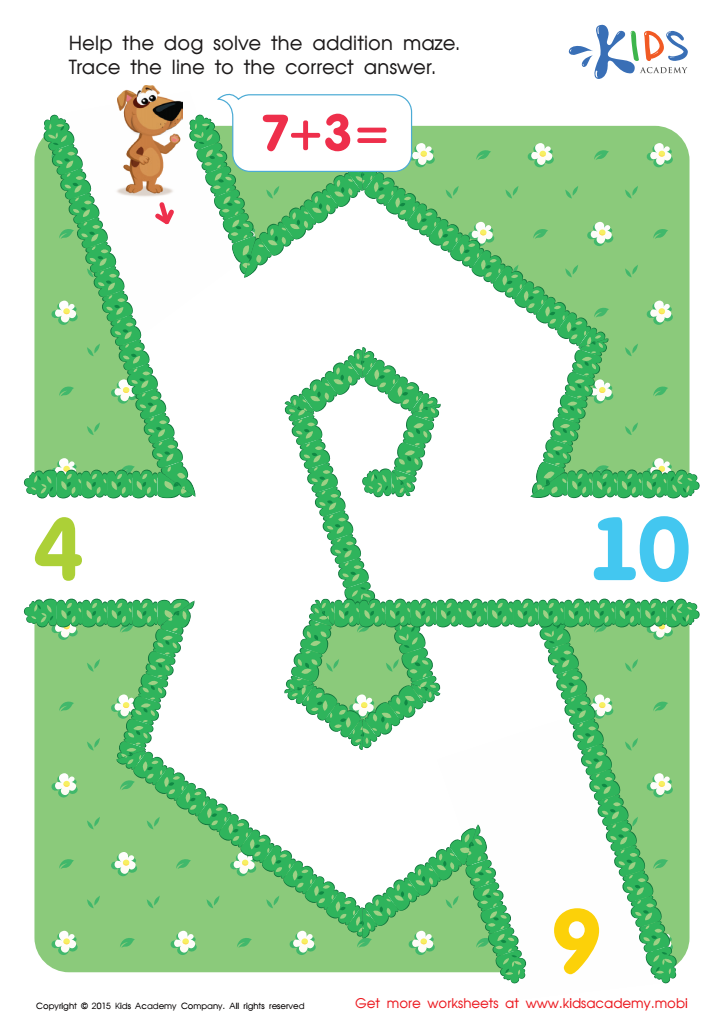
Seven Plus Three Worksheet
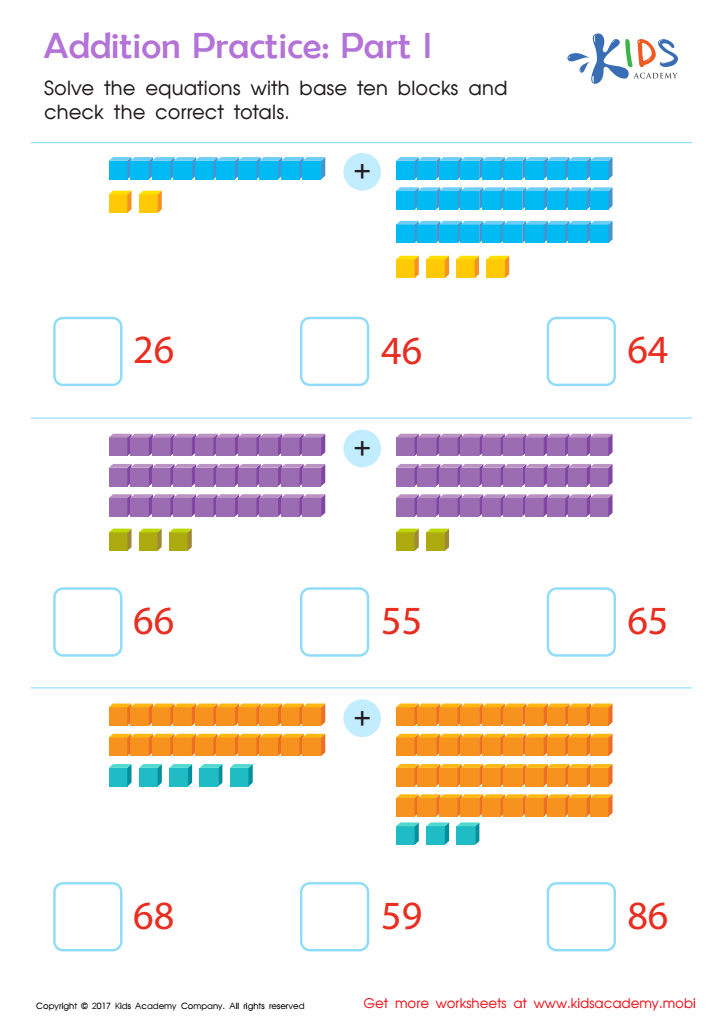
Addition Practice Sheet: Part 1
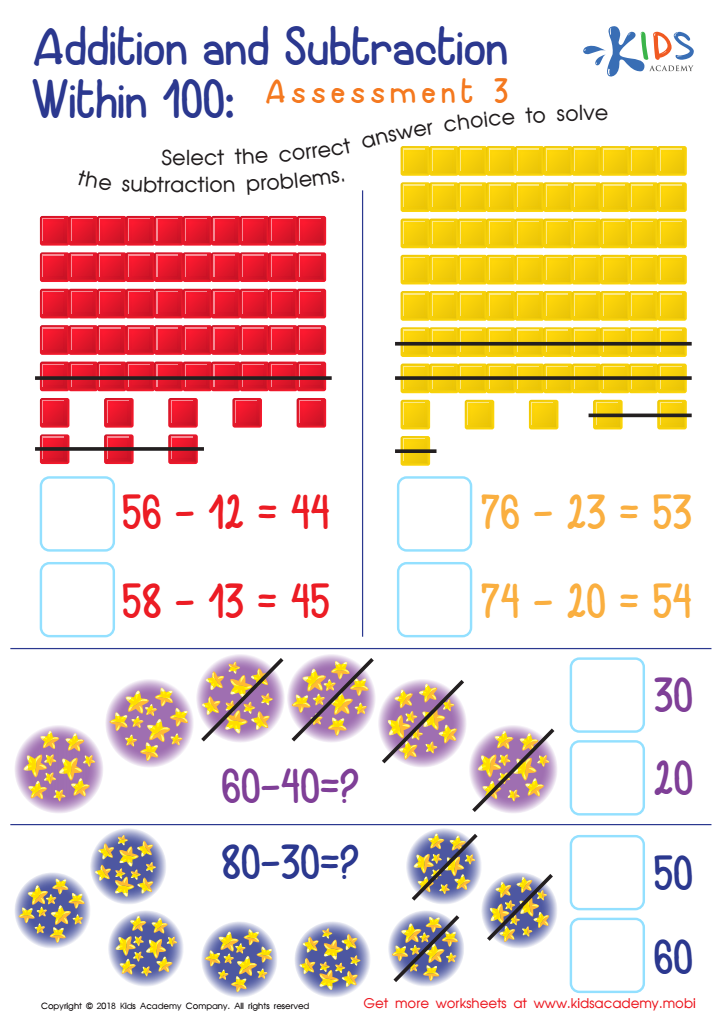
Addition and Subtraction Within 1: Assessment 3 Worksheet








Mental arithmetic, particularly addition and subtraction, is a crucial component of early childhood education for children aged 3-9. Developing these skills lays the foundation for future mathematical understanding and problem-solving abilities. Through mental arithmetic, children learn to process numbers, recognize patterns, and internalize mathematical concepts, which boosts their cognitive development.
Parents and teachers should care about mental arithmetic for several reasons. First, it fosters critical thinking and enhances concentration, skills that extend beyond mathematics. Engaging in mental calculations encourages children to visualize problems and find solutions independently, promoting a sense of accomplishment and boosting self-esteem.
Additionally, mental arithmetic nurtures a positive attitude toward math. If children find joy and confidence in mathematical tasks early on, they are more likely to embrace complex topics in later grades. Furthermore, mastering basic addition and subtraction will ease the transition to higher-level concepts in mathematics, such as multiplication and division.
Finally, incorporating mental arithmetic into daily activities allows for practical learning experiences, making math relevant in everyday life. By prioritizing mental arithmetic, parents and educators equip children with the essential tools they need for academic success and a lifelong appreciation for mathematics.








