Problem-solving development Addition & Subtraction Worksheets for Ages 3-9
3 filtered results
-
From - To
Enhance your child's math skills with our Problem-Solving Development Addition & Subtraction Worksheets designed for ages 3-9. These engaging and interactive worksheets promote critical thinking and help young learners build a strong foundation in arithmetic. Each worksheet focuses on real-life scenarios, enabling children to apply their addition and subtraction knowledge in practical situations. With colorful illustrations and child-friendly layouts, our materials make learning fun and effective. Ideal for home or classroom use, our worksheets cater to various skill levels, ensuring that every child can excel. Empower your child’s learning journey and boost their confidence in math with our thoughtfully crafted resources!
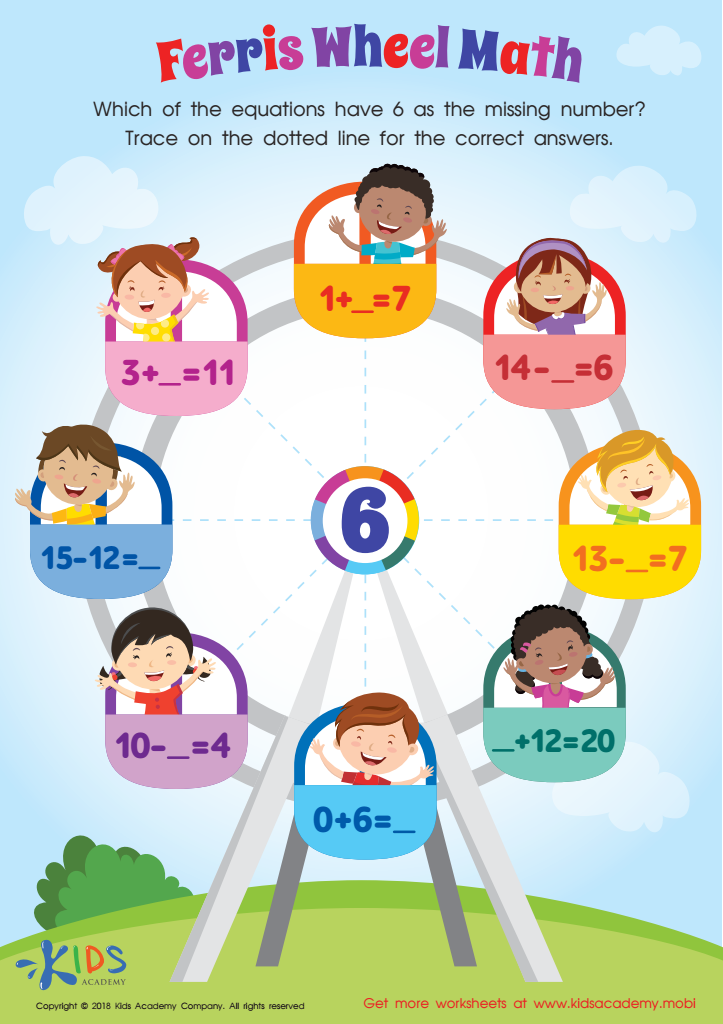
Missing Number: Ferris Wheel Math Worksheet
 Assign to My Students
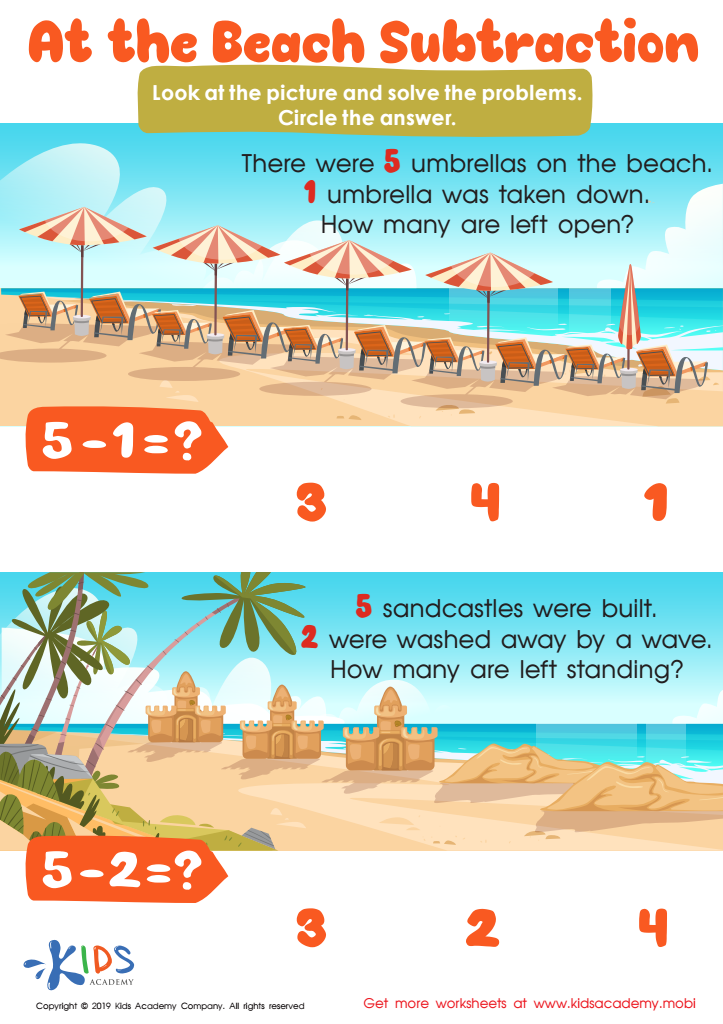
At the Beach Subtraction Worksheet
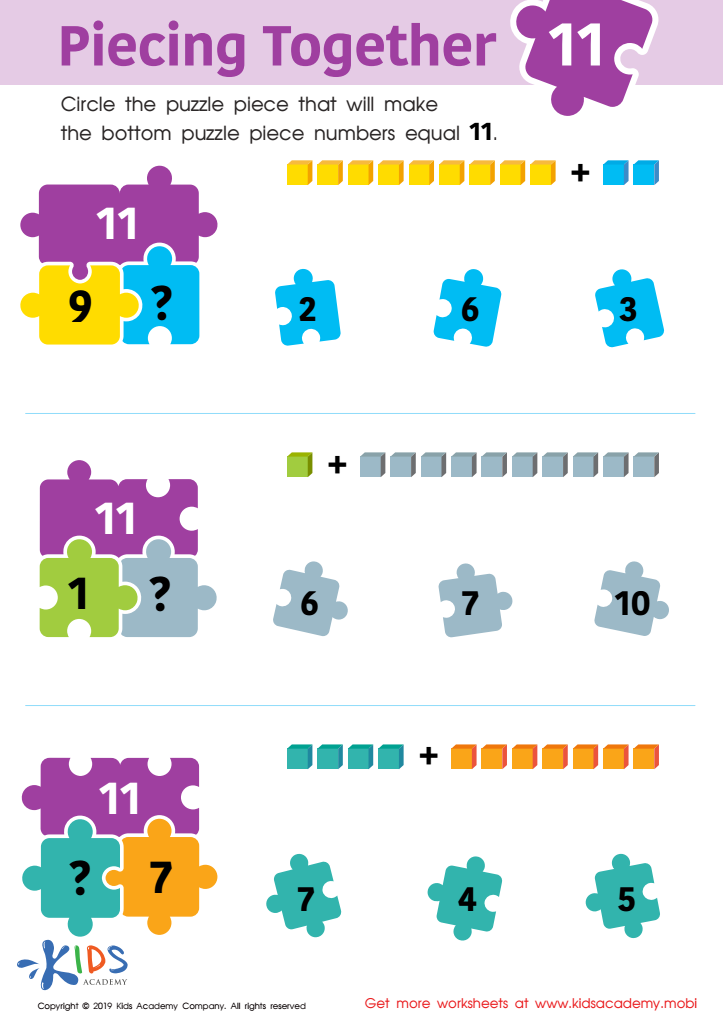
Piecing Together 11 Worksheet








Parents and teachers should prioritize the development of problem-solving skills in addition and subtraction for children aged 3-9, as these foundational skills are crucial for a child's cognitive development and future learning. At this age, children are naturally curious and eager to explore. Engaging them in problem-solving activities helps enhance their critical thinking, reasoning, and analytical skills, which are essential for all areas of life.
Learning addition and subtraction through problem-solving encourages children to understand concepts rather than memorize facts. It allows them to make connections between numbers, their meanings, and real-world applications—fostering a deeper understanding of mathematics. This approach helps build resilience; as children encounter and overcome challenges, they learn perseverance and adaptability, essential traits for academic success.
Moreover, early exposure to math problems promotes confidence in dealing with numbers, setting a positive attitude towards mathematics as they age. By nurturing problem-solving skills in young learners, adults not only prepare them for future academic endeavors, but also equip them with tools for life, enabling them to tackle challenges with creativity and strategic thinking. Cultivating these skills during early childhood is key to fostering lifelong learners who feel empowered in their mathematical abilities.








