Recognizing equivalent fractions Addition & Subtraction Worksheets for Ages 3-9
5 filtered results
-
From - To
Enhance your child's math skills with our "Recognizing Equivalent Fractions" addition and subtraction worksheets, designed specifically for ages 3-9. These engaging worksheets introduce young learners to the concept of equivalent fractions in a fun and interactive way. Children will practice identifying and recognizing equivalent fractions while mastering addition and subtraction strategies. Our colorful illustrations and age-appropriate activities ensure that kids remain motivated and excited about learning. Ideal for both home study and classroom use, these worksheets provide the perfect foundation for future math success. Watch your child's confidence soar as they explore the world of fractions with ease!
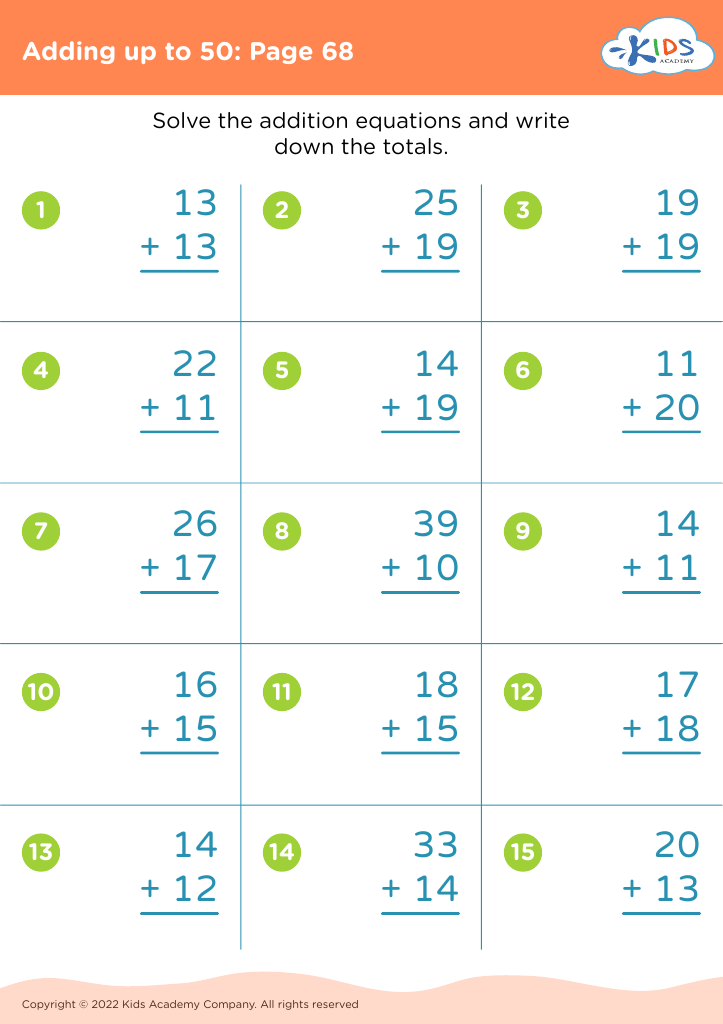
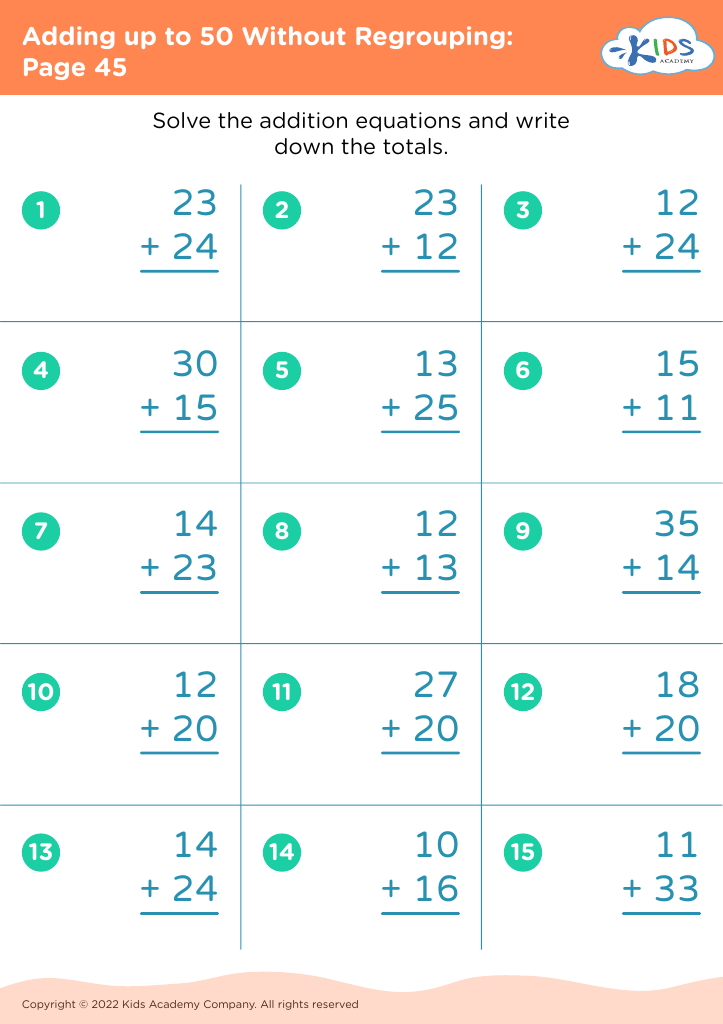
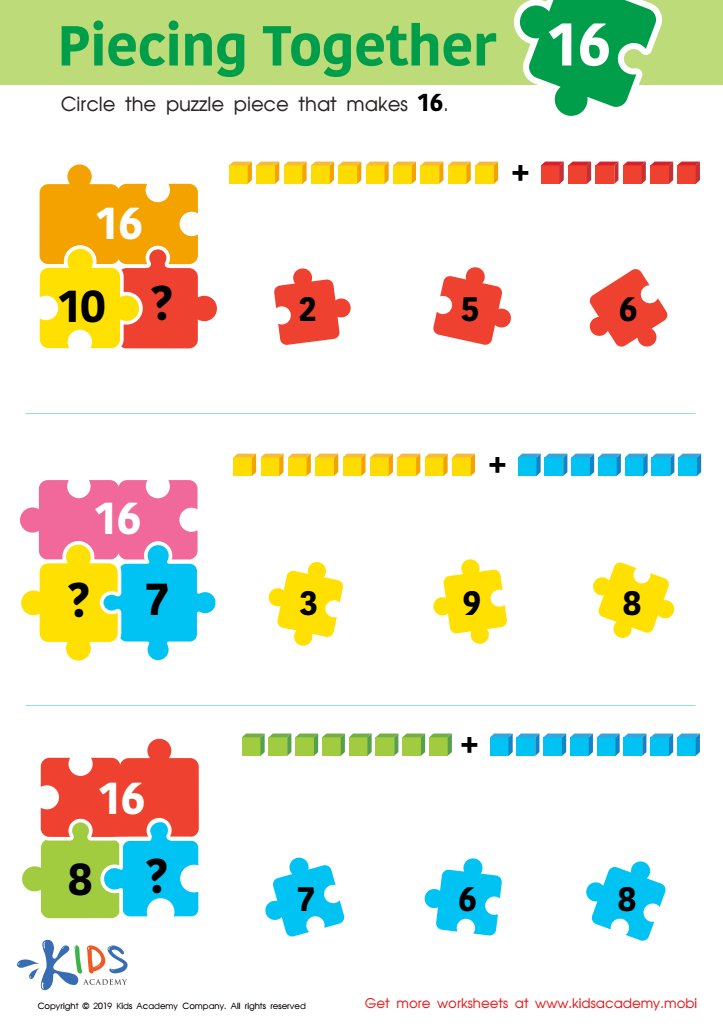
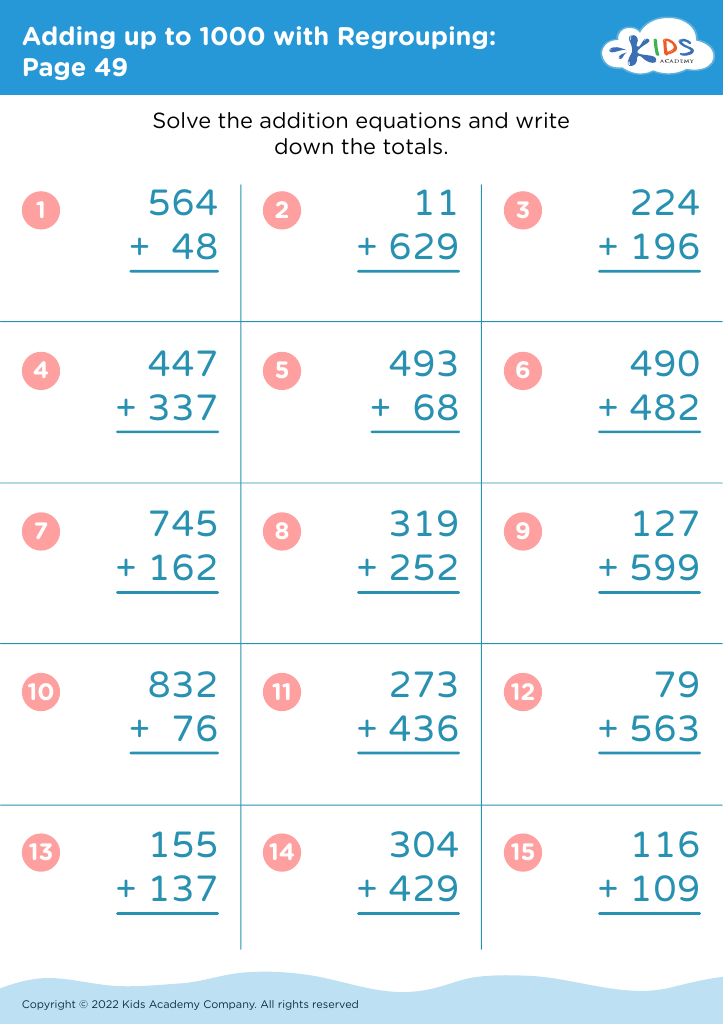
Piecing Together 16 Worksheet
 Assign to My Students
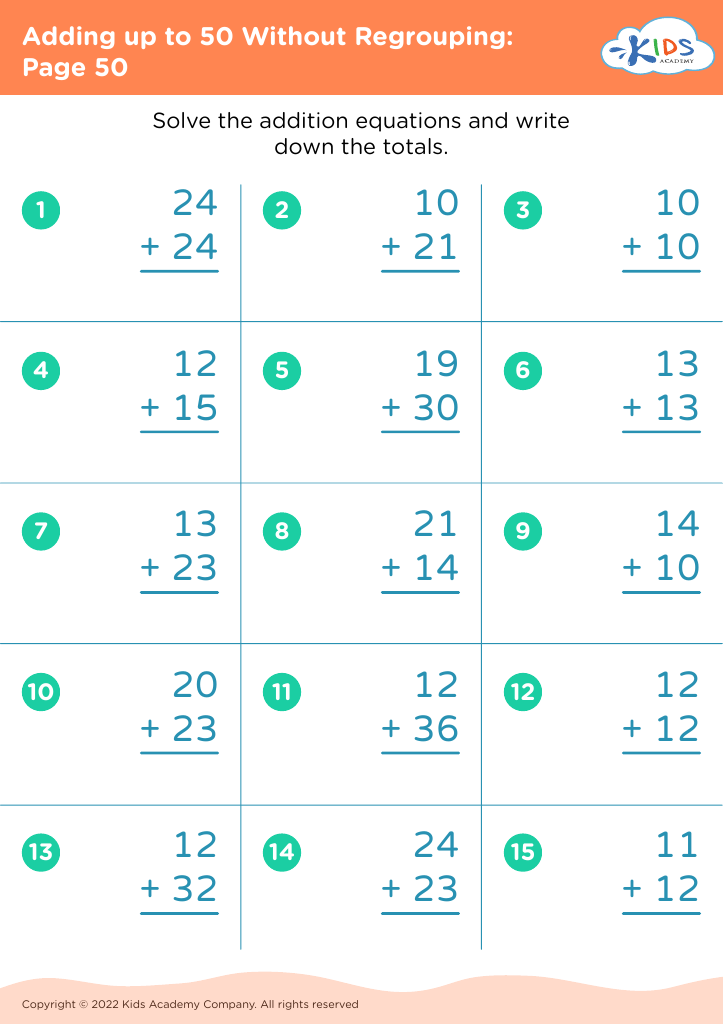








Recognizing equivalent fractions, as well as mastering addition and subtraction of these fractions, is crucial for children aged 3-9 for several reasons. Firstly, early exposure to these concepts lays a strong foundation for mathematical understanding. As children begin to recognize that different fractions can represent the same quantity, they develop a deeper understanding of numbers, enhancing their critical thinking and problem-solving skills.
Moreover, equivalent fractions serve as a stepping stone to more complex mathematical concepts. They are essential for comprehension in later grades when students tackle decimals and percentages, making them indispensable in a child's educational journey.
Additionally, mastering addition and subtraction of fractions promotes discipline and perseverance, helping children learn the importance of working through challenges. Engaging parents and teachers in this process fosters a supportive learning environment. Collaborative activities can make abstract concepts relatable and enjoyable.
Ultimately, a firm grasp of equivalent fractions and their operations is not just about arithmetic; it's about cultivating lifelong skills in logical reasoning, analytical thinking, and confidence in mathematics. By nurturing these abilities early on, parents and teachers can empower the next generation to tackle more advanced mathematical concepts with ease.








