Understand number relationships Addition & Subtraction Worksheets for Ages 3-9
3 filtered results
-
From - To
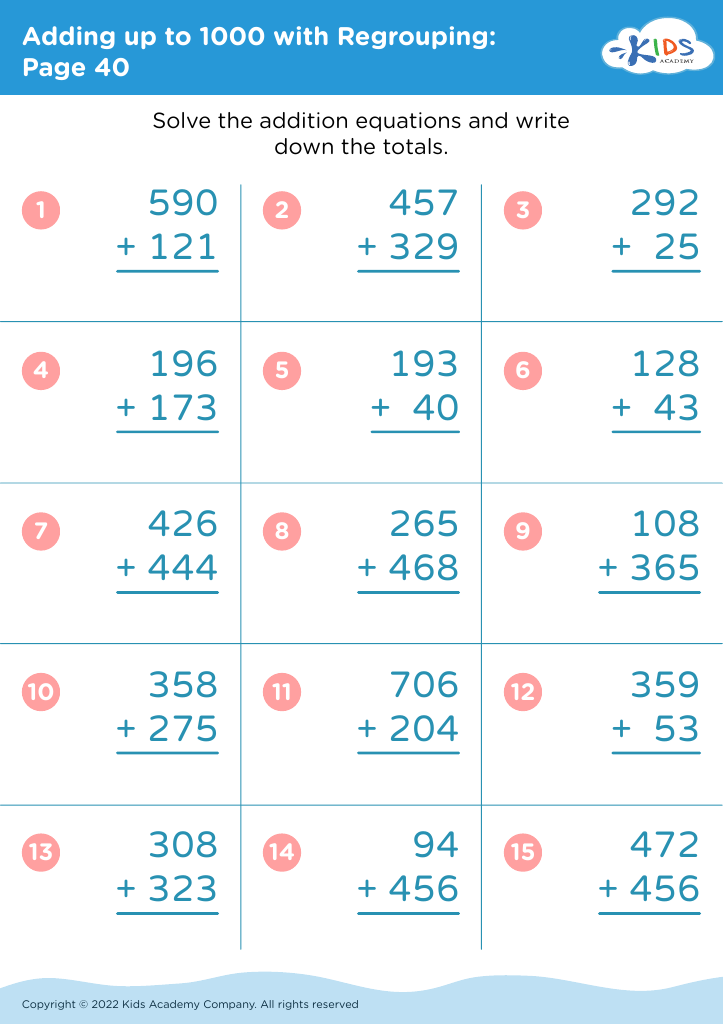
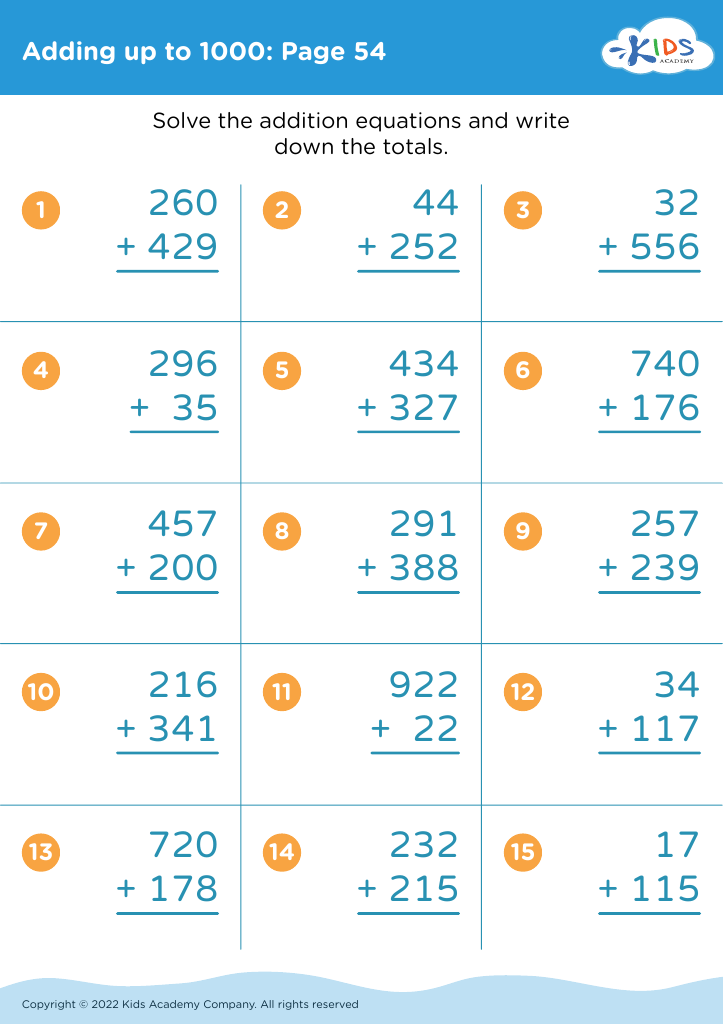
Discover engaging "Understand Number Relationships: Addition & Subtraction Worksheets" designed specifically for children ages 3-9! These educational resources help young learners build a strong foundation in basic math concepts through fun and interactive activities. Our worksheets emphasize the connection between addition and subtraction, fostering critical thinking and problem-solving skills. Perfect for parents and teachers alike, these printable worksheets reinforce key number relationships and promote numerical fluency. Whether in a classroom setting or at home, these activities make math enjoyable, paving the way for future success. Start your child's mathematical journey today with our thoughtfully crafted worksheets!
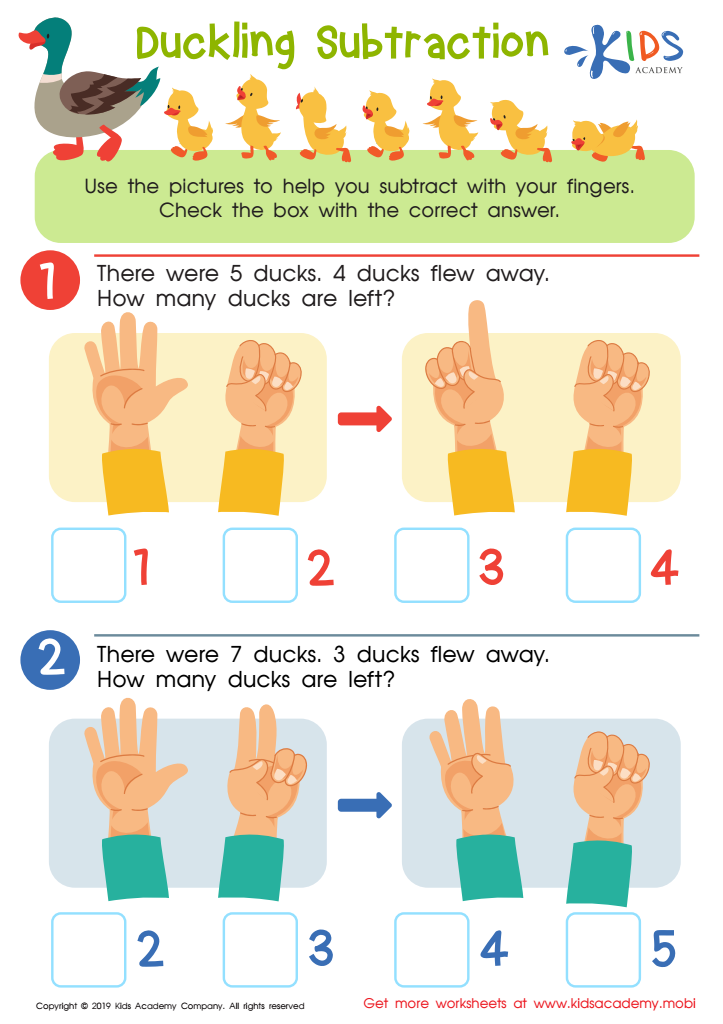
Duckling Subtraction Worksheet
 Assign to My Students








Understanding number relationships in addition and subtraction lays a crucial foundation for children's mathematical development, particularly for ages 3-9. Early knowledge of these concepts helps children make sense of numbers and comprehend how they relate to each other, enabling them to develop strong problem-solving skills. This foundational understanding fosters numerical fluency, which is essential as they progress to more complex math concepts.
When teachers and parents emphasize number relationships, they allow children to grasp essential skills like fact families and number bonds. This insight promotes mental math strategies, making arithmetic quicker and more intuitive. Furthermore, a solid grasp of addition and subtraction boosts their confidence and encourages a positive attitude towards math, countering any potential "math anxiety" they may encounter in later grades.
In addition, exposure to these concepts through engaging activities helps cultivate critical thinking and logical reasoning skills, aligning with early childhood education standards. By focusing on number relationships, adults can better support children's growth, encouraging them to explore mathematics as a dynamic and enjoyable subject rather than a series of rote memorization tasks. Investing in these early skills pays off, providing children with a strong mathematical foundation for future academic success.








