Understand sequences Addition & Subtraction Worksheets for Ages 3-9
5 filtered results
-
From - To
"Understand Sequences - Addition & Subtraction Worksheets for Ages 3-9" from Kids Academy are designed to develop children's mathematical reasoning and logical thinking. These fun and engaging worksheets help kids comprehend sequences and patterns through addition and subtraction exercises. Tailored for young learners, ages 3 to 9, these resources aim to build a strong foundation in math skills essential for academic success. Interactive and easy-to-follow, these worksheets introduce basic math concepts, promote problem-solving abilities, and make learning enjoyable. Perfect for both classroom use and home practice, they support children in mastering early math concepts confidently.
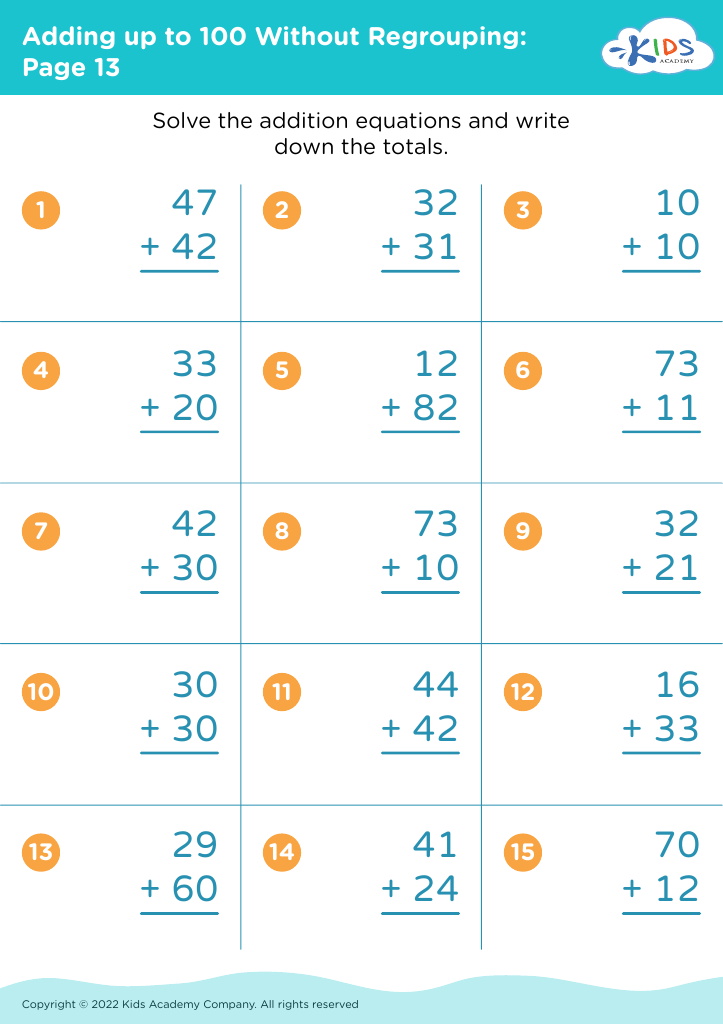
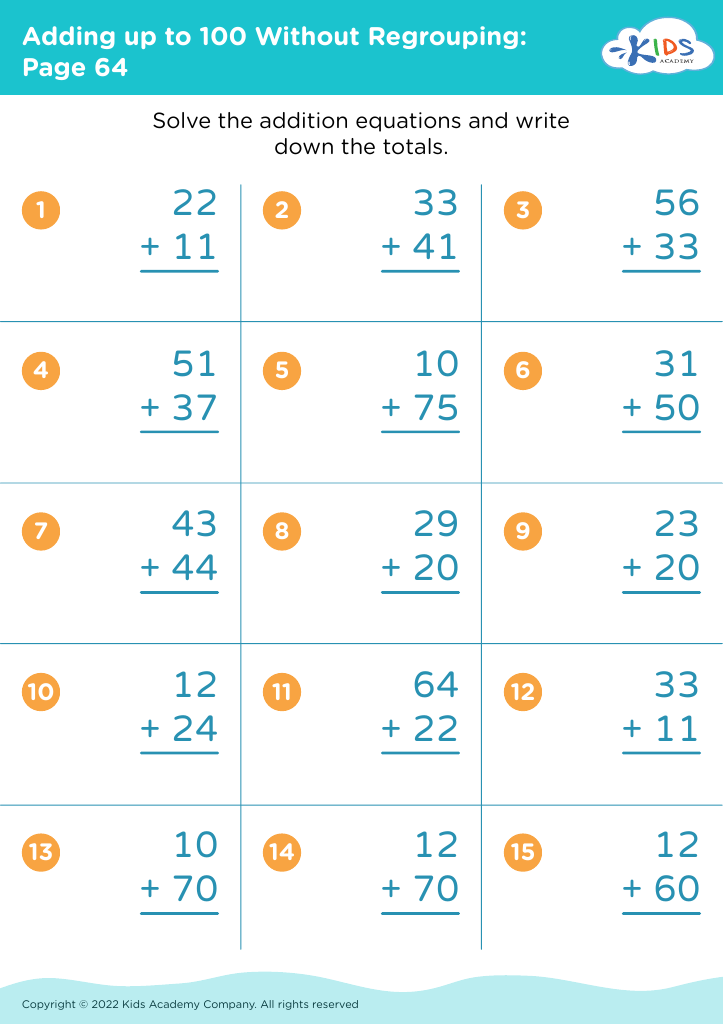
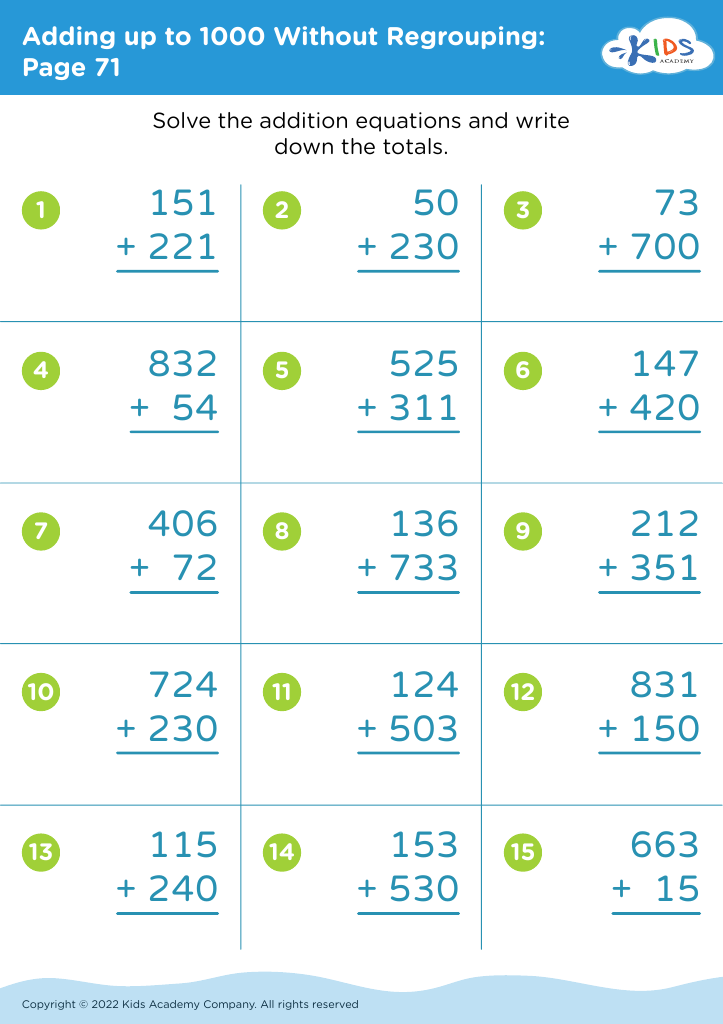
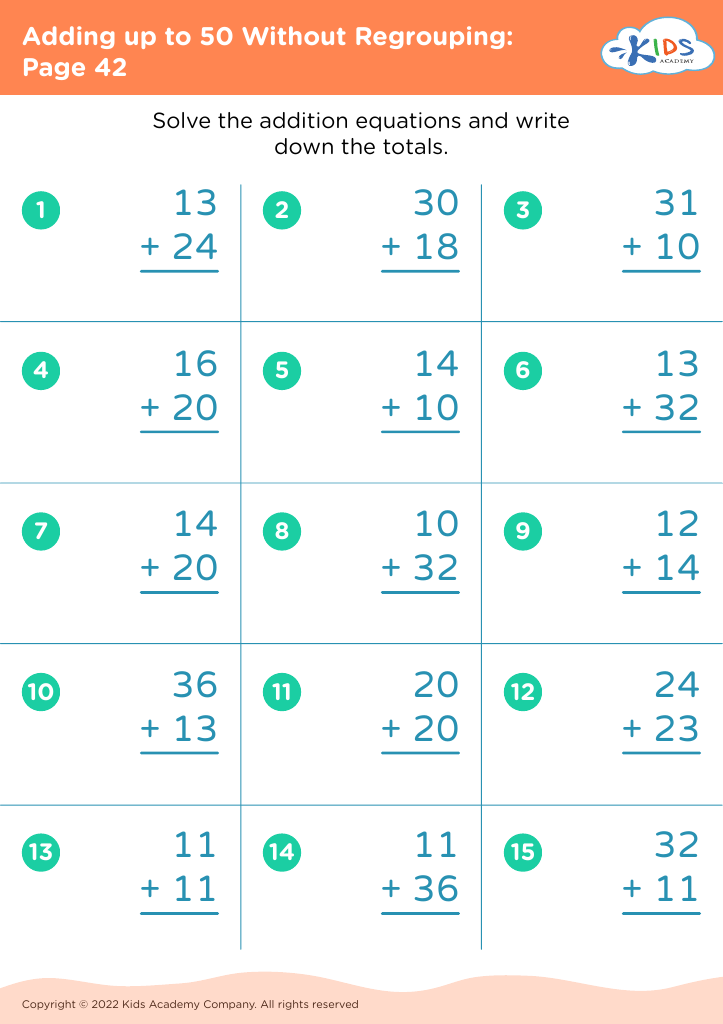
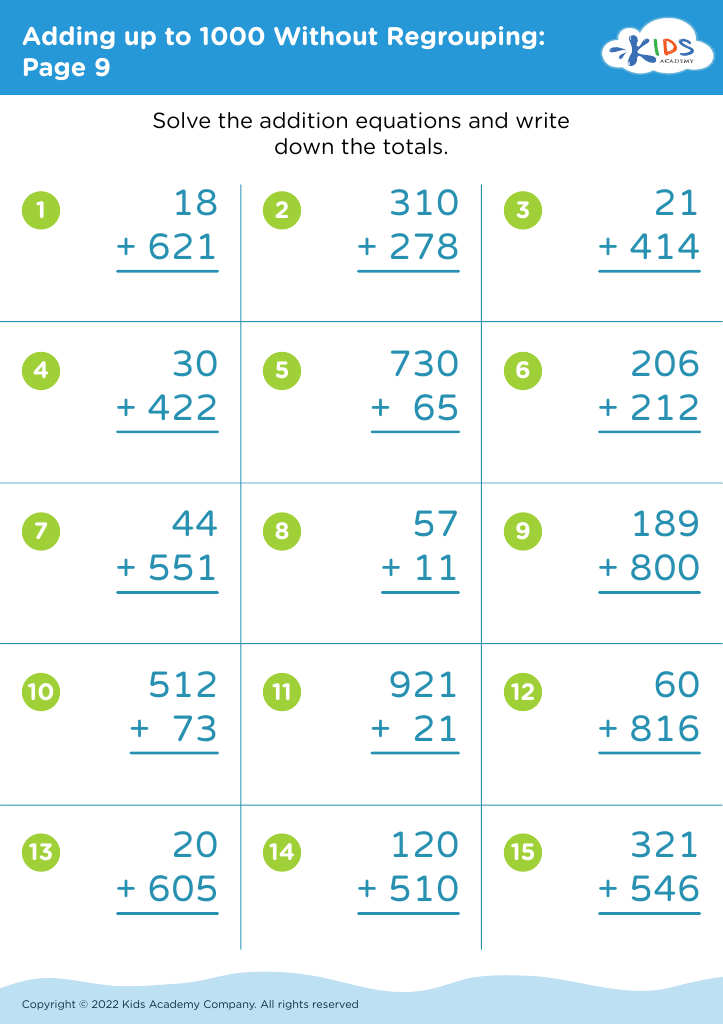








Parents and teachers should care about helping children aged 3-9 understand sequences in addition and subtraction because these foundational math skills are crucial for their cognitive development and academic success. During early childhood, kids are like sponges; they absorb new concepts quickly, and a strong grasp of basic math at this stage creates a solid groundwork for more complex mathematical reasoning later on.
Understanding sequences in addition and subtraction helps children form a mental framework for how numbers interact, fostering critical thinking and problem-solving skills. For example, recognizing that adding two numbers together in different sequences yields the same result (commutative property) or understanding how to decompose numbers (e.g., 7 can be split into 5+2 or 3+4) boosts their numeracy skills.
Incorporating sequence learning into addition and subtraction also taps into children's natural curiosity and inclination for patterns, making math feel like play rather than a chore. Furthermore, as children become confident in their mathemathical abilities, they're more likely to take risks and tackle challenging tasks, positively affecting their self-esteem and motivation to learn.
Therefore, by prioritizing these math basics, parents and teachers ensure children are well-equipped for lifelong learning and problem-solving, creating a ripple effect on their future educational journey and everyday life.








