







Understanding symmetry, addition, and subtraction at an early age is critical for the cognitive and mathematical development of children aged 3-9. Symmetry helps children recognize patterns and develop spatial awareness, which are fundamental skills in geometry and higher-level math. Early exposure to the concept of symmetry can enhance a child's ability to solve complex problems and make connections between shapes and patterns in their environment.
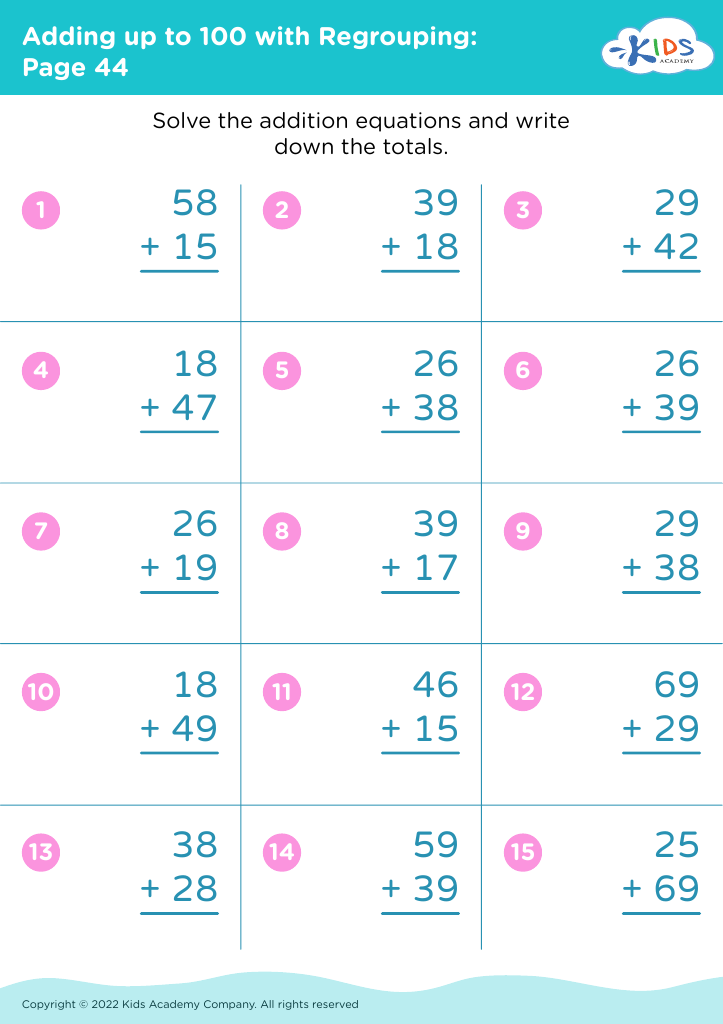
Moreover, mastering addition and subtraction forms the foundation of arithmetic, which is essential for advanced mathematical concepts. These operations are not only crucial for math proficiency but also important for everyday problem-solving skills. For example, understanding basic addition and subtraction helps children manage simple tasks like sharing toys or dividing snacks fairly, fostering a sense of fairness and cooperative play.
Early math skills are linked to developmental milestones and can predict academic achievement across various subjects. Studies show that children who grasp these basic math concepts early tend to perform better academically in later years. By integrating symmetry, addition, and subtraction into early learning, parents and teachers help set the stage for lifelong success. It promotes not only mathematical understanding but also critical thinking, logical reasoning, and decision-making skills, equipping children with the tools needed for future challenges.








