Visual interpretation Addition & Subtraction Worksheets for Ages 3-9
5 filtered results
-
From - To
Discover our Visual Interpretation Addition & Subtraction Worksheets, specially crafted for ages 3-9. These engaging worksheets blend fun visuals with fundamental math skills, promoting a strong mathematical foundation. Designed to develop your child’s addition and subtraction abilities, each worksheet uses intuitive imagery to simplify complex concepts, supporting visual learners. Our worksheets cater to varied difficulty levels, ensuring a gradual increase in challenge and confidence. With colorful, interactive pictures and beginner-friendly exercises, your child will master essential math operations while enjoying the learning process. Boost your child’s math aptitude today at Kids Academy!
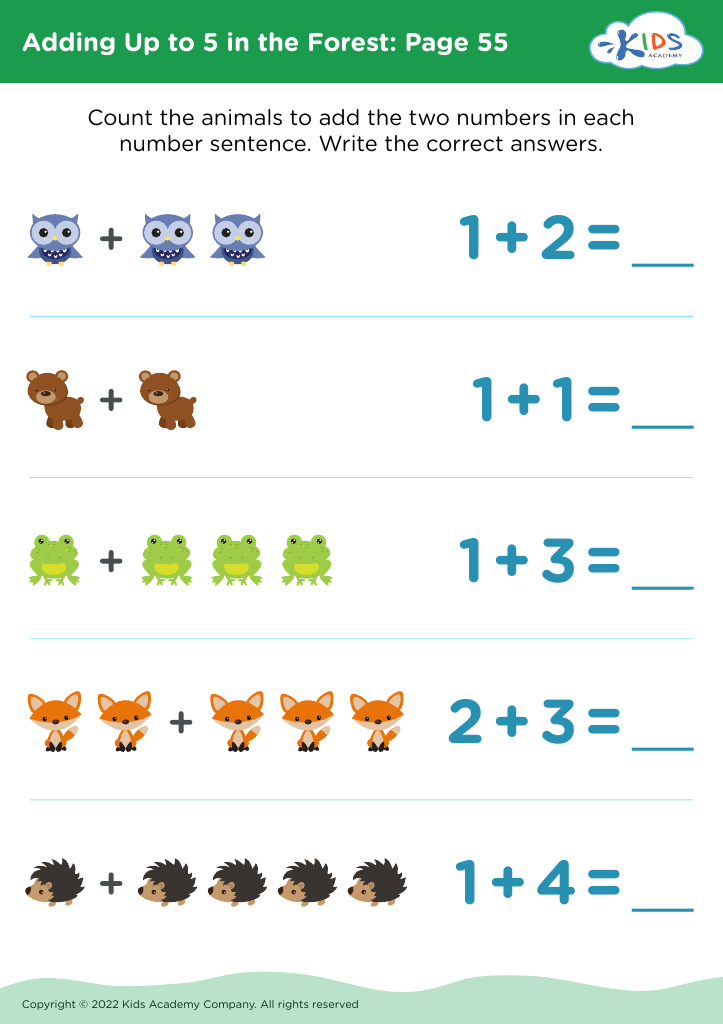
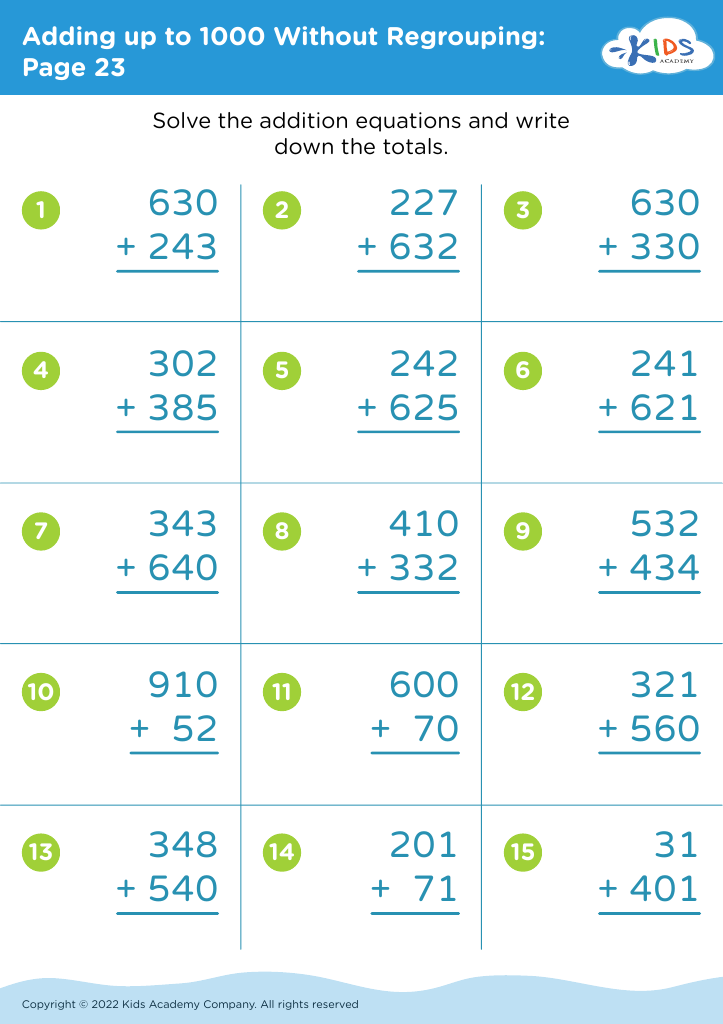
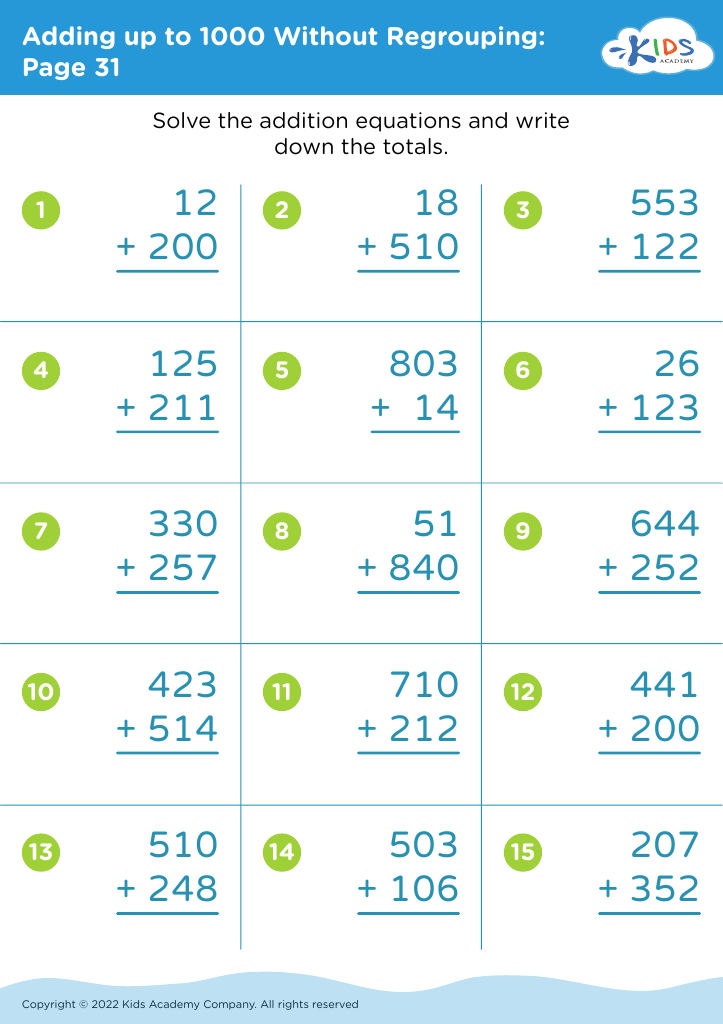
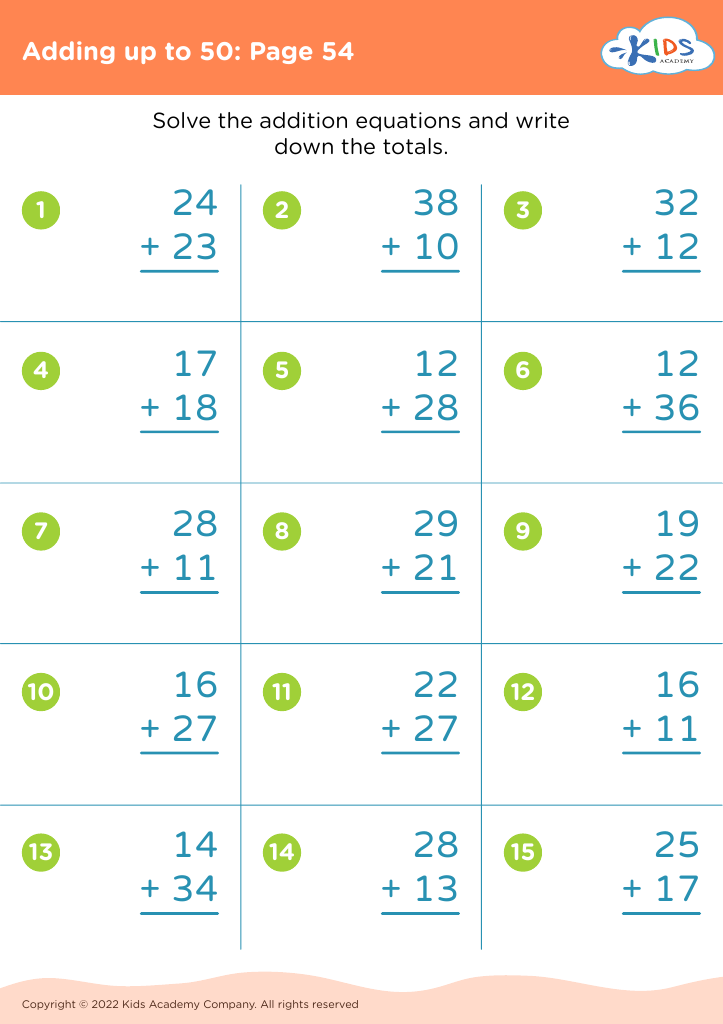
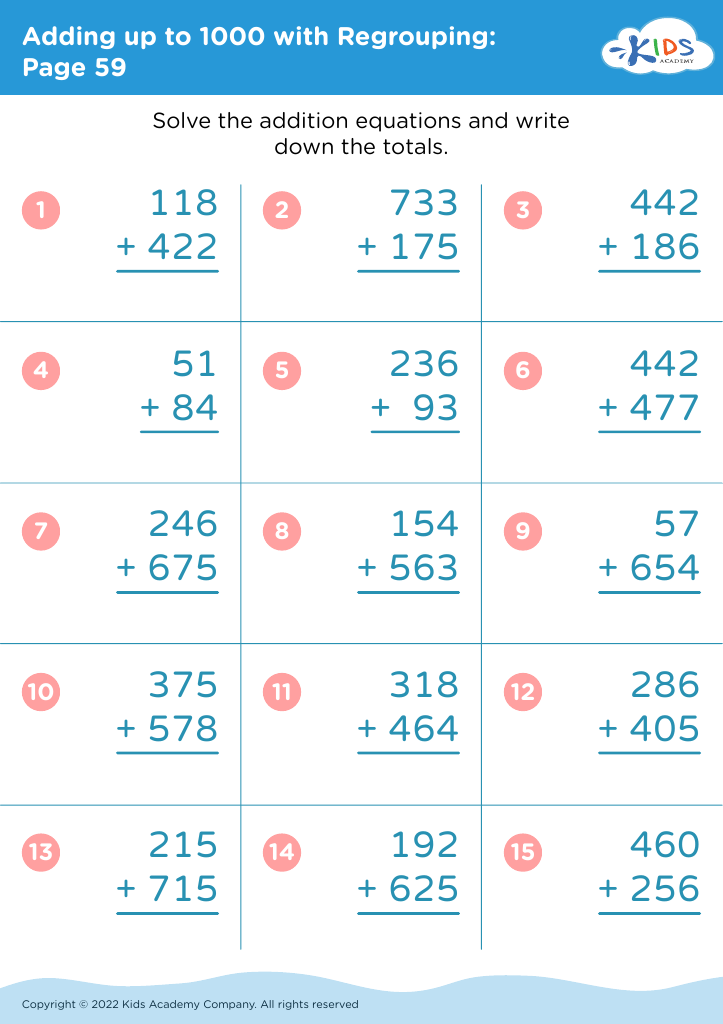








Visual interpretation of addition and subtraction for ages 3-9 is essential because it builds a strong mathematical foundation children can rely on as they progress in their education. During the early years, young minds tend to grasp concepts more quickly when introduced through visual learning. Picture-based and tangible representations like counting blocks, number lines, or visual story problems make abstract concepts more relatable and easier to understand. Using these visual tools helps bridge the gap between concrete and abstract thinking.
For parents and teachers, investing time in visual interpretative methods can enhance children's numerical literacy, critical thinking, and problem-solving skills. This early mastery can boost their confidence and foster a positive attitude towards mathematics, preventing math-related anxieties later. Additionally, when kids actively engage with math through visual aids, they develop a more intuitive feel for numbers and operations. This helps deepen their comprehension and retention, as employing visual-learning strategies taps into multiple areas of the brain, encoding the information more effectively.
Visual interpretation also provides equity in learning, accommodating various cognitive styles and learning preferences. Parents and teachers nurturing this environment ensure that all children, regardless of learning style, have the opportunity to thrive and develop vital life skills in a supportive setting.








