Filters

16 filtered results

Clear all filters
Favorites
With answer key
Interactive

16 filtered results

Difficulty Level

Grade


Welcome to our collection of Basic Addition Worksheets tailored for children aged 3-9! Designed to enhance early math skills, these engaging worksheets introduce basic addition concepts through fun and interactive activities. Children will enjoy colorful visuals and relatable themes that make learning enjoyable. Each worksheet reinforces number recognition, counting, and simple addition problems, catering to various learning styles. Ideal for home or classroom use, our resources support educators and parents alike. Encourage your little ones to build a strong foundation in math while having fun! Explore our carefully crafted materials today and watch their confidence and skills grow!
Check out this FREE Trial Lesson on Addition for age 3-9!

Exactly the Same, or Not

Favorites
With answer key
Interactive
  • 3-9
  • Basic Addition
  • Addition
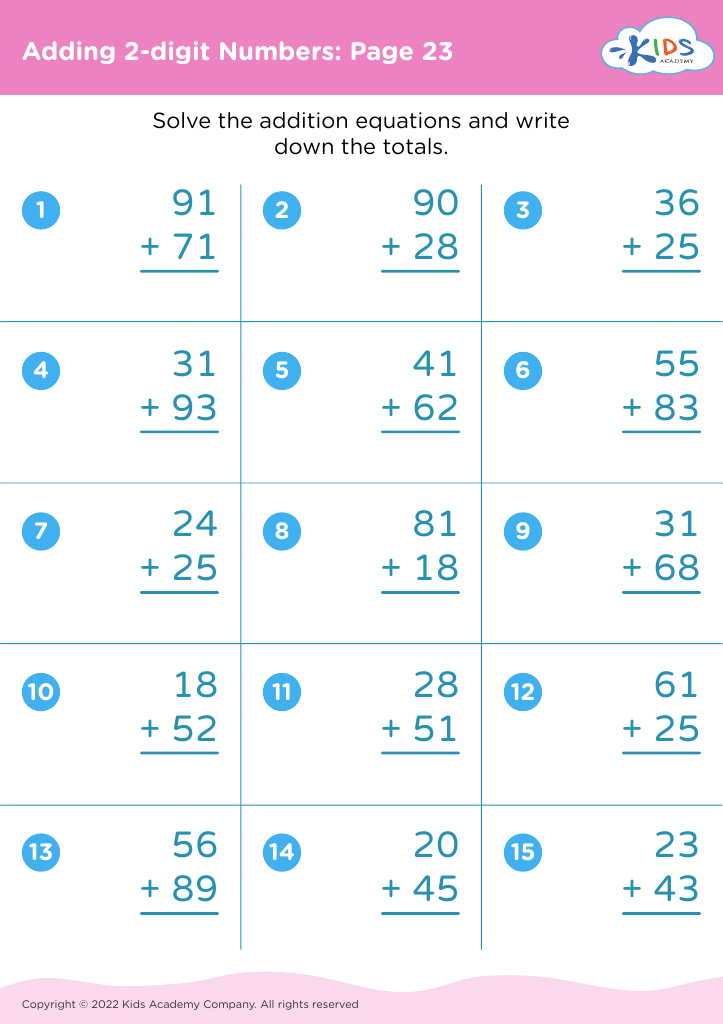
Adding 2-digit Numbers: Page 23

Adding 2-digit Numbers: Page 23

Adding 2-digit Numbers: Page 23
Worksheet
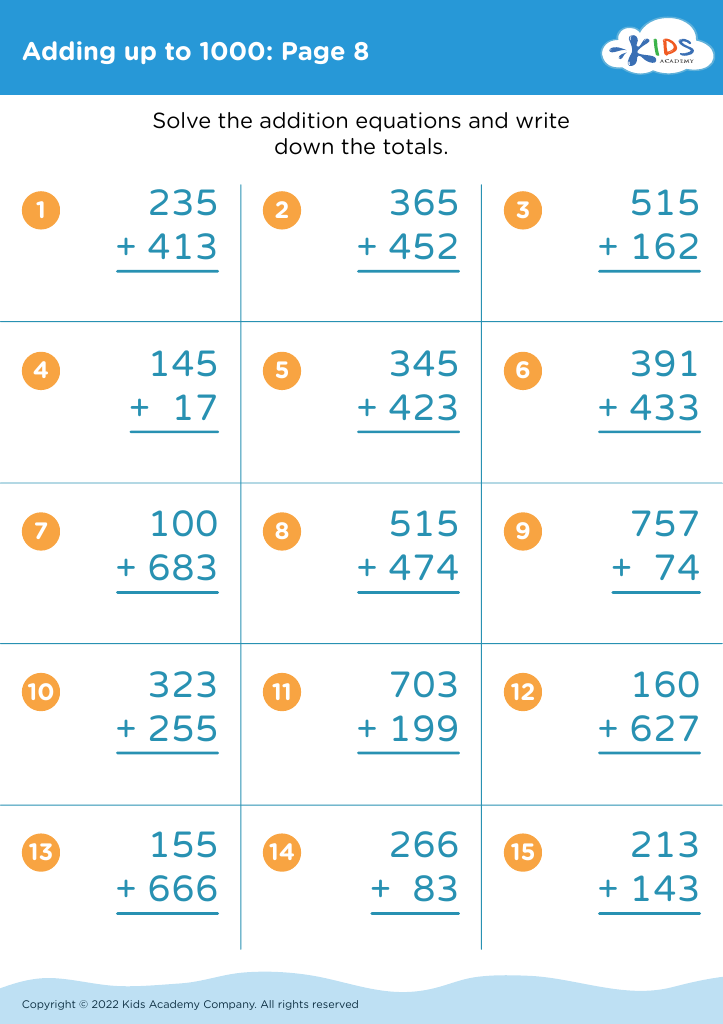
Adding up to 1000: Page 8

Adding up to 1000: Page 8

Adding up to 1000: Page 8
Worksheet
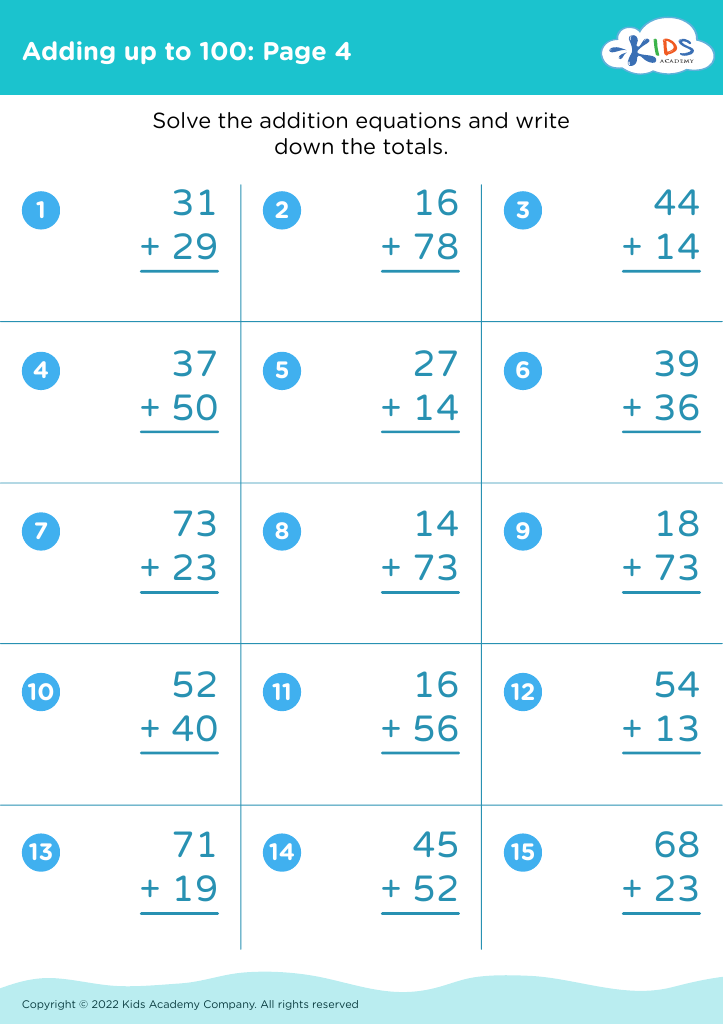
Adding up to 100: Page 4

Adding up to 100: Page 4

Adding up to 100: Page 4
Worksheet
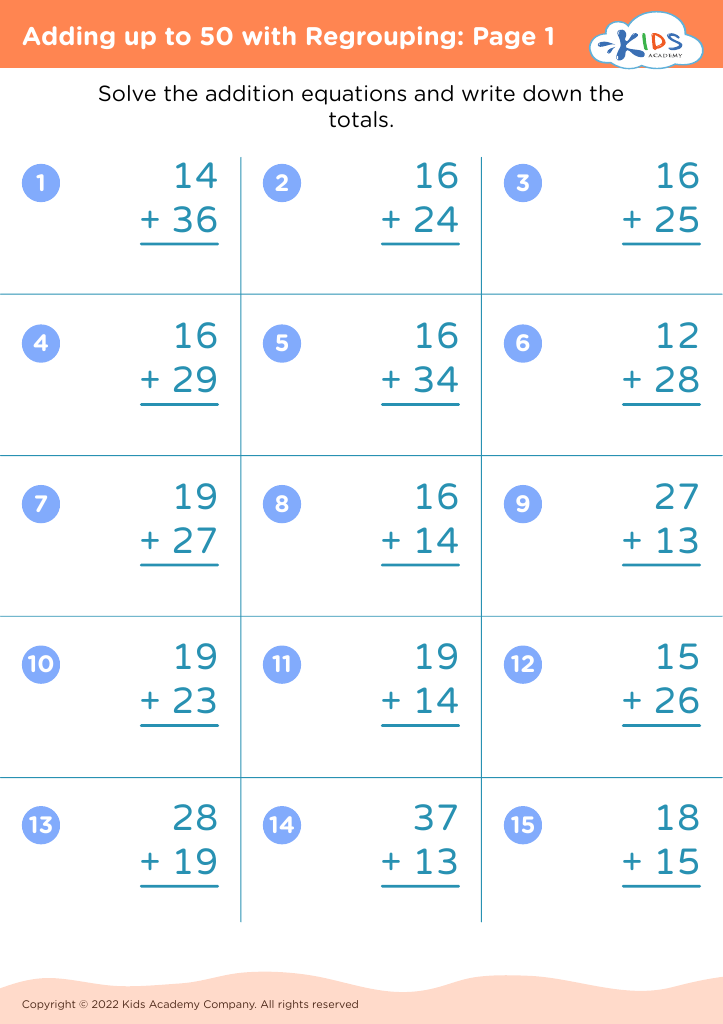
Adding up to 50 with Regrouping: Page 1
Worksheet
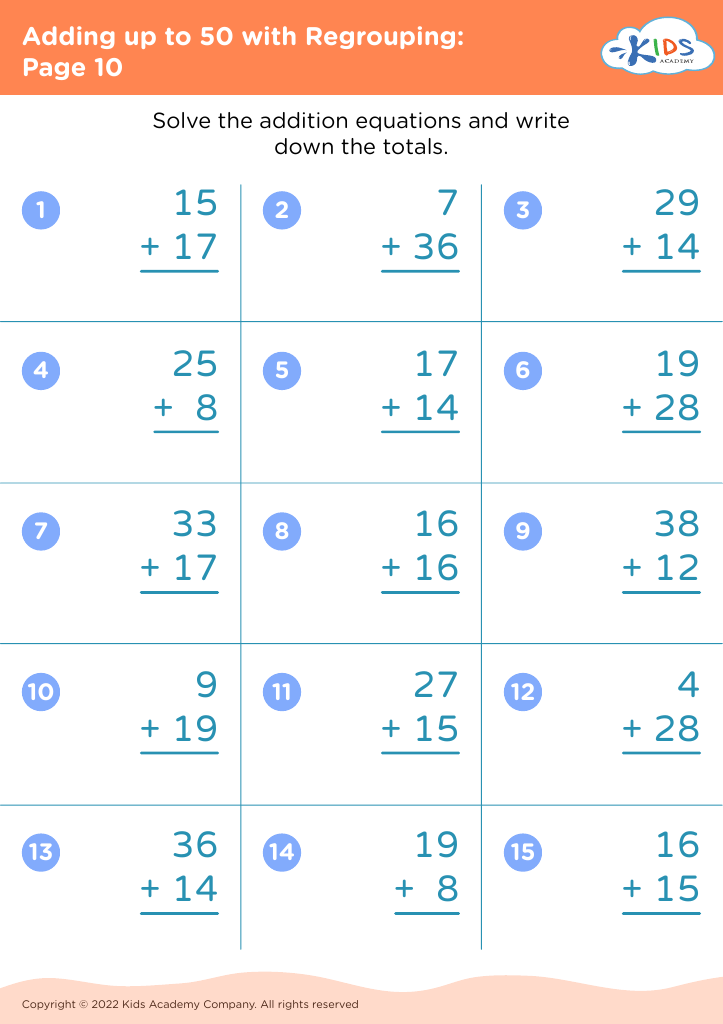
Adding up to 50 with Regrouping: Page 10
Worksheet
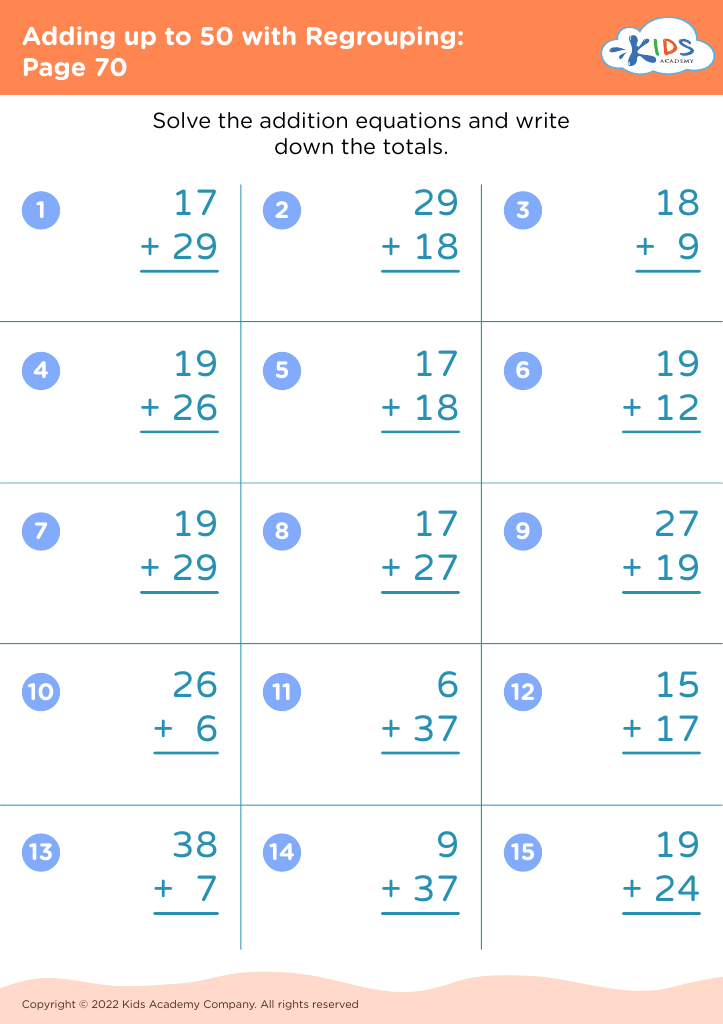
Adding up to 50 with Regrouping: Page 70
Worksheet
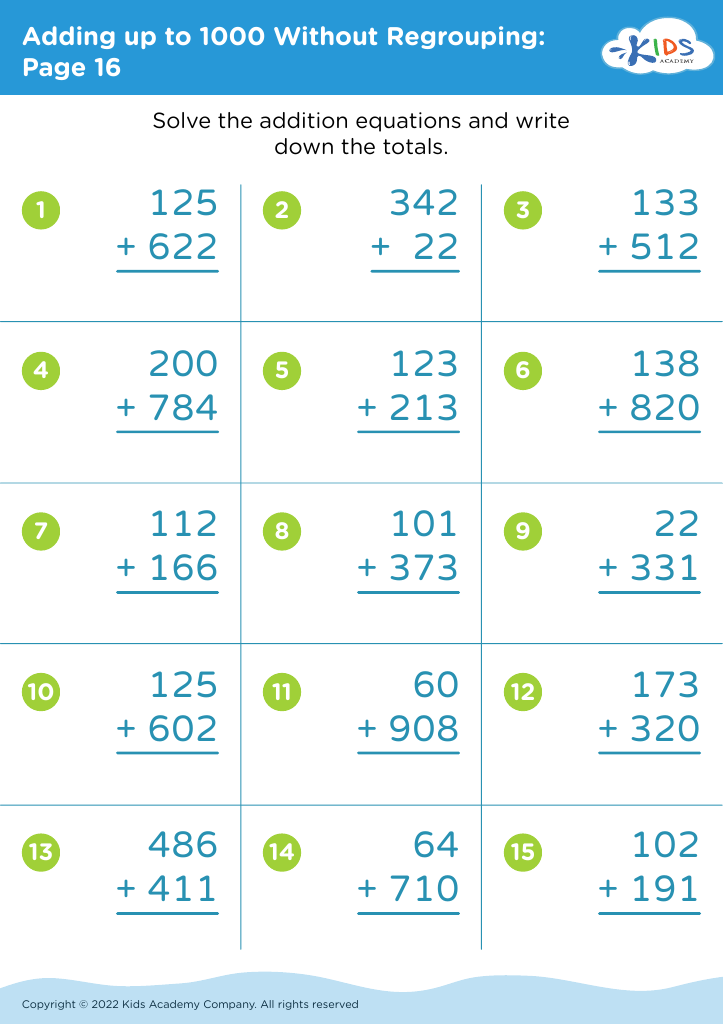
Adding up to 1000 Without Regrouping: Page 16
Worksheet
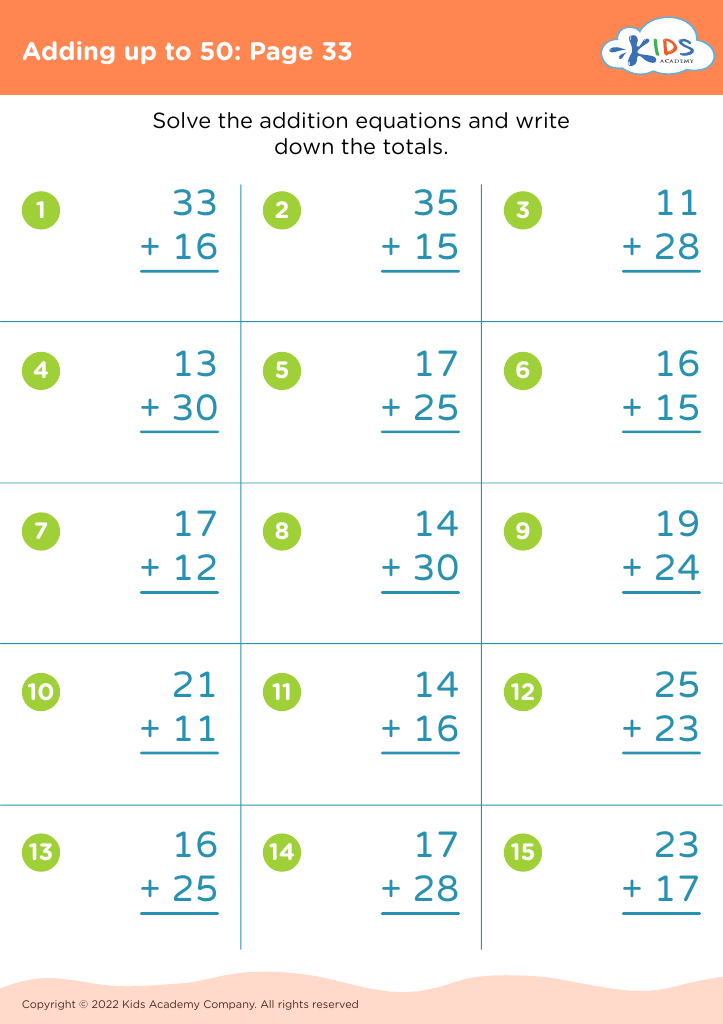
Adding up to 50: Page 33

Adding up to 50: Page 33

Adding up to 50: Page 33
Worksheet
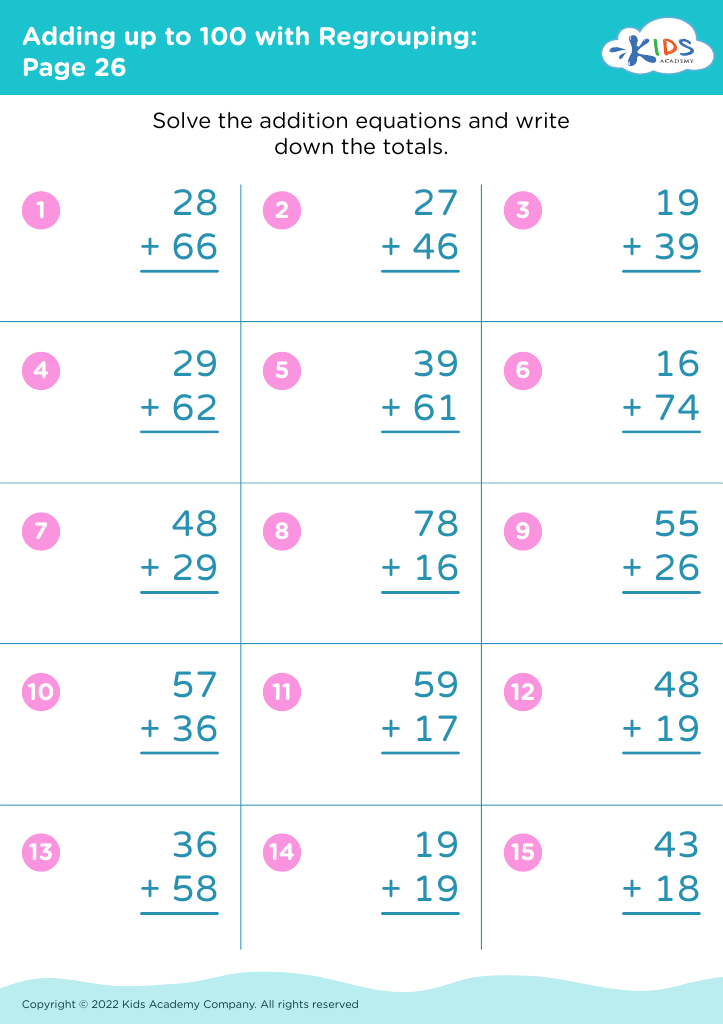
Adding up to 100 with Regrouping: Page 26
Worksheet
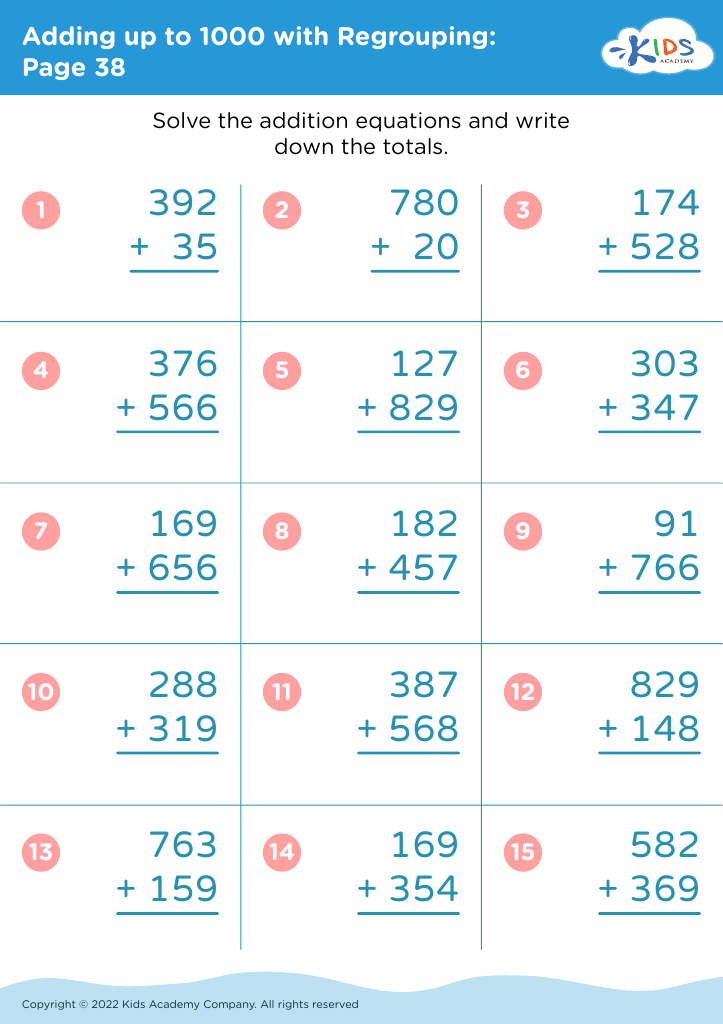
Adding up to 1000 with Regrouping: Page 38
Worksheet
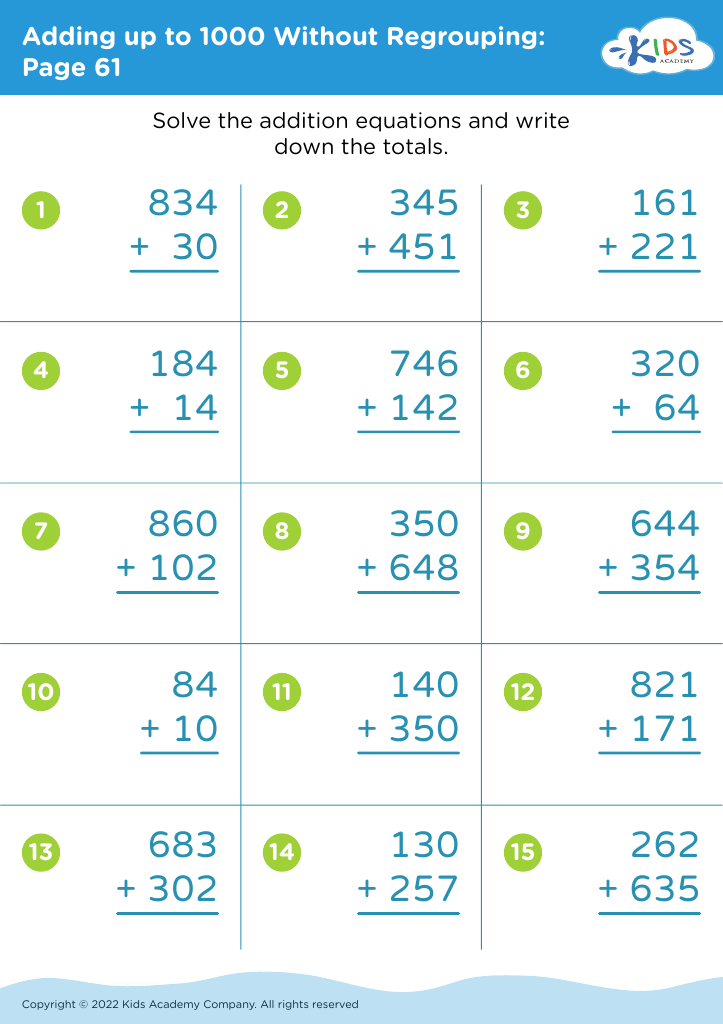
Adding up to 1000 Without Regrouping: Page 61
Worksheet
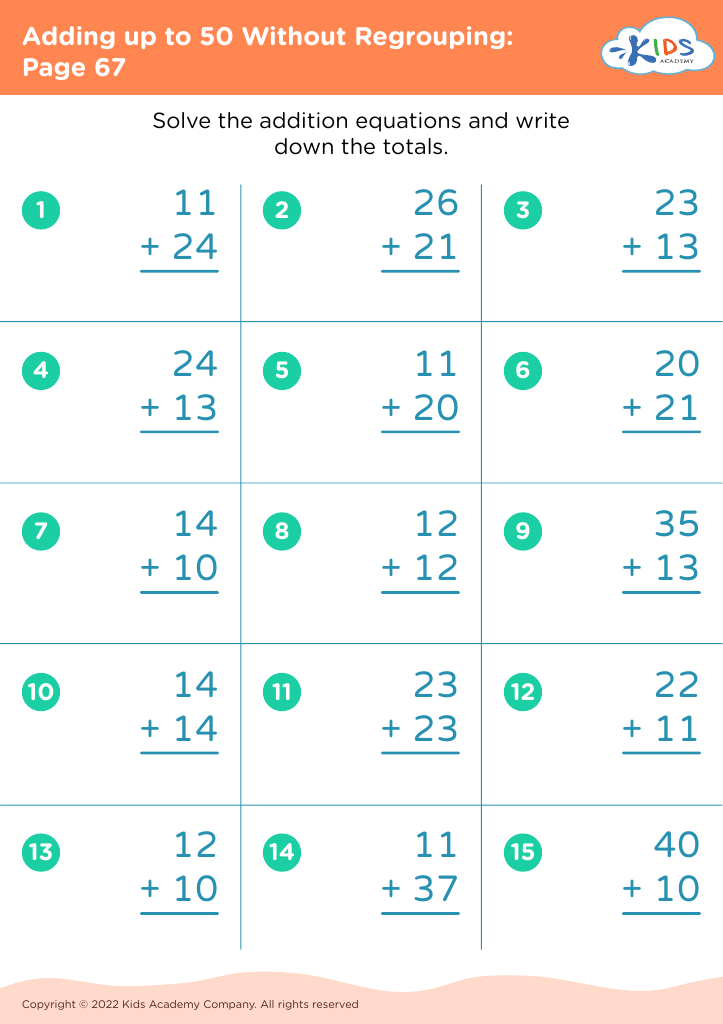
Adding up to 50 Without Regrouping: Page 67
Worksheet
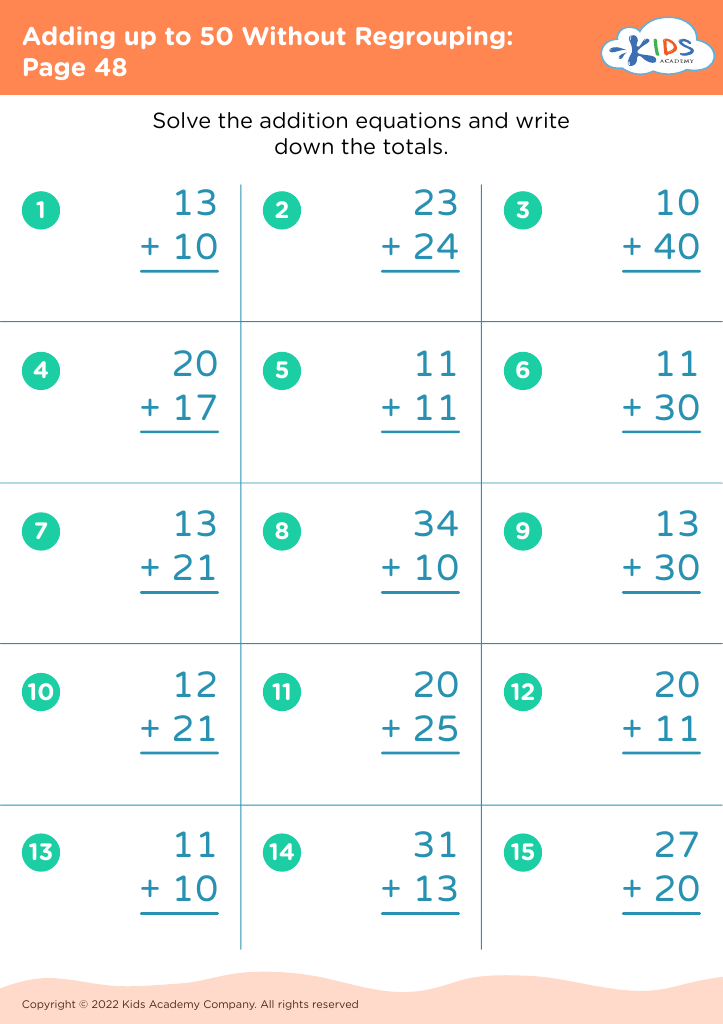
Adding up to 50 Without Regrouping: Page 48
Worksheet
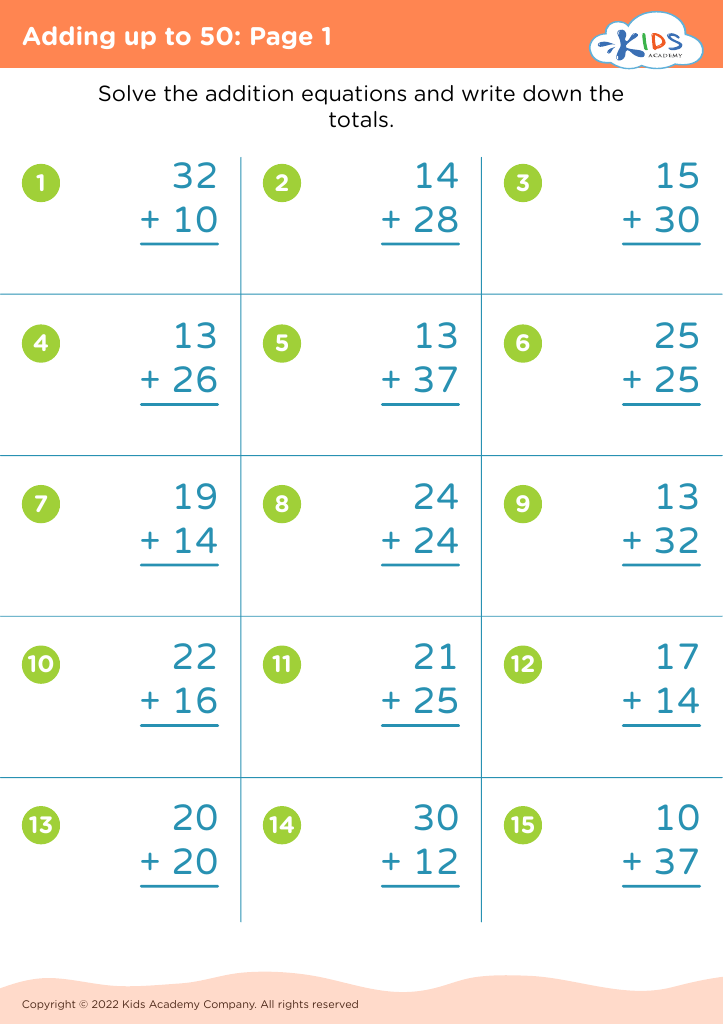
Adding up to 50: Page 1

Adding up to 50: Page 1

Adding up to 50: Page 1
Worksheet
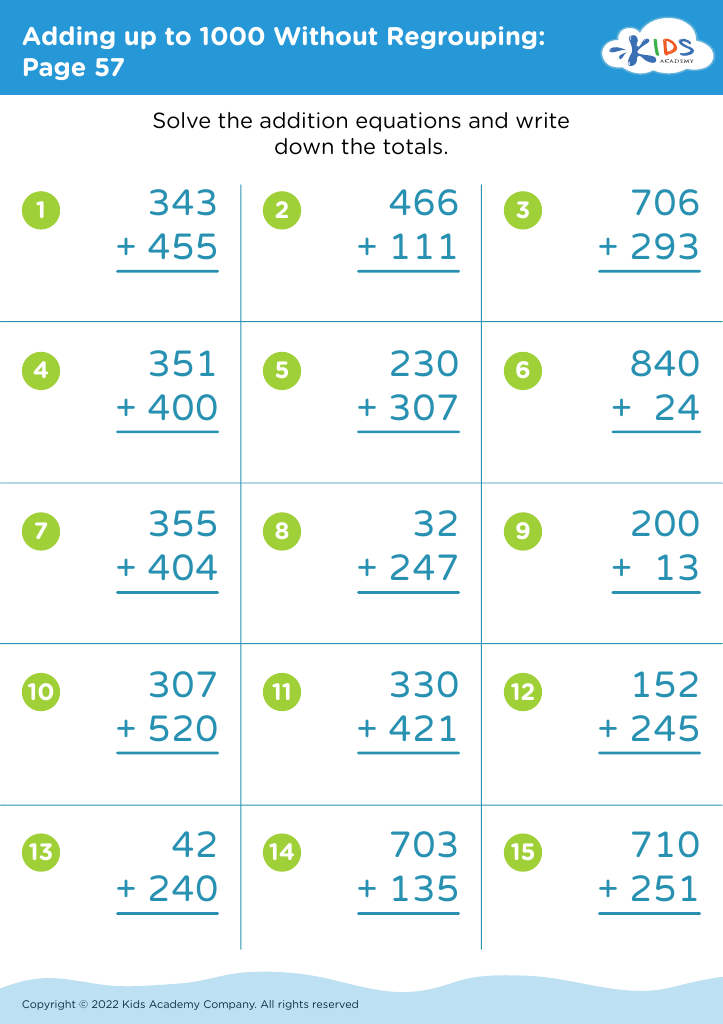
Adding up to 1000 Without Regrouping: Page 57
Worksheet
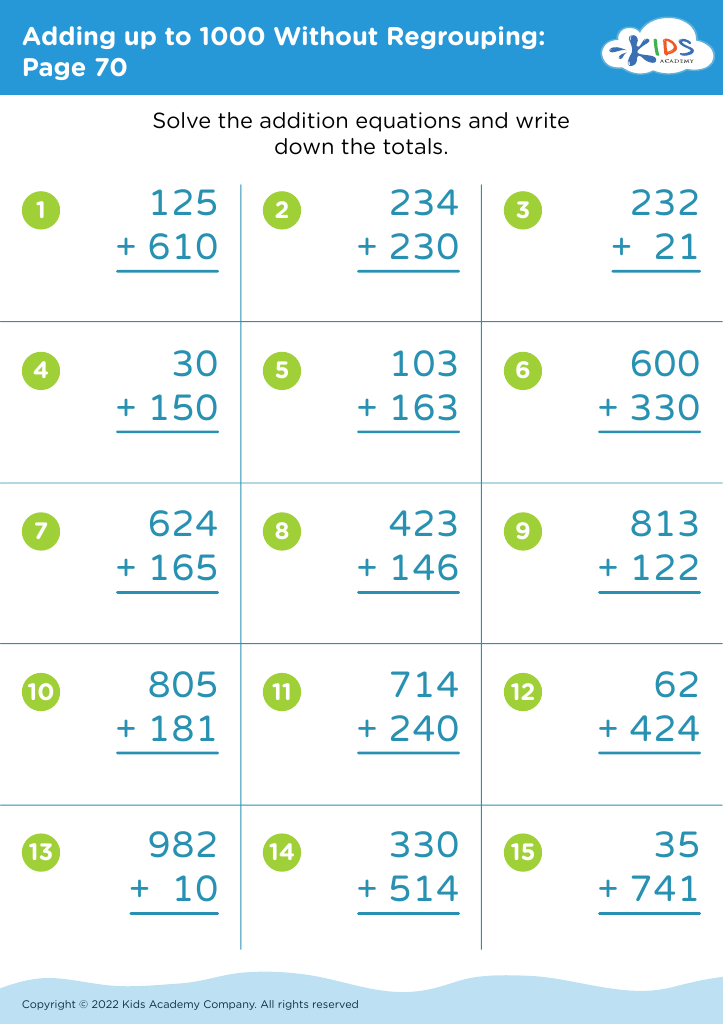
Adding up to 1000 Without Regrouping: Page 70
Worksheet


Basic addition is a crucial building block in early childhood education, particularly for children aged 3 to 9. Mastering fundamental addition not only lays the groundwork for more complex mathematical concepts in the future, but it also enhances cognitive skills such as problem-solving, logical reasoning, and critical thinking. Early mathematical understanding helps children make connections between numbers and the real world, fostering a sense of curiosity and investigation.

Furthermore, learning basic addition provides essential skills for daily life activities—whether it’s counting money, measuring ingredients for a recipe, or calculating time. By nurturing a child's ability to understand and manipulate numbers, parents and teachers can instill confidence that transcends the classroom and supports future academic success.

Additionally, early exposure to addition can pave the way for enjoyable, engaging learning experiences, reinforcing a positive attitude towards math. Consistent practice in a supportive environment helps children become comfortable with numbers, reducing math anxiety and encouraging persistence in the face of challenges.

In summary, emphasizing basic addition for children aged 3 to 9 is critical in shaping not just their academic journey in mathematics but also their overall cognitive development and life skills.