Filters

83 filtered results

Clear all filters
Favorites
With answer key
Interactive

83 filtered results

Difficulty Level

Grade


Check out this FREE Trial Lesson on Addition for age 3-9!

P

Favorites
With answer key
Interactive
  • 3-9
  • Comparing Fractions
  • Addition
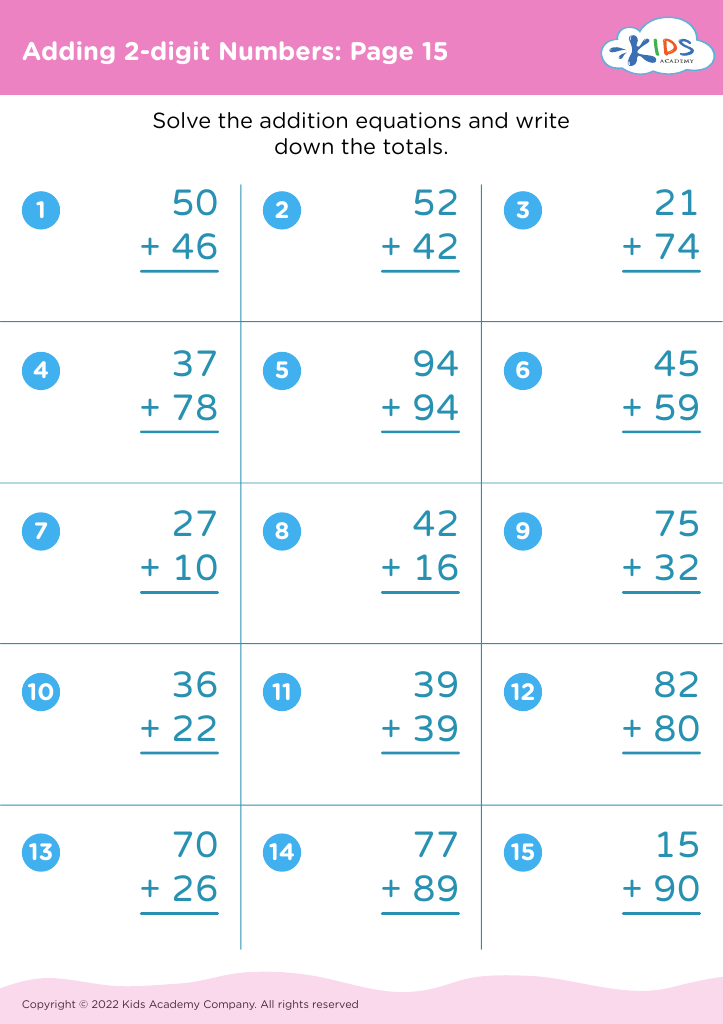
Adding 2-digit Numbers: Page 15

Adding 2-digit Numbers: Page 15

Adding 2-digit Numbers: Page 15
Worksheet
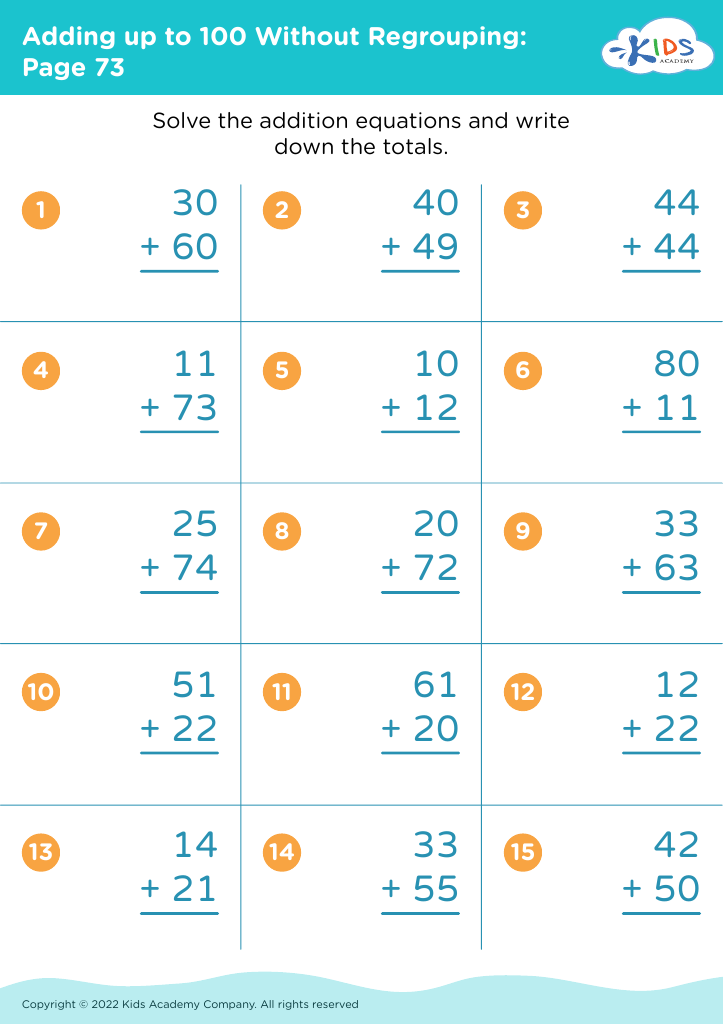
Adding up to 100 Without Regrouping: Page 73
Worksheet
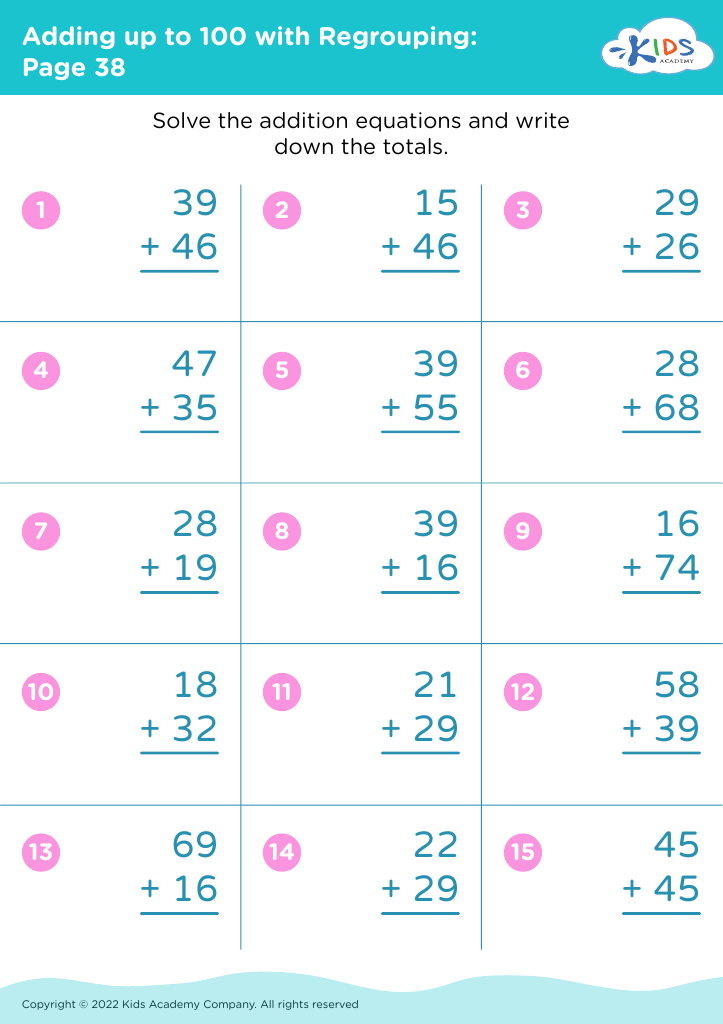
Adding up to 100 with Regrouping: Page 38
Worksheet
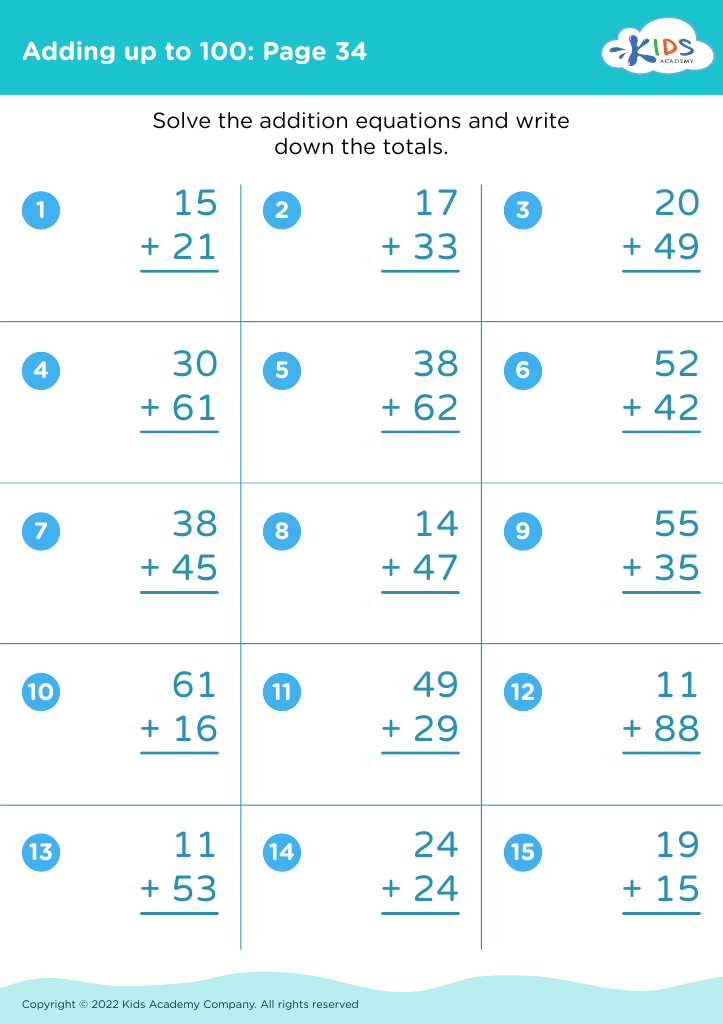
Adding up to 100: Page 34

Adding up to 100: Page 34

Adding up to 100: Page 34
Worksheet
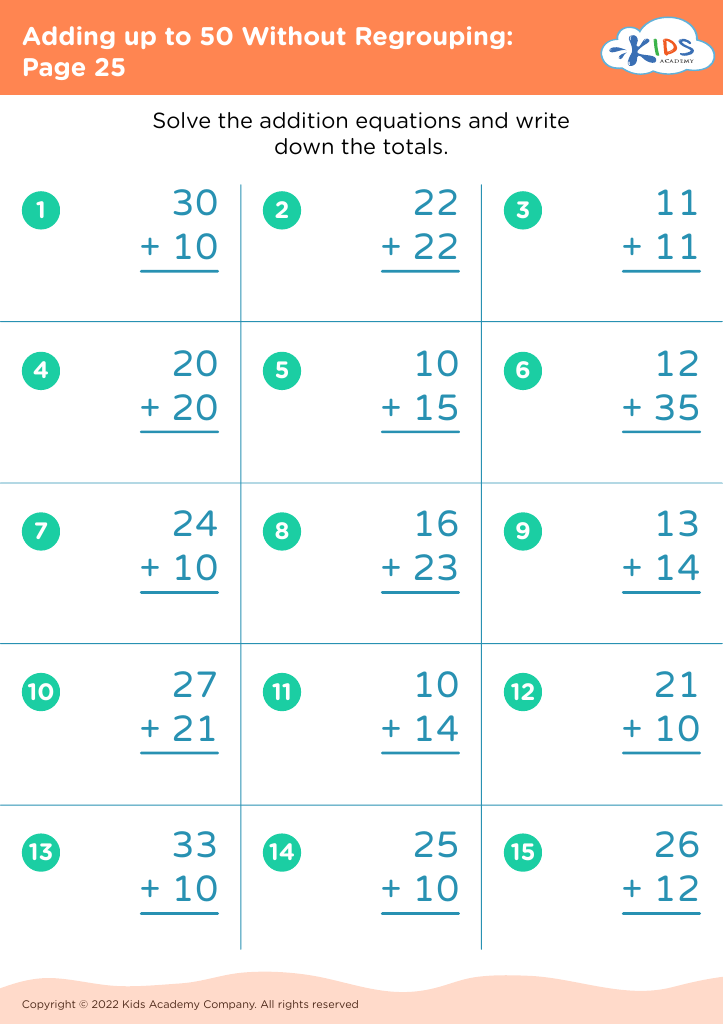
Adding up to 50 Without Regrouping: Page 25
Worksheet
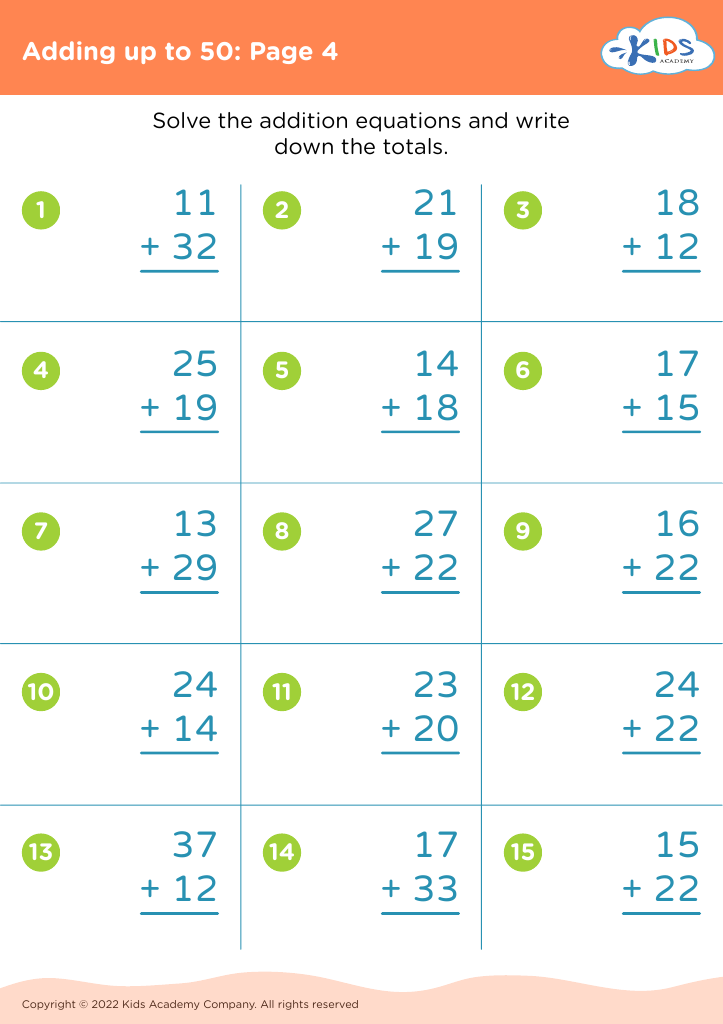
Adding up to 50: Page 4

Adding up to 50: Page 4

Adding up to 50: Page 4
Worksheet
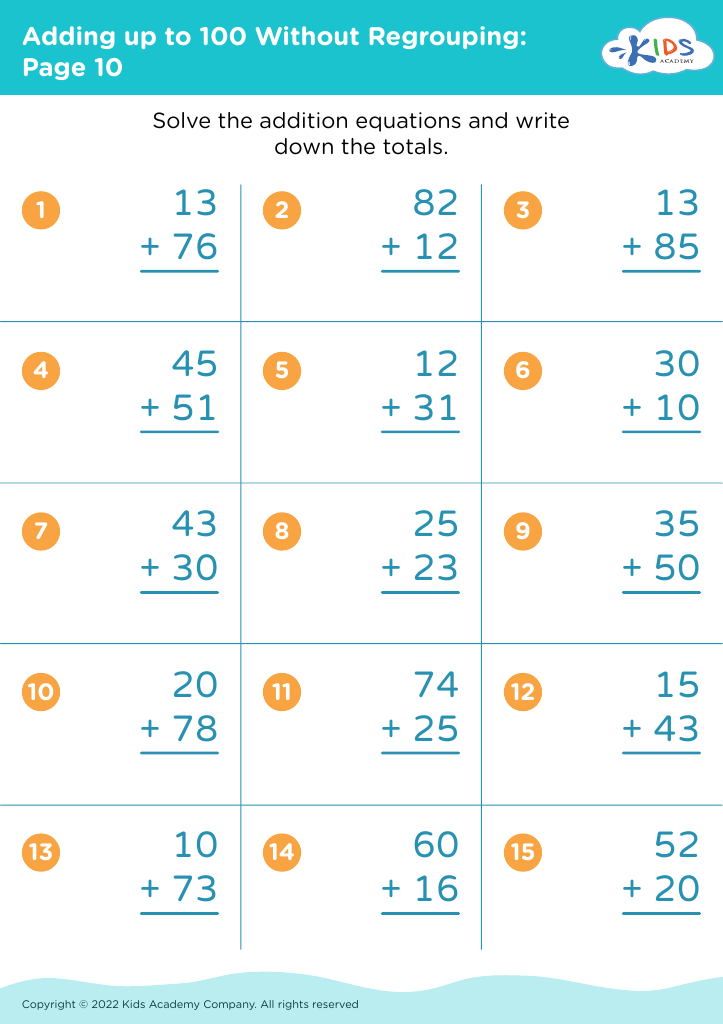
Adding up to 100 Without Regrouping: Page 10
Worksheet
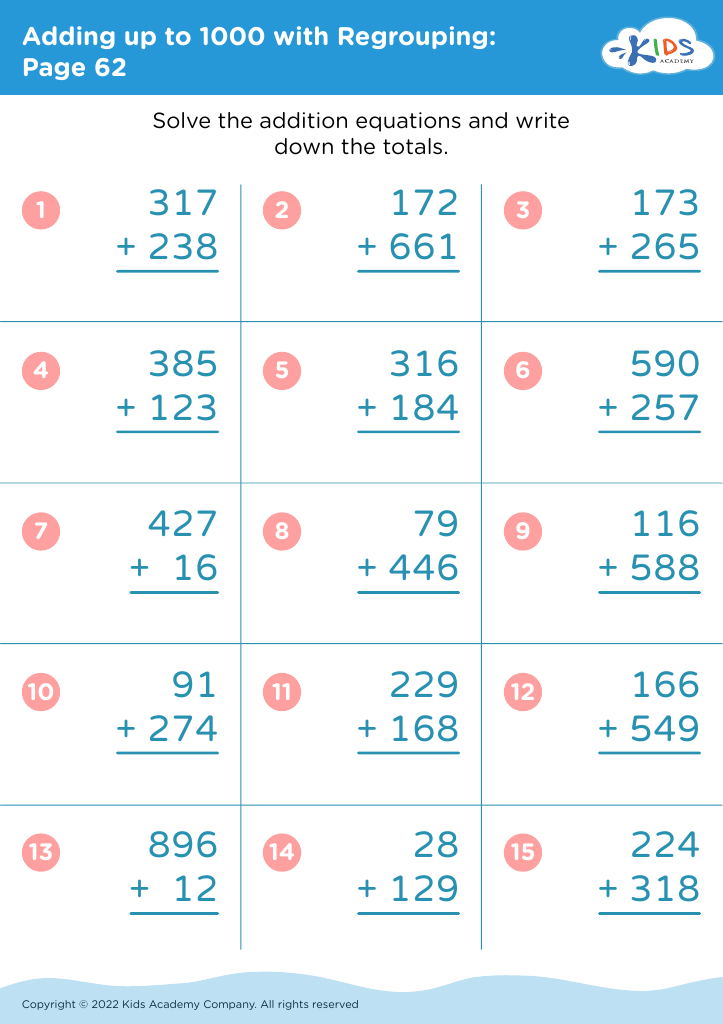
Adding up to 1000 with Regrouping: Page 62
Worksheet
Piecing Together 16 Worksheet

Piecing Together 16 Worksheet

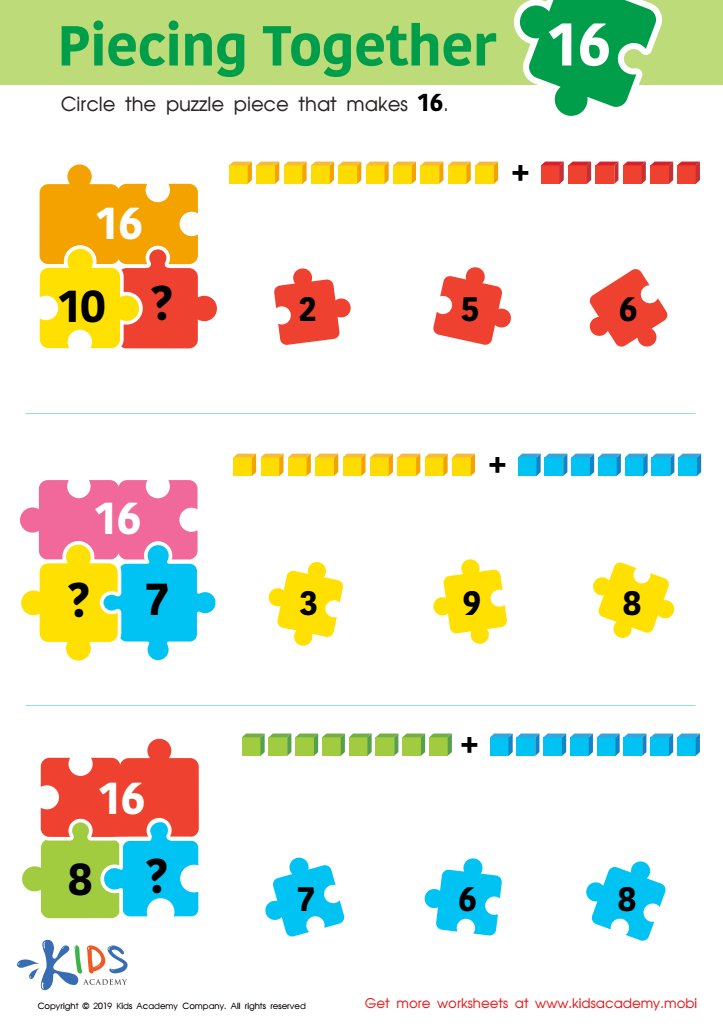
Combine learning with fun using this colorful worksheet! Ask your preschoolers what they see in the picture, then help them solve the mathematical equations on the puzzle pieces. One equation is missing on each; have them circle the piece that will make the bottom puzzle piece numbers equal 16. Use puzzles and bright colors to teach - it's one of the best ways your kids can learn!
Piecing Together 16 Worksheet
Worksheet
Adding up to 50: Page 55

Adding up to 50: Page 55

Adding up to 50: Page 55
Worksheet
Adding up to 100 Without Regrouping: Page 54
Worksheet
Adding up to 50 with Regrouping: Page 7
Worksheet
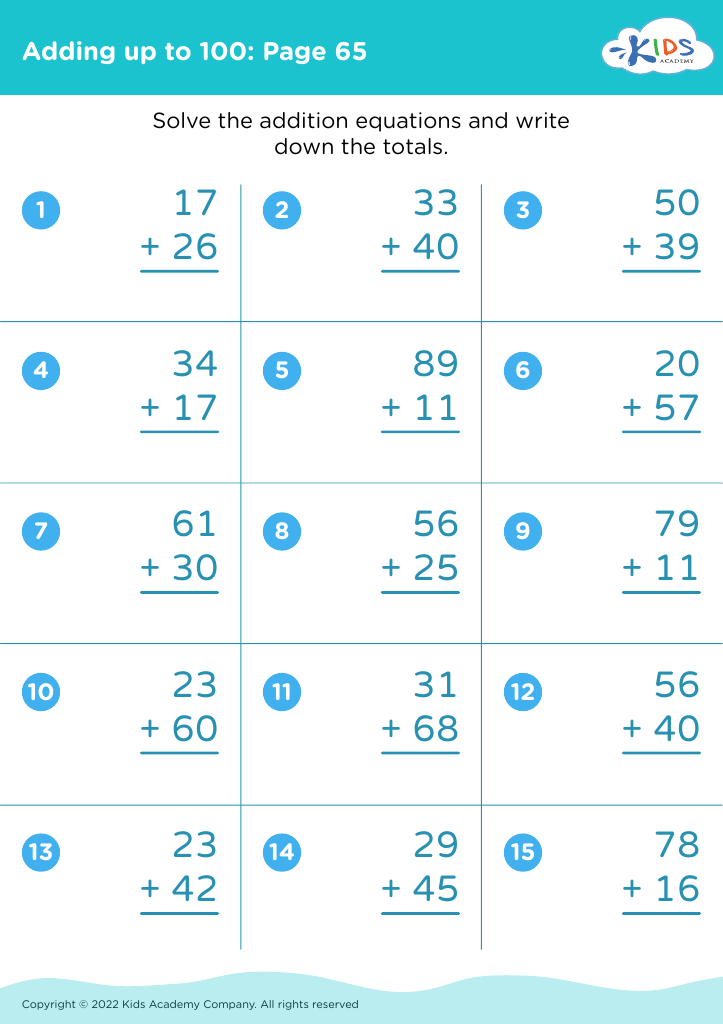
Adding up to 100: Page 65

Adding up to 100: Page 65

Adding up to 100: Page 65
Worksheet
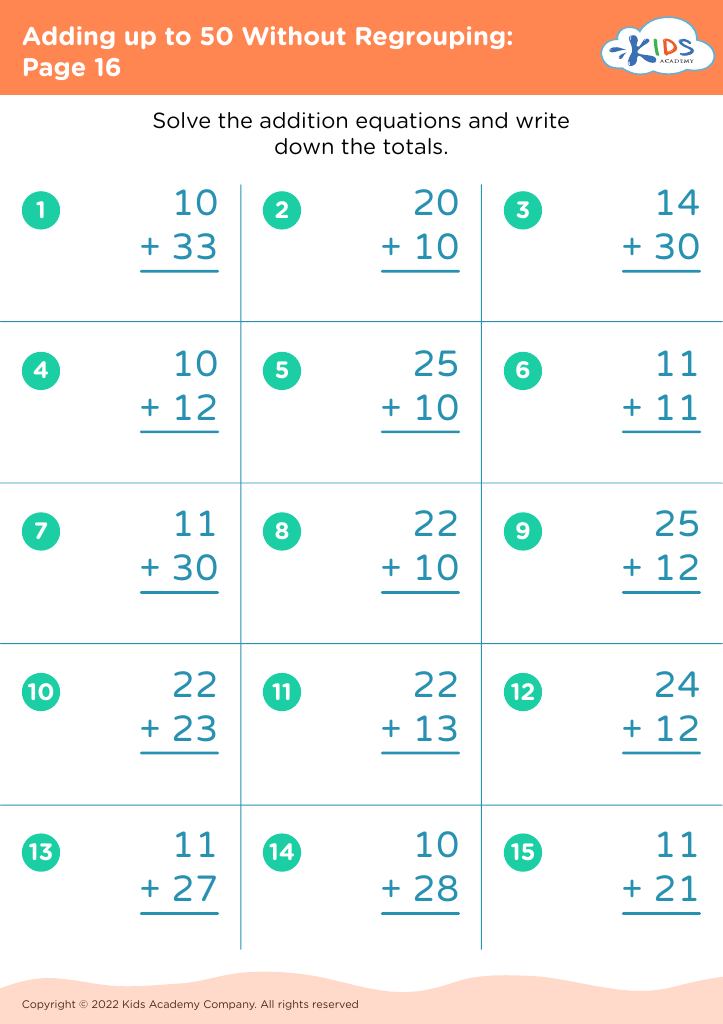
Adding up to 50 Without Regrouping: Page 16
Worksheet
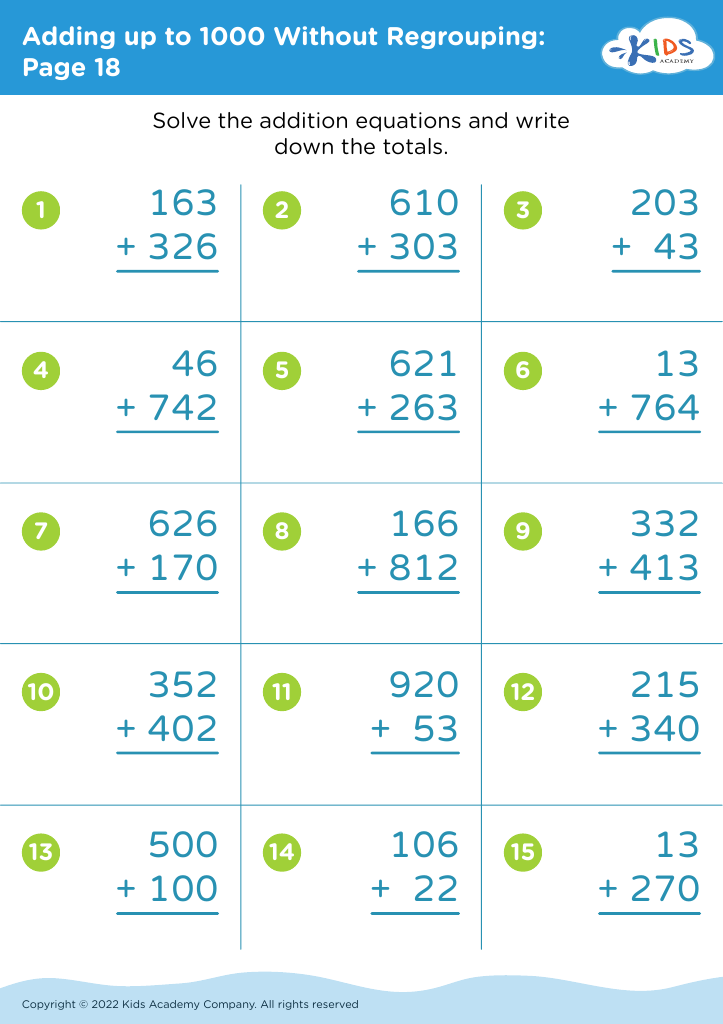
Adding up to 1000 Without Regrouping: Page 18
Worksheet
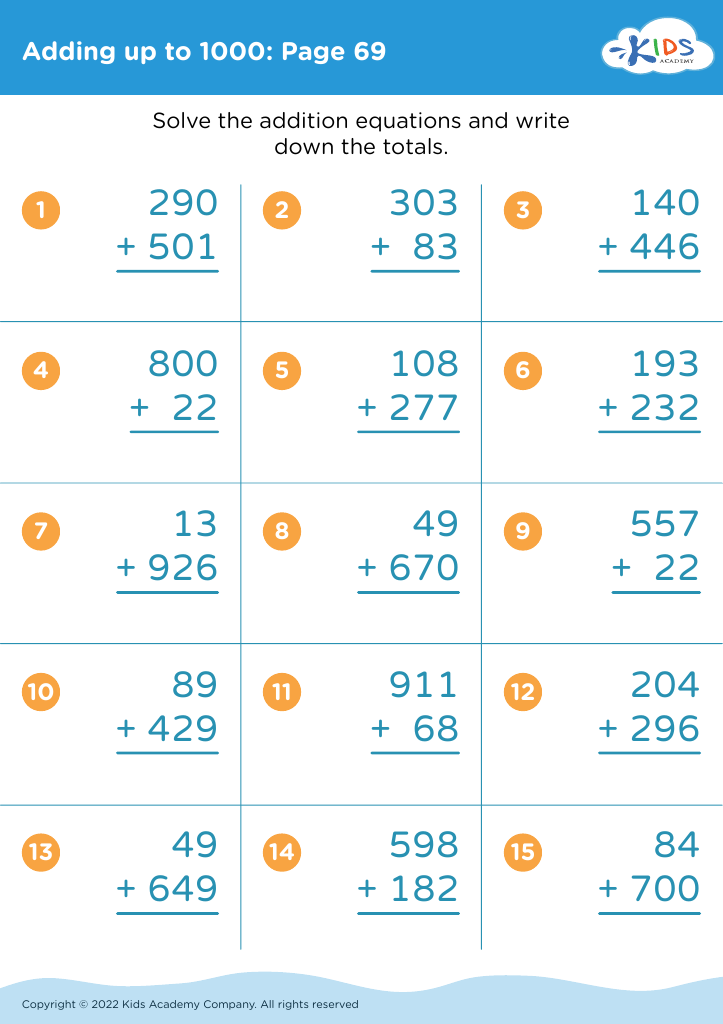
Adding up to 1000: Page 69

Adding up to 1000: Page 69

Adding up to 1000: Page 69
Worksheet
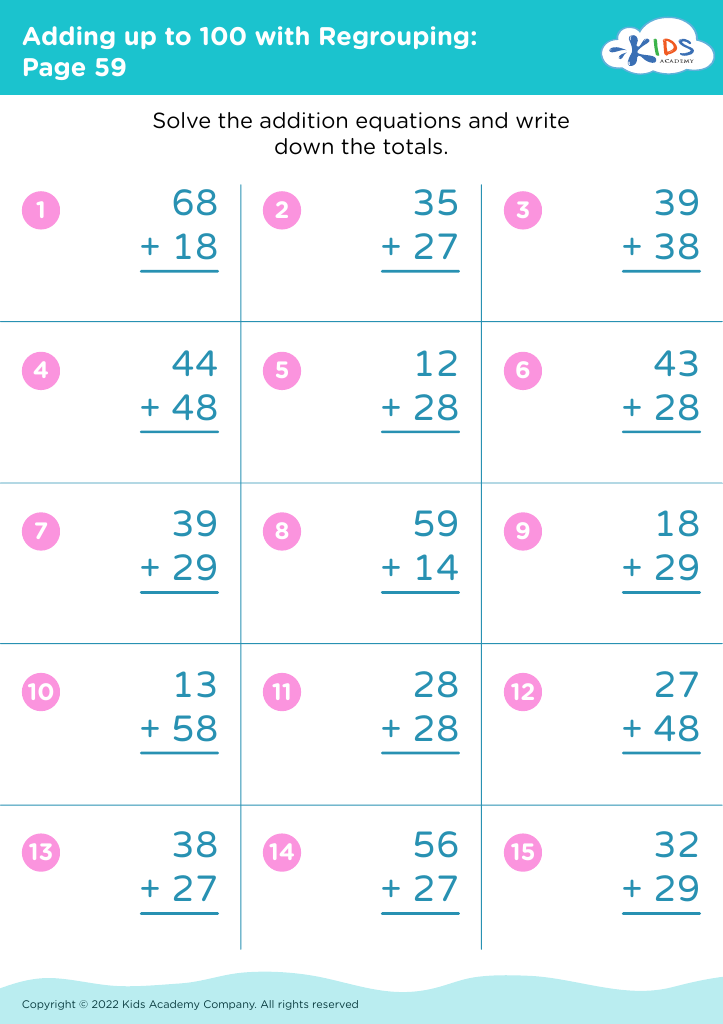
Adding up to 100 with Regrouping: Page 59
Worksheet
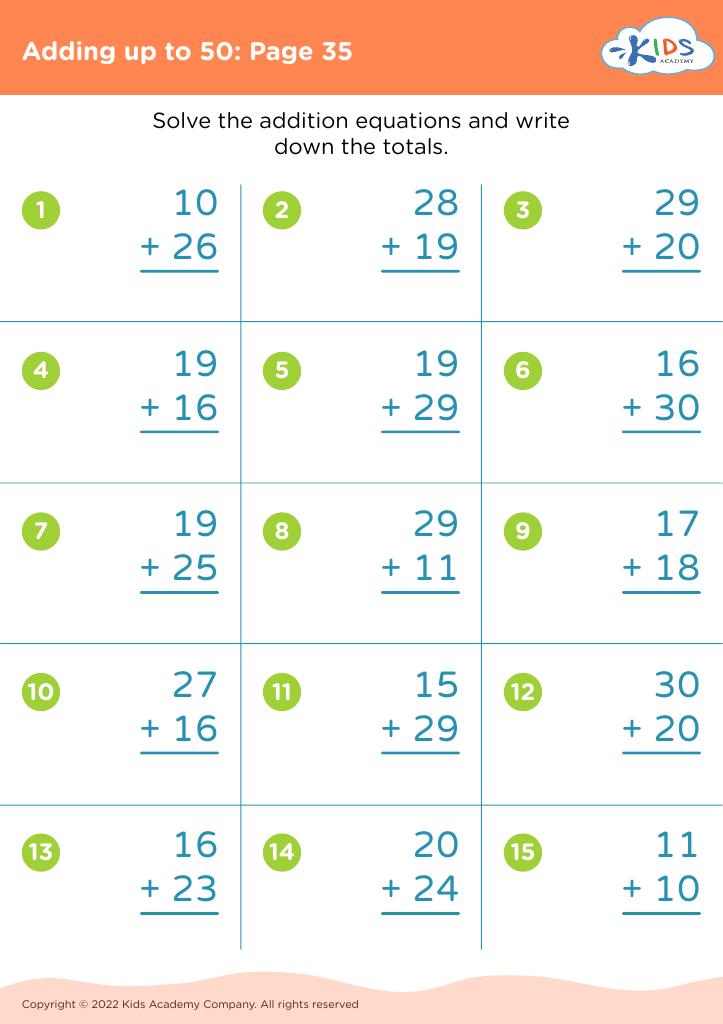
Adding up to 50: Page 35

Adding up to 50: Page 35

Adding up to 50: Page 35
Worksheet
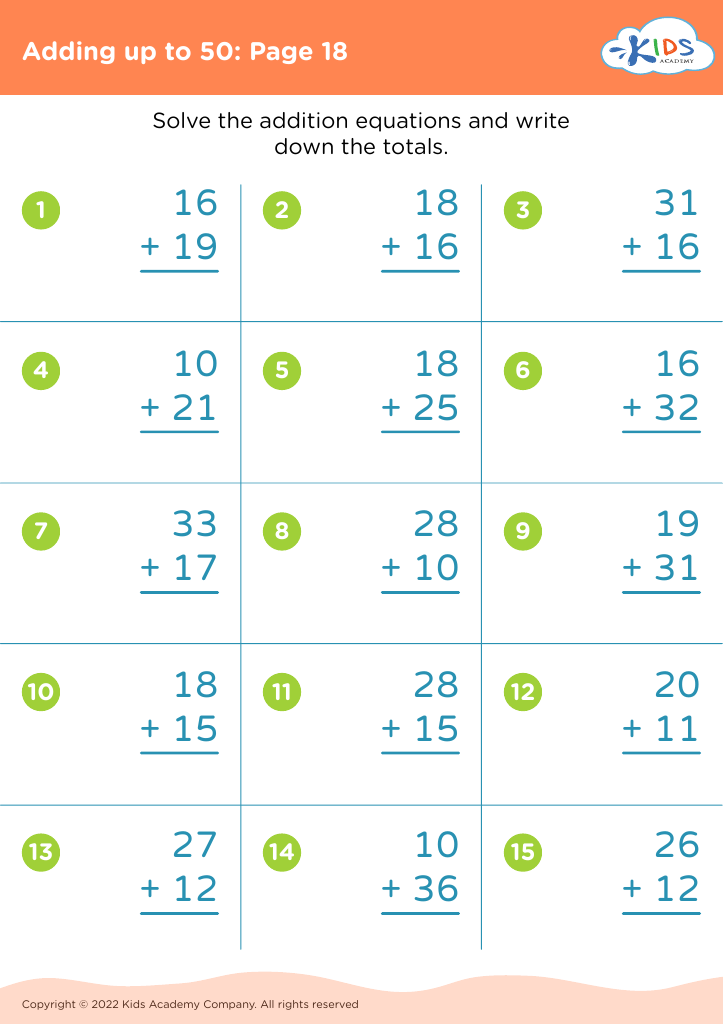
Adding up to 50: Page 18

Adding up to 50: Page 18

Adding up to 50: Page 18
Worksheet
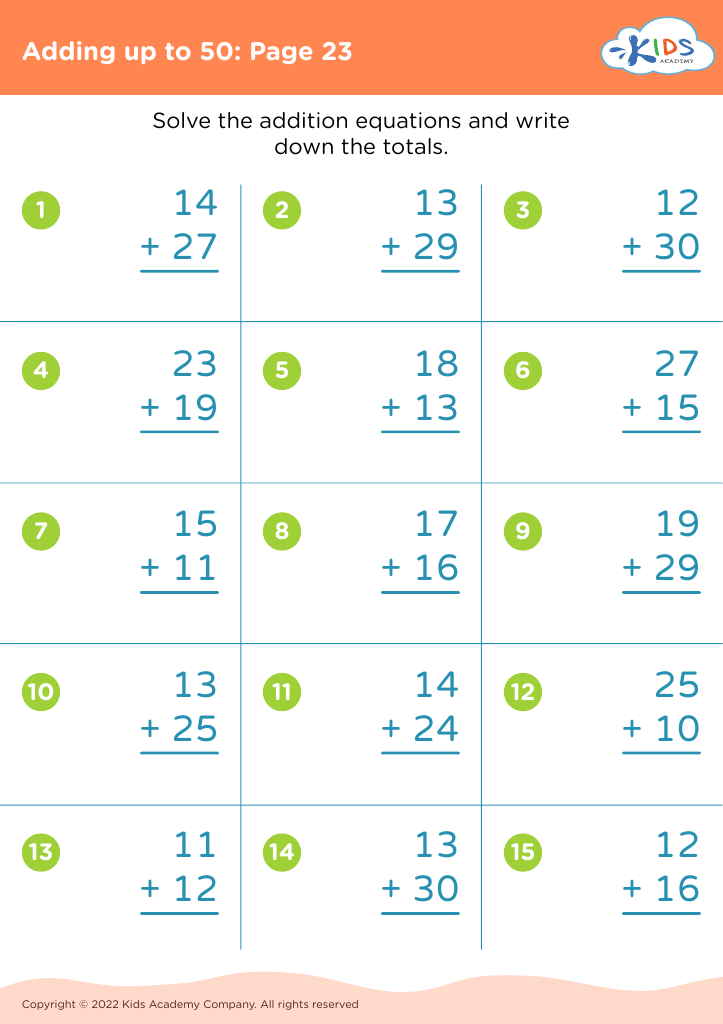
Adding up to 50: Page 23

Adding up to 50: Page 23

Adding up to 50: Page 23
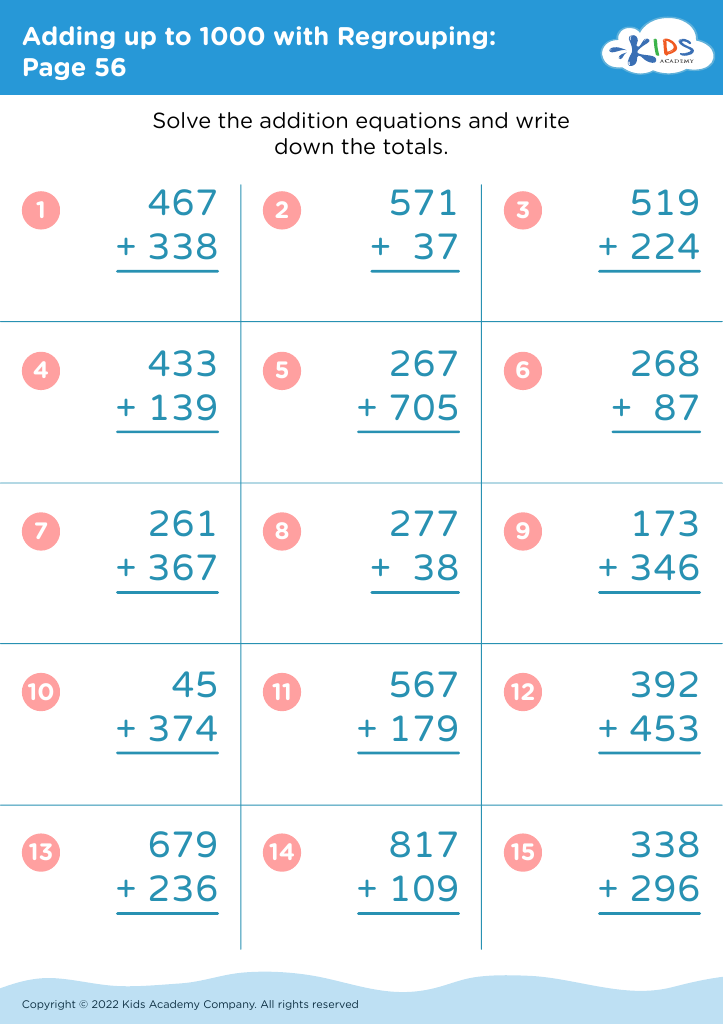
Worksheet
Adding up to 1000 with Regrouping: Page 56
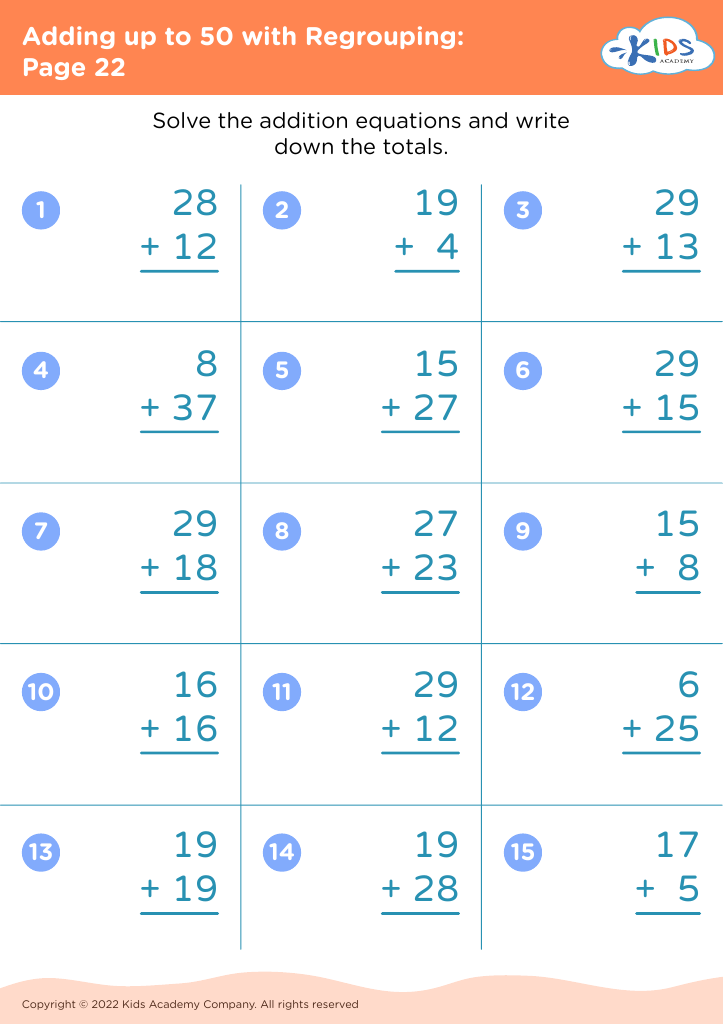
Worksheet
Adding up to 50 with Regrouping: Page 22
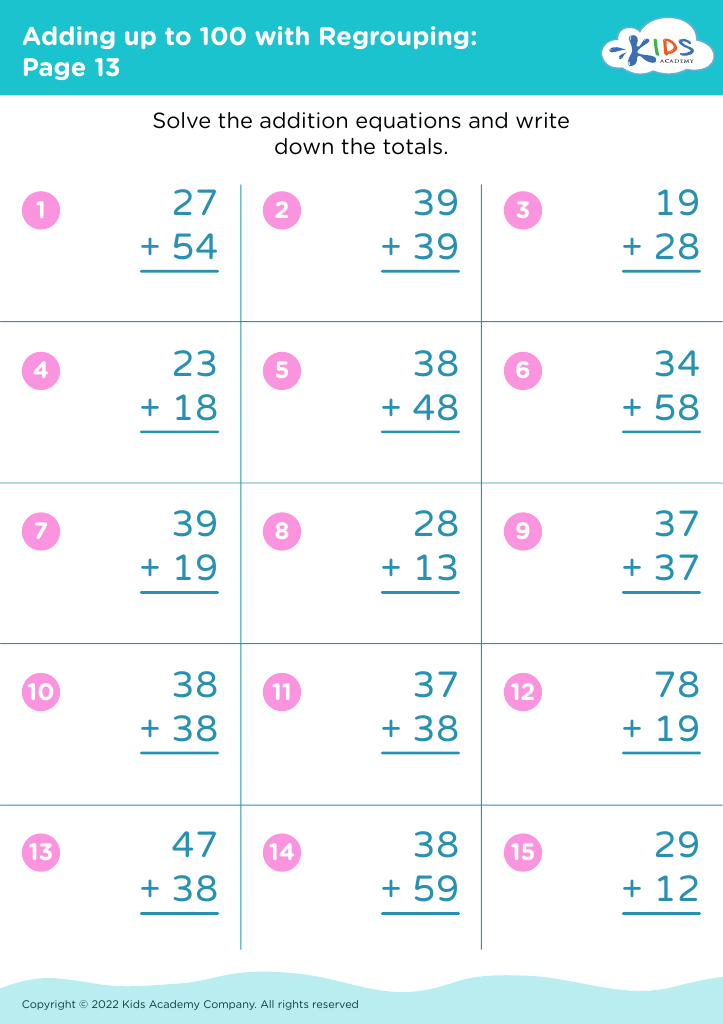
Worksheet
Adding up to 100 with Regrouping: Page 13
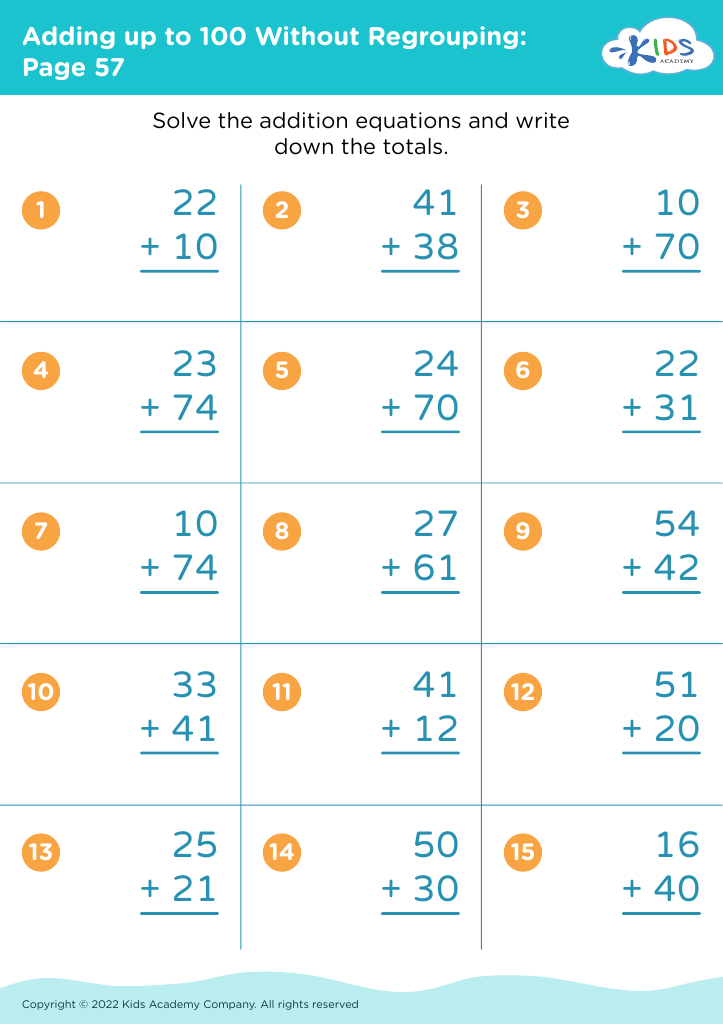
Worksheet
Adding up to 100 Without Regrouping: Page 57
Worksheet


Parents and teachers should care about comparing fractions and introducing fraction addition for ages 3-9 because early mathematical concepts are the building blocks for advanced mathematical understanding. At this developmental stage, children's brains are highly receptive to learning new concepts, and laying a solid foundation in fractions aids in fostering critical thinking and problem-solving skills.

By comparing fractions, children begin to understand the idea of parts making up a whole, which is essential not only in mathematics but also in real-world applications like measuring ingredients for recipes or dividing items fairly among friends. It teaches them to recognize that quantities can be divided and compared, an important skill in managing resources.

Introducing fraction addition at an early age enhances numerical fluency and confidence. It helps children see the relationships between numbers and strengthens their grasp of basic arithmetic operations. Kids learn early on how different fractions can combine to make a whole, or how adding smaller fractions can approximate a larger one.

Moreover, engaging students in these concepts through interactive and fun activities can make learning enjoyable, fostering a lifelong love and curiosity for mathematics. Thus, caring about these early mathematical skills sets children up for future academic success and equips them with the necessary tools to navigate everyday life.