Counting skills Addition Worksheets for Ages 3-9 - Page 3
227 filtered results
-
From - To
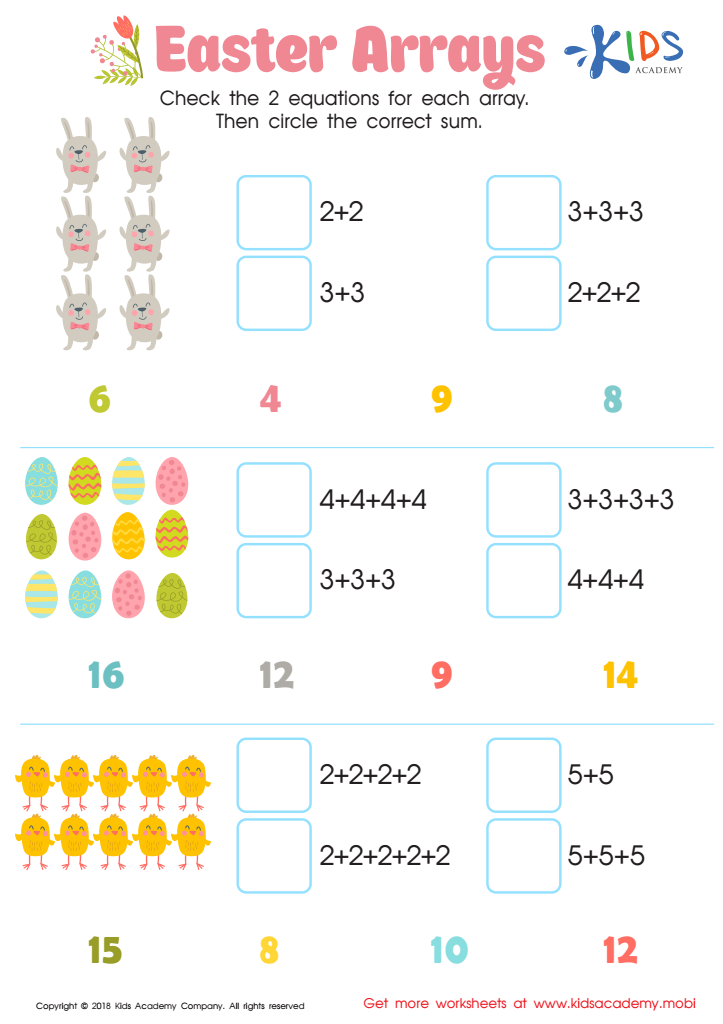
Easter Arrays Worksheet
 Assign to My Students
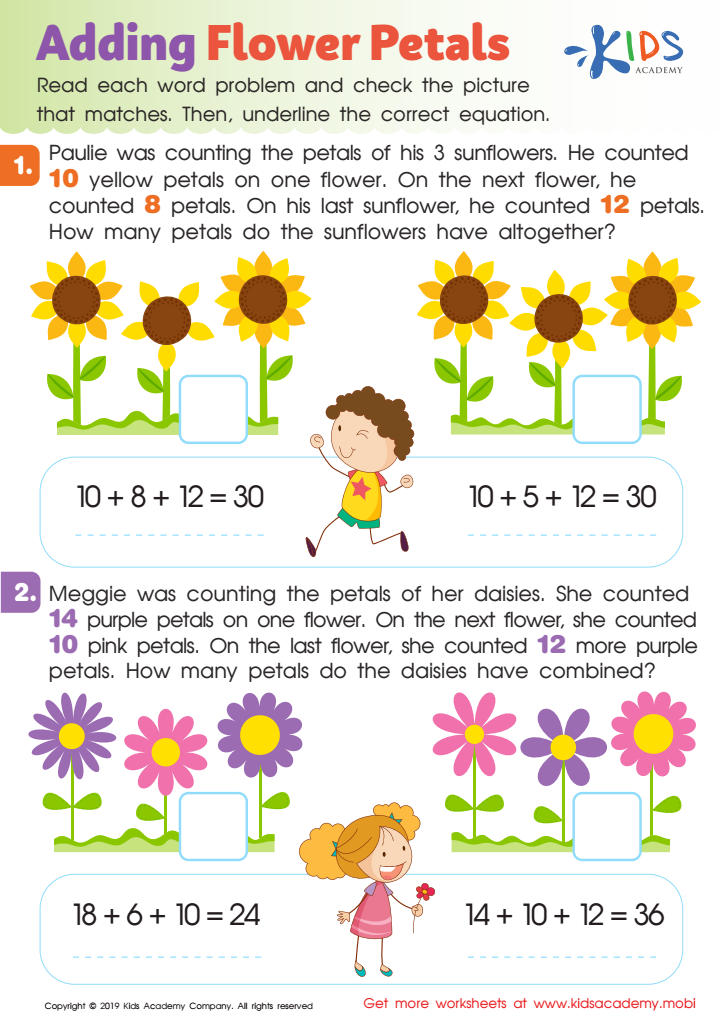
Adding Flower Petals Worksheet
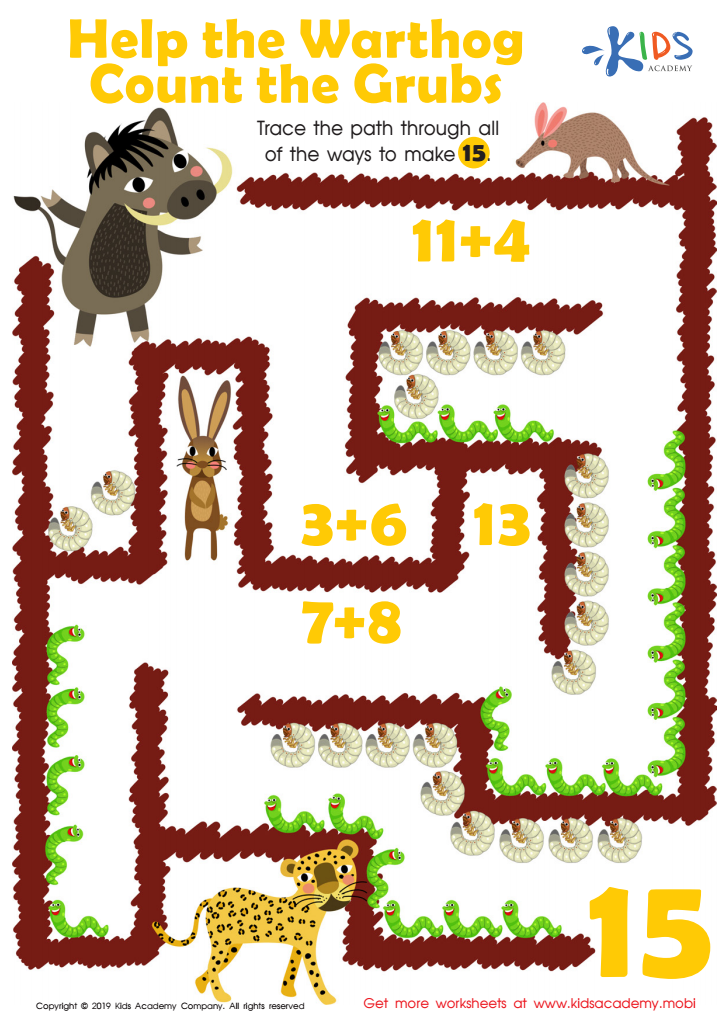
Help the Warthog Count the Grubs Worksheet
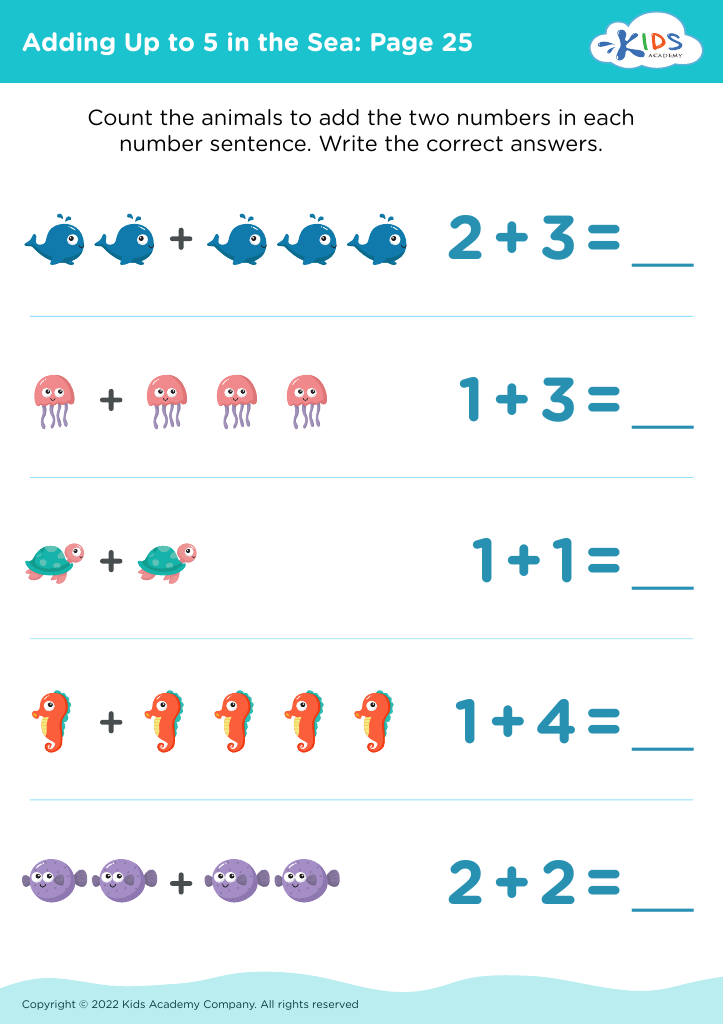
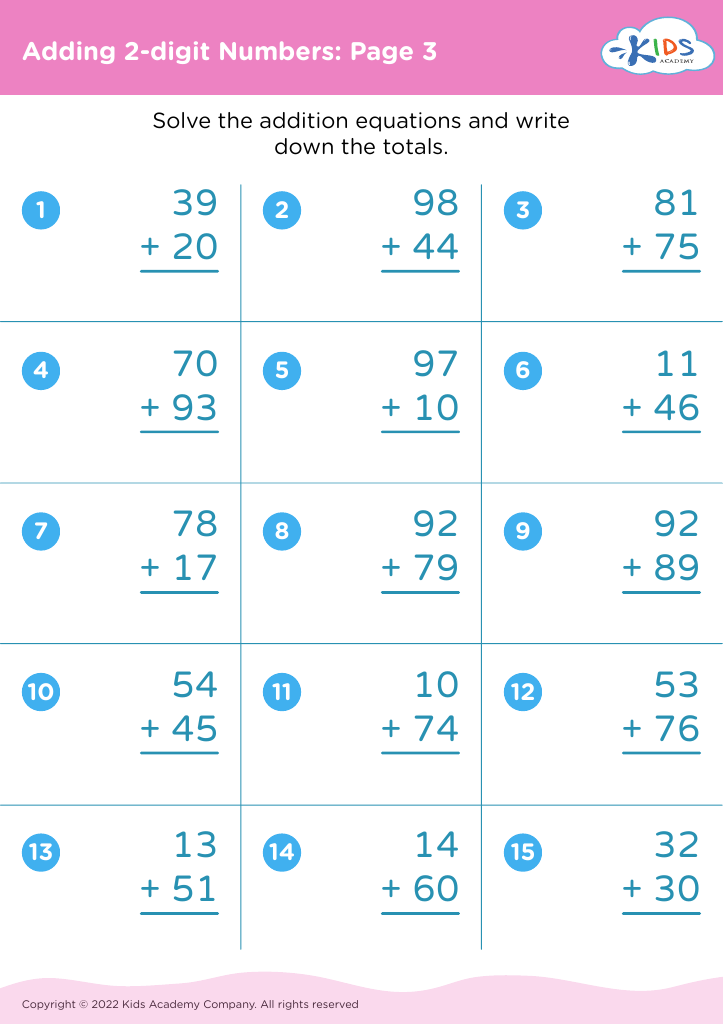
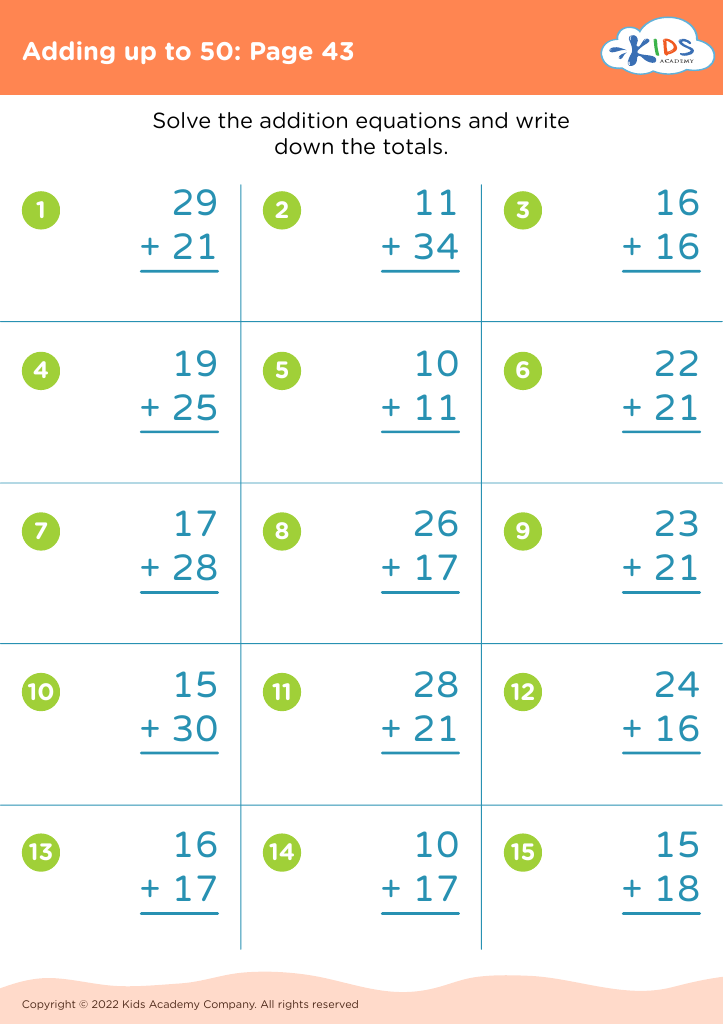
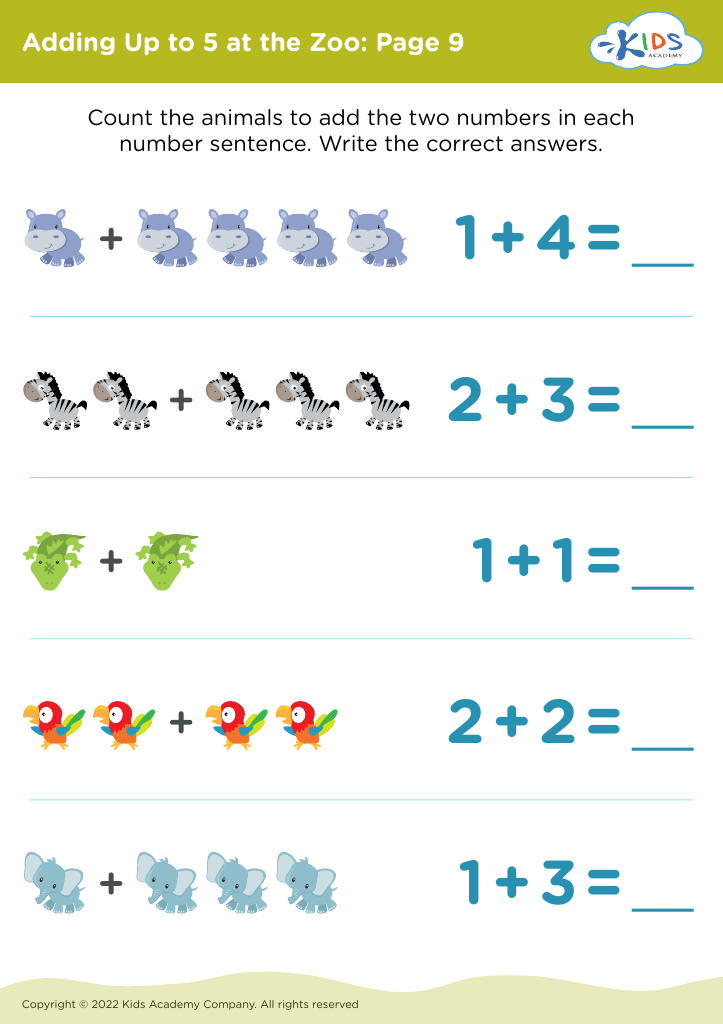








Counting skills and addition are foundational elements of early mathematics education for children aged 3-9. Mastery of these skills is essential for several reasons. Firstly, counting forms the basis for understanding numbers and sequences, enabling children to organize and quantify their environment effectively. When children learn to count, they develop a sense of number value, which is crucial for grasping more complex mathematical concepts later on.
Additionally, addition introduces children to combining quantities, which not only enhances their numerical skills but also fosters problem-solving abilities. Engaging with addition develops logical thinking, as children learn to manipulate numbers to find solutions. This cognitive development is inherently tied to their ability to think critically in various problem-solving situations, both academically and in daily life.
Moreover, nurturing these skills at a young age builds confidence and a positive attitude towards math. Children who feel competent in basic arithmetic are likely to pursue more advanced math topics with enthusiasm, reducing math anxiety later on.
Lastly, incorporating counting and addition into daily activities makes learning fun and interactive, reinforcing the idea that math is not just a subject but a valuable life skill. Parents and teachers play a crucial role in facilitating this essential learning process, helping to shape well-rounded, confident learners.








