Developing problem-solving abilities Addition Worksheets for Ages 3-9
4 filtered results
-
From - To
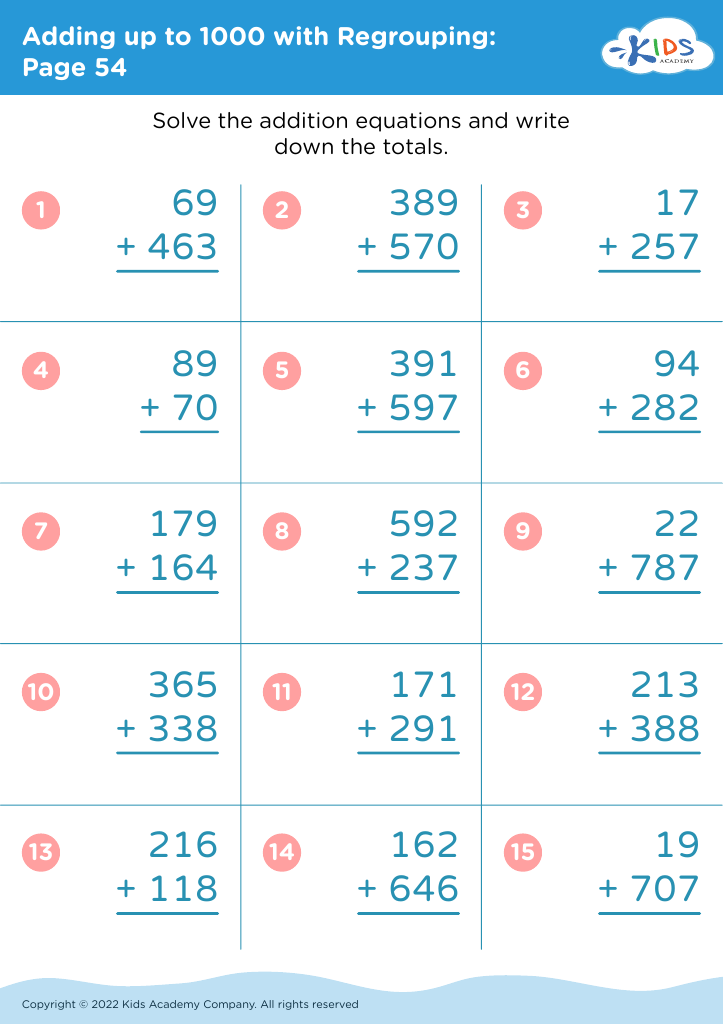
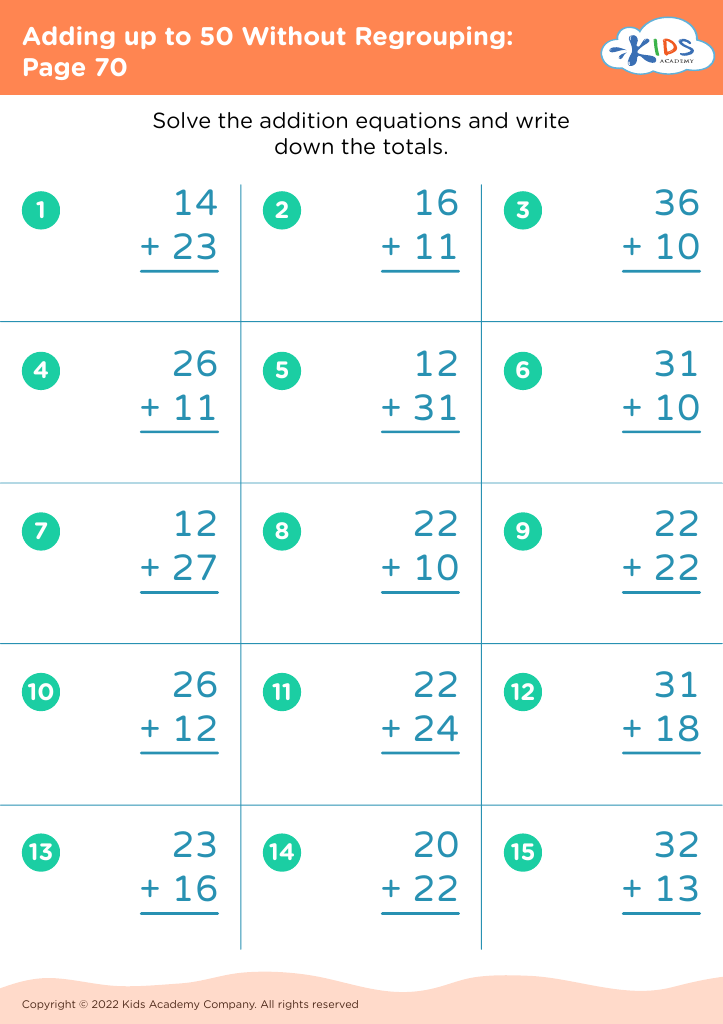
Developing problem-solving abilities is crucial for young learners aged 3-9, and our addition worksheets are designed to enhance these essential skills. These worksheets not only focus on basic addition tasks but also encourage children to think critically and find solutions to various math-related challenges. Each activity is creatively crafted to engage young minds, featuring colorful visuals and relatable scenarios that stimulate logical reasoning. As children progress through these worksheets, they build confidence in their math skills and learn to approach problems strategically. Start your child's journey to becoming a confident problem solver with our engaging addition worksheets today!
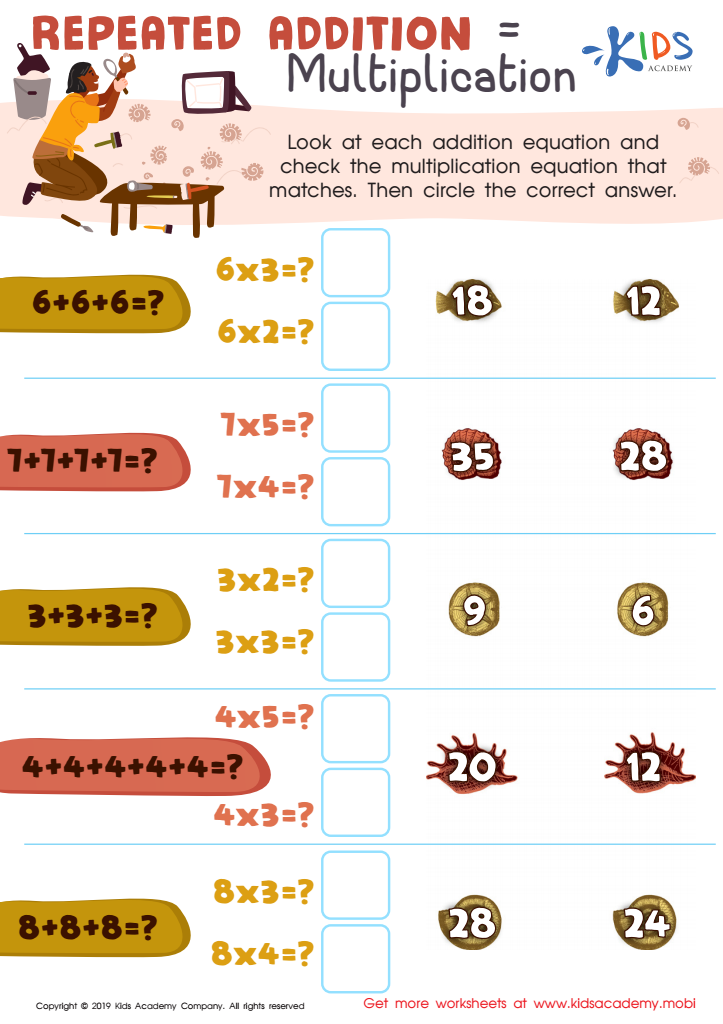
Repeated Addition = Multiplication Worksheet
 Assign to My Students
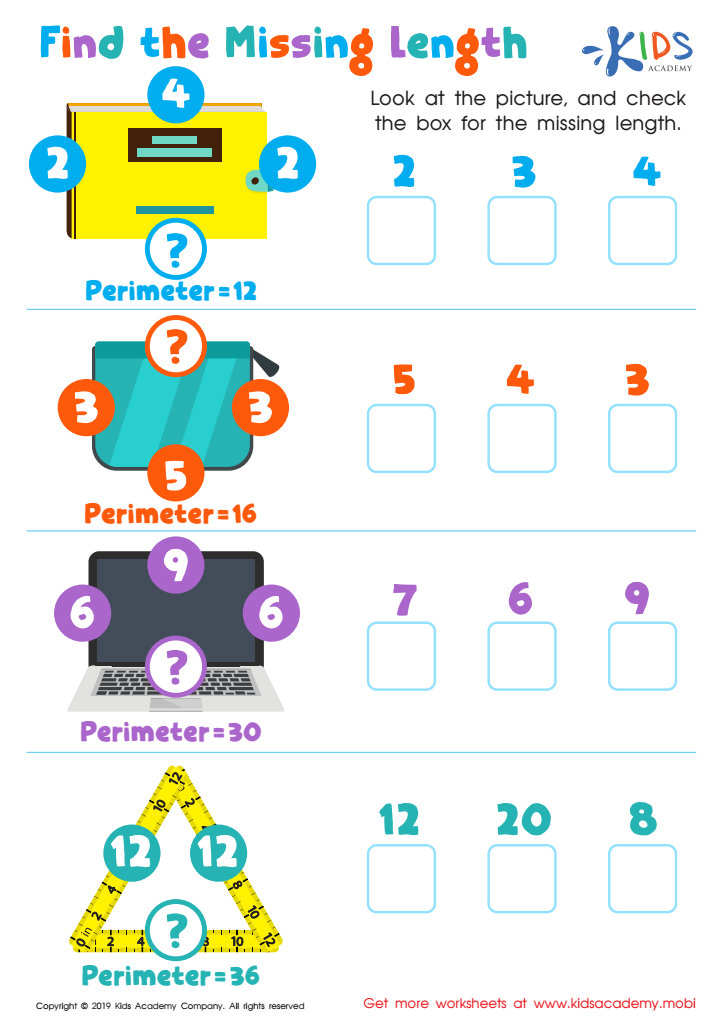
Find the Missing Length Worksheet








Developing problem-solving abilities in young children, particularly through addition, is crucial for their cognitive and emotional growth. At ages 3-9, children's brains are especially receptive to learning new concepts, making it an ideal time to establish foundational skills in mathematics.
First, strong problem-solving skills enhance critical thinking, allowing children to analyze situations, evaluate options, and make informed decisions. This process cultivates a growth mentality, teaching them that challenges can be overcome with effort and persistence. Additionally, learning addition through problem-solving encourages creativity as children explore different ways to approach mathematical problems.
Furthermore, problem-solving fosters independence. As children learn to tackle challenges on their own, they gain confidence, which translates into many areas of their lives—from academics to social interactions. By mastering addition, children also build a solid base for future mathematical concepts, leading to greater academic success.
Lastly, engaging parents and teachers in this process fosters a supportive learning environment. Collaborative activities not only strengthen relationships but also model positive problem-solving approaches. By investing in the development of these skills at an early age, we equip children with the tools they need to navigate their world effectively and confidently.








