Fine motor skills development Addition Worksheets for Ages 3-9
3 filtered results
-
From - To
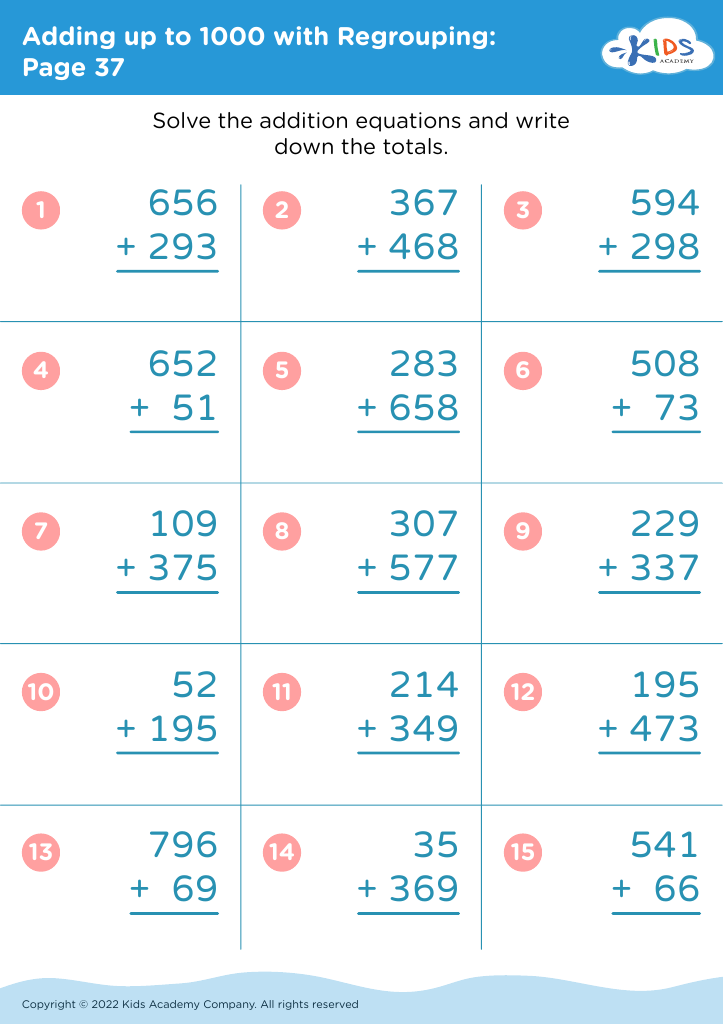
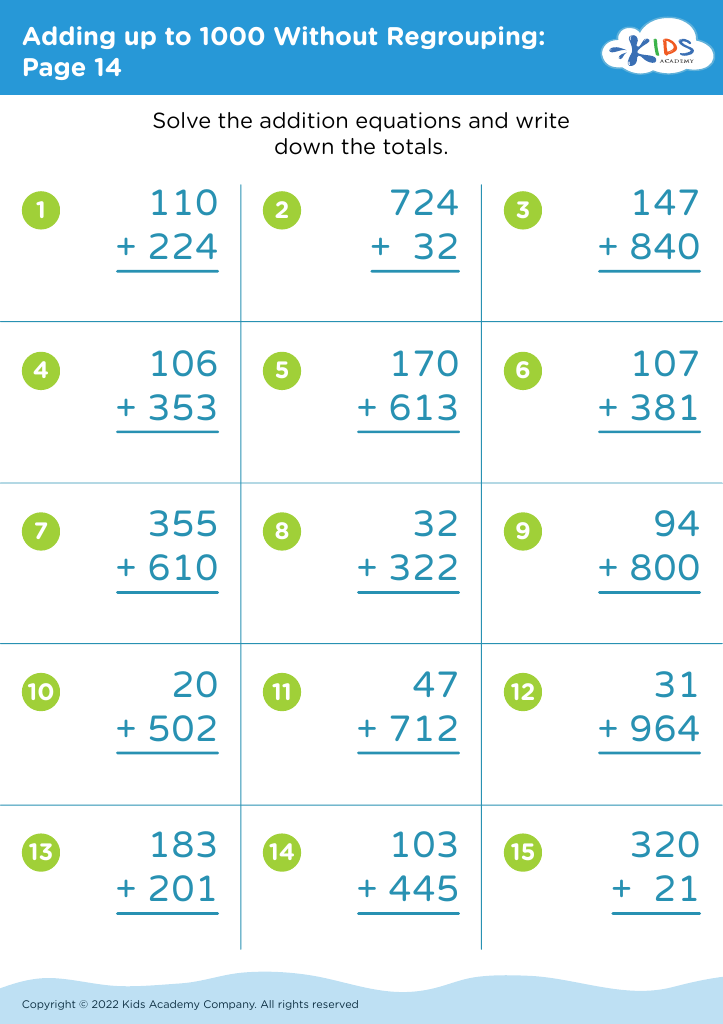
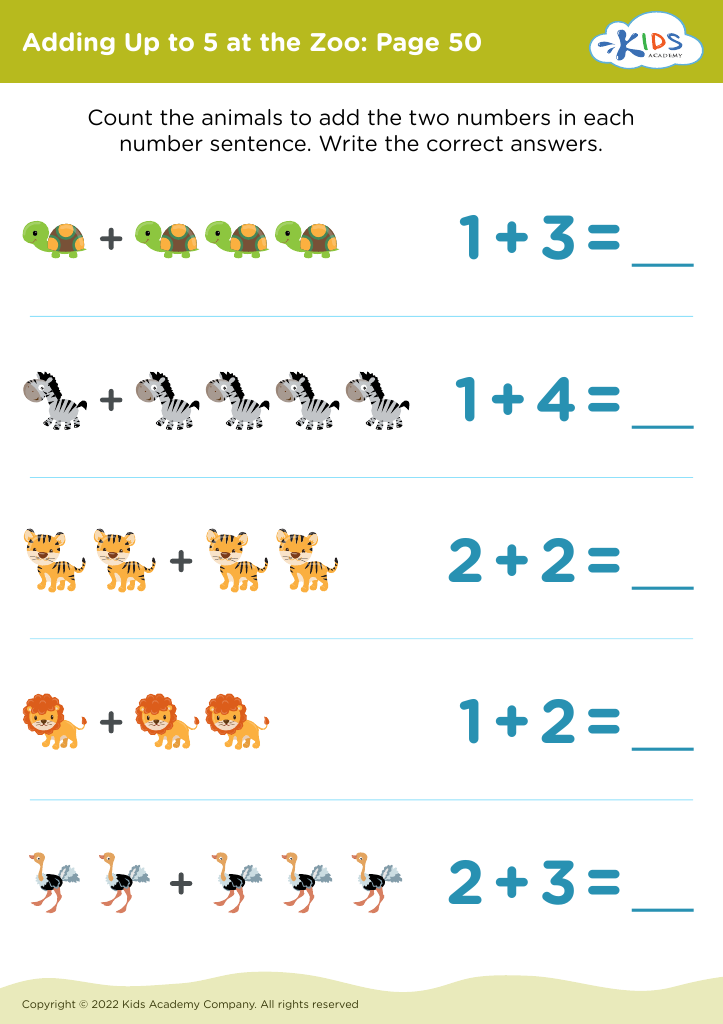
Enhance your child's fine motor skills with our engaging Addition Worksheets designed for ages 3-9. These exciting and interactive activities promote hand-eye coordination and finger strength while introducing fundamental math concepts. Each worksheet features colorful illustrations and age-appropriate exercises that captivate young learners' attention. Children will enjoy tracing numbers, connecting dots, and completing fun tasks that seamlessly blend skill development and early math learning. Perfect for homeschooling or supplemental practice, these worksheets support your child's growth in a playful and educational way. Download our Fine Motor Skills Development Addition Worksheets today and watch your little one's confidence soar as they master math!







.jpg)
Fine motor skills development is crucial for children ages 3 to 9, as it lays the foundation for numerous essential tasks they will encounter in school and daily life. These skills involve the coordination of small muscles, particularly in the hands and fingers, and are integral for activities such as writing, drawing, cutting with scissors, and buttoning clothing.
As children master fine motor skills, they gain confidence and independence, allowing them to participate more fully in classroom activities and social interactions. For example, developing these skills enhances a child's ability to express themselves through art, resulting in improved creativity and emotional expression. Additionally, children with well-developed fine motor skills often experience better academic success, especially in literacy and numeracy, as they can manipulate writing tools and engage in hands-on activities with greater ease.
Parents and teachers can foster fine motor development through a variety of playful and engaging activities, such as arts and crafts, puzzles, and construction play. By prioritizing fine motor skill development, they not only support children’s immediate learning needs but also their overall growth, ensuring they build the confidence and skills needed for future learning experiences.








