Filters

29 filtered results

Clear all filters
Favorites
With answer key
Interactive

29 filtered results

Difficulty Level

Grade


Explore our engaging Fraction Comparison Addition Worksheets designed for children aged 3-9! These worksheets provide a fun and interactive way to help young learners understand and compare fractions, paving the way for solid math skills. With colorful illustrations and age-appropriate problems, kids can enhance their addition skills while gaining confidence in working with fractions. Our resources cater to various learning styles, ensuring that every child can grasp these concepts effectively. Perfect for classroom use or homeschooling, these worksheets make math enjoyable and accessible. Download now and watch your child excel in their understanding of fractions while having fun!
Check out this FREE Trial Lesson on Addition for age 3-9!

X

Favorites
With answer key
Interactive
  • 3-9
  • Fraction comparison
  • Addition
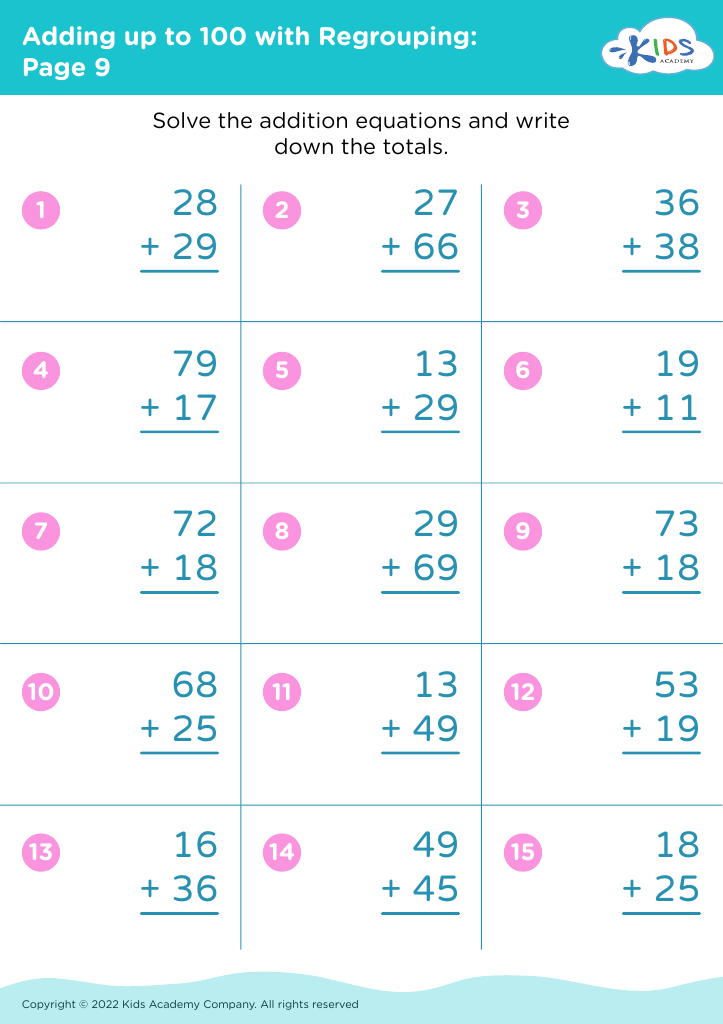
Adding up to 100 with Regrouping: Page 9
Worksheet
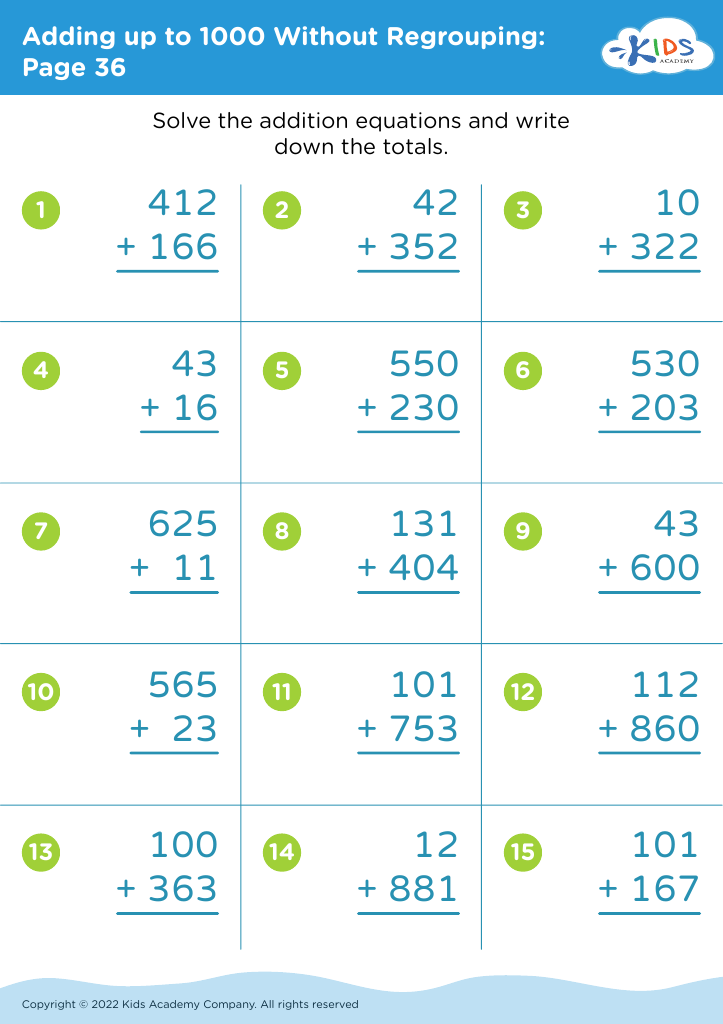
Adding up to 1000 Without Regrouping: Page 36
Worksheet
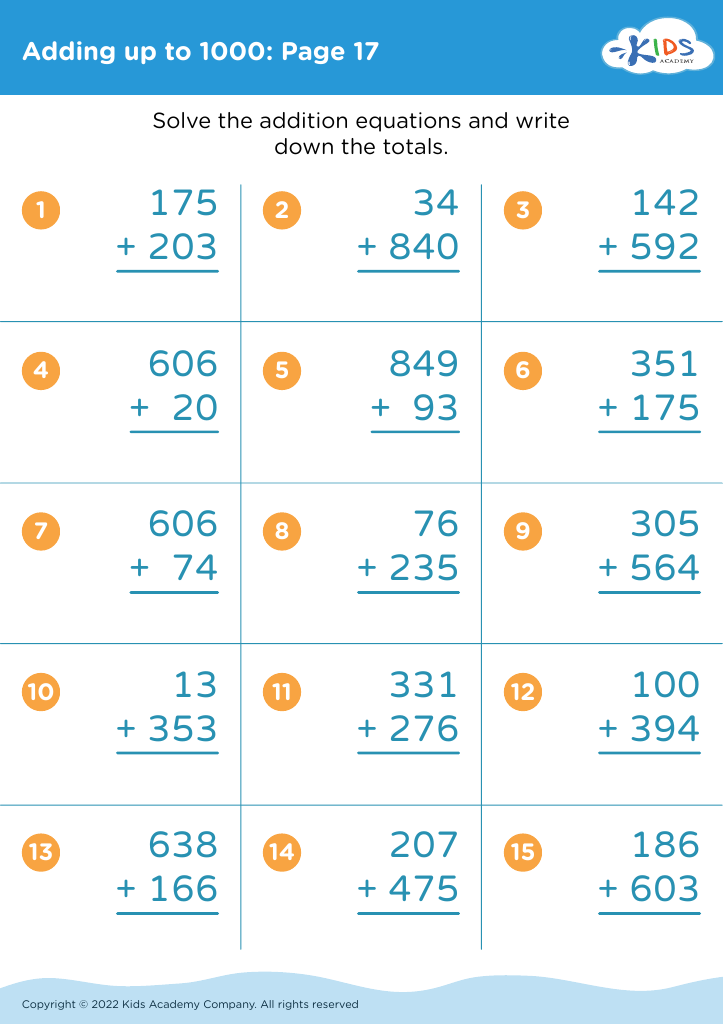
Adding up to 1000: Page 17

Adding up to 1000: Page 17

Adding up to 1000: Page 17
Worksheet
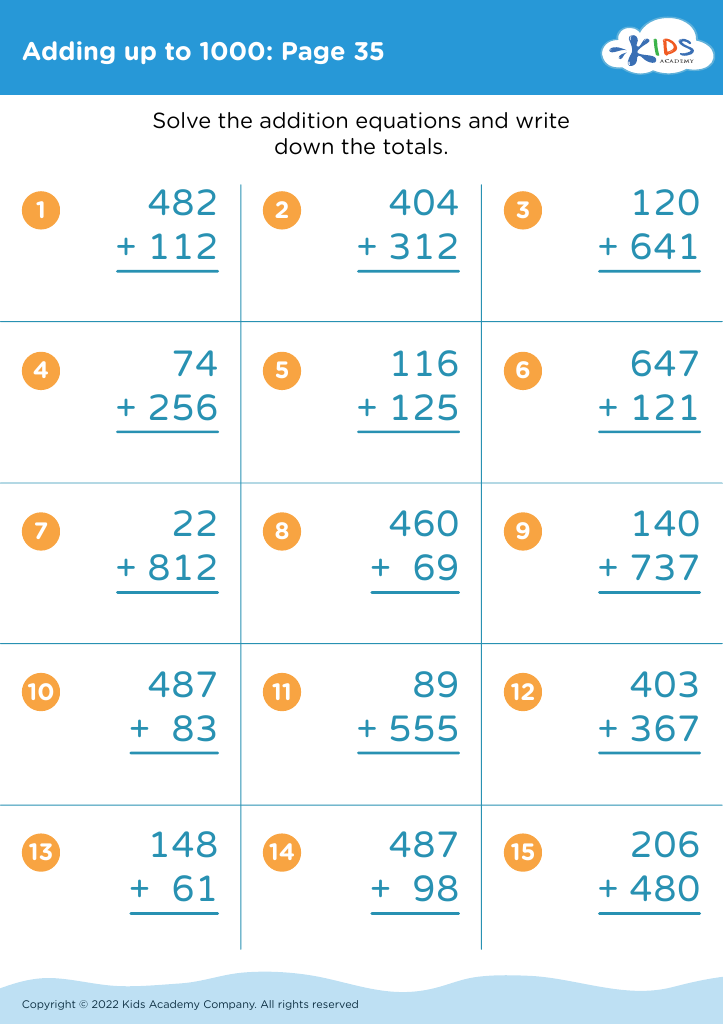
Adding up to 1000: Page 35

Adding up to 1000: Page 35

Adding up to 1000: Page 35
Worksheet
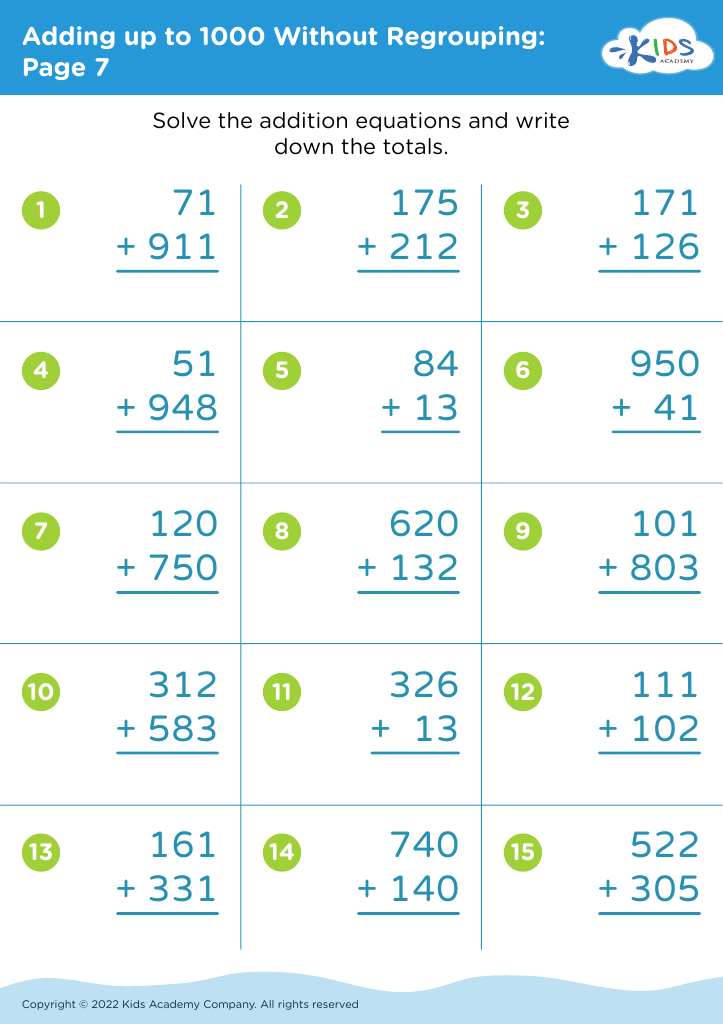
Adding up to 1000 Without Regrouping: Page 7
Worksheet
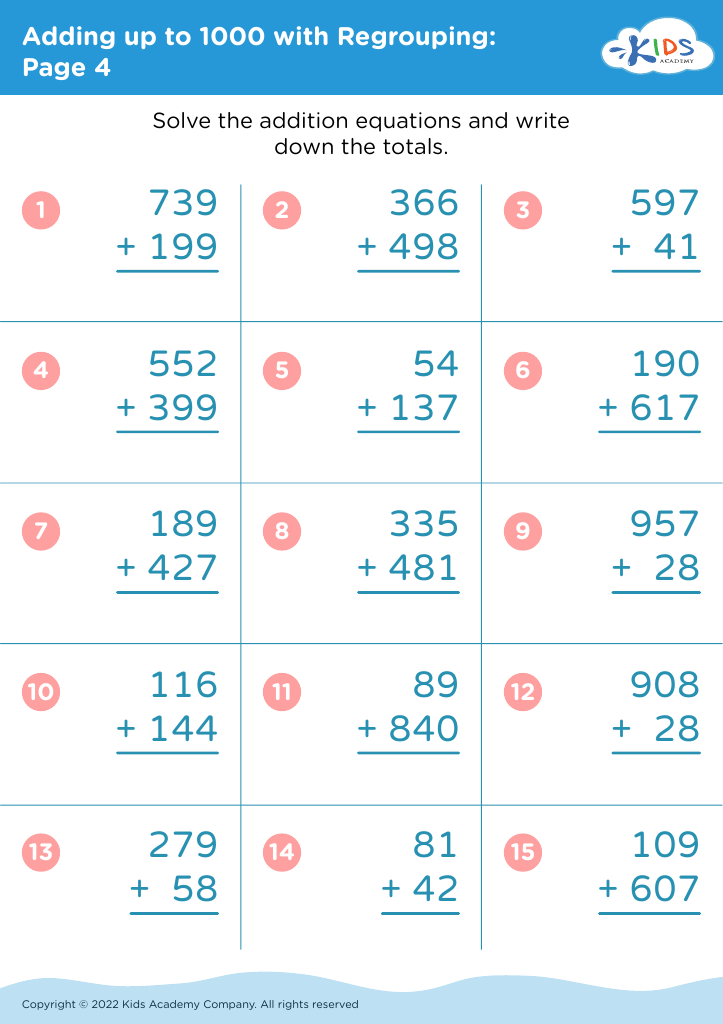
Adding up to 1000 with Regrouping: Page 4
Worksheet
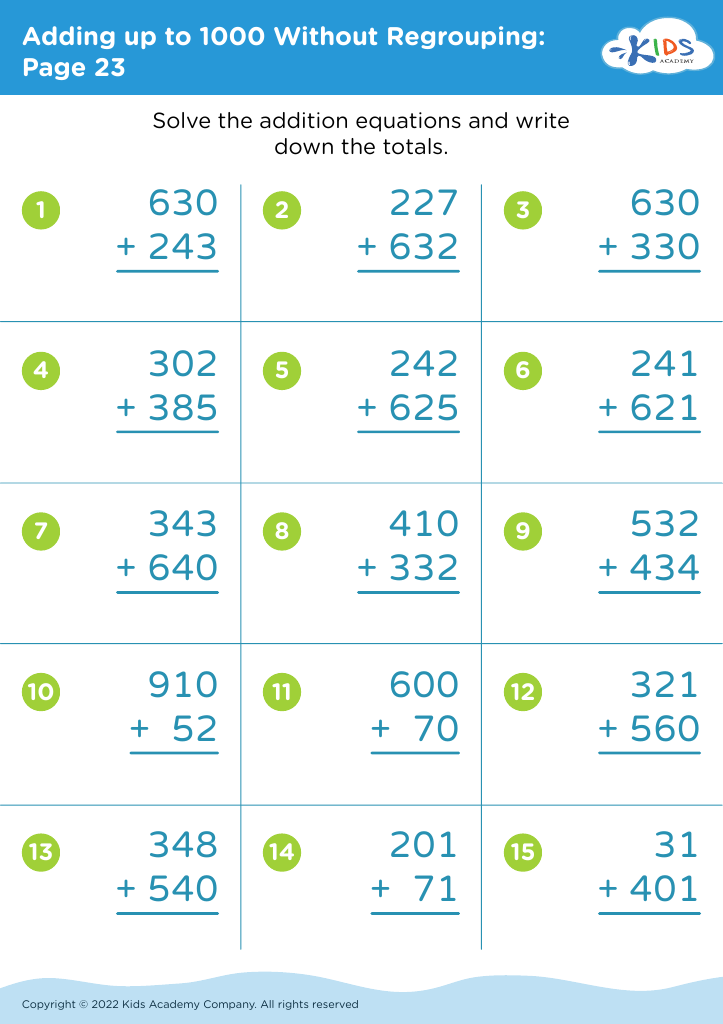
Adding up to 1000 Without Regrouping: Page 23
Worksheet
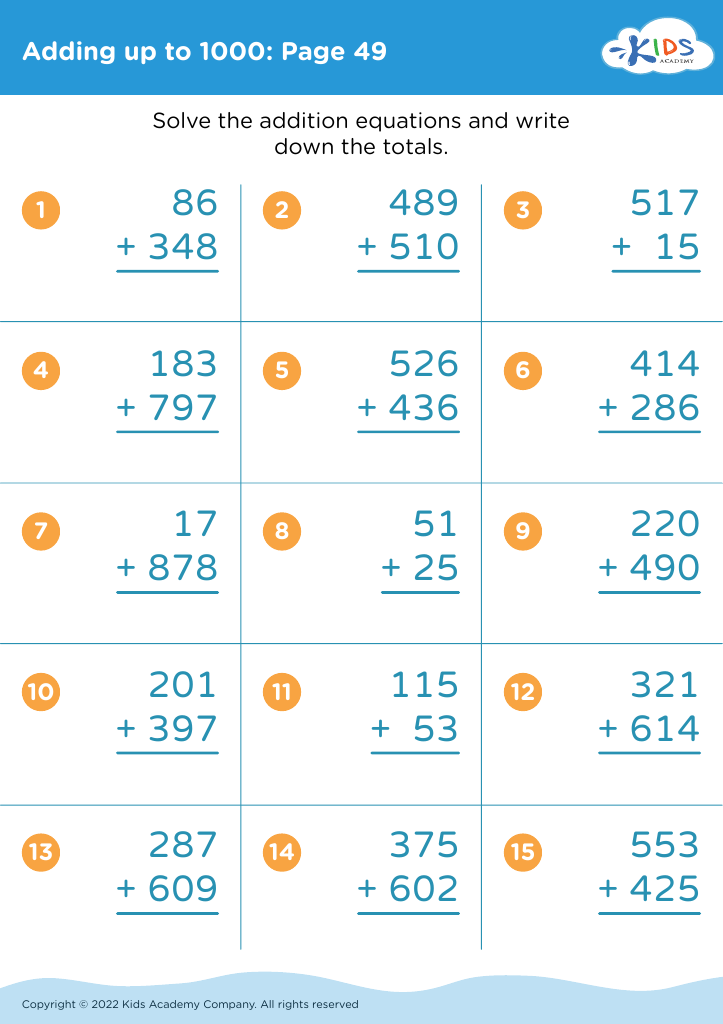
Adding up to 1000: Page 49

Adding up to 1000: Page 49

Adding up to 1000: Page 49
Worksheet
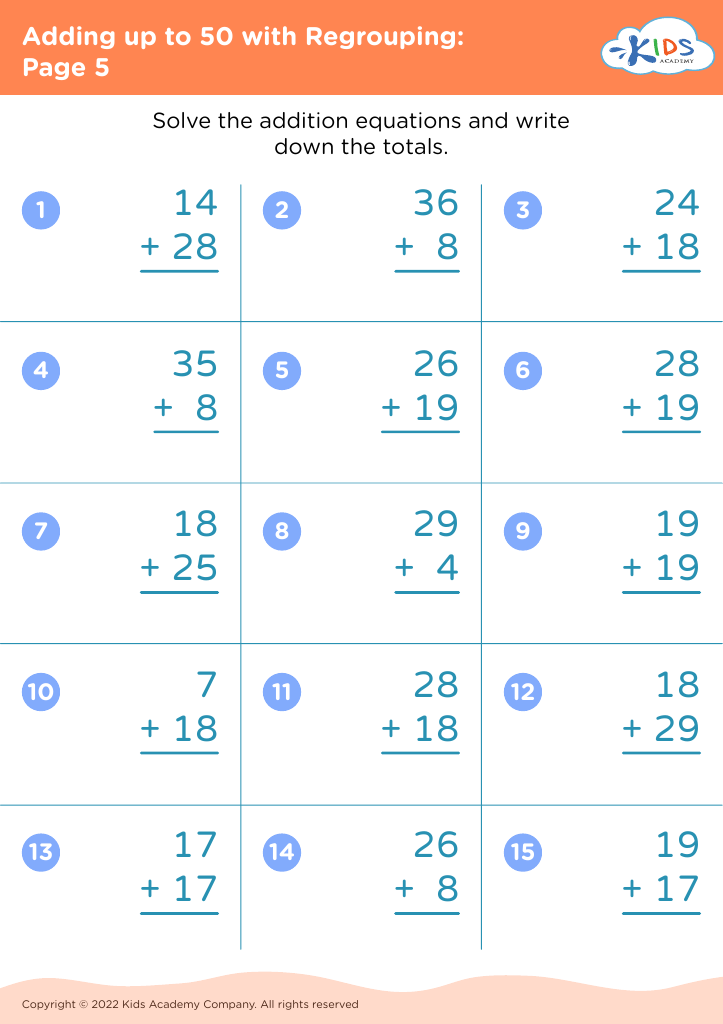
Adding up to 50 with Regrouping: Page 5
Worksheet
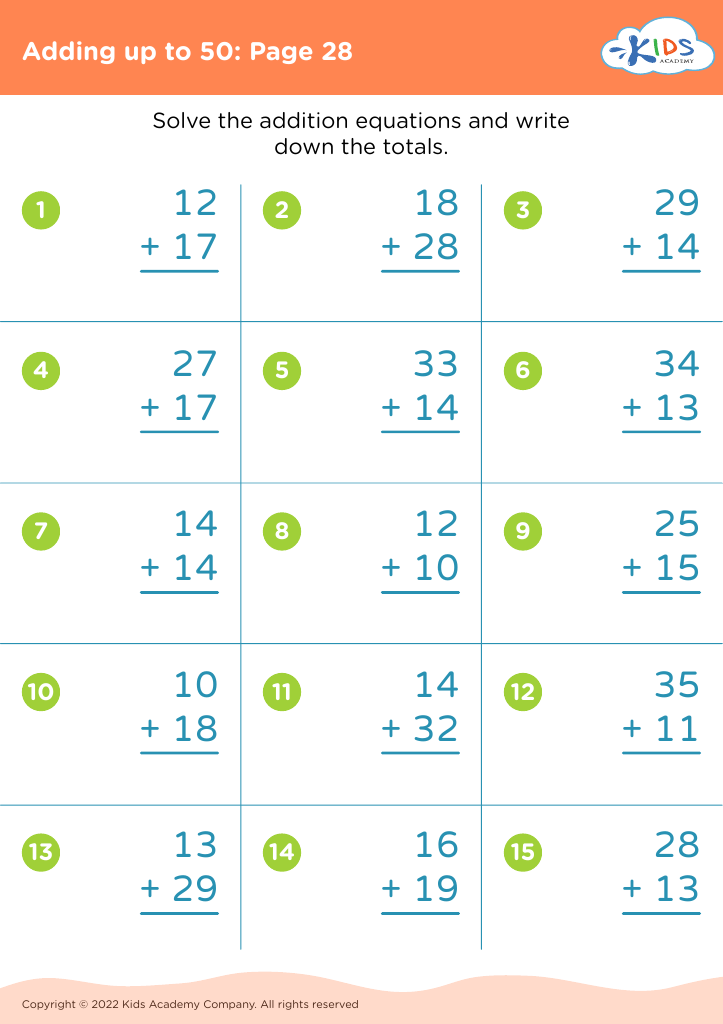
Adding up to 50: Page 28

Adding up to 50: Page 28

Adding up to 50: Page 28
Worksheet
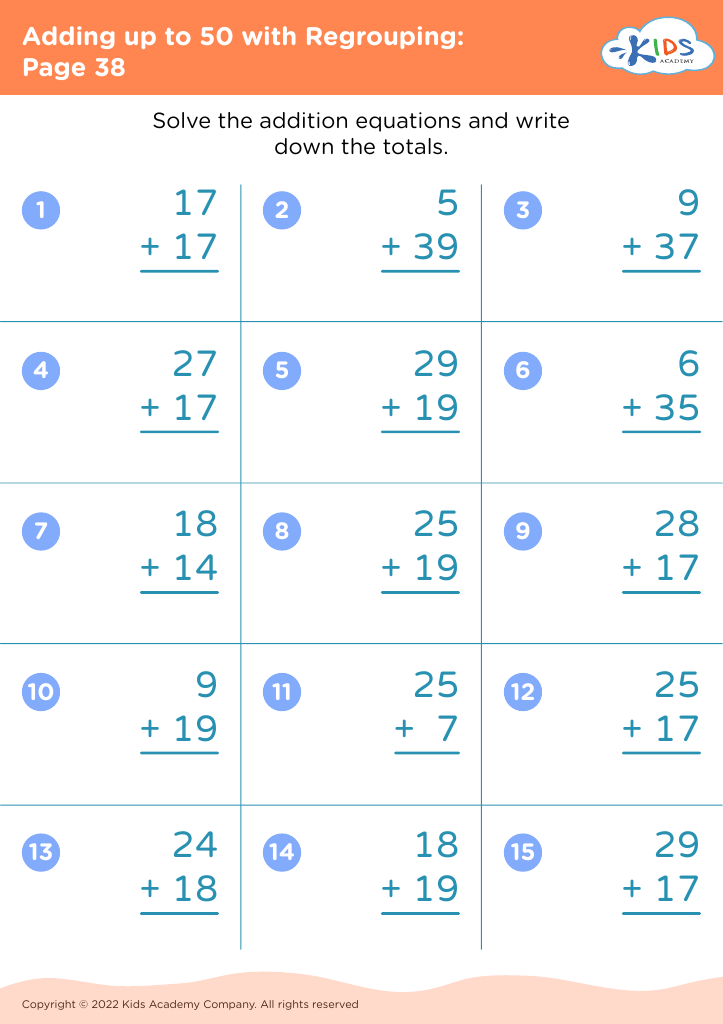
Adding up to 50 with Regrouping: Page 38
Worksheet
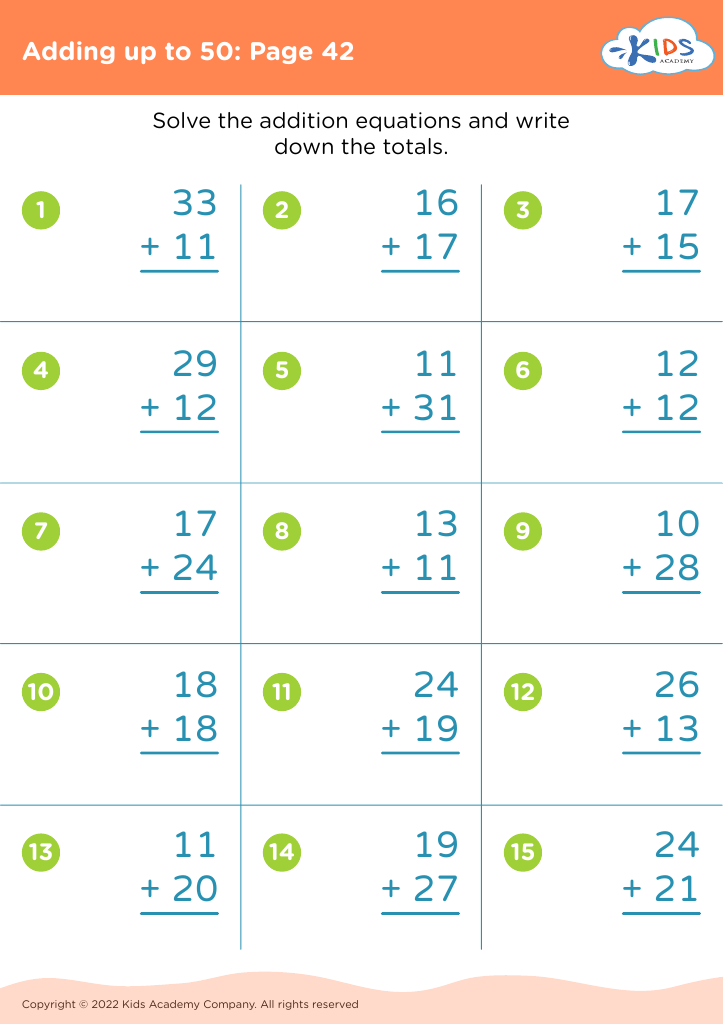
Adding up to 50: Page 42

Adding up to 50: Page 42

Adding up to 50: Page 42
Worksheet
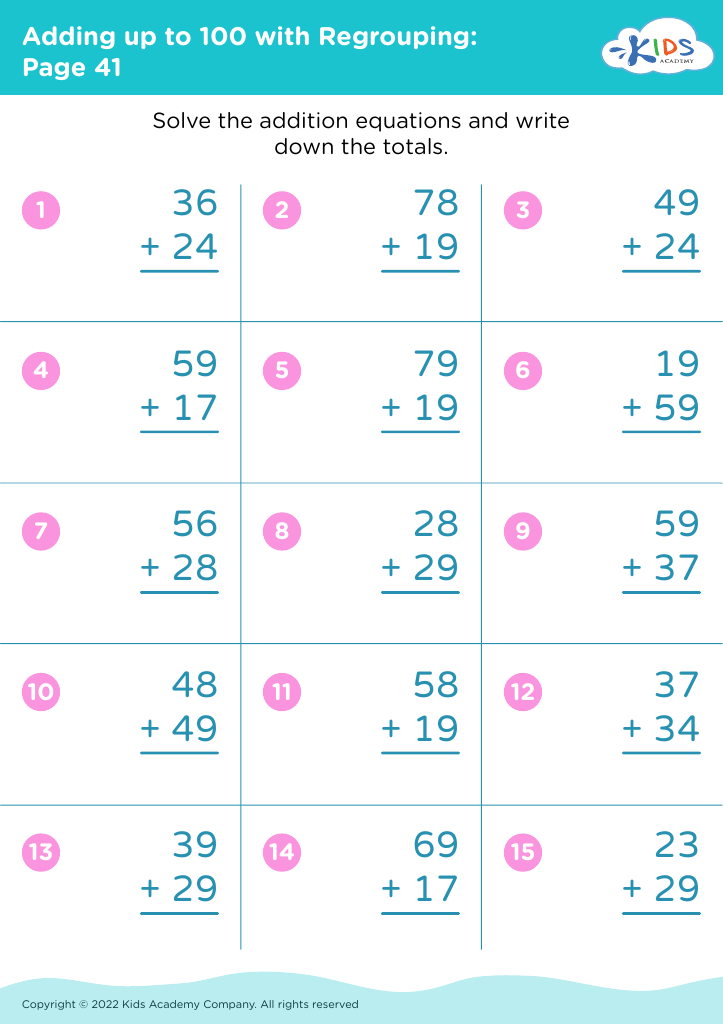
Adding up to 100 with Regrouping: Page 41
Worksheet
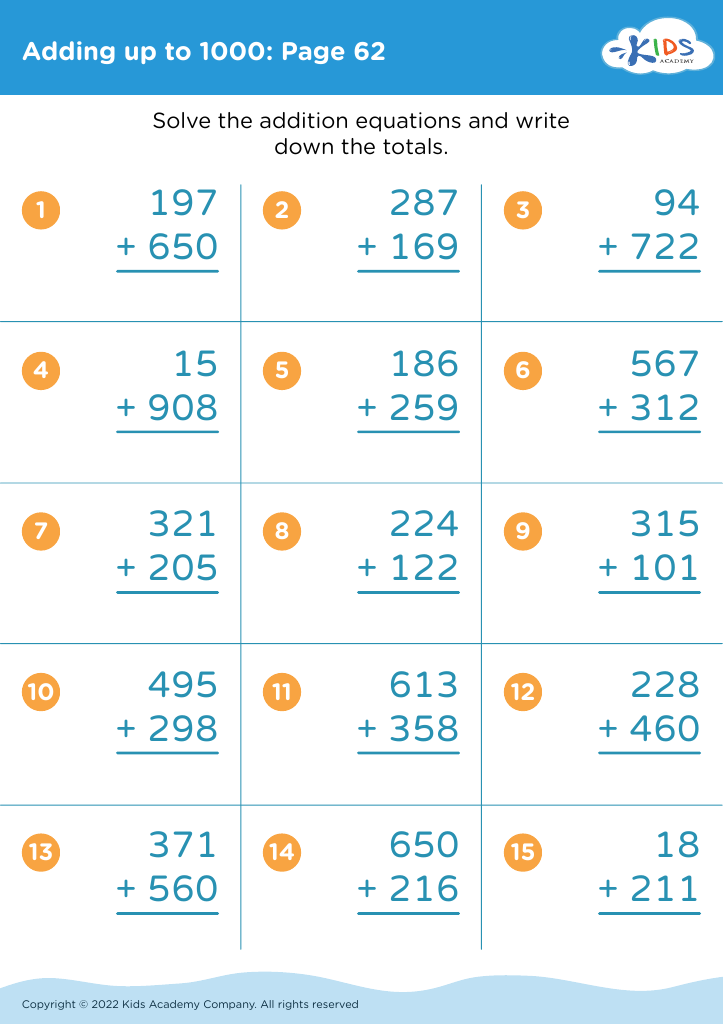
Adding up to 1000: Page 62

Adding up to 1000: Page 62

Adding up to 1000: Page 62
Worksheet
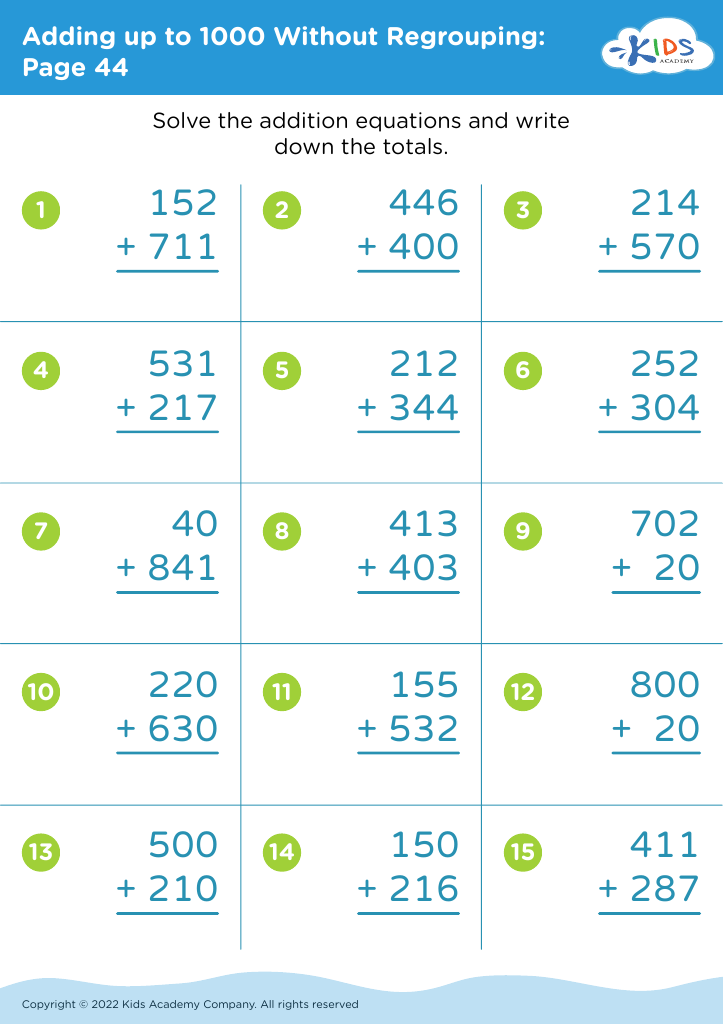
Adding up to 1000 Without Regrouping: Page 44
Worksheet
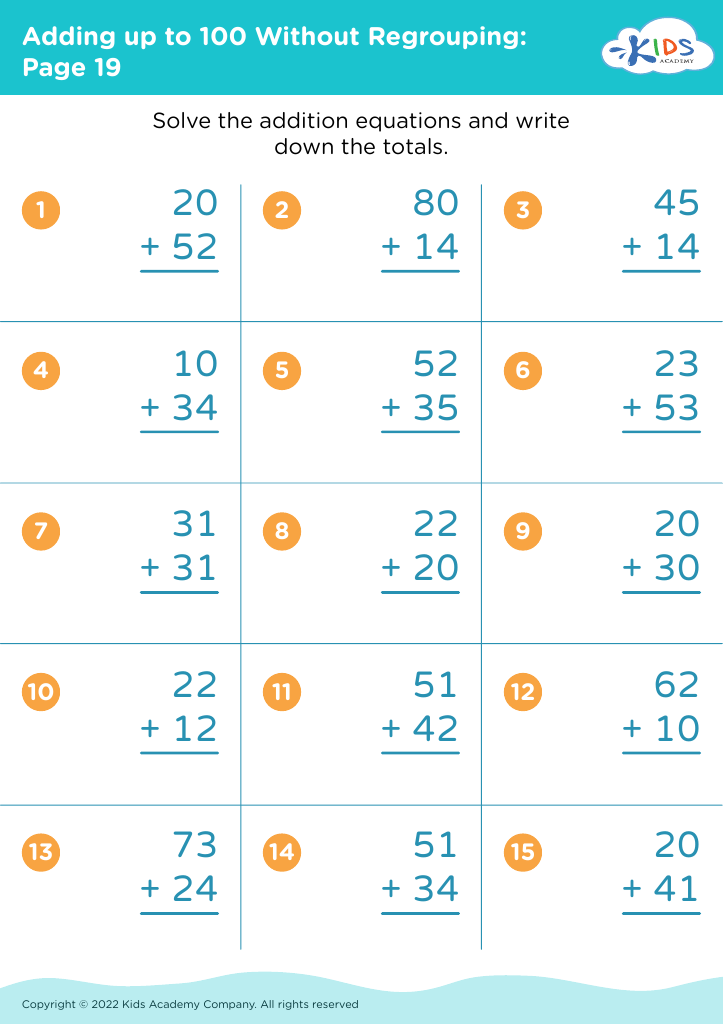
Adding up to 100 Without Regrouping: Page 19
Worksheet
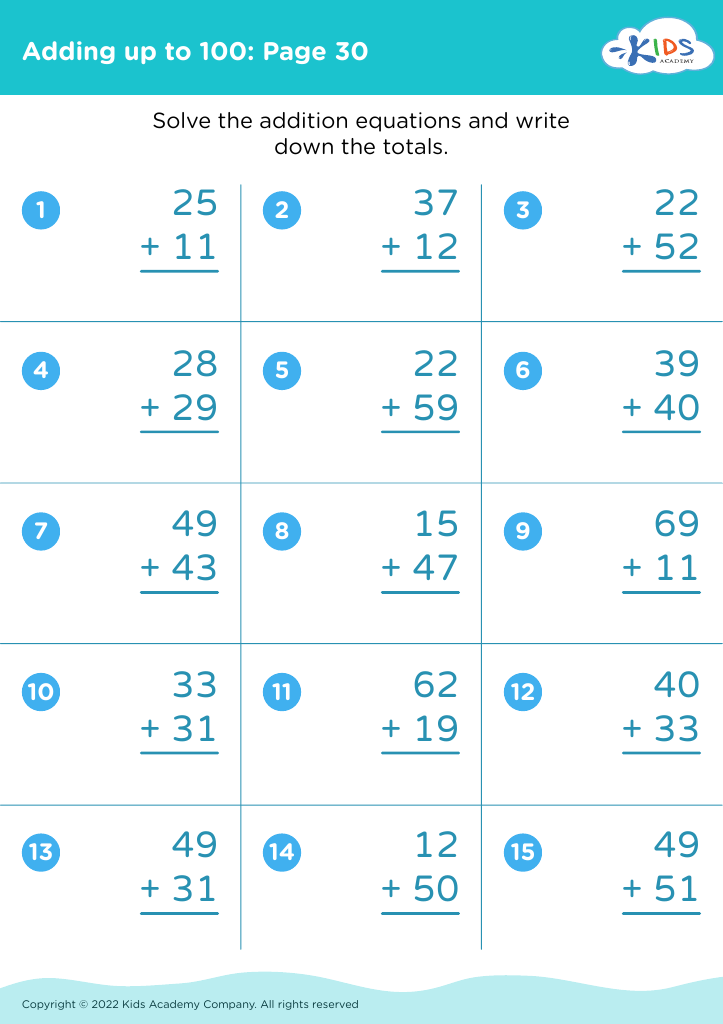
Adding up to 100: Page 30

Adding up to 100: Page 30

Adding up to 100: Page 30
Worksheet
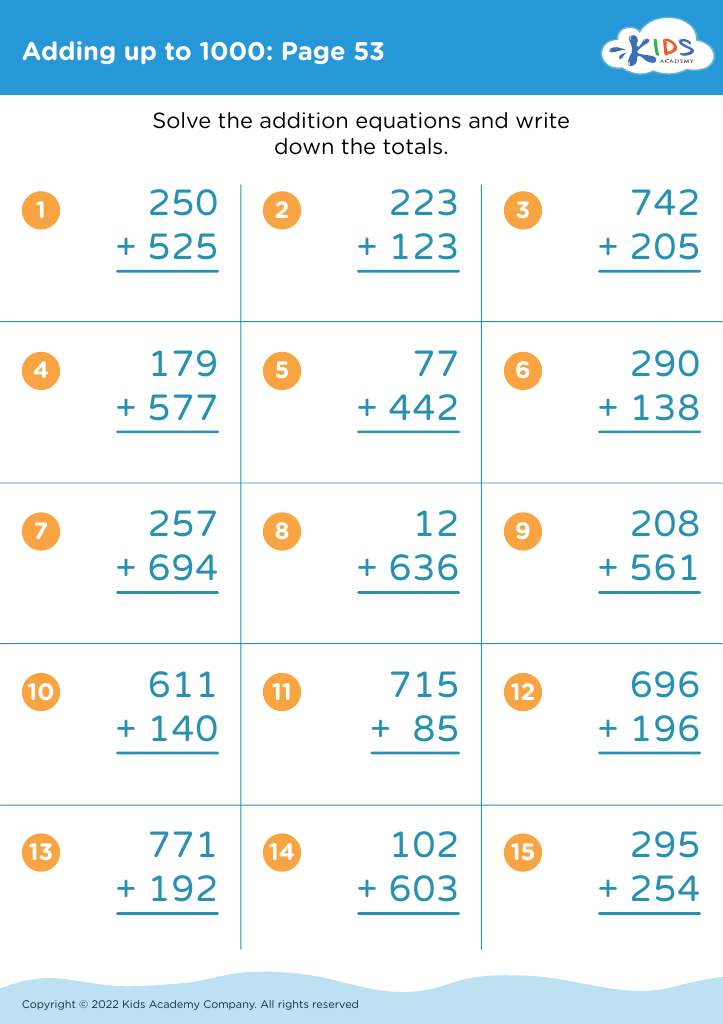
Adding up to 1000: Page 53

Adding up to 1000: Page 53

Adding up to 1000: Page 53
Worksheet
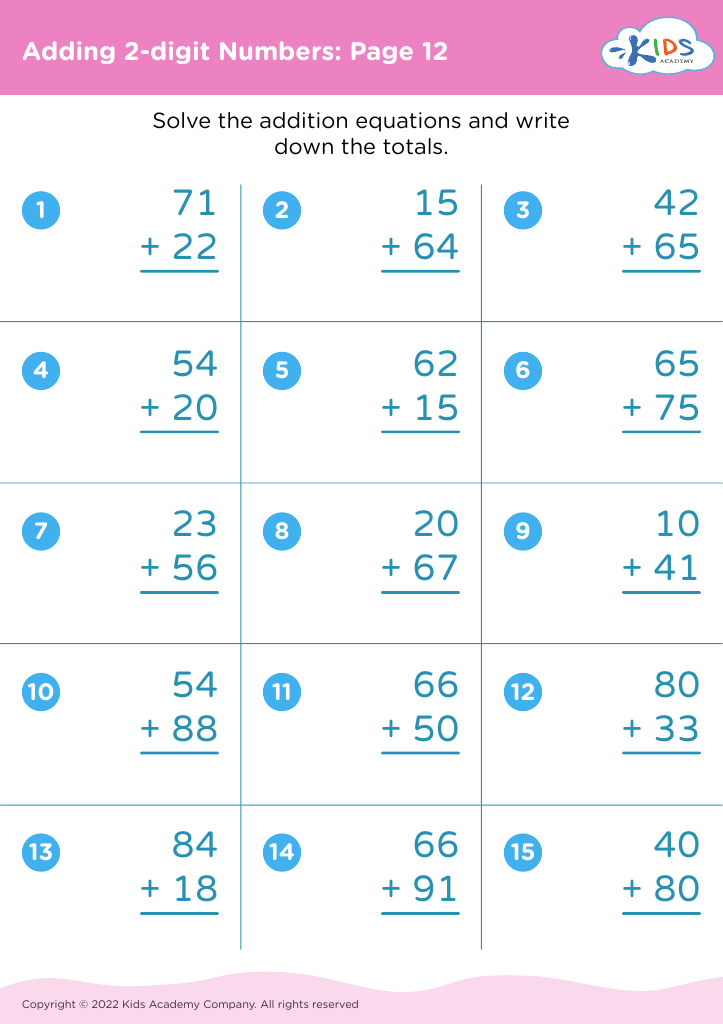
Adding 2-digit Numbers: Page 12

Adding 2-digit Numbers: Page 12

Adding 2-digit Numbers: Page 12
Worksheet
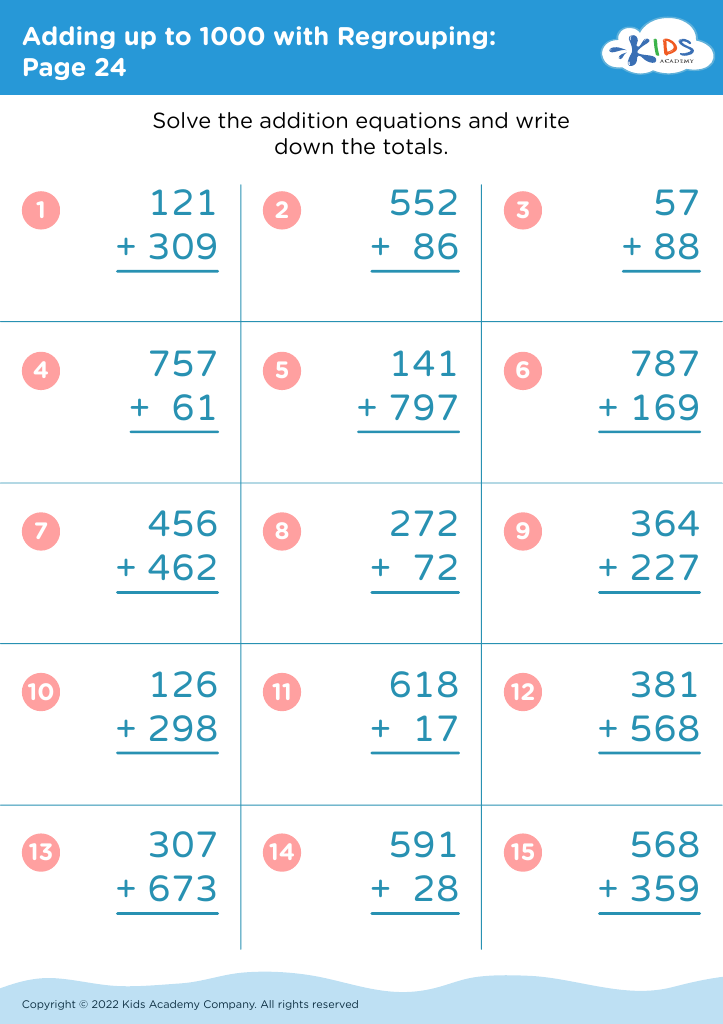
Adding up to 1000 with Regrouping: Page 24
Worksheet
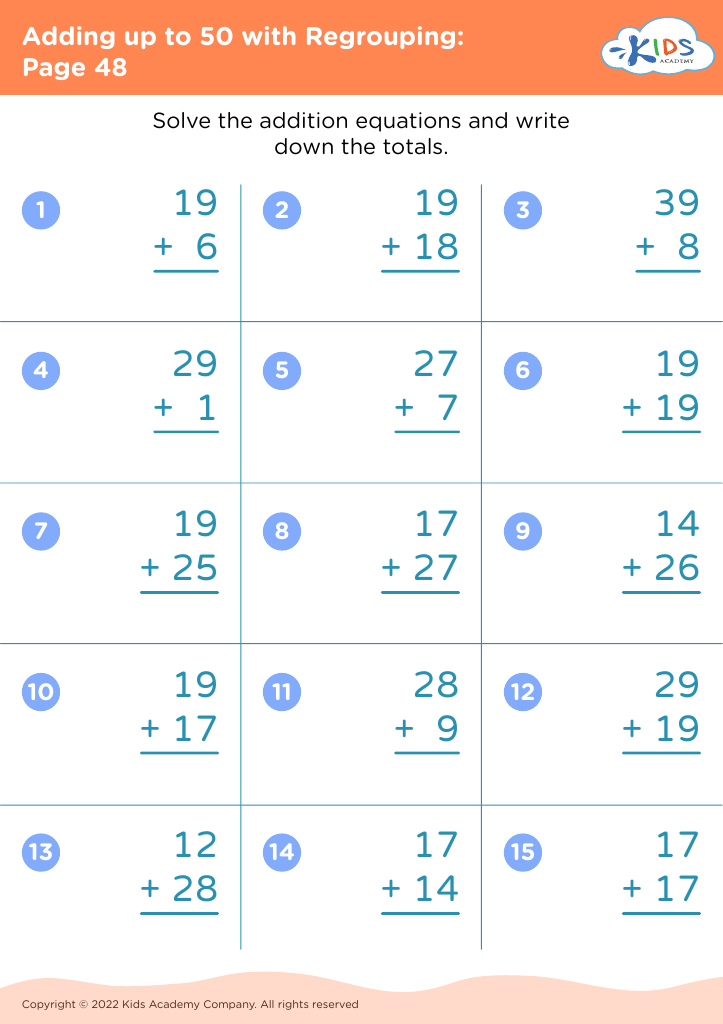
Adding up to 50 with Regrouping: Page 48
Worksheet
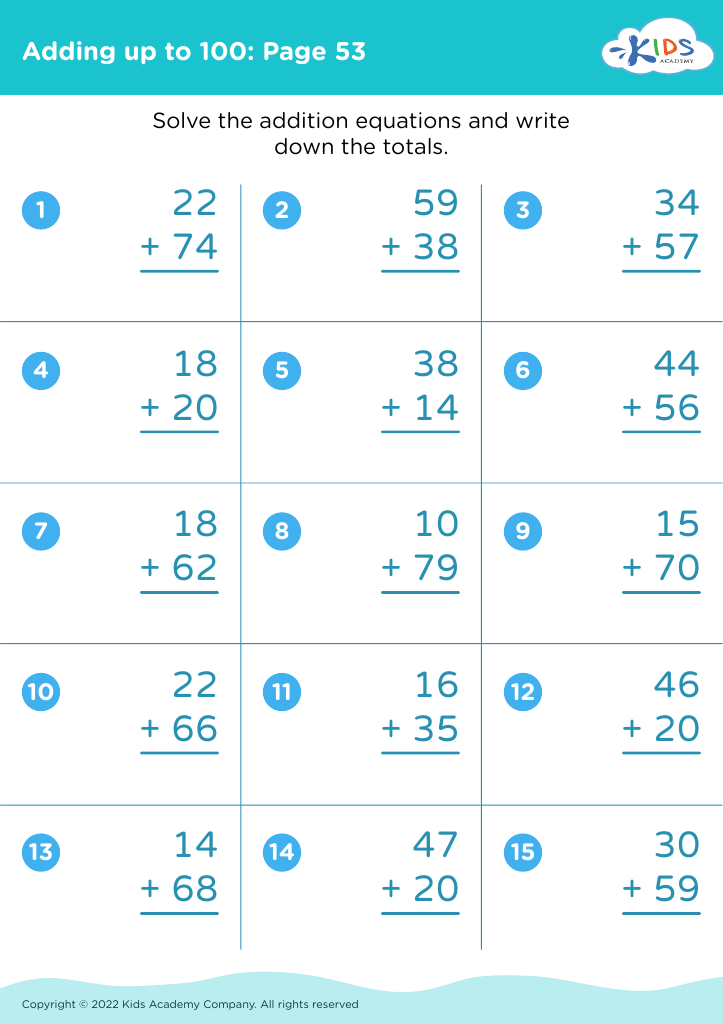
Adding up to 100: Page 53

Adding up to 100: Page 53

Adding up to 100: Page 53
Worksheet
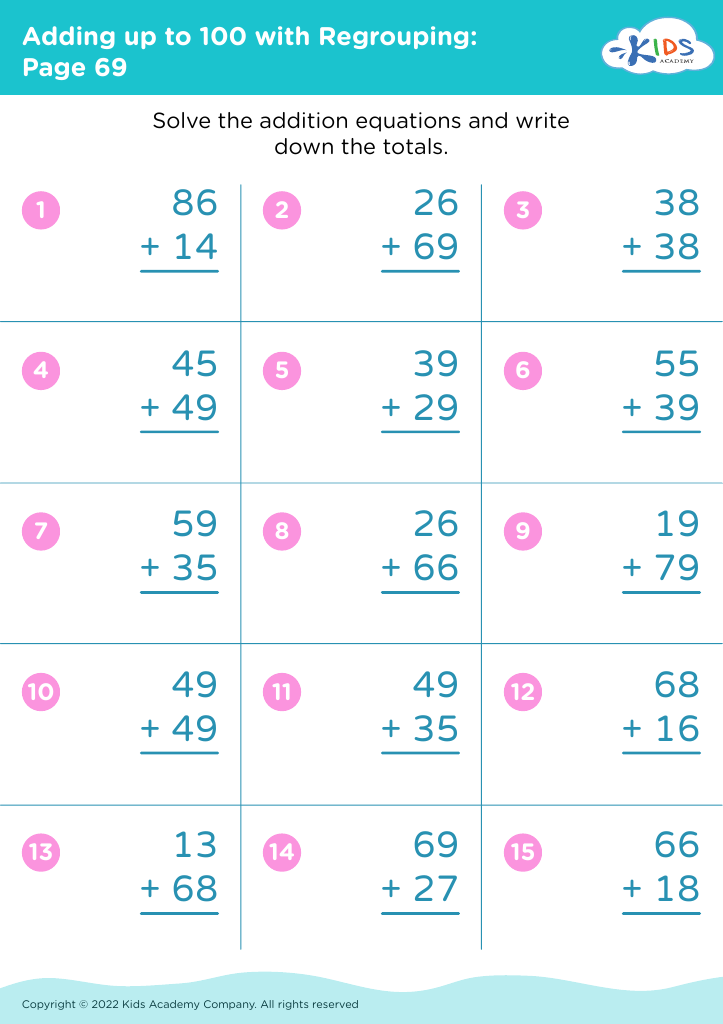
Adding up to 100 with Regrouping: Page 69
Worksheet
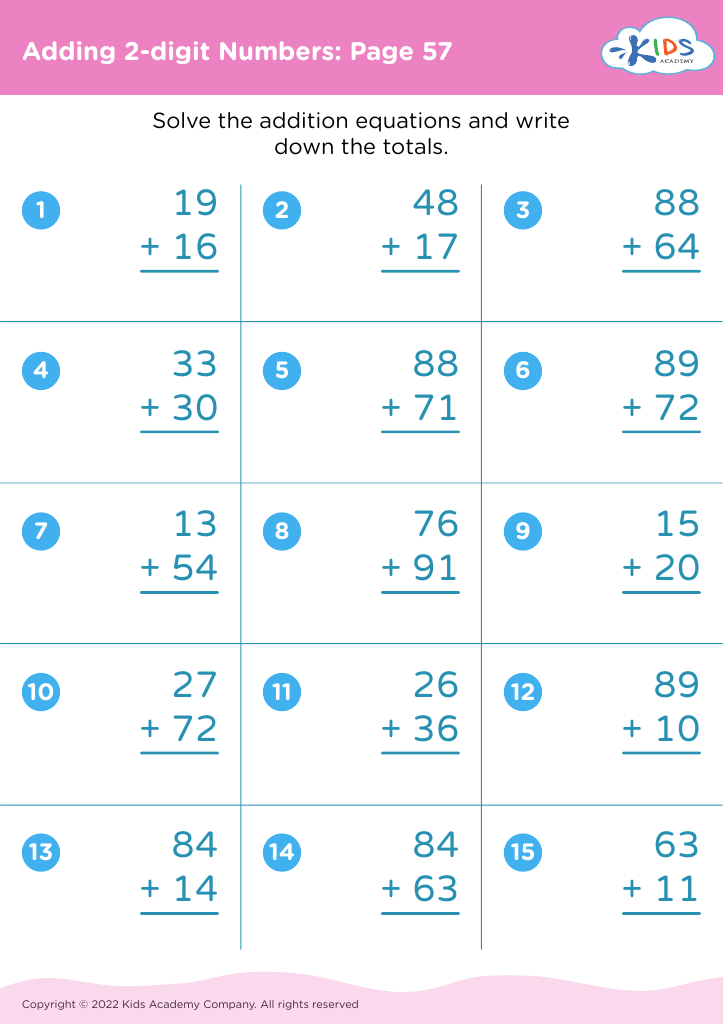
Adding 2-digit Numbers: Page 57

Adding 2-digit Numbers: Page 57

Adding 2-digit Numbers: Page 57
Worksheet


Parents and teachers should prioritize Fraction Comparison and Addition for children aged 3-9 because these foundational skills lay the groundwork for later mathematical understanding. Learning to compare fractions helps children grasp the concept of parts of a whole, a crucial step in their overall numerical literacy. It encourages logical thinking and problem-solving skills, teaching them to analyze relationships between quantities in everyday situations.

Moreover, mastering addition with fractions fosters a sense of competence and confidence in young learners. It prepares them for more complex math concepts in the future, setting them up for success in their academic journey. Given that fractions are prevalent in daily life—whether measuring ingredients in cooking or understanding portions—students can better connect their learning to real-world scenarios.

Engaging in playful, hands-on activities makes these concepts accessible and enjoyable. This age group is particularly receptive to learning through play, which can promote a positive attitude towards math. Ultimately, equipping children with the knowledge and skills to confidently compare and add fractions cultivates essential cognitive skills and prepares them for advanced mathematics and critical thinking tasks in the years to come.