Improves counting skills Addition Worksheets for Ages 3-9
6 filtered results
-
From - To
Enhance your child’s counting skills with our engaging addition worksheets designed for ages 3-9! These printable worksheets provide a fun and interactive way for young learners to grasp essential math concepts. Fostering a strong foundation in counting, our activities incorporate colorful visuals and playful exercises that capture children's attention. Whether at home or in the classroom, these worksheets promote confidence in addition while improving overall numeracy skills. Perfect for parents and educators, our resource is tailored to accommodate different learning styles, ensuring each child progresses at their own pace. Explore our collection today and watch your child’s counting skills flourish!
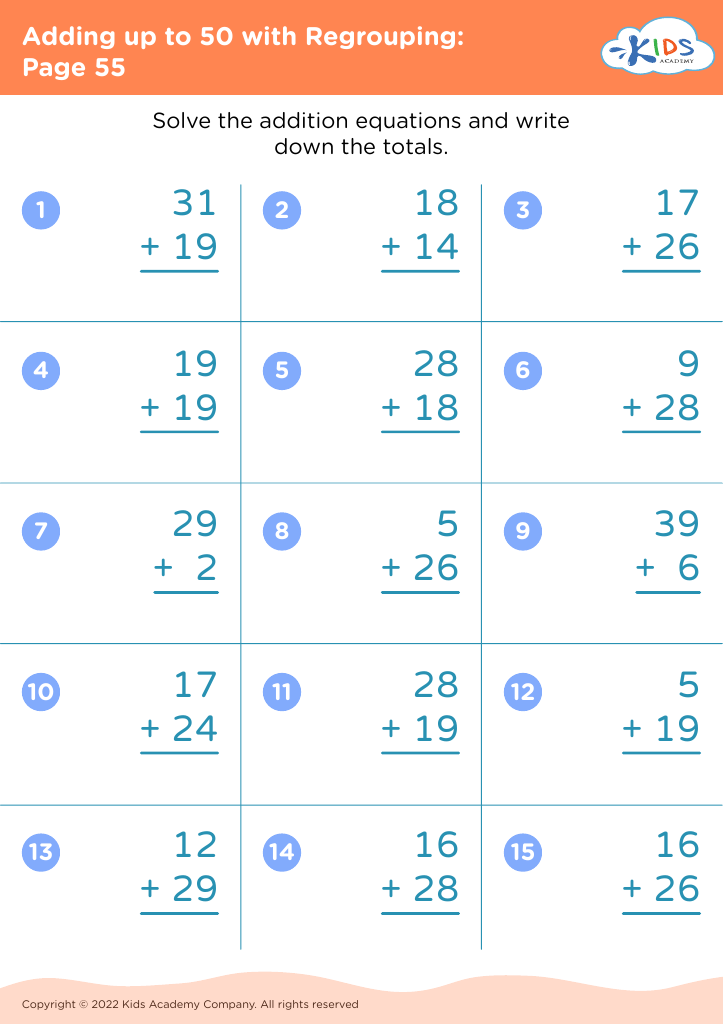
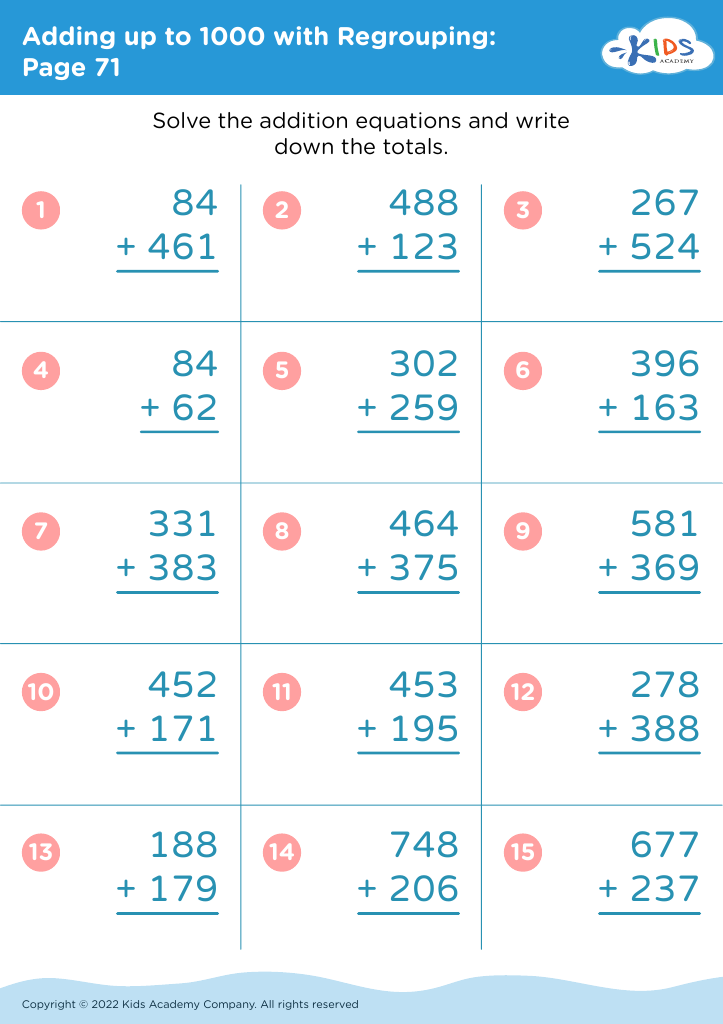
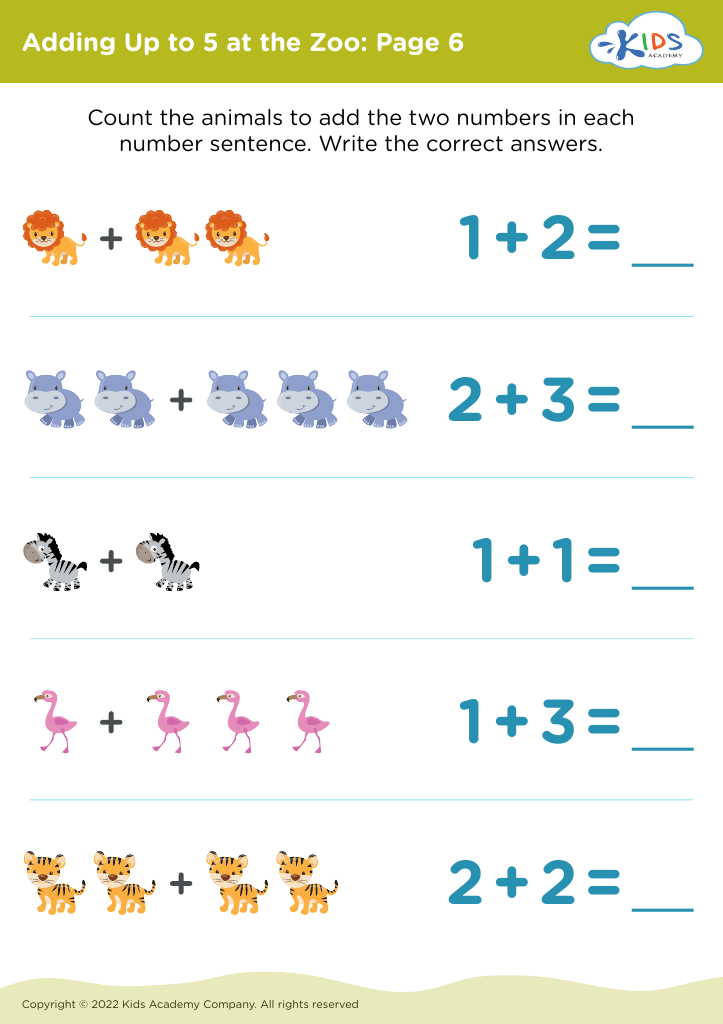
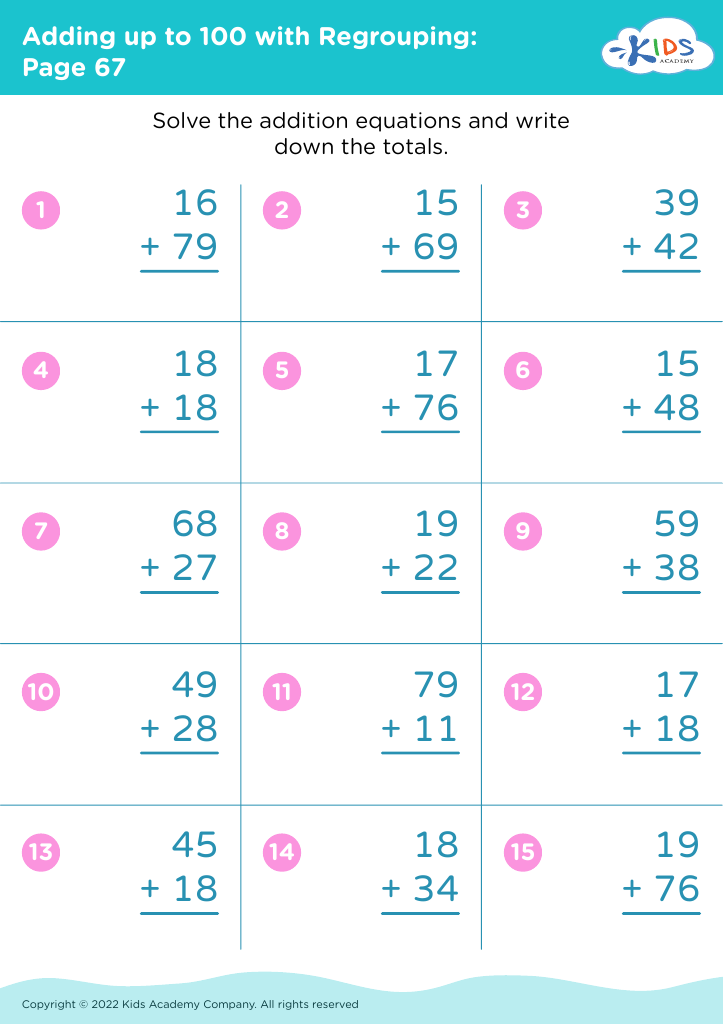
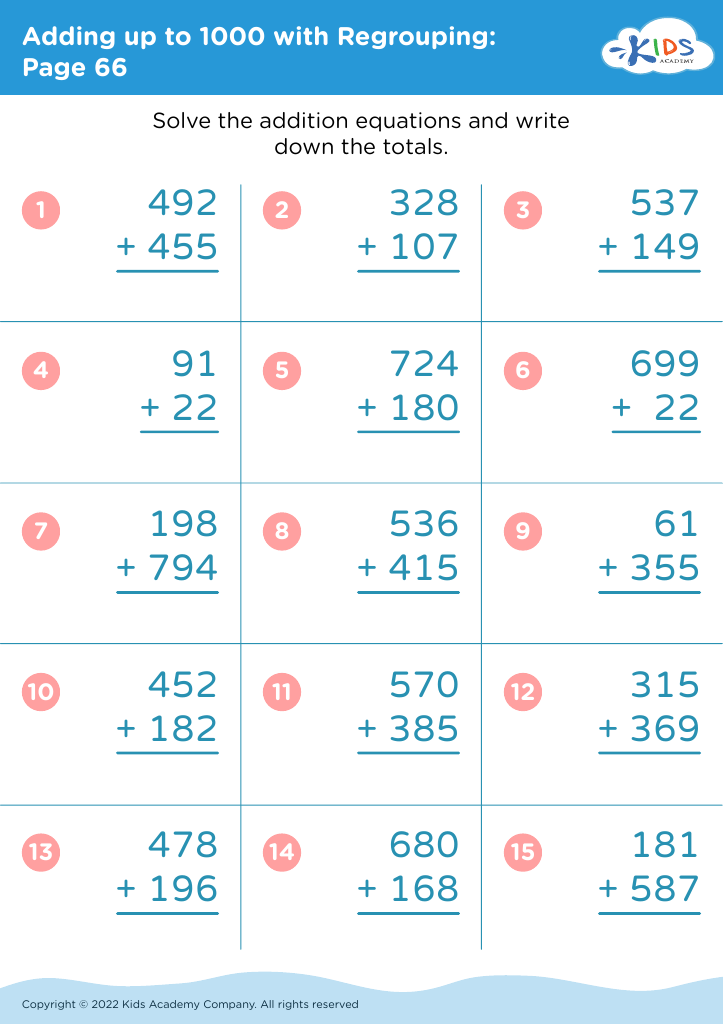
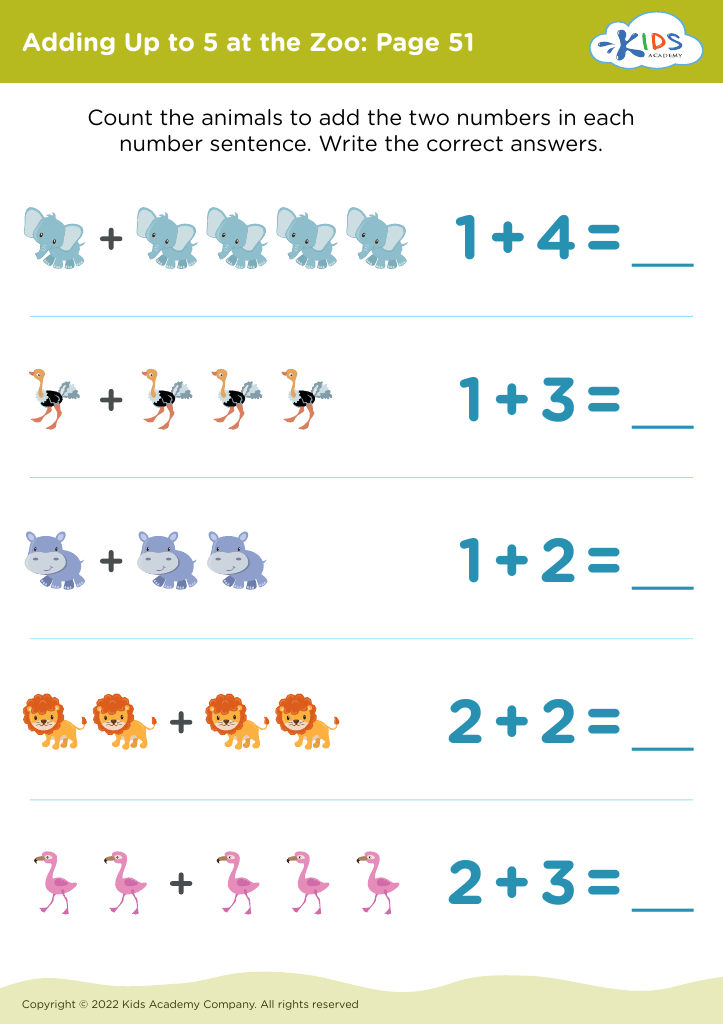








Improving counting skills and addition in children aged 3-9 is essential for their overall cognitive development and future academic success. During these formative years, children are developing foundational numeracy skills that will serve as the basis for more complex mathematical concepts. Mastery of counting and basic addition enhances their ability to solve problems, encourages logical reasoning, and fosters critical thinking skills.
Moreover, engaging young learners through fun and interactive counting and addition activities can also help cultivate a positive attitude towards math. When parents and teachers prioritize these skills, they create opportunities for meaningful learning experiences that promote curiosity and a love for math from an early age. Many everyday experiences, such as cooking, shopping, or playing games, can incorporate counting and addition, making learning both relevant and enjoyable.
Additionally, strong counting and addition skills are vital for real-world applications, such as managing finances, understanding time, and measuring ingredients. Investing time and effort in developing these skills at an early age prepares children for future academic challenges and sets them up for a lifetime of effective problem-solving abilities, ultimately leading to greater confidence in their abilities and enhanced educational outcomes.








