Improving reading skills Addition Worksheets for Ages 3-9
4 filtered results
-
From - To
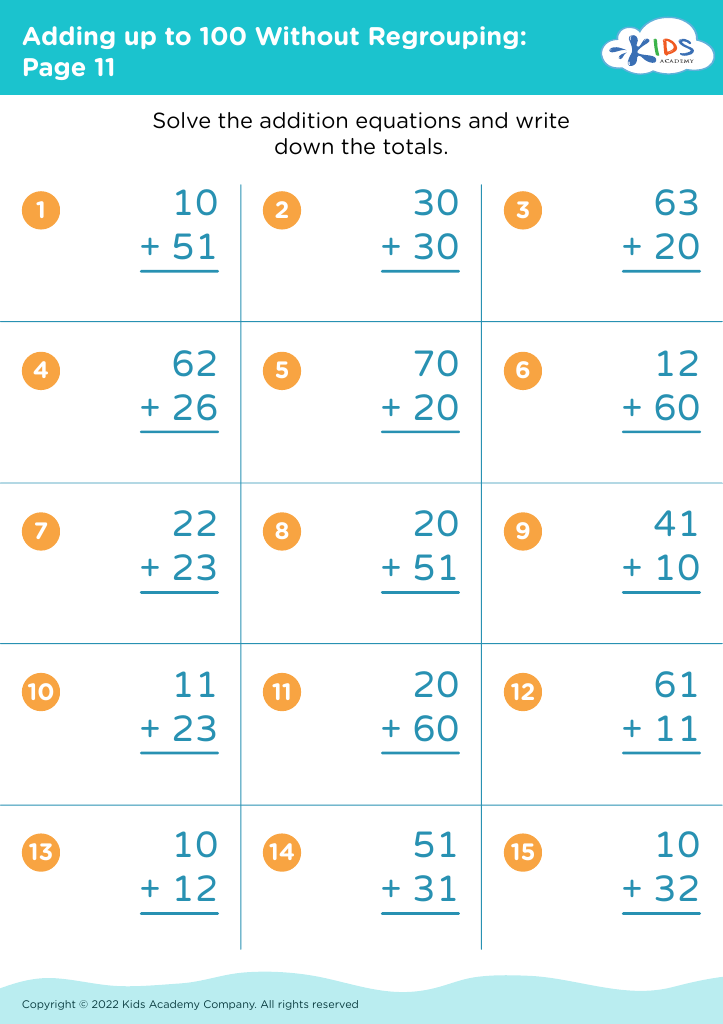
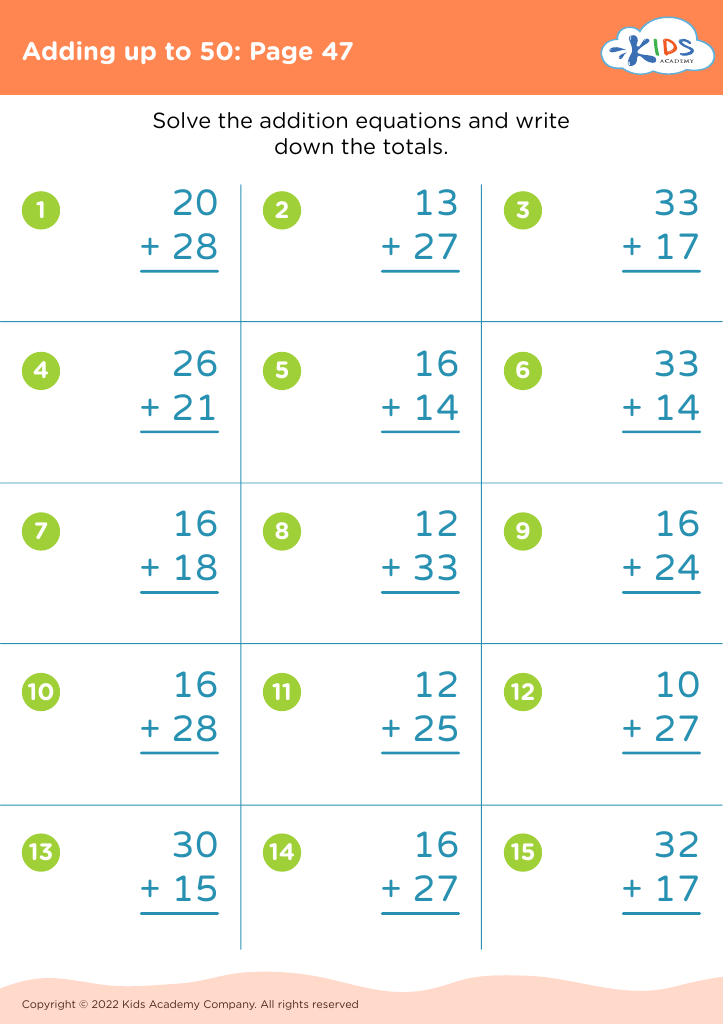
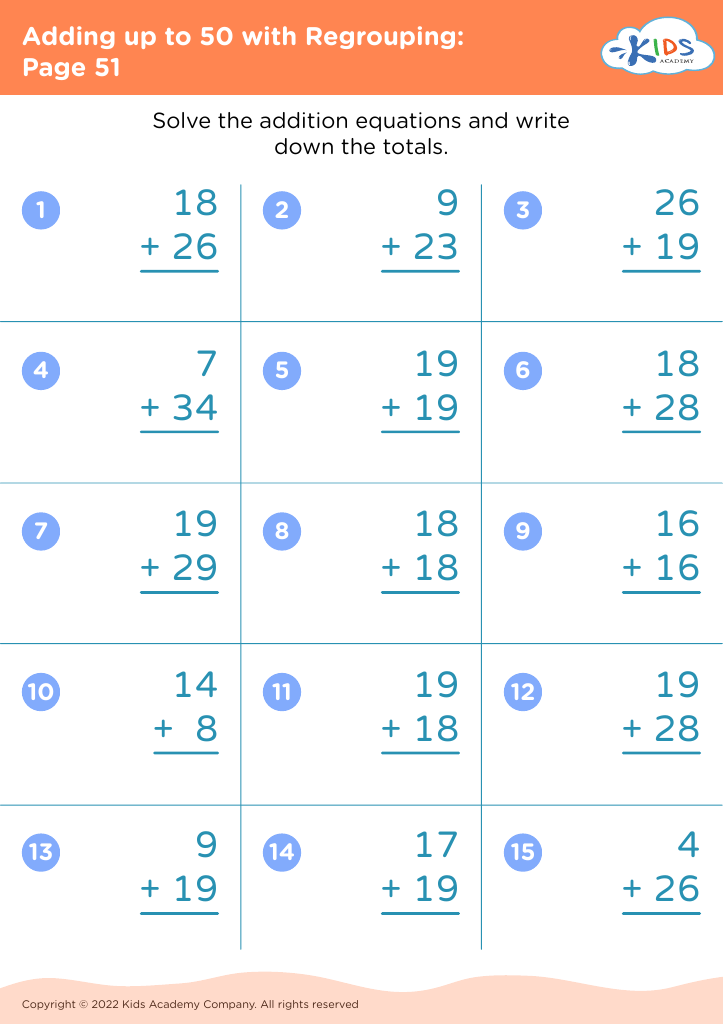
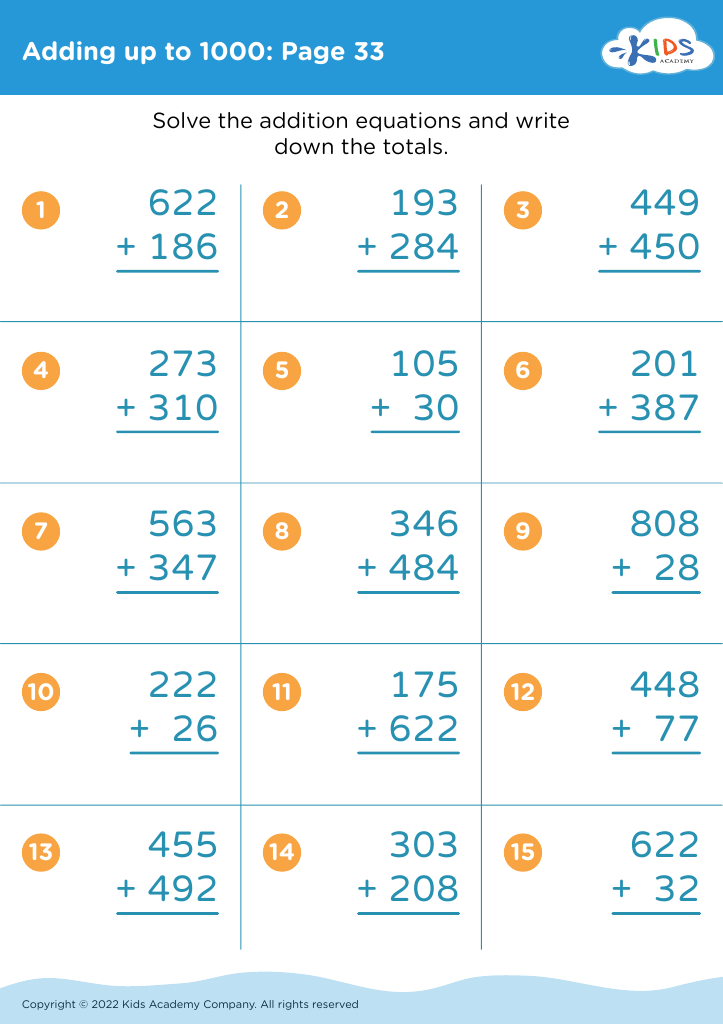
Enhance your child’s literacy and numeracy simultaneously with our "Improving Reading Skills Addition Worksheets" designed for ages 3-9! These engaging worksheets combine fun addition exercises with reading comprehension, helping children develop critical skills in both areas. Each worksheet is tailored to improve vocabulary acquisition and number recognition, encouraging young learners to connect words with quantities. Perfect for teachers and parents, our resources make learning interactive and enjoyable, ensuring your child builds confidence in reading and math. Explore colorful illustrations and diverse activities that captivate young minds, making math magical while enhancing their reading journey. Start fostering a love for learning today!








Improving reading skills for children aged 3-9 is crucial for their overall development and academic success. During these formative years, early literacy serves as the foundation for learning and cognitive growth. Reading proficiency enhances vocabulary, comprehension, and critical thinking, enabling children to communicate effectively and understand the world around them.
Parents and teachers play a pivotal role in fostering these skills. Engaging in reading activities, such as storytelling, interactive reading sessions, and phonics games, cultivates a love for literature and boosts confidence in young learners. Developing strong reading skills not only supports literacy but also encourages creativity and imagination.
Furthermore, children with effective reading skills tend to perform better academically, as reading is integral to every subject. Children lacking proficiency may face difficulties in school, leading to frustration and disengagement. By prioritizing reading development, parents and teachers can help ensure that children build the necessary tools for lifelong learning and success.
Inspiring children to embrace reading early on establishes positive habits and promotes a culture of inquiry and knowledge. Therefore, both parents and teachers should actively contribute to creating an enriching reading environment that nurtures and develops these essential skills.








