Logical thinking Addition Worksheets for Ages 3-9
9 filtered results
-
From - To
Enhance your child's problem-solving abilities with our "Logical Thinking Addition Worksheets" designed for ages 3 to 9. These engaging worksheets introduce young learners to the concepts of addition through fun and interactive activities. Our thoughtfully crafted exercises encourage children to use reasoning and critical thinking as they navigate through various addition challenges. Perfect for at-home learning or classroom use, these worksheets support cognitive development while reinforcing essential math skills. Each resource is tailored to accommodate different skill levels, ensuring that every child can progress at their own pace. Give your child the tools they need for mathematical success today!
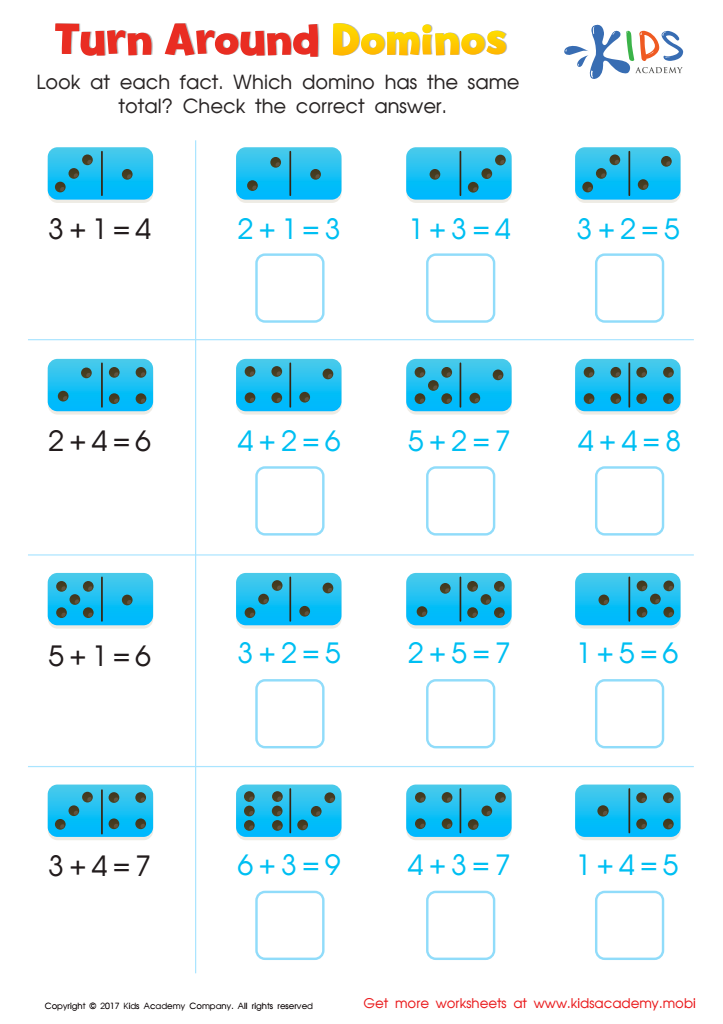
Turn Around Dominos Worksheet
 Assign to My Students
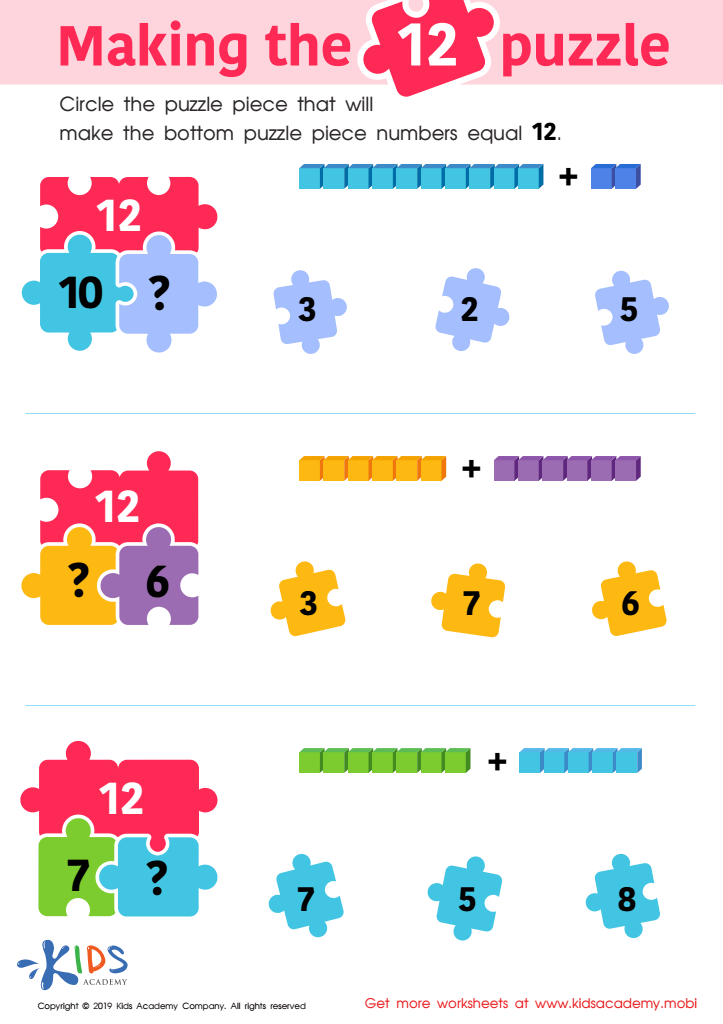
Making the 12 Puzzle Worksheet
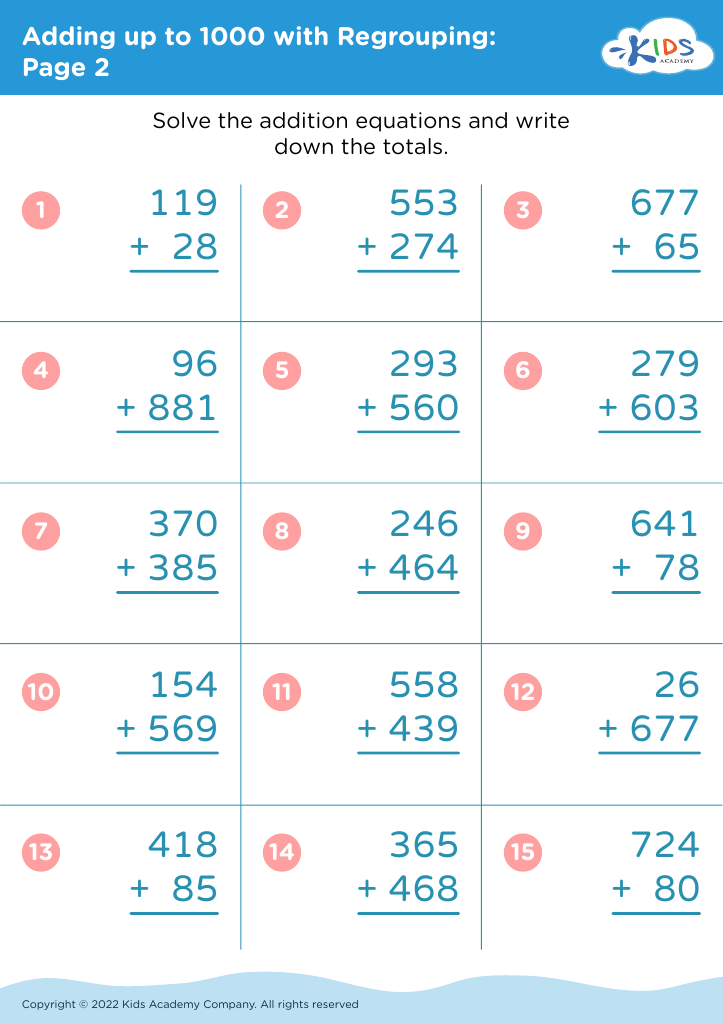



.jpg)




Logical thinking addition is a crucial skill for children ages 3-9, laying the groundwork for their future mathematical understanding and problem-solving abilities. Parents and teachers should prioritize this skill for several reasons.
Firstly, engaging children in logical thinking forms the basis of critical thinking. It helps them explore patterns, identify relationships between numbers, and develop reasoning skills that are essential for more advanced mathematical concepts. This early foundation encourages them to approach problems methodically and confidently.
Secondly, logical reasoning promotes cognitive development. At this age, children's brains are highly adaptable, making them prime candidates for absorbing new information. Activities that challenge them to think critically about addition—such as simple puzzles or number games—facilitate brain growth and enhance learning capacities.
Moreover, fostering logical thinking in addition aids in cultivating a positive attitude towards math. Early experiences with these concepts can reduce anxiety and build confidence in their mathematical abilities, setting them up for future success.
Finally, logical thinking aligns with everyday situations. Working with addition in tangible contexts helps children grasp its real-world applications, paving the way for practical and informed decision-making as they grows. In essence, prioritizing this skill benefits children's overall academic and personal growth.








