Nature awareness Addition Worksheets for Ages 3-9
8 filtered results
-
From - To
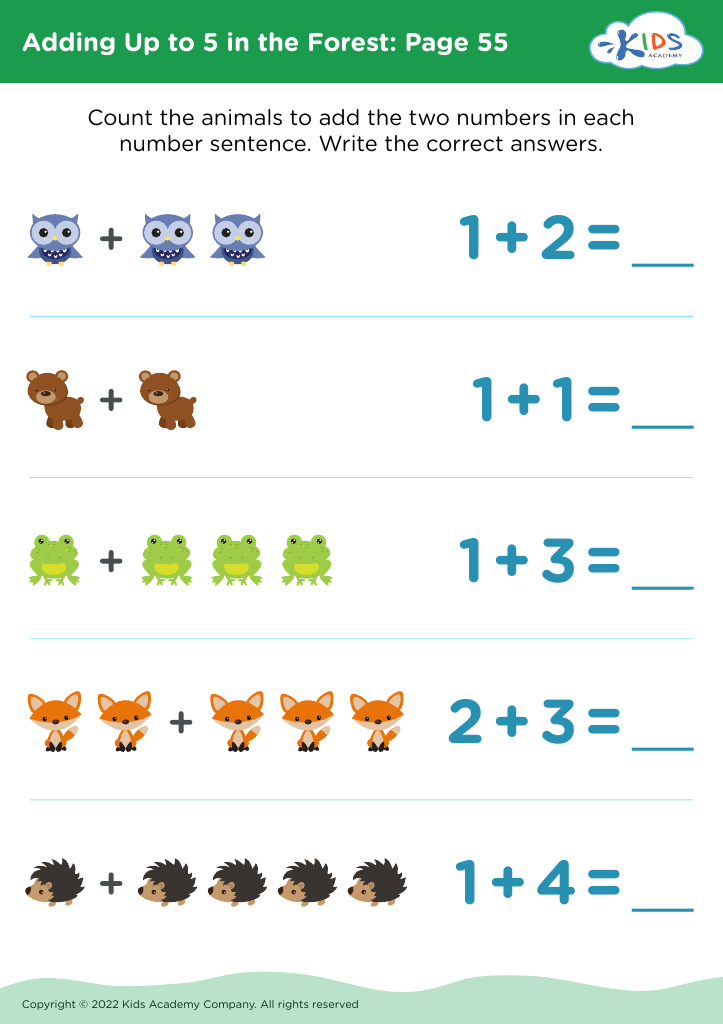
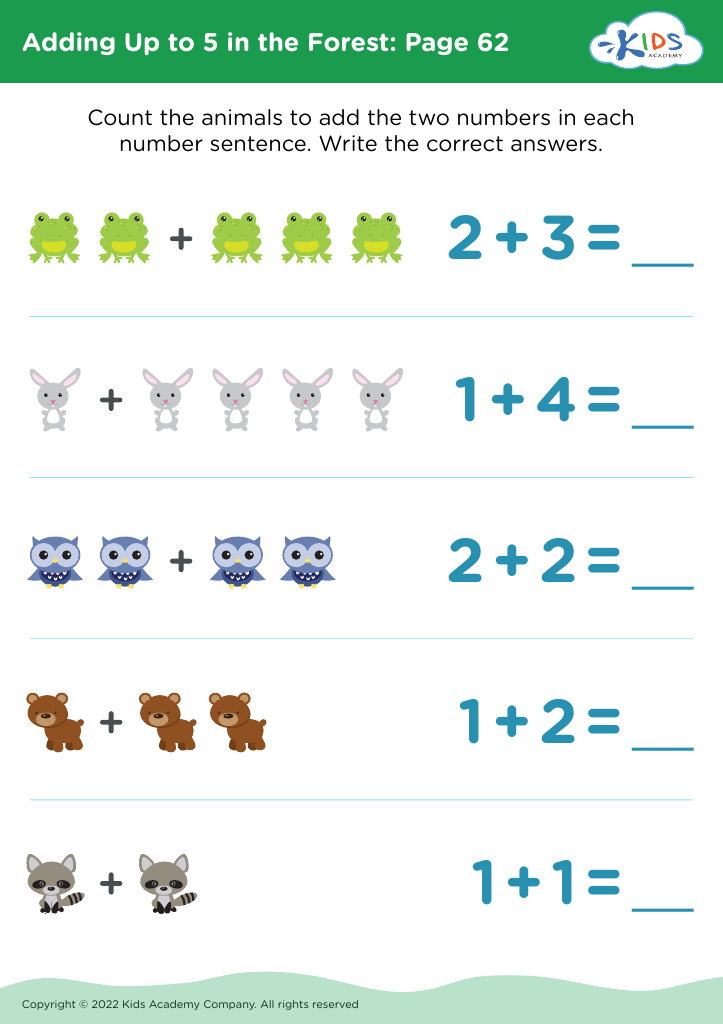
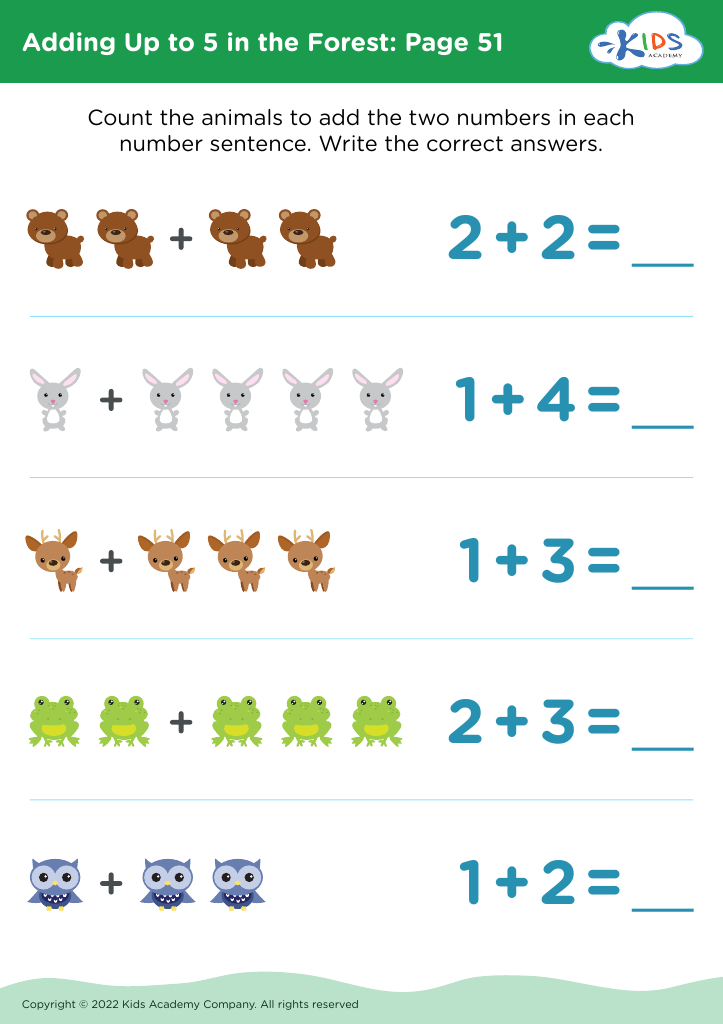
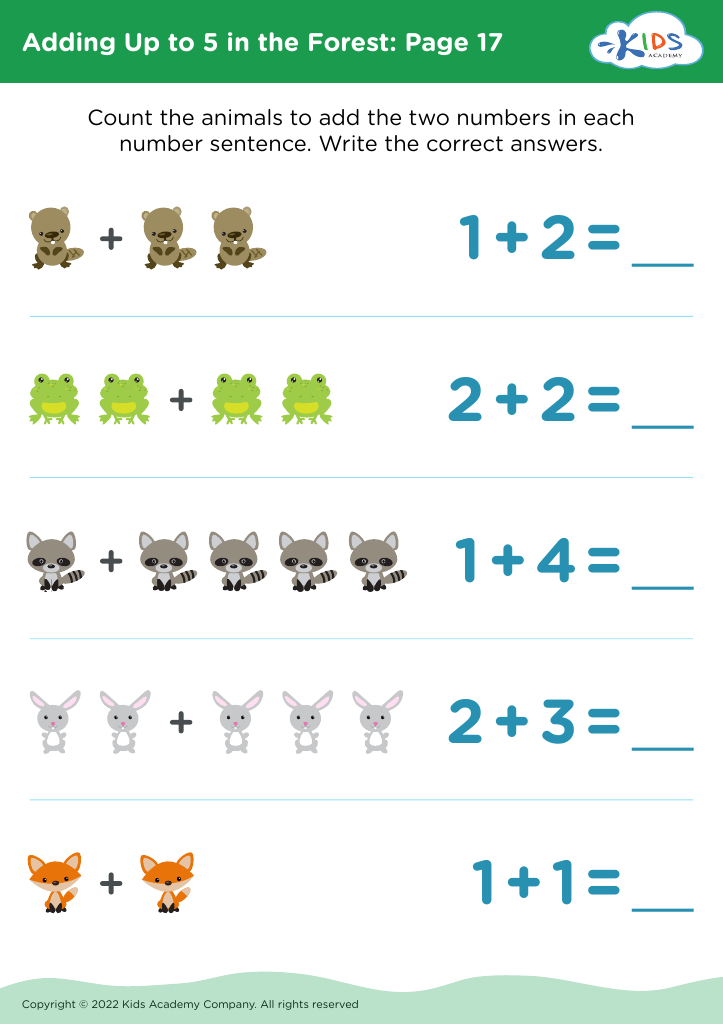
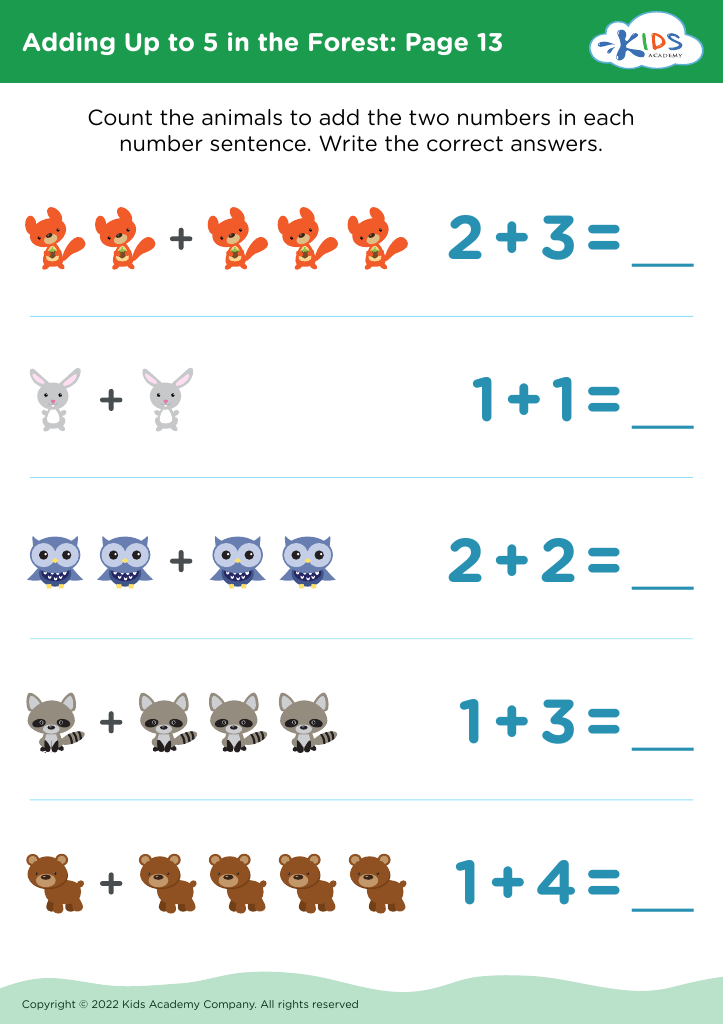
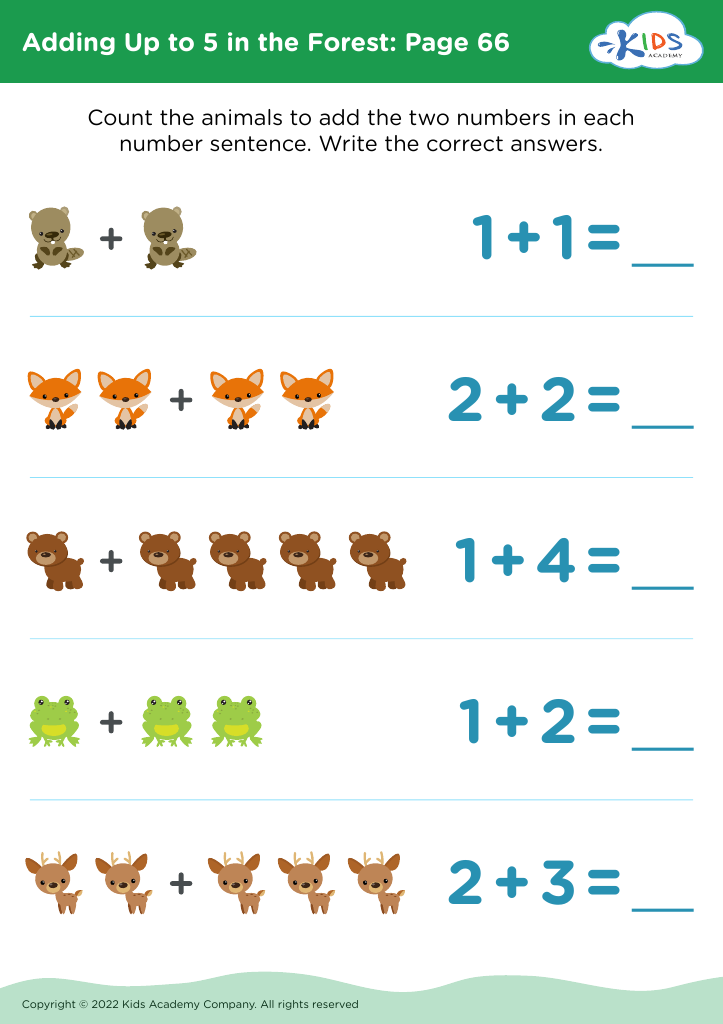
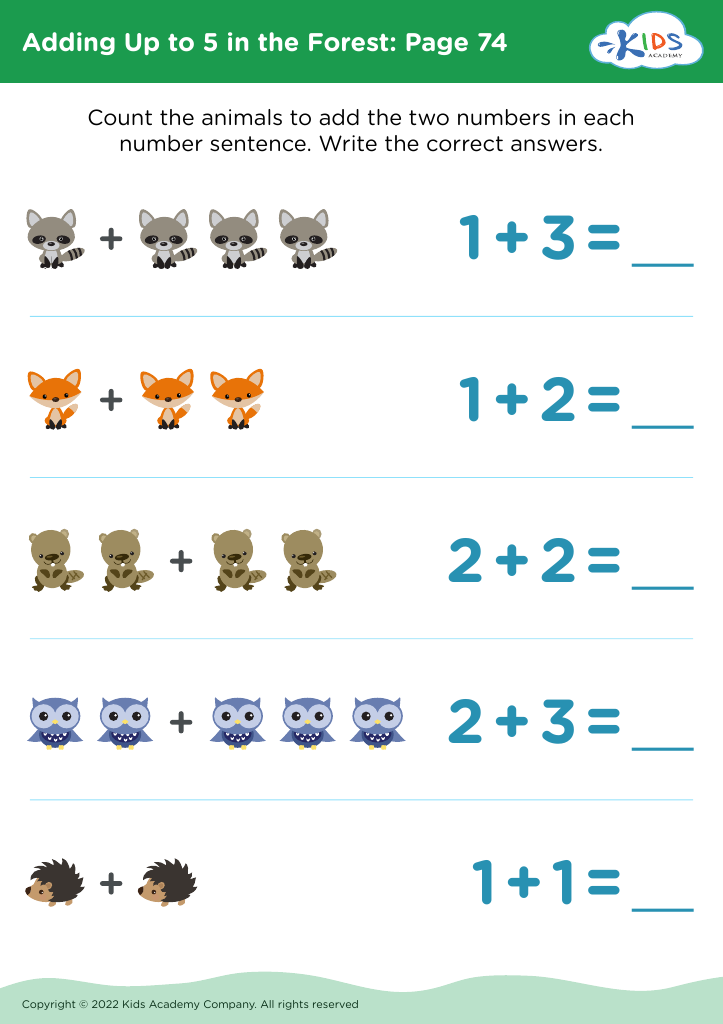
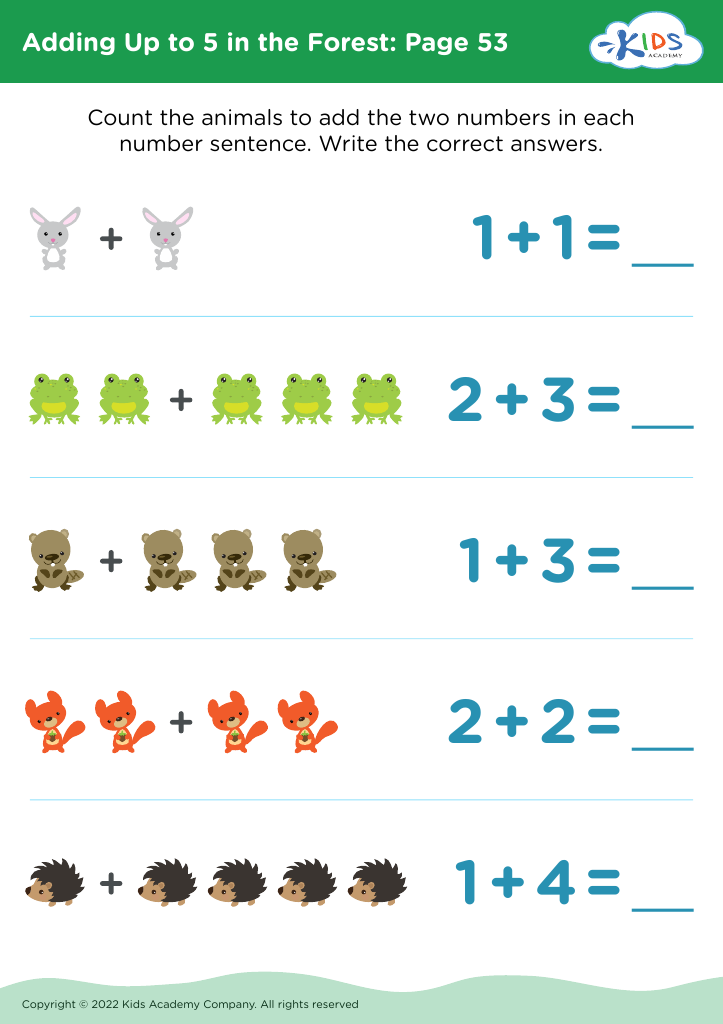
Discover the perfect blend of math and the great outdoors with our Nature Awareness Addition Worksheets for Ages 3-9! These engaging printables combine fundamental addition skills with fascinating elements of nature, making learning both fun and educational. Each worksheet presents colorful illustrations of animals, plants, and natural scenes to captivate young minds while reinforcing essential math concepts. Ideal for classrooms or at-home learning, our worksheets foster a love for nature and a solid mathematical foundation. Enhance your child's arithmetic skills and environmental awareness in one exciting package with Kids Academy's expertly crafted resources. Download today and watch your child thrive!








Parents and teachers should deeply care about introducing nature awareness to children aged 3-9 because it plays a critical role in their holistic development. At this formative age, children are inherently curious and open to learning from their environment. Engaging with nature fosters physical health through outdoor activities, such as running, climbing, and exploring, which are key for motor skills development and overall physical well-being.
Nature also stimulates intellectual growth by offering endless opportunities for exploration and inquiry-based learning. Kids learn to observe patterns, identify plants and animals, and understand ecological systems. This experiential learning fosters critical thinking, problem-solving skills, and a love for science and sustainability from an early age.
Emotionally, being in nature has been shown to reduce stress and improve mood, fostering emotional stability and mental health. It encourages mindfulness and helps children to appreciate the beauty and complexity of the natural world, creating a sense of stewardship and responsibility towards the environment. This paves the way for raising environmentally conscious future citizens.
Socially, playing and exploring in natural settings promotes cooperative play, shared discovery, and teamwork. Children develop social skills by interacting with peers in various unstructured environments, building confidence and empathy. Thus, incorporating nature awareness enriches children’s lives profoundly across multiple dimensions.








