Number Sequencing Addition Worksheets for Ages 3-9
10 filtered results
-
From - To
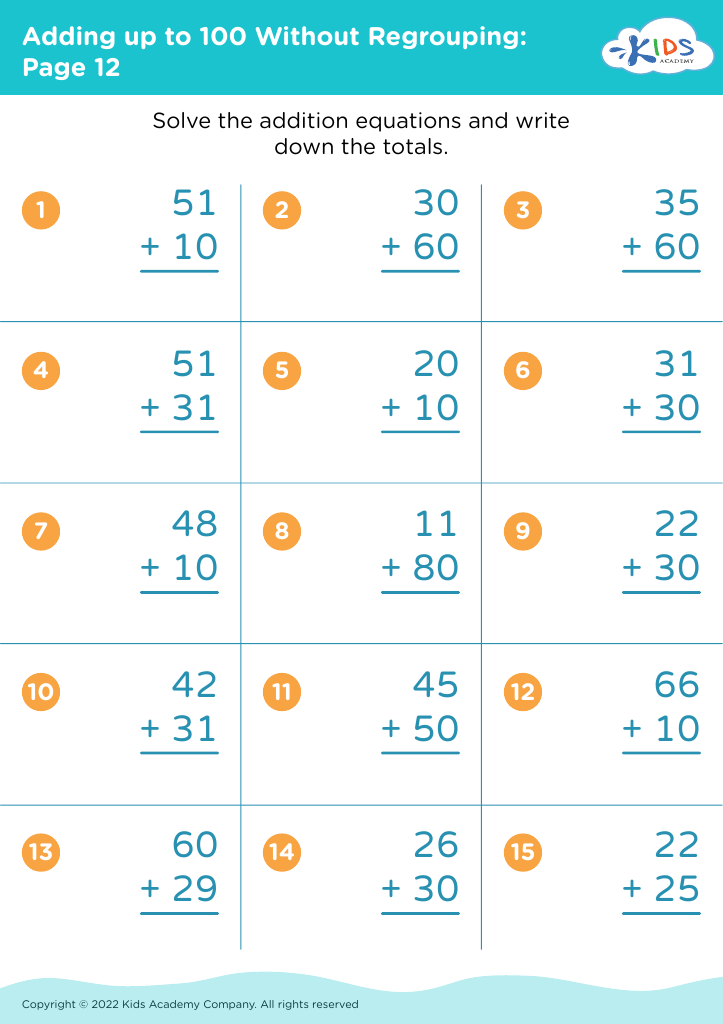
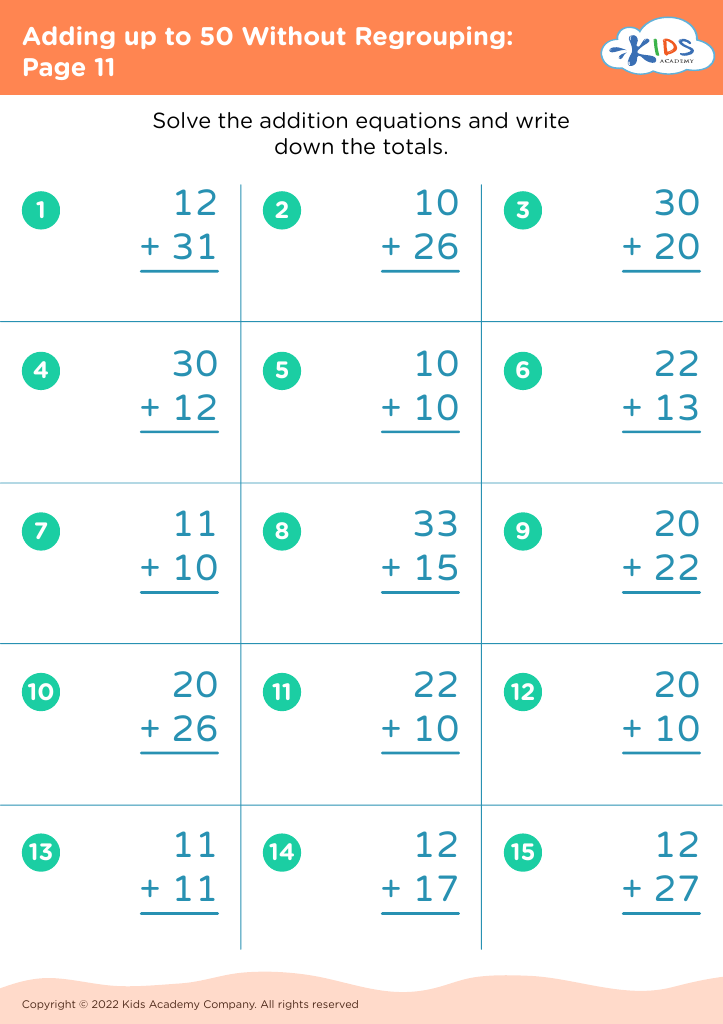
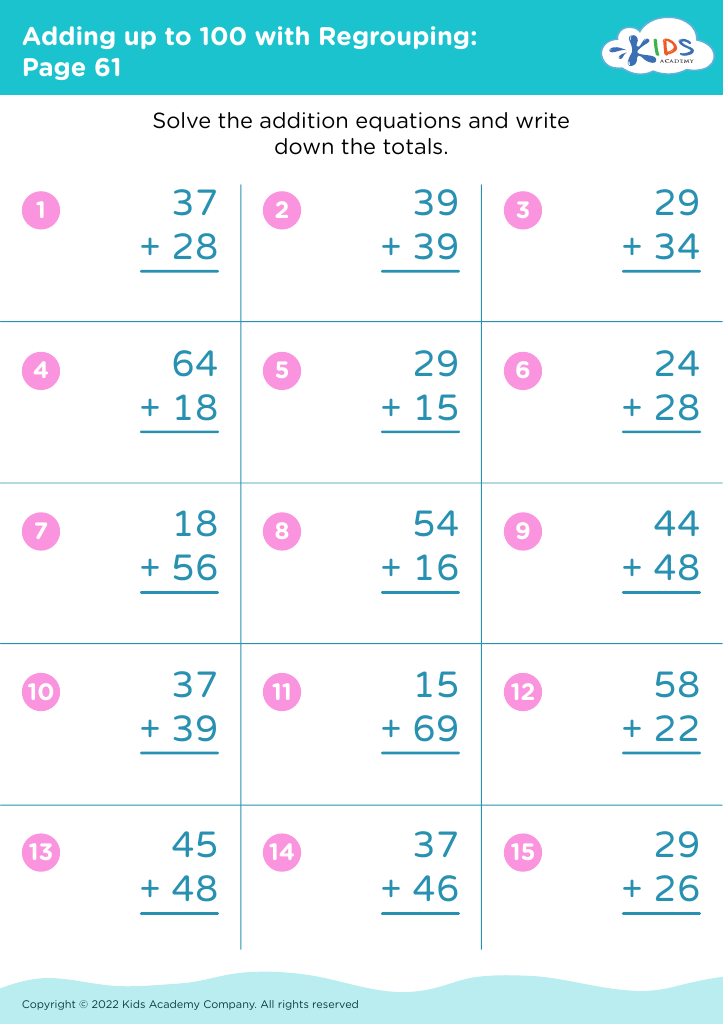
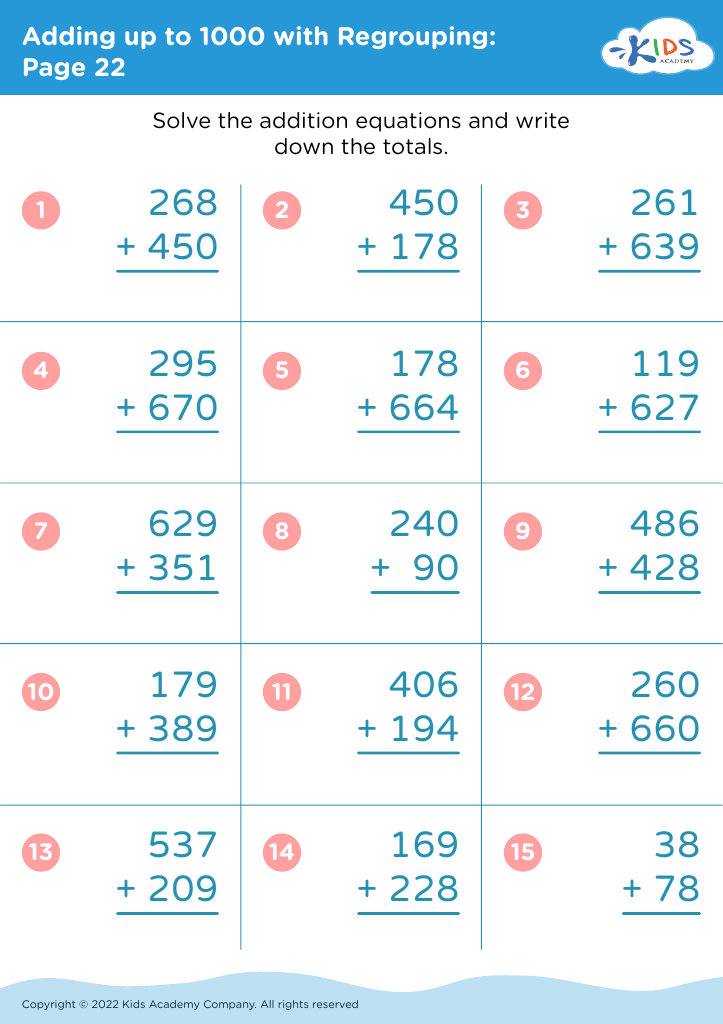
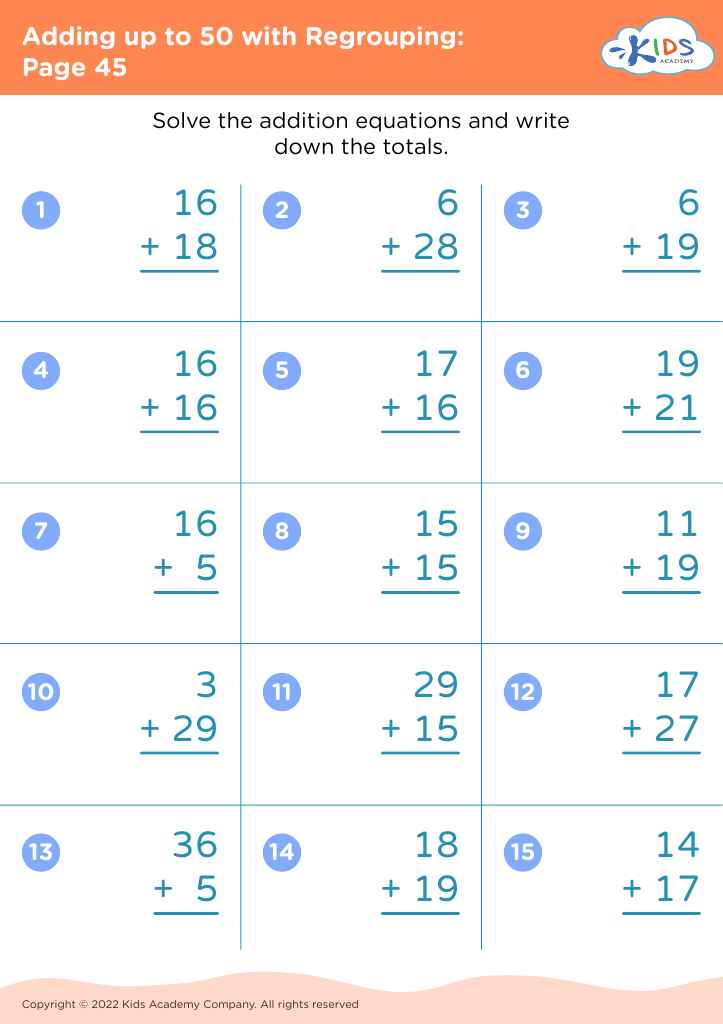
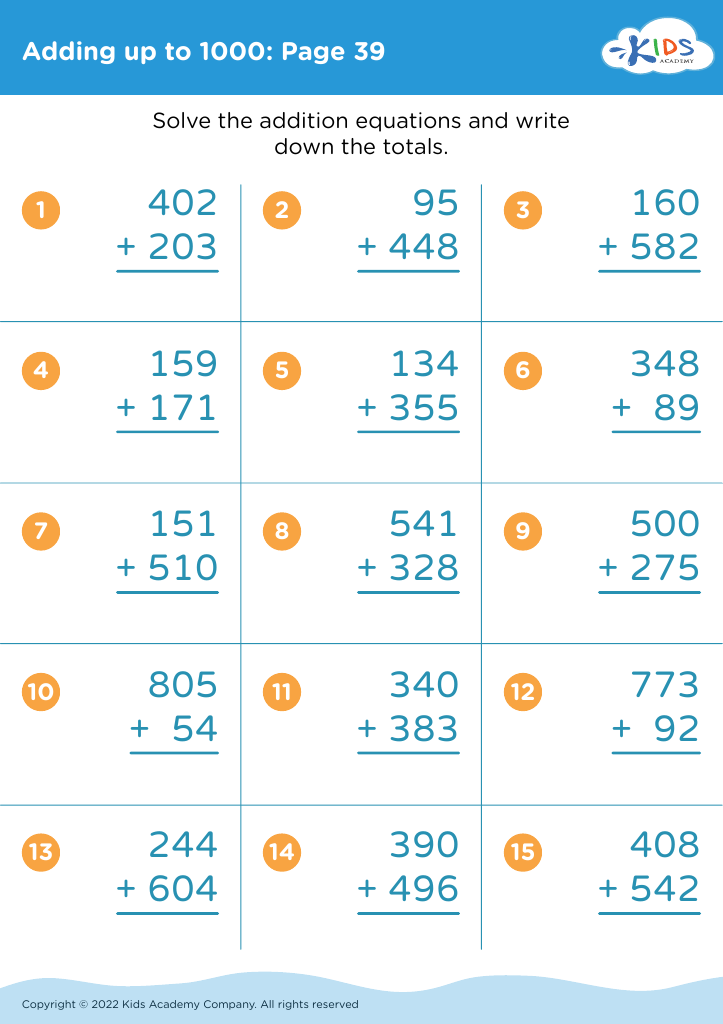
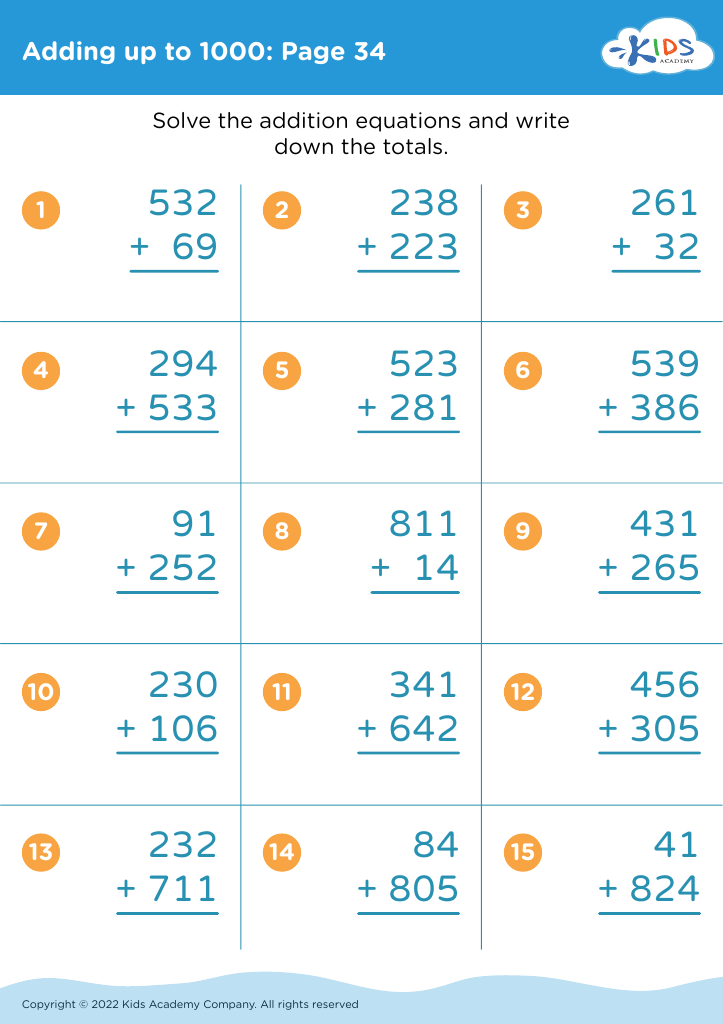
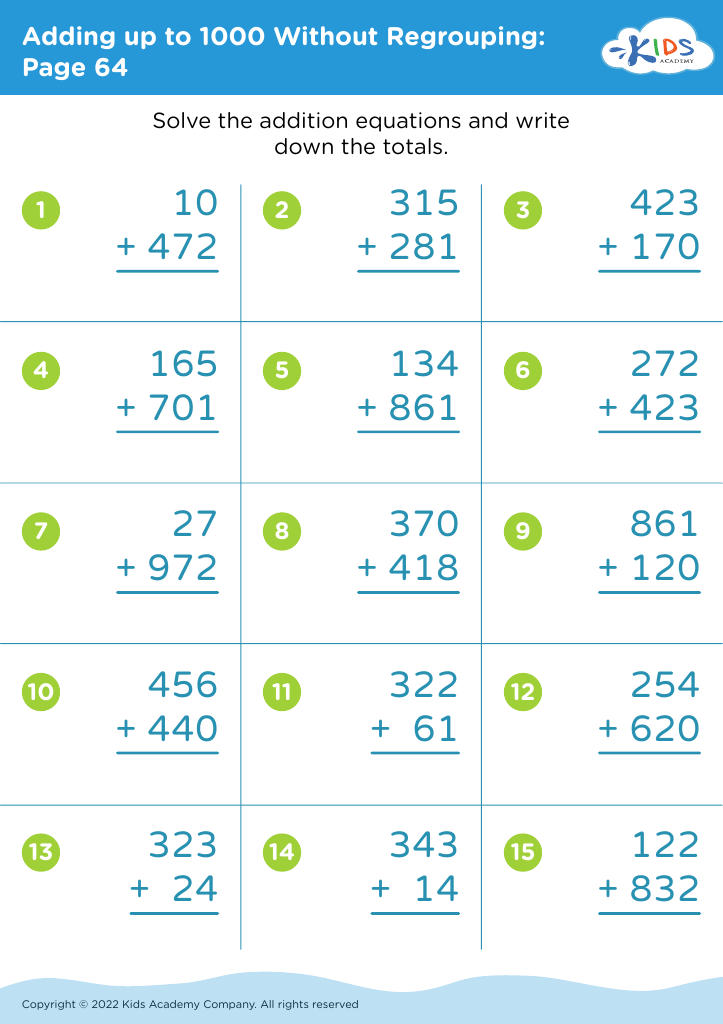
Ready to boost your child's mathematical abilities? Our "Number Sequencing Addition Worksheets for Ages 3-9" provide the perfect blend of fun and education! These worksheets are designed to enhance your child's addition skills and number sequencing knowledge in an engaging manner. Each activity offers a step-by-step approach, ensuring young learners grasp fundamental concepts with ease. Ideal for preschool through third grade, our worksheets help children master counting, ordering, and simple arithmetic. Tailored to align with educational standards, these resources support parents and teachers in making math enjoyable and accessible. Prepare your child for future math success today!
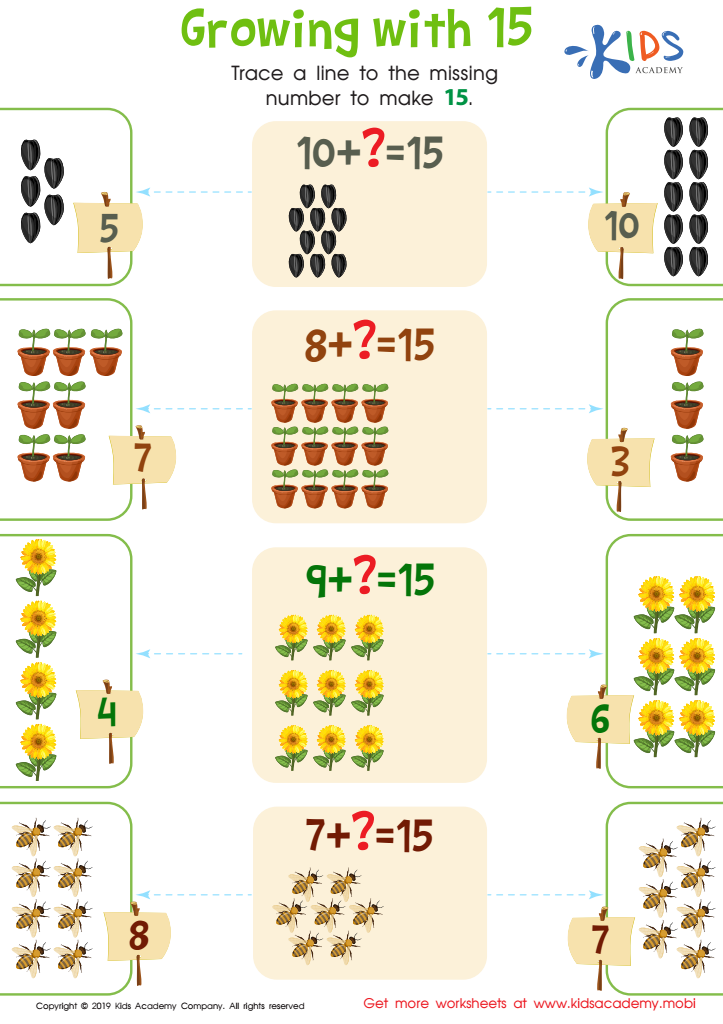
Growing with 15 Worksheet
 Assign to My Students







.jpg)
Parents and teachers should care about number sequencing and addition for children aged 3-9 because these foundational skills are crucial for cognitive development and later academic success. At this age, children's brains are particularly receptive to absorbing and organizing new information. Learning number sequences helps them understand mathematical concepts and relationships between numbers, which is pivotal for problem-solving and logical thinking.
Engaging in number sequencing and addition activities helps children develop familiarity with numbers, patterns, and the arithmetic operations they will rely on throughout their education and daily lives. These skills translate directly into the ability to perform more complex calculations and understand higher-level math concepts, such as multiplication, division, and fractions, as they progress in school.
Moreover, number sequencing and addition cultivate qualities like attention to detail, concentration, and perseverance. Regular practice can enhance confidence and reduce anxiety associated with math, making children more comfortable in tackling challenges. Finally, early math skills are predictive of future academic achievement, not just in mathematics but across subjects, indicating compounds benefits for overall educational and cognitive development. Therefore, engaging young children in number sequencing and addition is essential to building a strong mathematical foundation and fostering lifelong learning skills.








