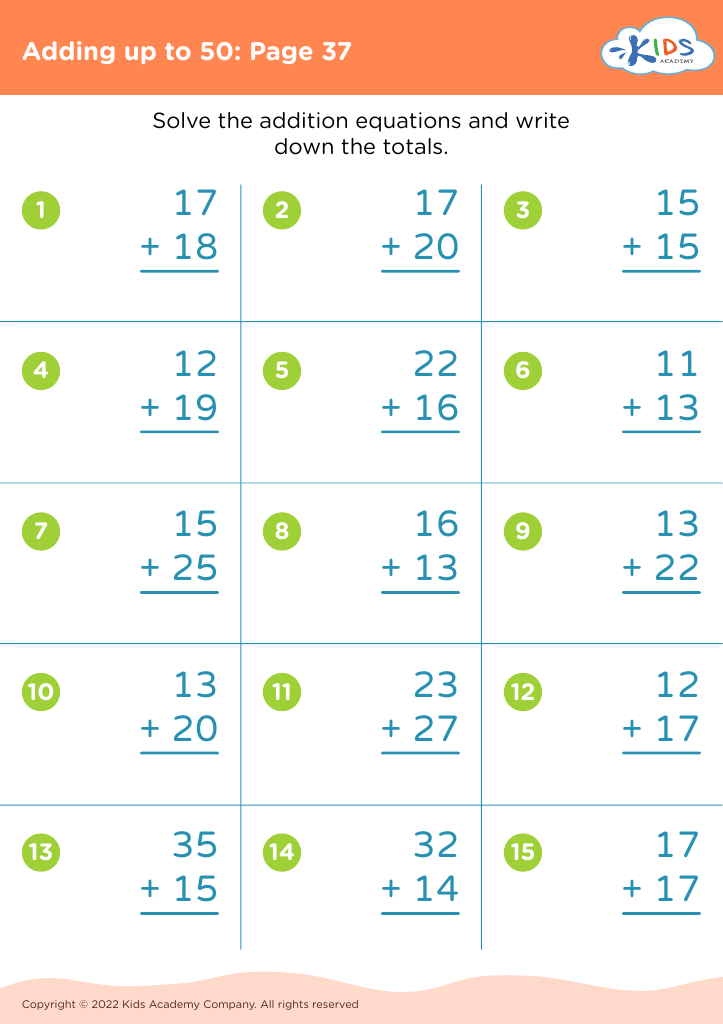
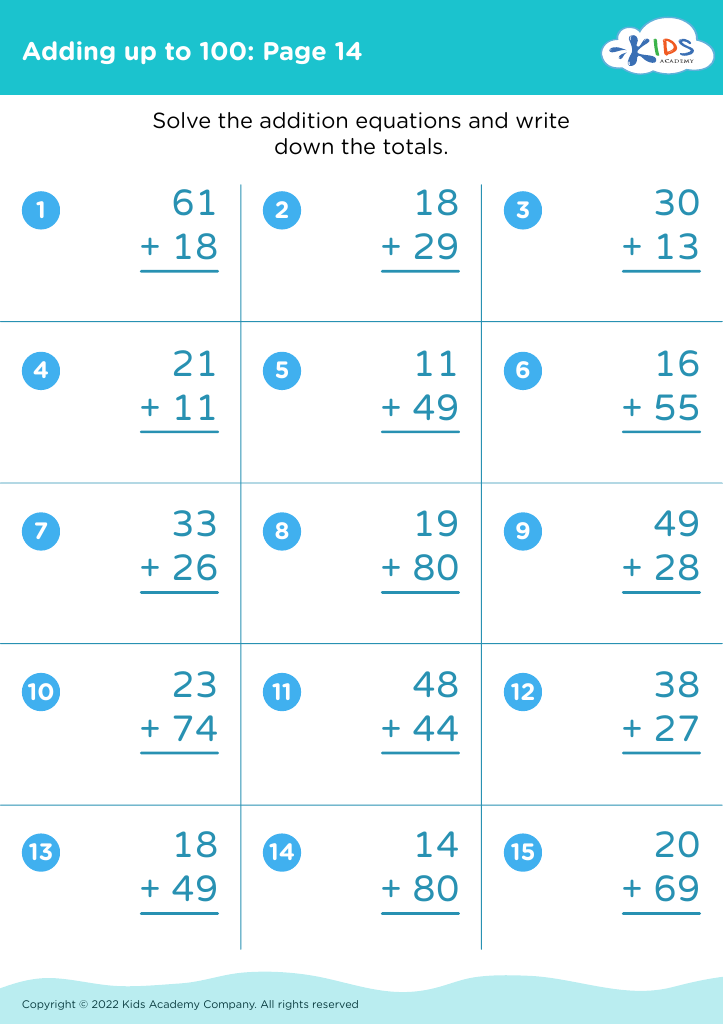
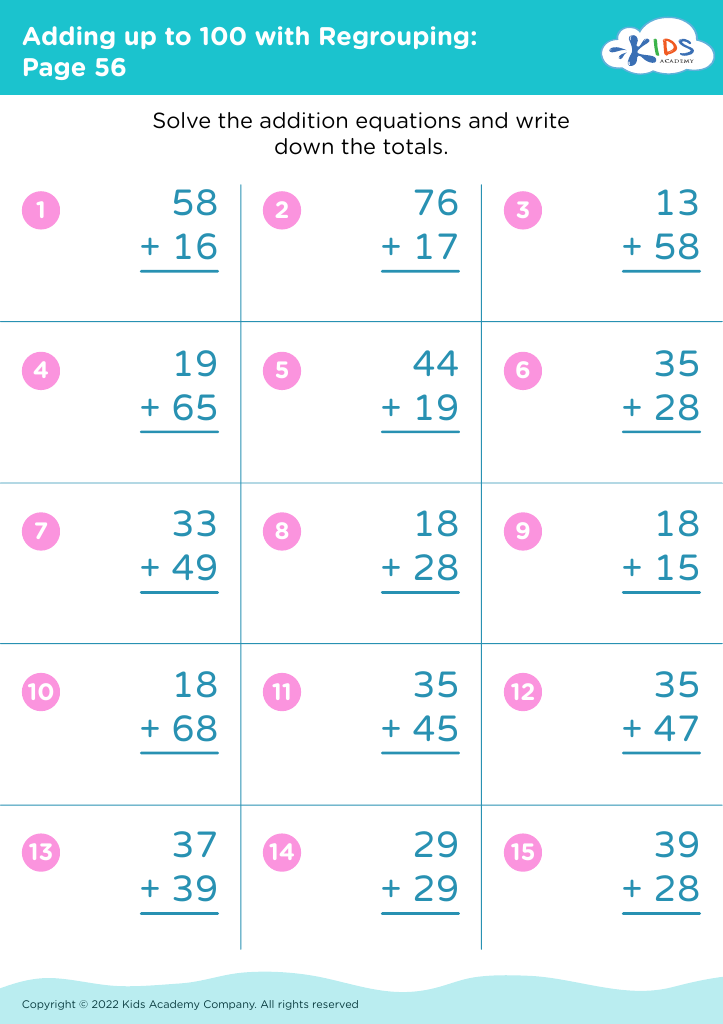
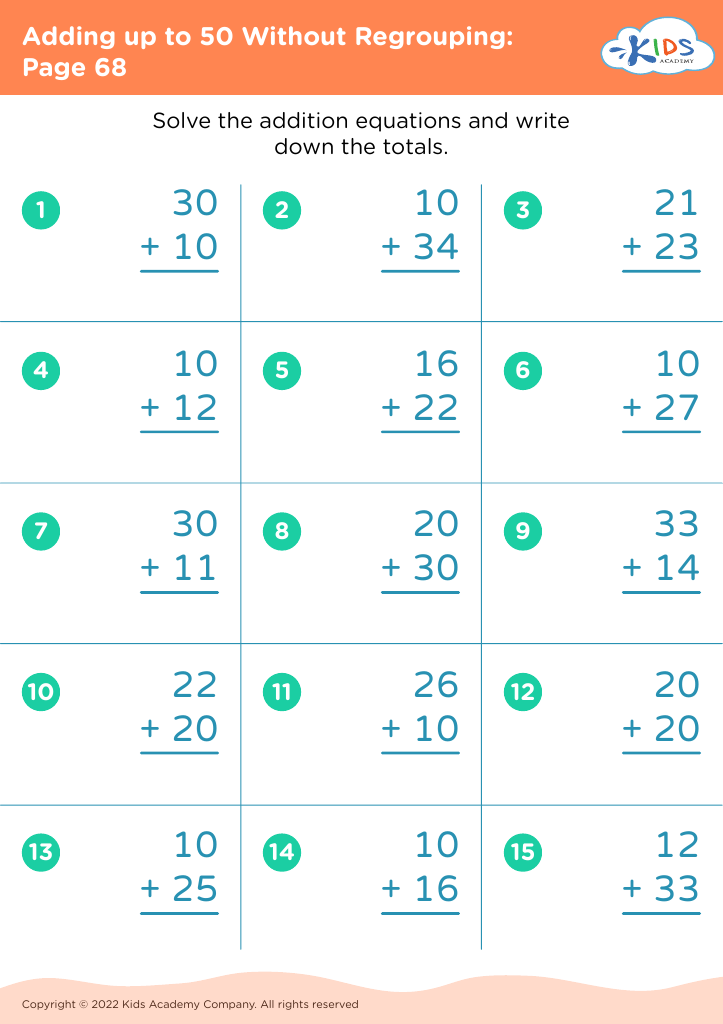








Recognizing shapes and performing addition are foundational skills essential for children's cognitive development. For ages 3-9, these skills are not merely academic but critical components of early learning that influence problem-solving and reasoning abilities. Understanding shapes helps children identify and categorize their environment, fostering spatial awareness vital for everyday tasks and more complex subjects like math and science in later years.
Parents and teachers should care because early experiences with shapes and numbers lay the groundwork for future learning. Engaging in activities that incorporate shape recognition encourages children to make connections between visual and verbal representations. This active exploration enhances critical thinking and creativity, both of which are essential life skills. Additionally, introducing addition through tangible shapes assists in making abstract concepts more concrete and relatable.
Moreover, these skills promote social development as children often engage in collaborative activities, sharing ideas and strategies. Early mastery of shapes and addition boosts self-confidence, serving as a cornerstone for more advanced mathematical concepts in the future. Investing time in shape recognition and basic math fosters a love of learning and equips children with the tools to thrive as they progress through their educational journey.








