Sea creatures identification Addition Worksheets for Ages 3-9
3 filtered results
-
From - To
Discover a world of learning with our "Sea Creatures Identification Addition Worksheets" designed for ages 3-9! These interactive worksheets seamlessly combine math and marine biology, helping young learners enhance their addition skills while identifying various sea creatures. Each worksheet features vibrant illustrations and engaging activities that make math enjoyable and informative. Ideal for parents and educators seeking to foster a love of learning about the ocean and its inhabitants, our resources cater to different skill levels. Dive into this educational adventure today and watch your child's confidence in math and knowledge of sea life flourish!
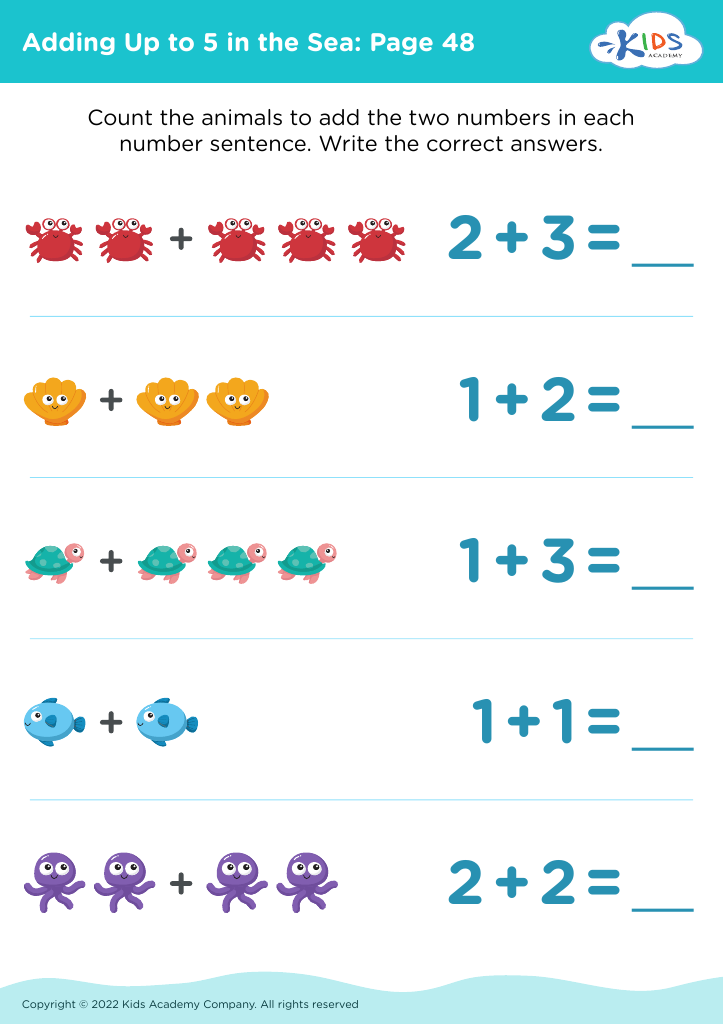
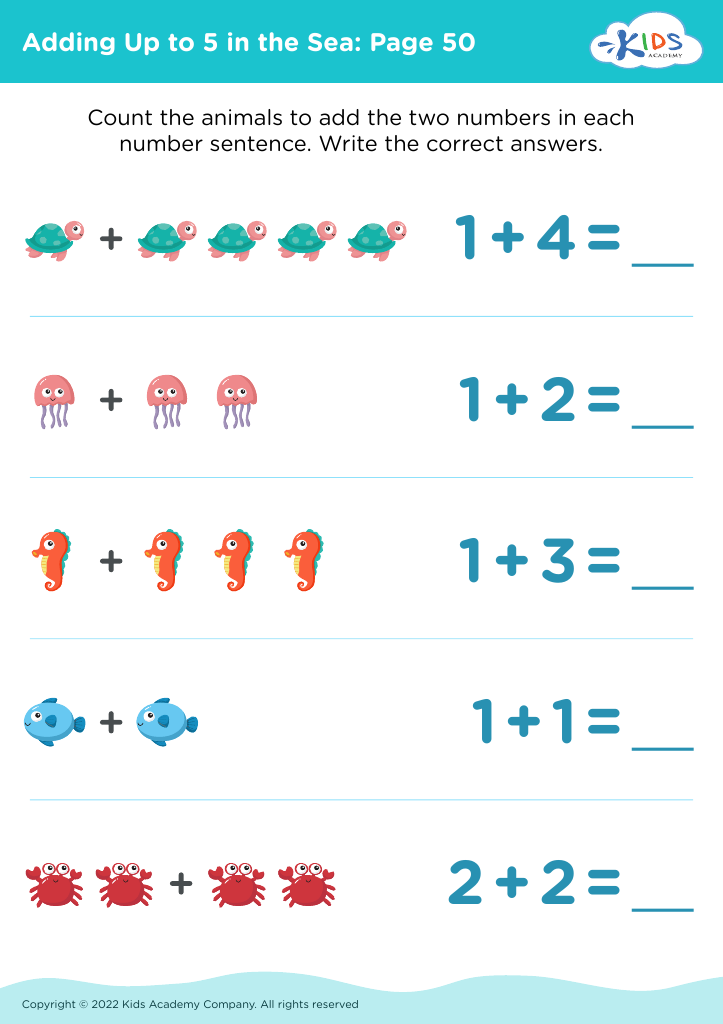
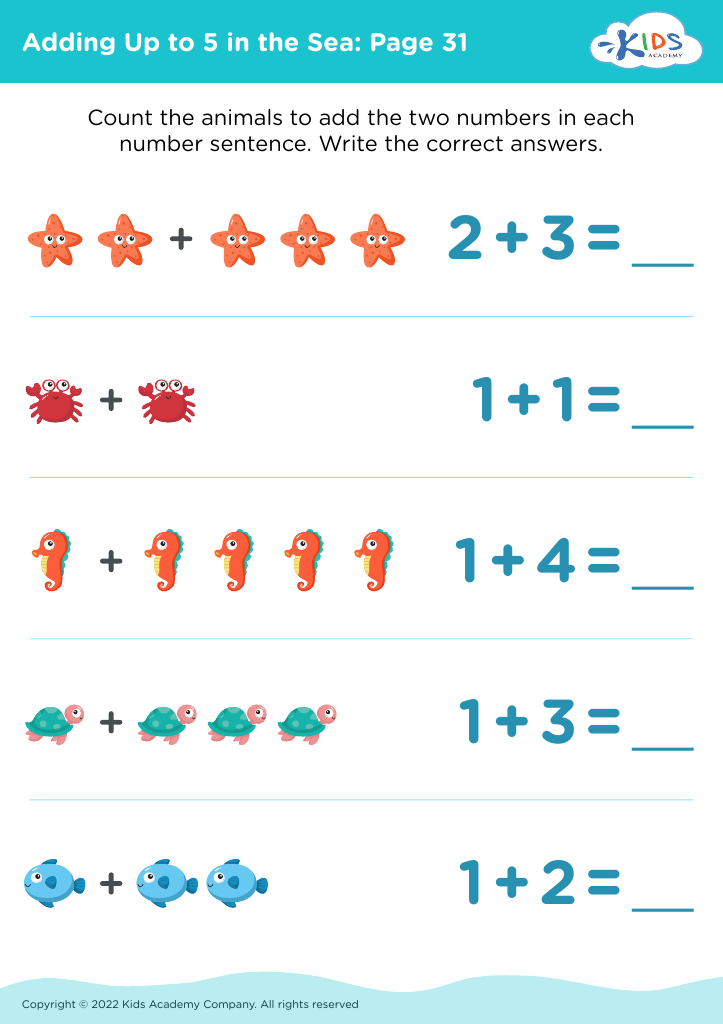








Parents and teachers should care about sea creature identification for children ages 3-9 because it fosters early childhood development in various essential areas. Primarily, engaging with nature and marine life enhances cognitive skills. Children learn to recognize and categorize different species, which boosts their observational abilities and critical thinking skills. This foundation lays the groundwork for future scientific understanding.
Moreover, addressing sea creatures also promotes environmental awareness. By teaching young children about marine biodiversity and the importance of oceans, we cultivate a sense of stewardship towards nature. This awareness can lead to more environmentally conscious behaviors as they grow, contributing to conservation efforts.
Additionally, marine education enhances language development. Describing sea creatures and their habitats can expand children's vocabulary and communication skills, as they learn new terms and concepts related to marine life.
Lastly, learning about sea creatures can be a fun and engaging activity. Through hands-on experiences like storytelling, art projects, and field trips to aquariums or coastal areas, children can build their enthusiasm for learning while also enjoying social interaction with peers. Overall, incorporating sea creature identification into early education nurtures well-rounded, environmentally conscious, and intellectually curious individuals.








