Understanding directions Addition Worksheets for Ages 3-9
3 filtered results
-
From - To
Discover our "Understanding Directions Addition Worksheets for Ages 3-9" designed to teach young learners the essential skills of following directions while practicing addition. Our expertly crafted printable worksheets help children develop strong mathematical foundations, improve comprehension, and enhance problem-solving abilities. Each engaging activity combines simple directional cues and age-appropriate arithmetic tasks to provide a well-rounded, interactive learning experience. With vibrant visuals and clear instructions, these worksheets make mastering addition fun and easy for kids. Start your child's journey to mathematical proficiency with our effective and educational resources tailored for ages 3-9!
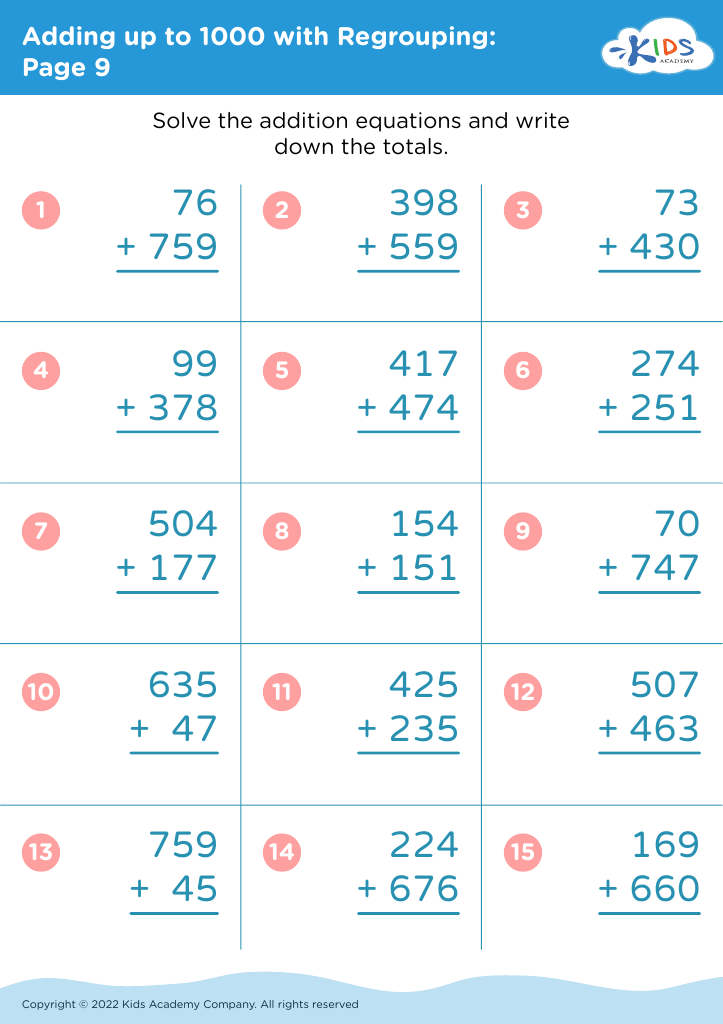
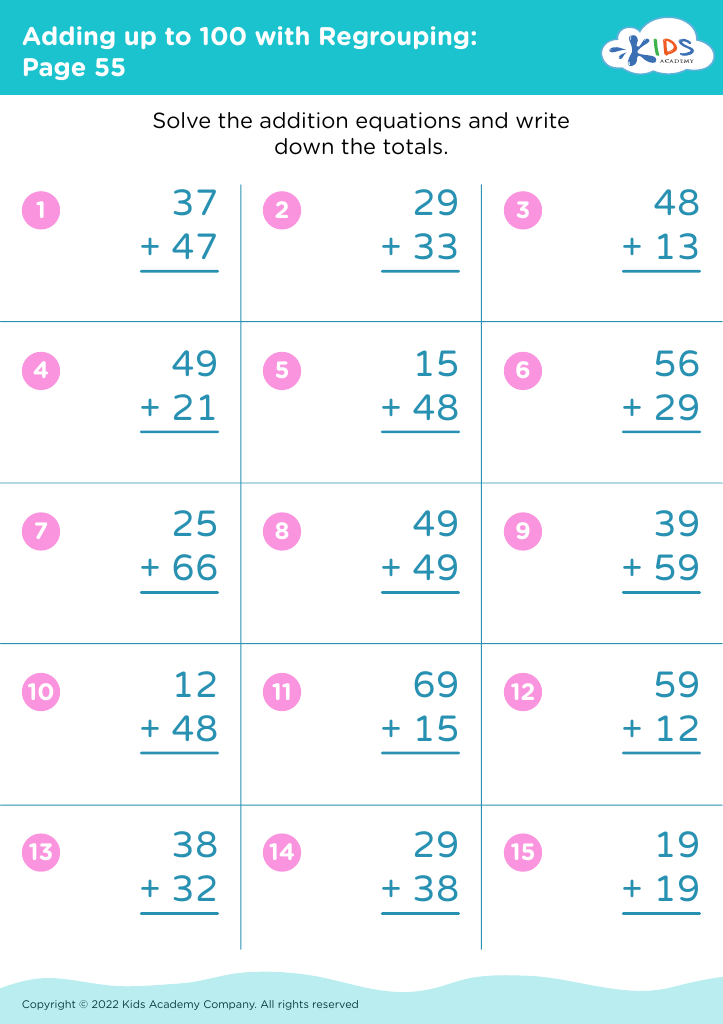
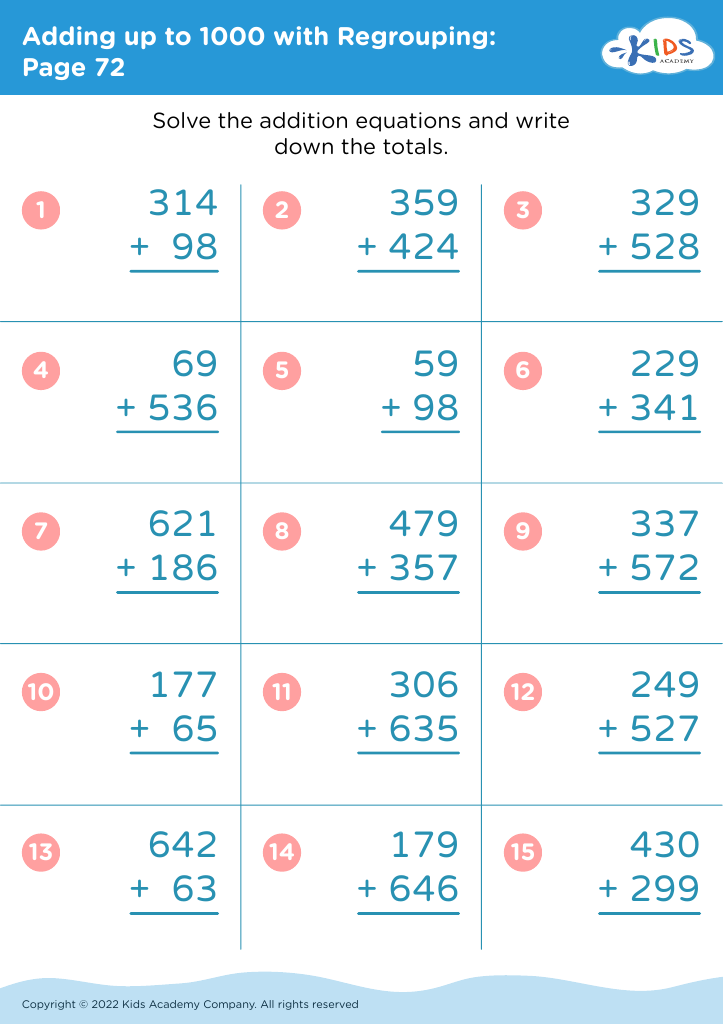







Understanding directions for addition is crucial for children aged 3-9 because it forms the cornerstone of their mathematical foundation, and it also enhances their cognitive and problem-solving skills. For young learners, clarity in directions ensures they grasp the concept of combining quantities to find a sum, an essential arithmetic skill.
When parents and teachers focus on making sure children understand the directions for addition, it nurtures their ability to follow multi-step instructions— a transferable skill beneficial in various areas of learning and daily life. Clear understanding prevents confusion, builds confidence, and promotes successful, independent learning experiences.
Furthermore, engaging with directions for addition encourages focus and concentration. It requires children to pay attention to detail, follow sequences, and recognize patterns, all of which are important cognitive skills. This lays a valuable foundation not only for future mathematical concepts but also for reading comprehension and logical reasoning.
For teachers, providing clear directions helps create a structured learning environment where children feel safe to explore and understand new concepts. For parents, reinforcing these skills at home fosters a supportive and consistent learning experience, ensuring children can practice and apply what they learn in school effectively, reinforcing their confidence and capability in mathematics.








