Understanding numeracy Addition Worksheets for Ages 3-9
4 filtered results
-
From - To
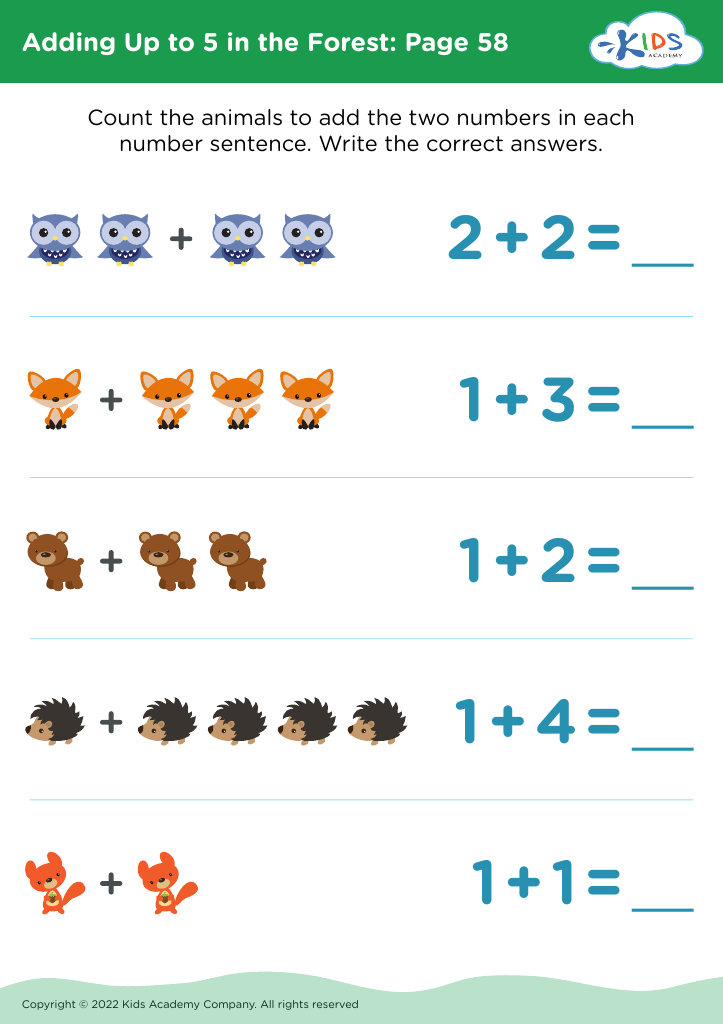
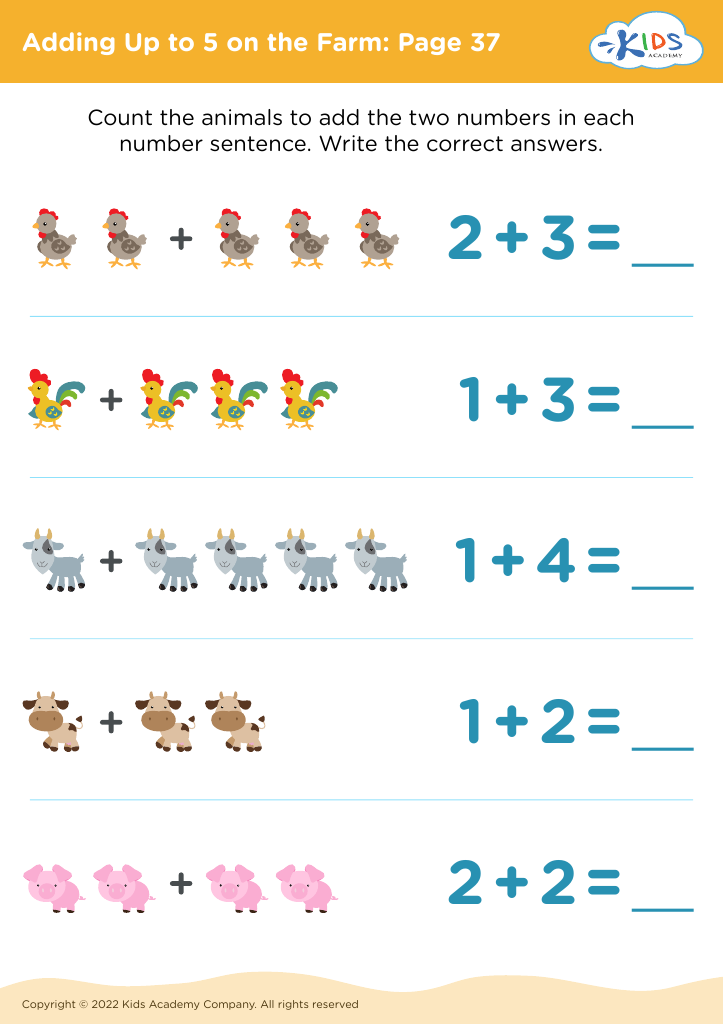
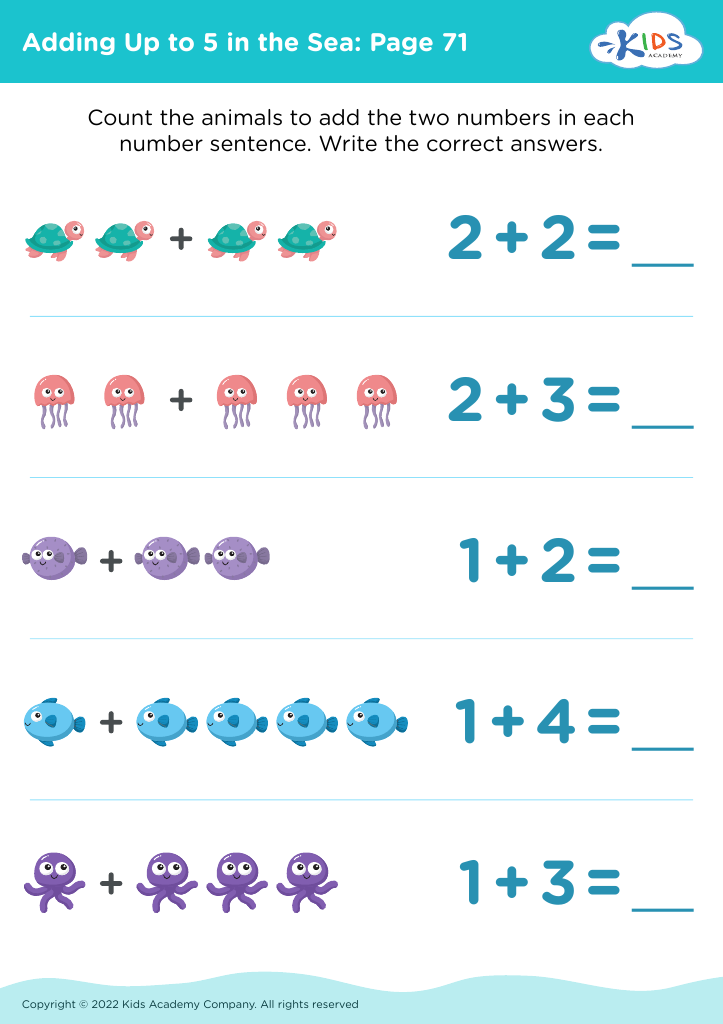
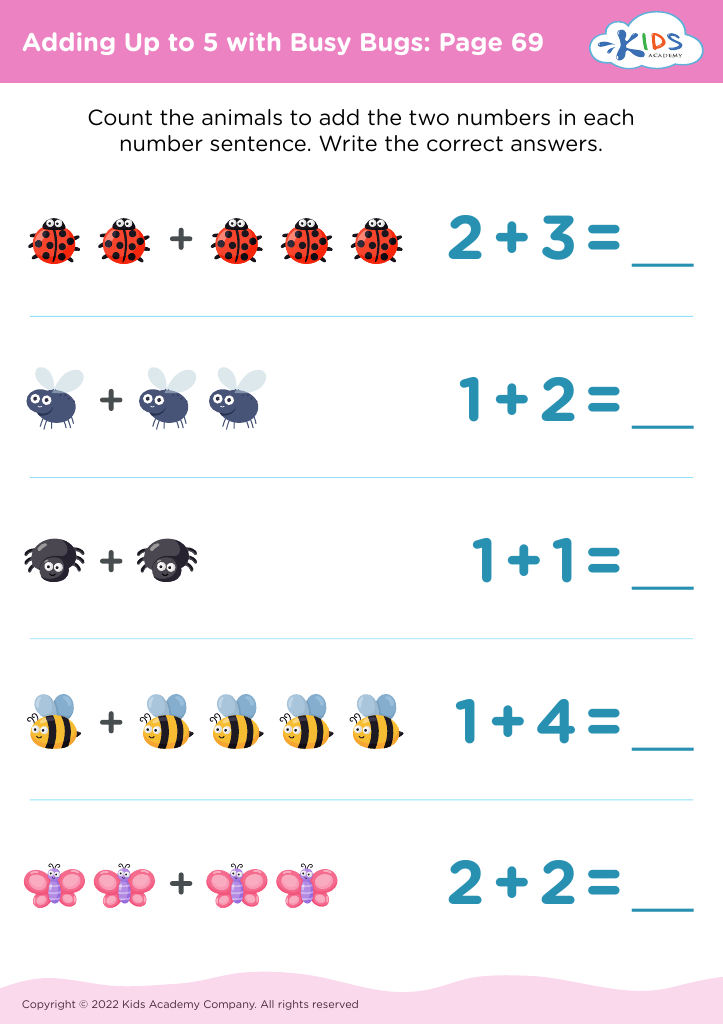
Discover our "Understanding Numeracy Addition Worksheets" designed for children ages 3-9. These engaging and interactive worksheets introduce foundational addition concepts in a fun and accessible way. With colorful visuals and age-appropriate activities, kids will develop essential numeracy skills through hands-on practice and problem-solving. Our worksheets focus on building confidence in basic math, helping young learners to recognize numbers, count objects, and solve simple addition problems. Perfect for home or classroom use, these resources support early math education, ensuring children cultivate a strong understanding of numeracy as they prepare for advanced math concepts in later grades. Enhance your child's learning experience today!


.jpg)





Understanding numeracy, particularly addition, is a crucial foundational skill for children aged 3-9. Parents and teachers should prioritize this learning because early mathematics establishes the groundwork for future academic success. Mastering addition promotes critical thinking and problem-solving skills, enabling children to navigate daily tasks, such as budgeting allowance, sharing items, or planning activities.
Moreover, numeracy skills are inherently linked to various cognitive developments, including logical reasoning and pattern recognition. Children who excel in early math are often more confident and engaged learners, fostering a positive attitude towards education. Additionally, strong numerical skills enhance a child's ability to understand relationships among numbers and concepts for future math topics like multiplication and division.
Parents and teachers play a pivotal role in motivating and enriching children’s experiences with mathematics. Engaging activities and real-world applications, such as playing counting games or using everyday situations to teach addition, can make the learning process enjoyable. By investing time in understanding numeracy, both parents and educators ensure that children are equipped with essential tools for lifelong learning, helping them to navigate not only academic challenges but also real-world scenarios successfully. Ultimately, a focus on addition nurtures a love for math that can last a lifetime.








