Filters

16 filtered results

Clear all filters
Favorites
With answer key
Interactive

16 filtered results

Difficulty Level

Grade


Explore our "Understanding Sequences Addition Worksheets" designed specifically for children aged 3-9! These engaging worksheets help young learners grasp the foundational concepts of addition through the use of sequences. By working through colorful, interactive problems, kids will develop their problem-solving skills, enhance their numerical understanding, and refine their ability to identify patterns, all while boosting their confidence in math. Our carefully crafted activities cater to a range of abilities, making it easy to adapt for individual learning styles. Support your child's math journey today by diving into our collection of fun and educational worksheets that make learning addition an enjoyable adventure!
Check out this FREE Trial Lesson on Addition for age 3-9!

Match Objects that Fit Together

Favorites
With answer key
Interactive
  • 3-9
  • Understanding Sequences
  • Addition
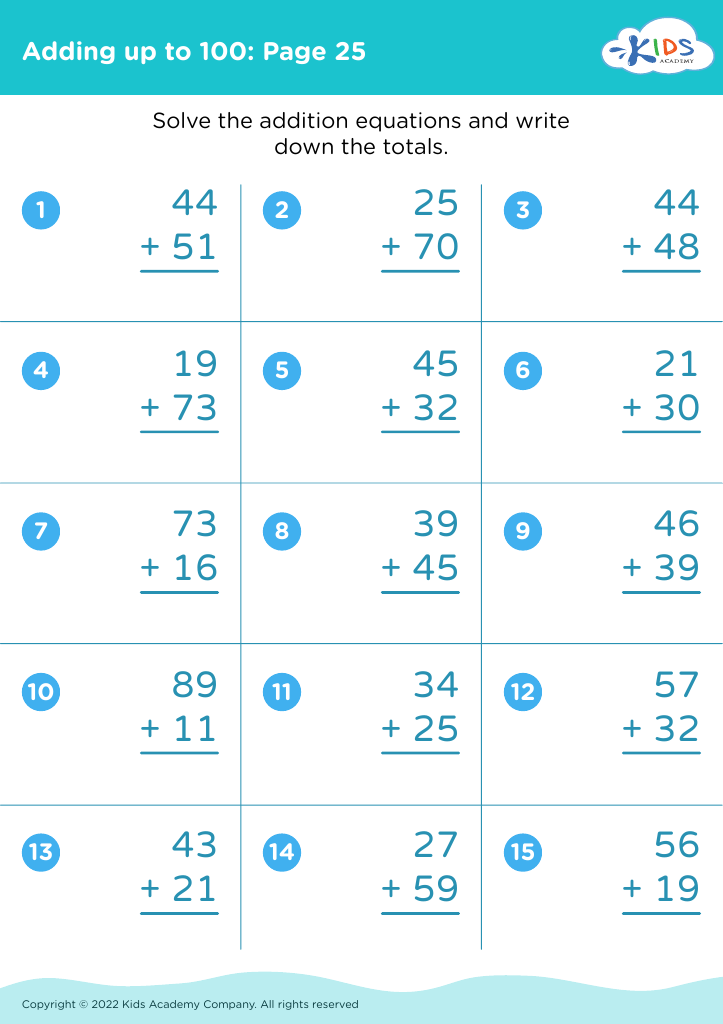
Adding up to 100: Page 25

Adding up to 100: Page 25

Adding up to 100: Page 25
Worksheet
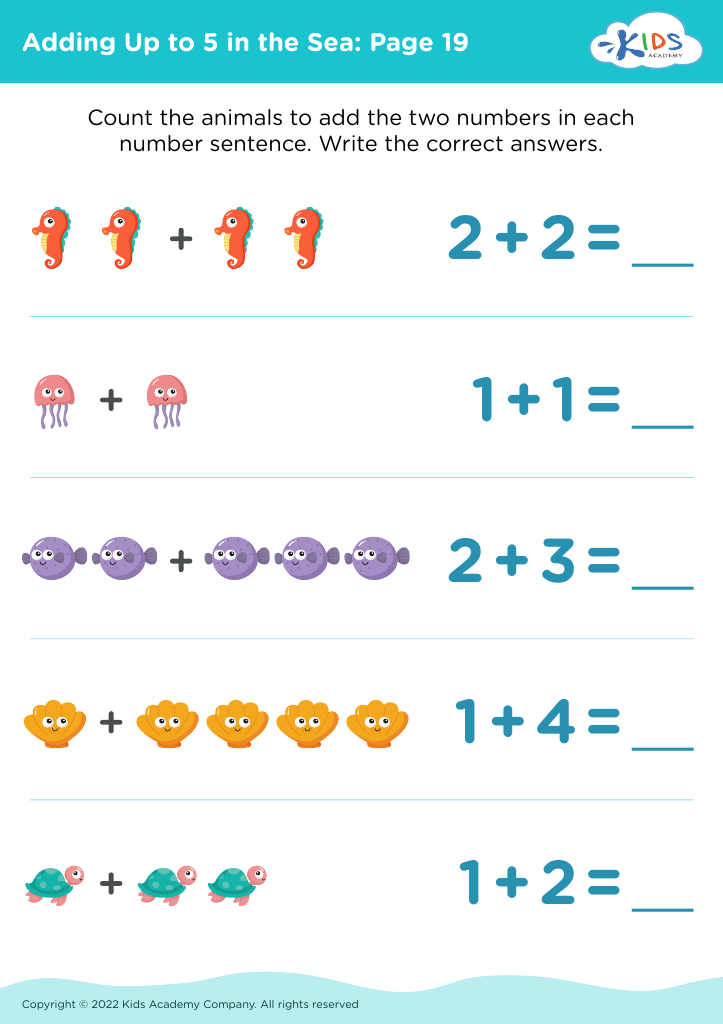
Adding Up to 5 in the Sea: Page 19
Worksheet
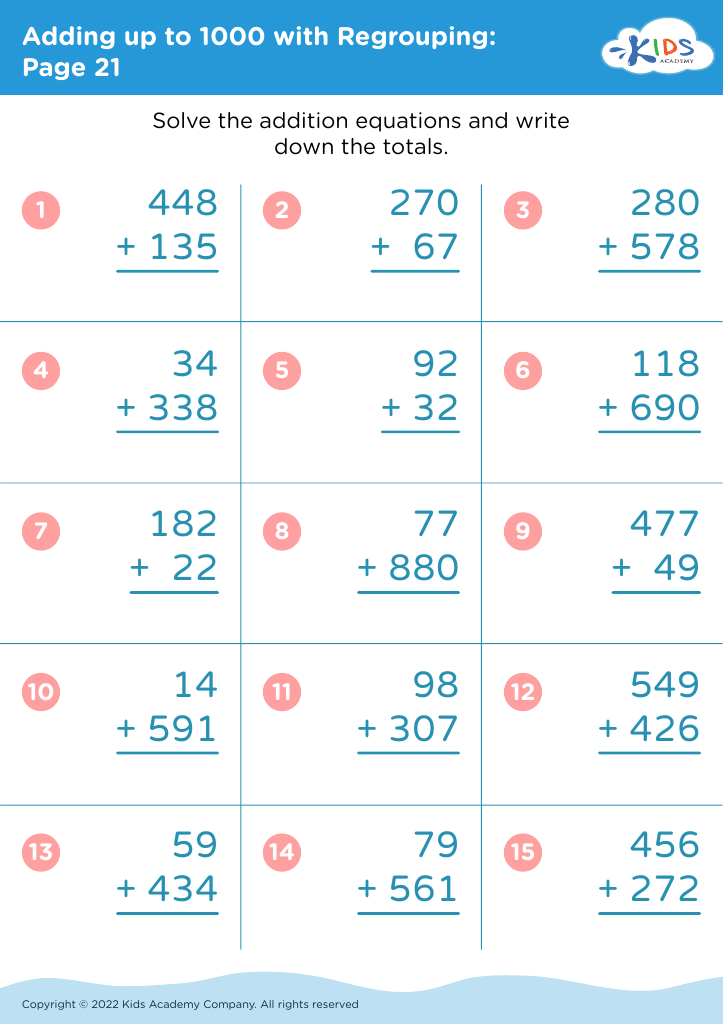
Adding up to 1000 with Regrouping: Page 21
Worksheet
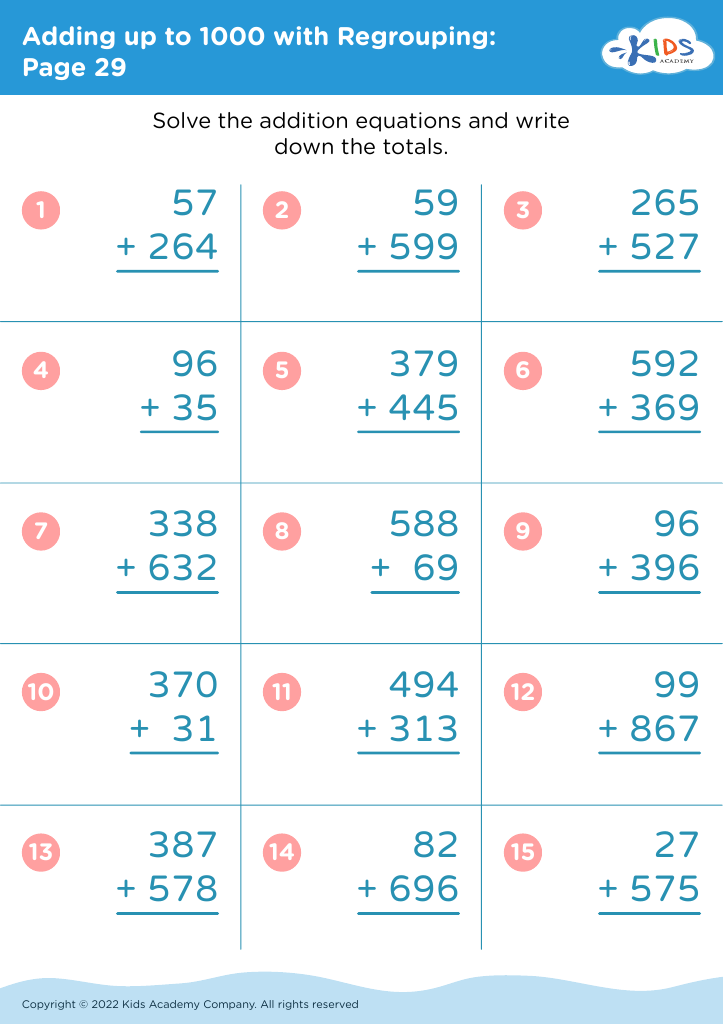
Adding up to 1000 with Regrouping: Page 29
Worksheet
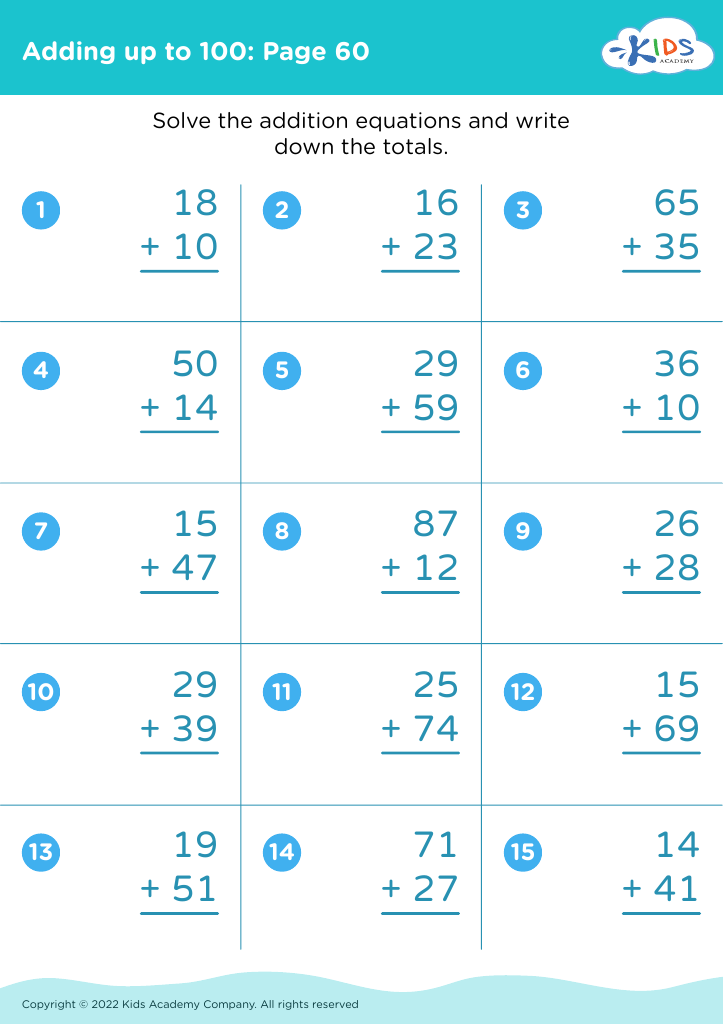
Adding up to 100: Page 60

Adding up to 100: Page 60

Adding up to 100: Page 60
Worksheet
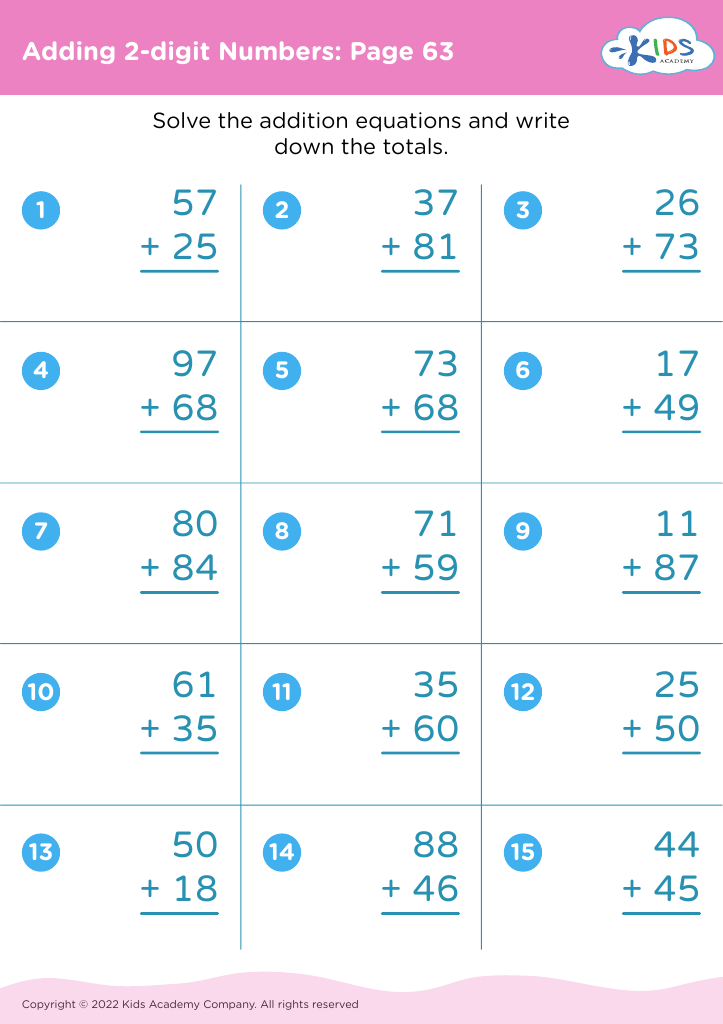
Adding 2-digit Numbers: Page 63

Adding 2-digit Numbers: Page 63

Adding 2-digit Numbers: Page 63
Worksheet
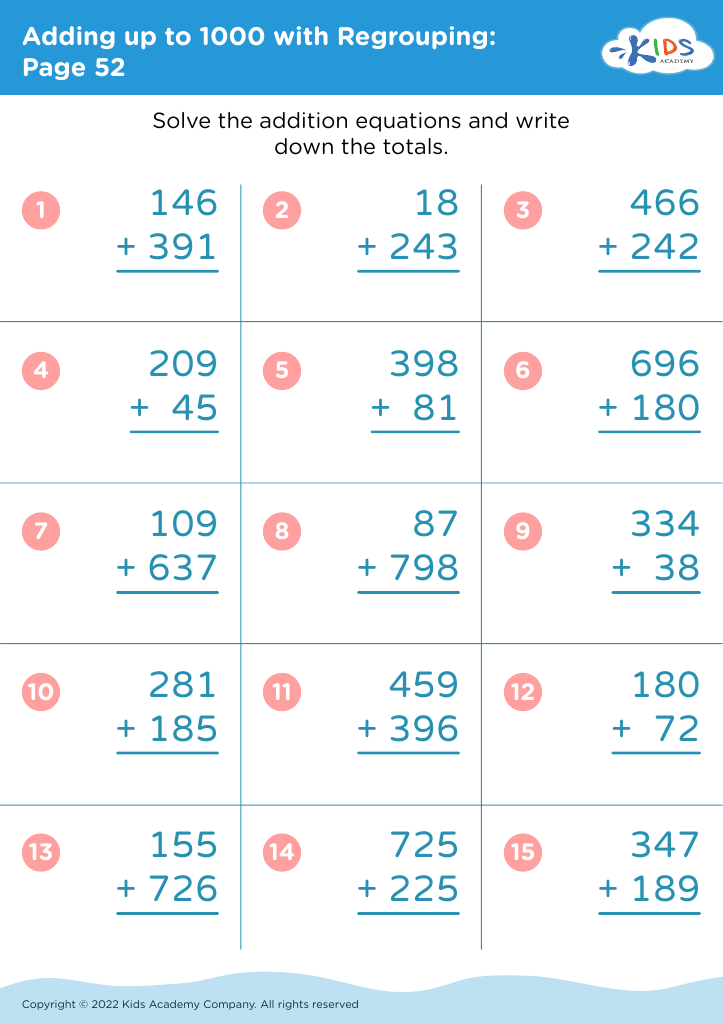
Adding up to 1000 with Regrouping: Page 52
Worksheet
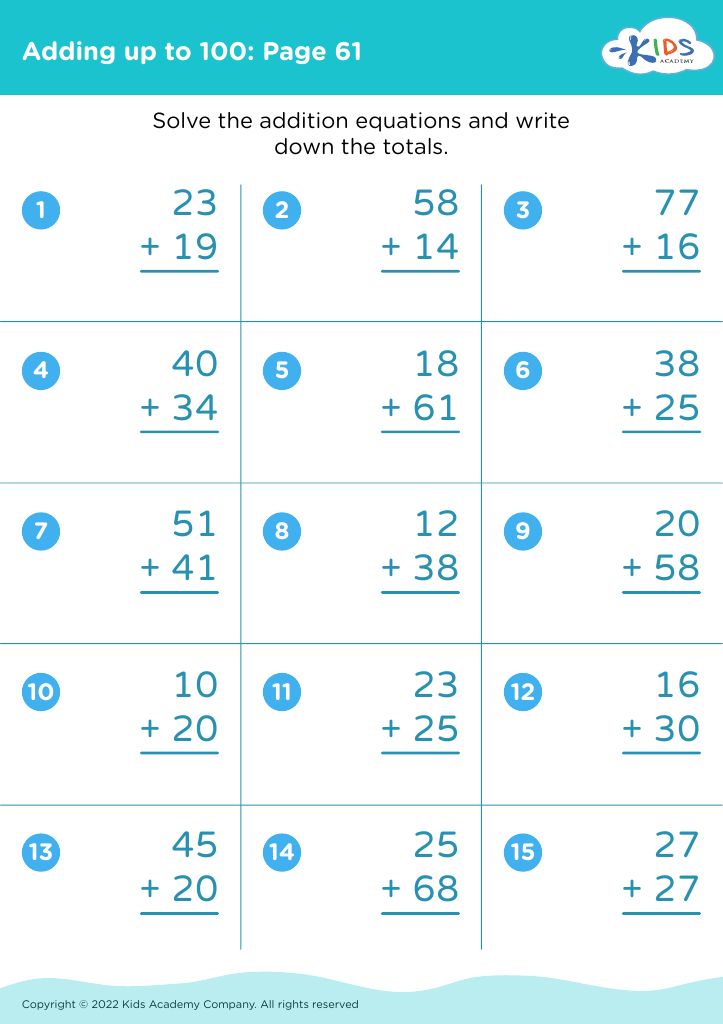
Adding up to 100: Page 61

Adding up to 100: Page 61

Adding up to 100: Page 61
Worksheet
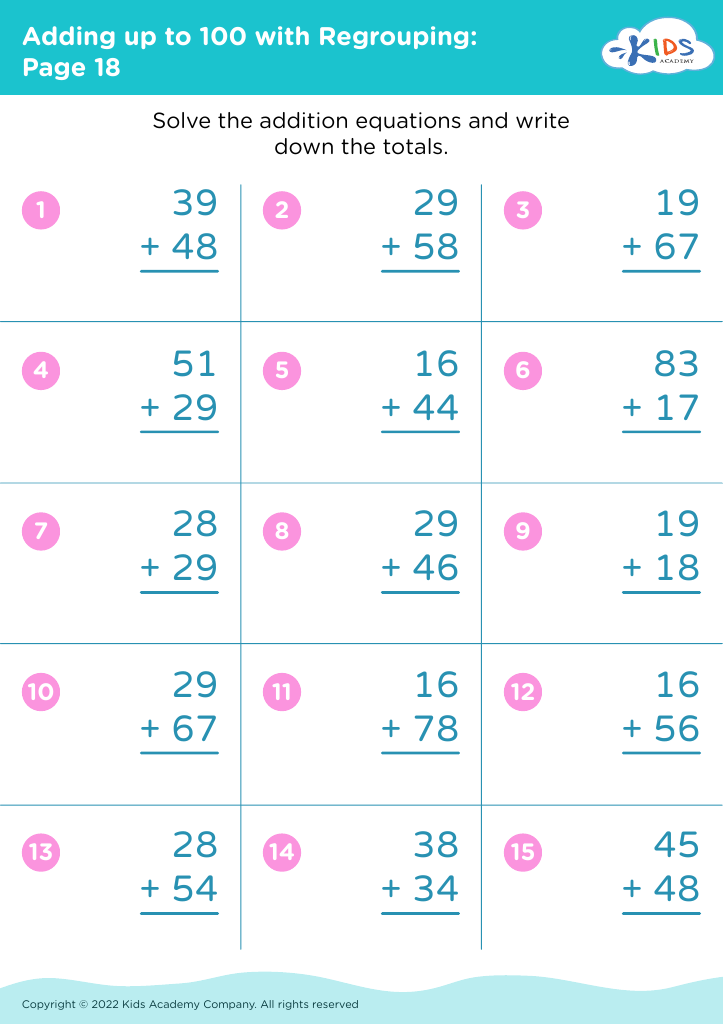
Adding up to 100 with Regrouping: Page 18
Worksheet
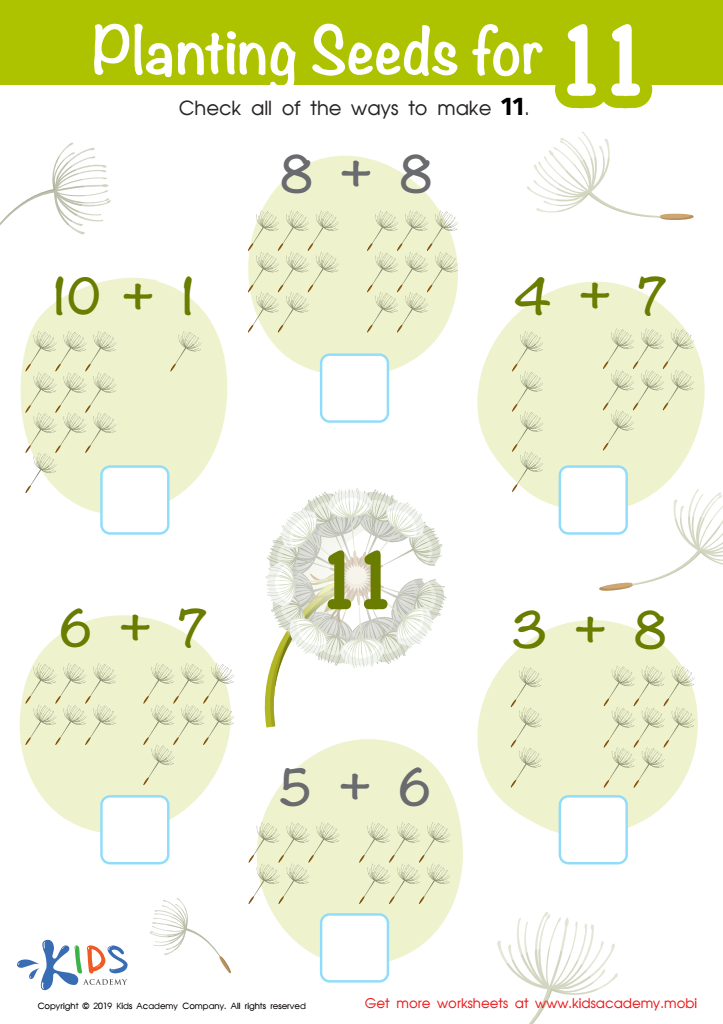
Planting Seeds for 11 Worksheet

Planting Seeds for 11 Worksheet

Before starting, ask your students to count as high as they can. Explain that different numbers can add up to the same total. Give examples like 2+2 =4 and 3+1 =4. Ask if they can think of other examples. Then have them work through the equations in the printout and circle all that add up to 11.
Planting Seeds for 11 Worksheet
Worksheet
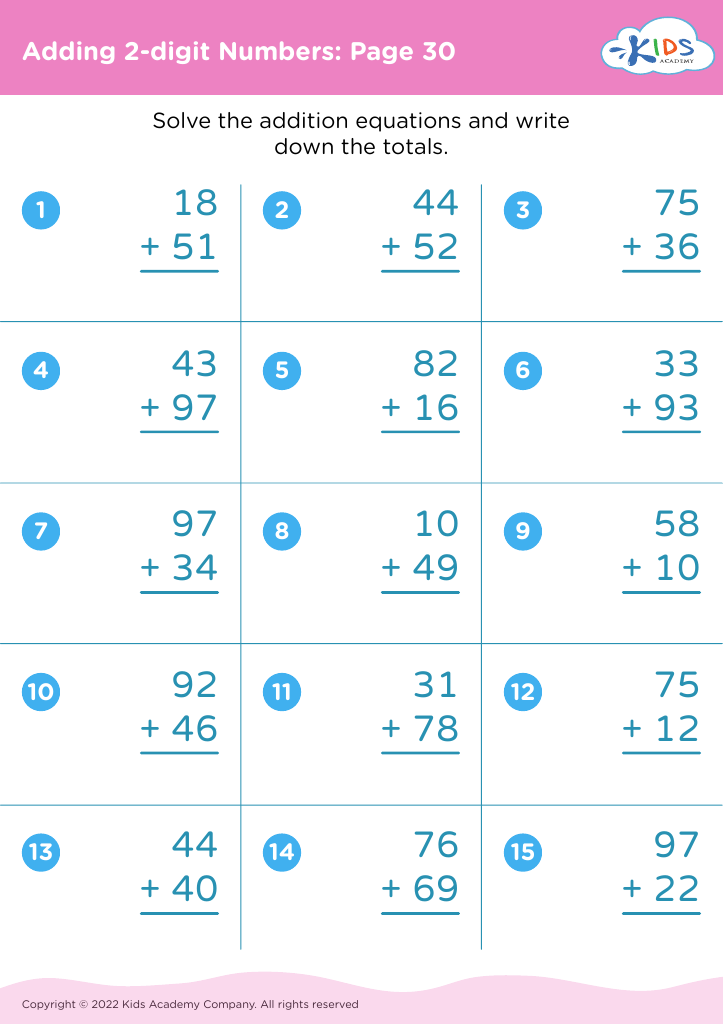
Adding 2-digit Numbers: Page 30

Adding 2-digit Numbers: Page 30

Adding 2-digit Numbers: Page 30
Worksheet
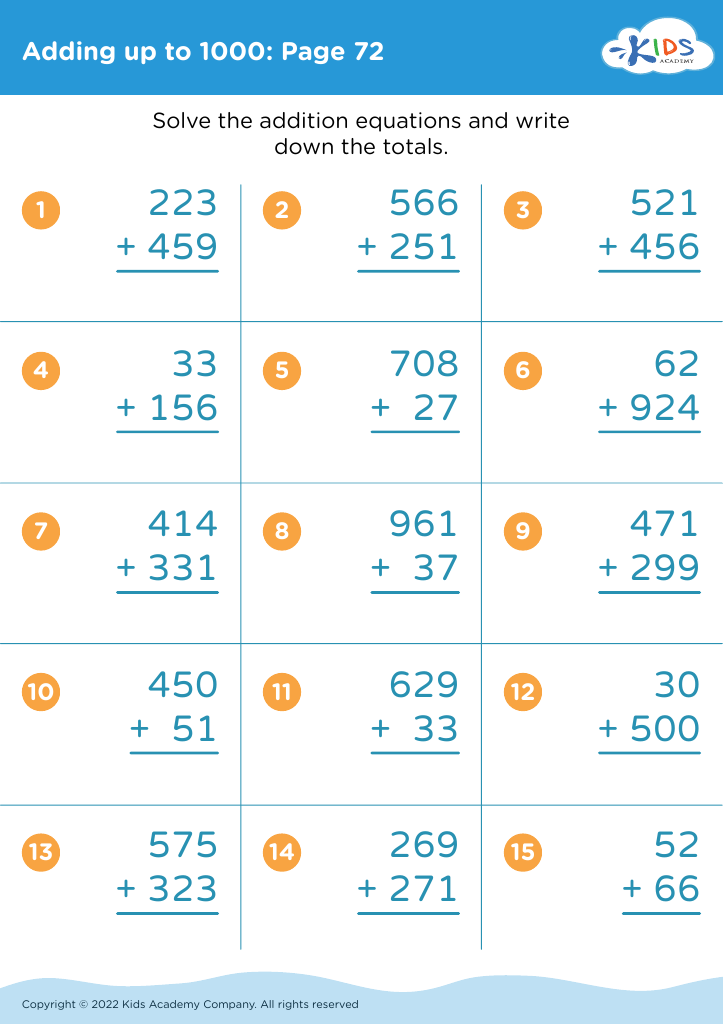
Adding up to 1000: Page 72

Adding up to 1000: Page 72

Adding up to 1000: Page 72
Worksheet
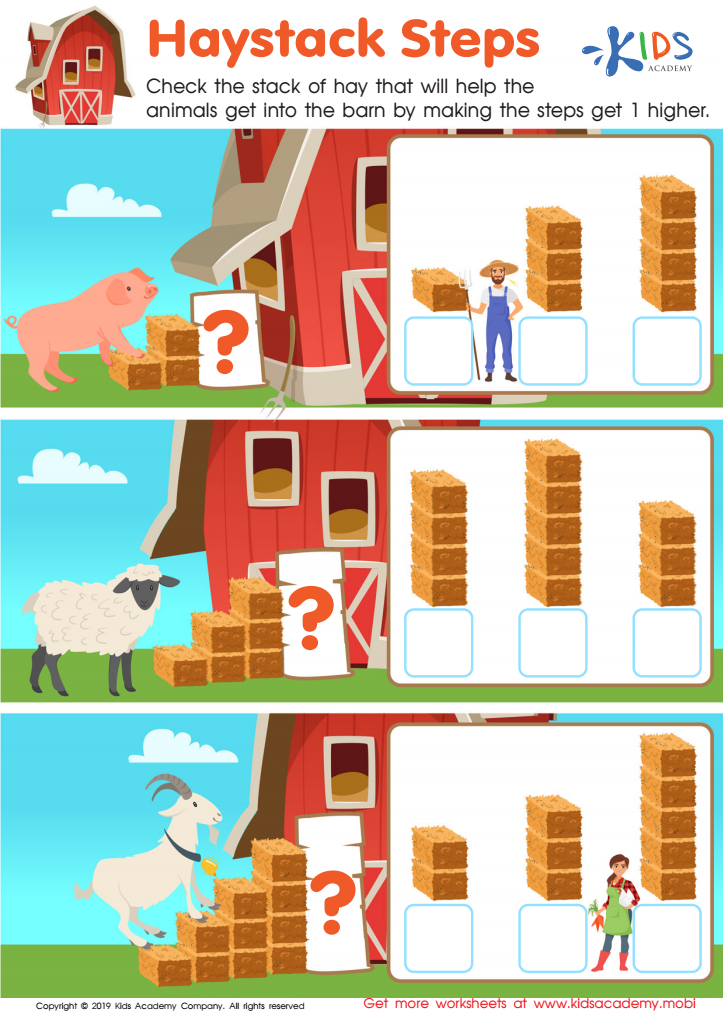
Haystack Steps Worksheet

Haystack Steps Worksheet

Have your kids ever visited a farm? What activities and sights did they enjoy? Farmers are essential to our lives, growing food and providing us with dairy and eggs. In this worksheet, a farmer has made a haystack for his animals to climb into the barn. Ask your kids to add an extra layer to the stack to make the climb easier.
Haystack Steps Worksheet
Worksheet
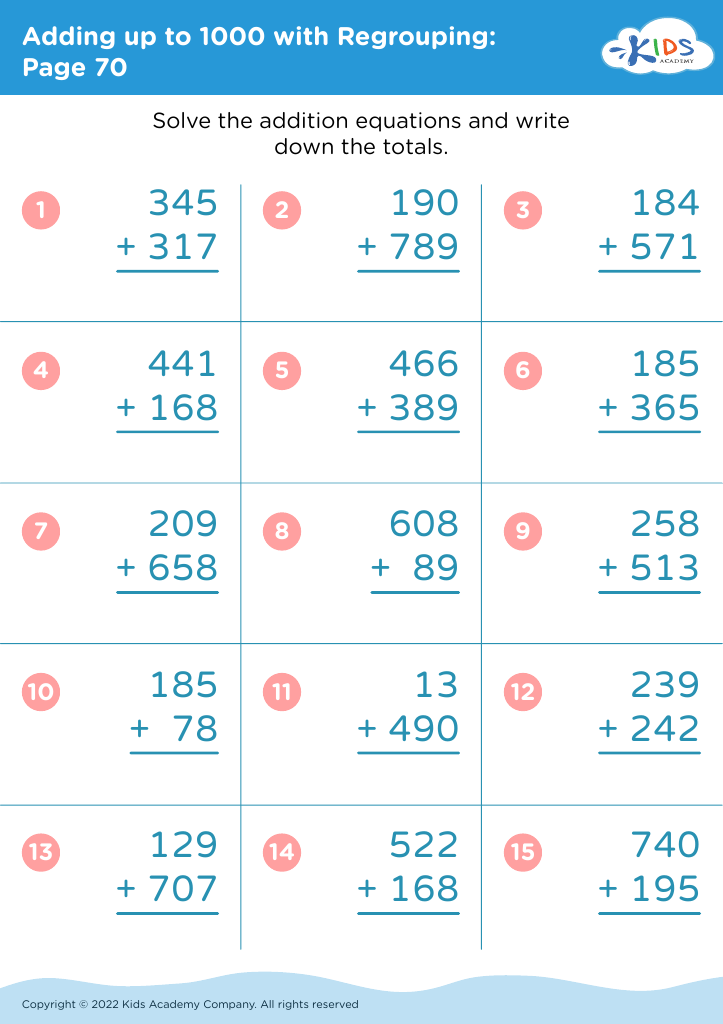
Adding up to 1000 with Regrouping: Page 70
Worksheet
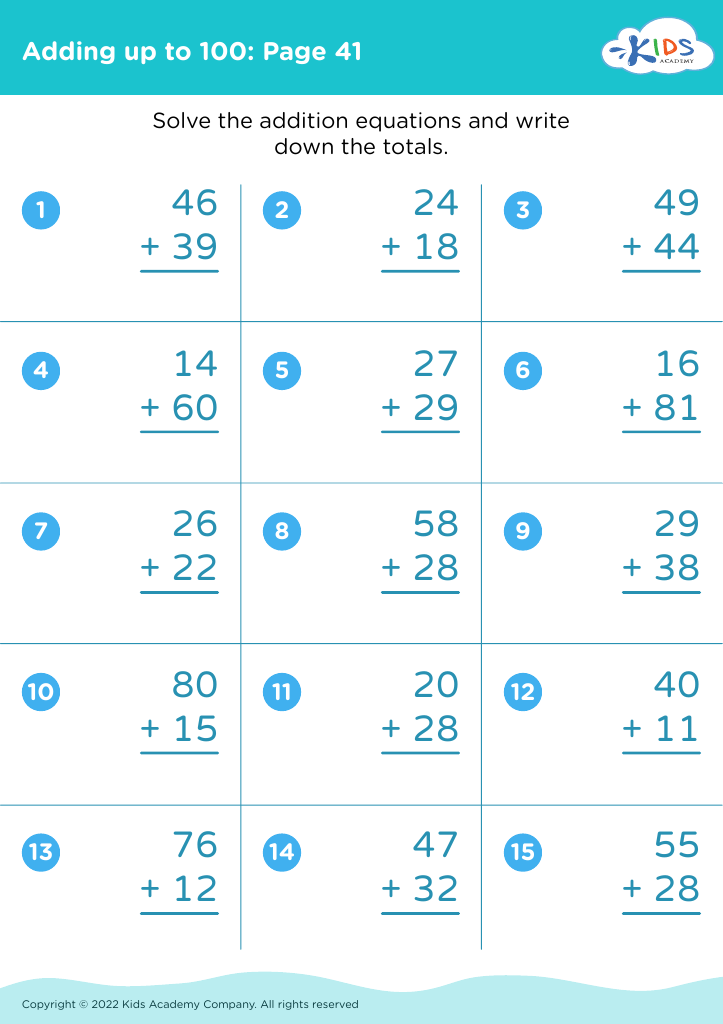
Adding up to 100: Page 41

Adding up to 100: Page 41

Adding up to 100: Page 41
Worksheet
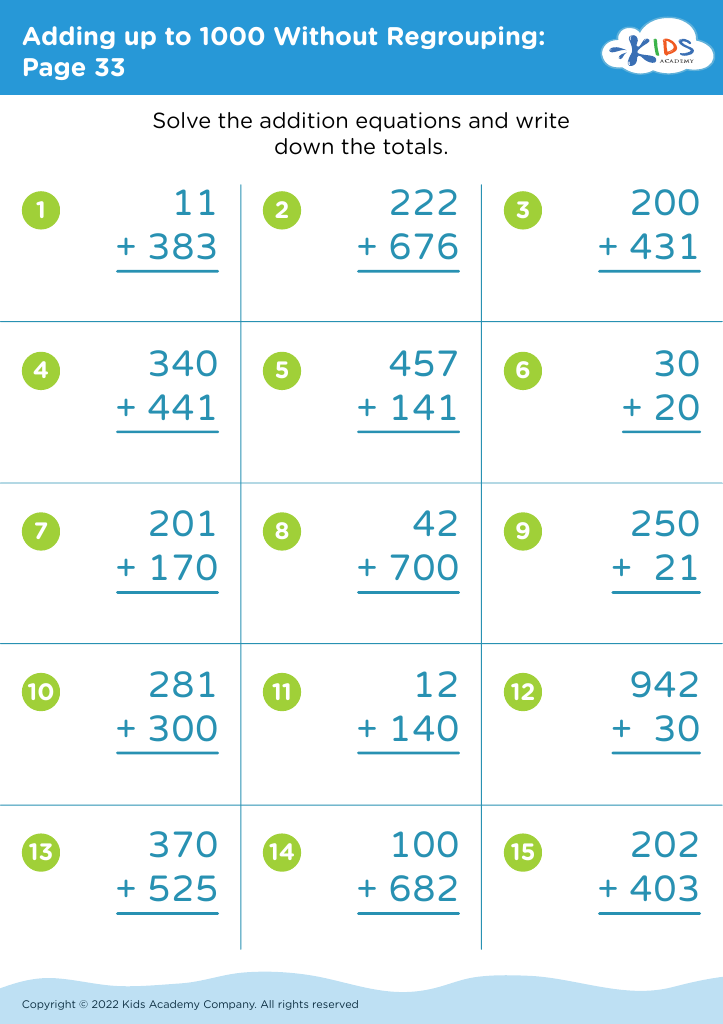
Adding up to 1000 Without Regrouping: Page 33
Worksheet


Understanding sequences and addition is crucial for children aged 3-9 because it lays the foundation for their future mathematical interventions. At such an early age, children are naturally curious and eager to explore patterns and relationships. Recognizing and understanding sequences—such as counting numbers, days of the week, or colors—enhances their cognitive development and promotes logical thinking.

For parents and teachers, promoting sequential understanding aids in developing critical skills like problem-solving and analytical reasoning. As children learn to identify patterns, they become better equipped to tackle more complex mathematical concepts later on, such as addition and subtraction. Additionally, engaging students in activities that involve sequences makes learning enjoyable, reinforcing their love for math.

Finally, early intervention can bridge learning gaps. Children who grasp these early concepts can improve their overall academic performance and build confidence in their abilities. By prioritizing sequential learning and addition skills, parents and teachers not only prepare children for future math success but also support their overall cognitive and emotional development, fostering a growth mindset that values persistence and curiosity. Ultimately, these foundational skills are essential not just for school, but for everyday problem-solving throughout life.